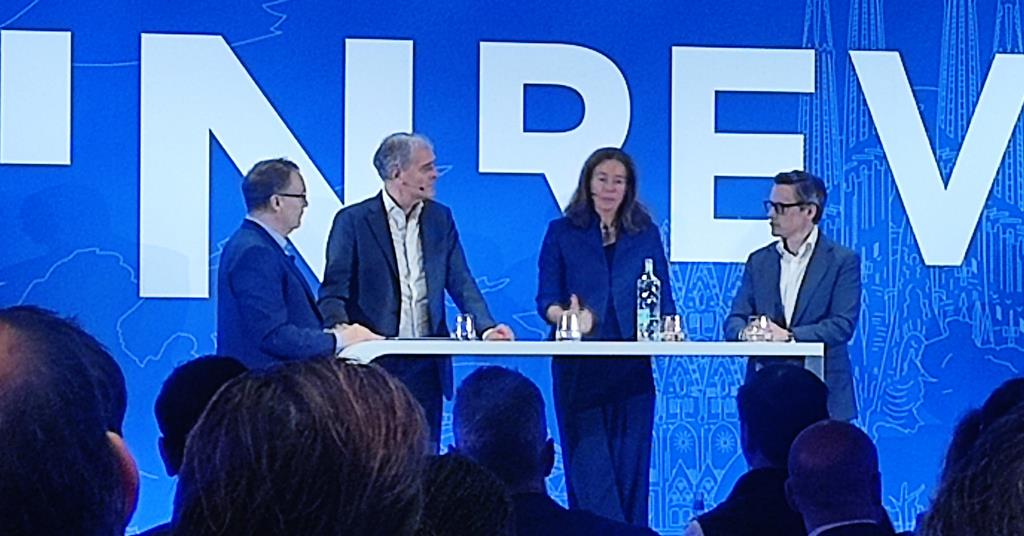
The next real estate cycle will be defined by “societal friction” and operational complexity rather than simple sector picking, delegates at the INREV Annual Conference 2026 were told as heads of real estate from Canada Pension Plan Investment Board (CPP Investments) and Norges Bank Investment Management (NBIM), alongside APG Asset Management’s head of European property investments, took the stage.

Moderating the panel discussion Where Europe stands: competitiveness, reform and the case for real estate, Greg Clark, global urbanist, innovator and author, asked how the next cycle will be distinctive from the last.
NBIM’s Alexander Knapp argued that the next era will be defined by societal friction rather than specific asset classes. The global head of real estate at Norway’s NOK21.2trn (€1.8trn) sovereign wealth fund said while the previous cycle was driven by the e-commerce revolution and the rise of logistics, the industry is moving toward a “different set of logic” where the disruption of AI and autonomous vehicles will “completely change locational preference” across sectors. Knapp suggested that focusing strictly on product types is “yesterday’s war.”
Sophie van Oosterom, at CPP Investments, explained that the next cycle will be characterised by a “big bifurcation” where a rising tide no longer lifts all boats. She said the nature of real estate has changed to become “much more operational”, meaning that value will be driven by those with superior operational capabilities.
According to van Oosterom, execution at the individual asset level will be the primary driver of performance, effectively evolving property investment into a “private equity play ultimately”.
APG’s Robert-Jan Foortse added that the next cycle will see a significantly higher focus on risks. Reflecting on the last decade, Foortse admitted that many portfolios increased their risk profile without being properly rewarded.
“We could have probably achieved the same result with a lower risk profile and got from a more core portfolio, [and] probably have achieved the same results,” he said. He suggested that future strategies will take this into consideration, prioritising disciplined risk-adjusted returns over simply chasing growth.
Regarding the trade-off between “inflation-hedged income or capital growth or both”, the panellists reached a consensus on total return, though with different underlying mandates. Foortse said because they [APG] manage a Dutch pension fund where liabilities are “essentially related to wage growth in the Netherlands”, the income component and inflation hedging remain “very important to the ultimate plan”.
Van Oosterom clarified that while income is critical to drive value, the overarching mandate is “managing for optimal returns, and that’s total returns”.
She said that in many organisations real estate has been “reined in” after previously holding a “special place” in portfolios. She explained that it is now being treated as “just an asset like anybody else”, leading firms to reset their strategies and leadership to better fit the “kind of returns” they now expect from the asset class.
Knapp agreed that “it’s total return,” but added that they seek “as much income as you could get” to index with inflation. He further suggested that in a diversified portfolio, real assets now serve a unique strategic purpose as a “hedge against AI” when compared to an equity-heavy index.
The fragmented search for exits
When asked which sectors show the “biggest desire to exit or recap”, the real estate heads indicated that the pressure is becoming increasingly case-specific. Van Oosterom suggested that the office sector is a logical focus for disposals, noting that “given the fact that office was the biggest asset class for a very long time, and most parties want a diverse portfolio… it’s logical that there’s a reduction in the office holding.” She added that while the market has “not been transacting quite a lot,” there is clearly “pent-up demand to move the office along.”
Knapp offered a different perspective, identifying “more residential” than might be expected as an area for potential recapitalisation. According to Knapp, “opportunistic buyers who assembled portfolios and thought there’d be a core takeout” are finding that the “pricing doesn’t quite stack”, leading to a build-up of assets waiting for a move.
Foortse agreed that the pressure to exit is widespread but not restricted to one area, stating, “there is no clear winner in that respect… it’s very case specific.”
He added that while there is an “overhang” in logistics and some offers in retail, the broader market is being driven by the fact that “refinancings are coming up” and “at a certain point selling will happen”.
To read the latest IPE Real Assets magazine click here.