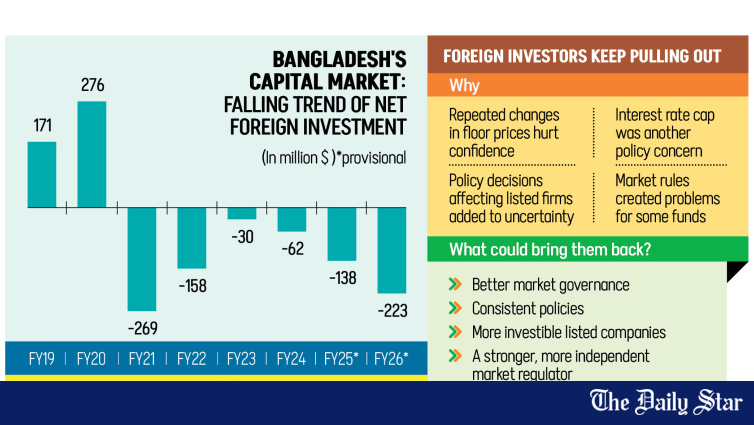
Amid the prolonged fallout from the Russia-Ukraine conflict and emerging geopolitical risks from Iran-US tensions, Bangladesh’s capital market is standing at a critical crossroads. For years, the narrative of our equity market centred on expansion and “new projects”. However, in a high-interest-rate environment where the Taka’s depreciation has inflated project costs, the priority must shift from growth to survival.
To revitalise our thinning IPO pipeline, the newly appointed adviser to the Prime Minister on Investment and Capital Markets, Tanvir Ghani, along with the Bangladesh Securities and Exchange Commission (BSEC), needs to rethink a fundamental constraint: the utilisation of IPO proceeds for debt repayment.
A market in retreat

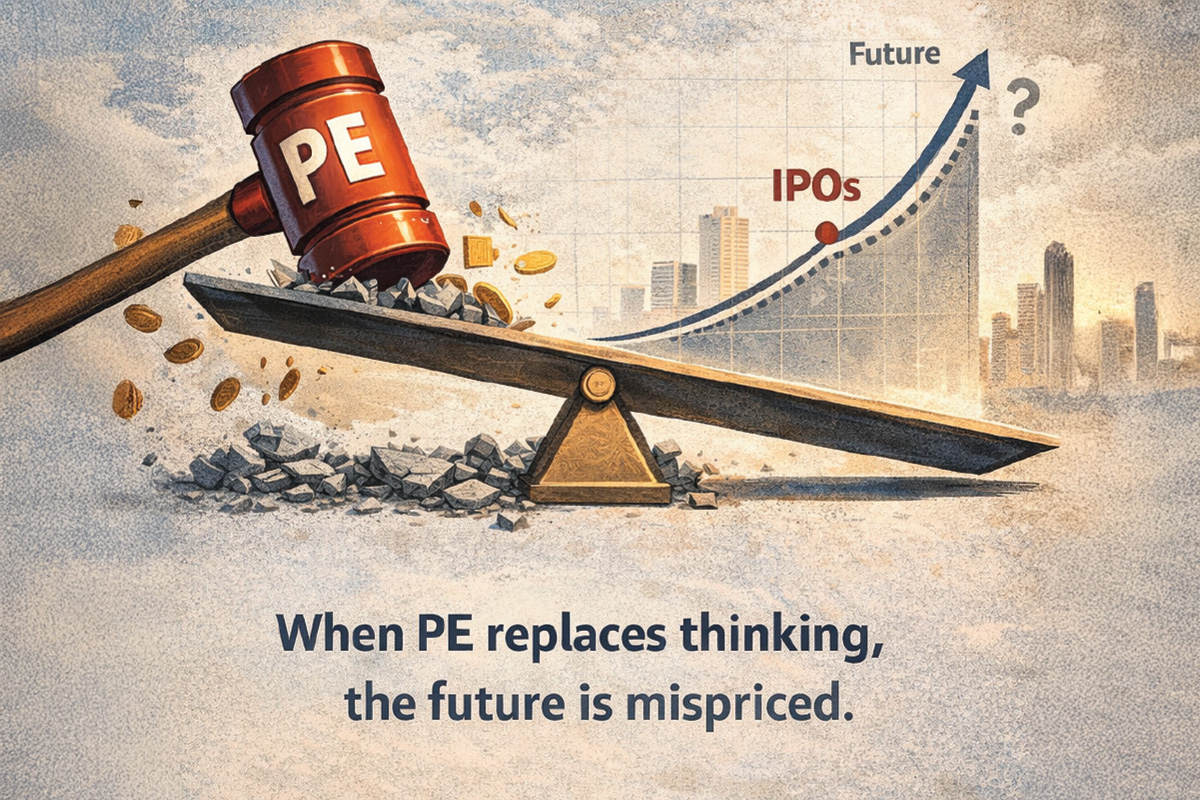
The numbers tell a sobering story. Since the brief post-pandemic surge in 2021, appetite for Initial Public Offerings has sharply declined – from 13 IPOs in 2021 to zero in 2025. This stagnation is not merely a symptom of “poor quality” companies. Many robust, Tier-1 firms are currently over-leveraged, burdened by heavy debt taken for capital expenditure over the last four to five years. In the current climate, these firms cannot feasibly justify further expansion, yet they are bleeding from double-digit interest rates. The problem is structural, not reputational.
The BSEC deserves credit for its recent efforts in modernising the valuation process for IPOs with premiums. By refining these methods to reflect intrinsic value, the Commission has finally addressed long-standing valuation anomalies. However, the next logical step – to truly breathe life into the market – is providing these corporates the flexibility to repair their balance sheets.
The 30% ceiling: A barrier to consolidation
On 30 December 2025, BSEC finalised the Public Offer of Equity Securities Rules, 2025. While the commission amended valuation methods, one particular clause remains a bottleneck: a maximum of 30% of IPO or RPO proceeds may be used for repayment of outstanding loans or investments. While the rule ensures that loans being repaid were used for legitimate BMRE (Balancing, Modernisation, Replacement, and Expansion) purposes, the 30% cap is increasingly out of touch with corporate reality.
For a company with a high debt-to-equity ratio, an IPO that only clears 30% of its debt does not move the needle on its credit rating or profitability. If a firm is forced to deploy the remaining 70% of proceeds into new projects it does not need – or cannot afford to operate due to soaring energy costs – the IPO becomes a burden rather than a blessing. The rule, intended to protect the market, is instead keeping quality issuers away from it.
A concrete illustration
Consider a mid-sized Bangladeshi textile manufacturer – call it company ABC – that invested Tk400 crore in factory expansion between 2020 and 2022, financed primarily through term loans at rates that have since risen to 13-14%. Today, company ABC is profitable at the operating level: it generates positive EBITDA, its plant runs at 70% capacity, and its export receivables are regular. But its interest burden consumes nearly half of its operating profit, leaving little room for retained earnings or dividend distribution.
Company ABC wishes to raise Tk250 crore through an IPO. Its debt repayment need is Tk200 crore. Under the current rule, only Tk75 crore may go toward debt repayment. The remaining Tk175 crore must fund “new projects” – yet company ABC has no immediate CAPEX pipeline, no additional capacity need, and no appetite to add fixed costs in an uncertain energy environment. The result: either company ABC walks away from the exchange entirely, or it lists with an artificially constructed use-of-proceeds that satisfies the regulator but serves no genuine business purpose.
Had the cap been set at 80% or eliminated for qualifying firms, company ABC could reduce its interest burden by Tk200 crore, improve NPAT by an estimated Tk26-28 crore annually, and emerge as a fundamentally stronger listed entity – one that attracts institutional investor confidence rather than undermining it.
Why a higher threshold makes sense
Allowing a significantly higher proportion of IPO proceeds to be used for debt repayment offers several systemic benefits. First, firms replace high-cost bank debt with permanent equity capital, immediately boosting NPAT and improving return on equity. Second, by migrating corporate debt from the banking sector to the capital market, we reduce pressure on a banking system already struggling with non-performing loans. Third, in a volatile global economy, a lean and deleveraged company is more resilient than an over-extended one. Finally, a company with a repaired balance sheet – lower gearing, stronger interest coverage – is fundamentally more investable, and far more likely to sustain its listing price post-IPO.
What peer markets tell us
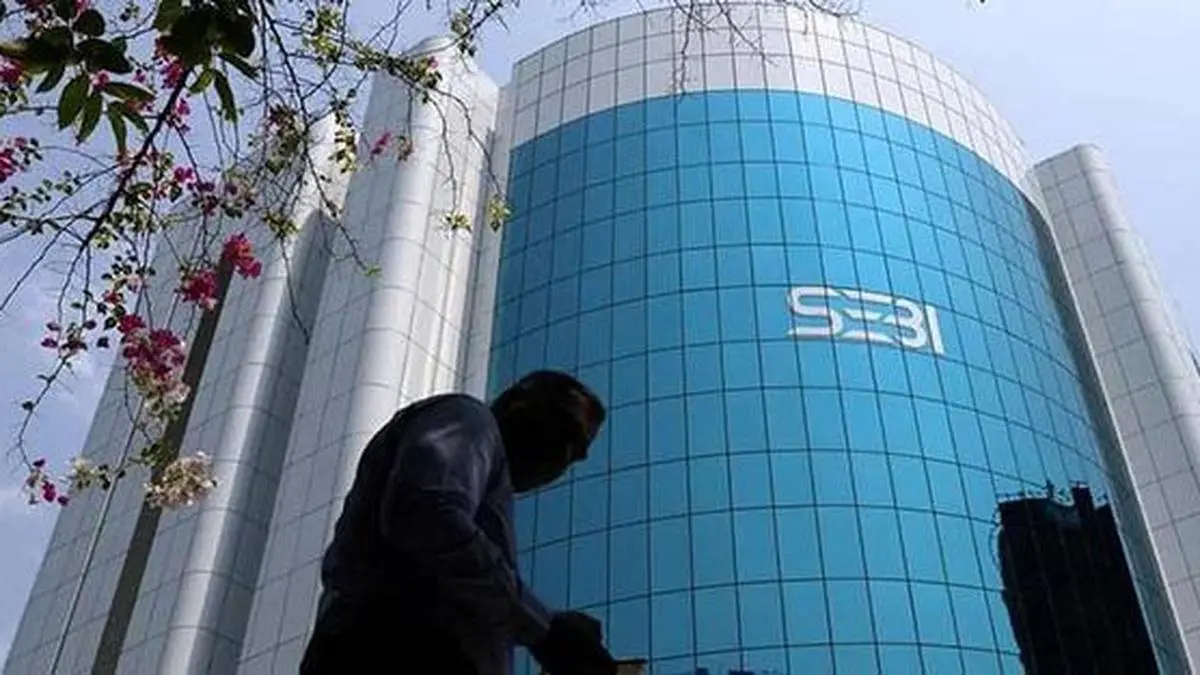
This is not an untested idea. India’s SEBI imposes no numerical ceiling on the proportion of IPO proceeds directed toward debt repayment. Its 2025 amendment to the ICDR framework explicitly recognised capex-loan repayment as equivalent to capital expenditure – acknowledging that paying off a factory loan is economically indistinguishable from building one. Malaysia’s securities commission similarly sets no regulatory cap, focusing instead on disclosure and time-bound deployment. Across the globe, the philosophy is consistent: disclose the intended use of proceeds, and let the market determine whether the proposed capital restructuring is acceptable.
Bangladesh’s 30% statutory cap is an outlier in this landscape, substituting regulatory prescription for investor judgment.
A workable reform
The BSEC should consider a temporary three-to-five-year window during which the cap is lifted for companies meeting clear eligibility criteria: positive operating cash flow for at least two of the three preceding fiscal years; an auditor’s certificate confirming that loans proposed for repayment were used for BMRE-eligible purposes; a pre-IPO debt-to-equity ratio exceeding 2.0x; no default classification with any scheduled bank or financial institution; and a 24-month undertaking against drawing new bank financing for overlapping CAPEX purposes. These criteria preserve the spirit of the original rule while creating a transparent, operationally credible pathway for genuinely over-leveraged but fundamentally sound firms.
The path forward
To bring the market back to life, we must stop viewing debt repayment as a “waste” of IPO funds. If a company used bank loans to build a factory three years ago, that factory is already a national asset. Paying off that loan with public equity is simply a change in capital structure – not a loss of value. Our peer regulators in India and Malaysia understand this. Without this flexibility, IPO activity will remain subdued, and our best corporate houses will continue to stay away from the exchanges – preferring to suffer under the weight of bank interest rather than enter a market that does not give them room to breathe.
It is time to prioritise financial stability over forced expansion.
The author is Director, Putnam Capital Advisory Pte Ltd, Singapore