If, a few months ago, the prevailing assumption among investors was that artificial intelligence (AI) would deliver widespread efficiency gains for companies, the market has recently shown greater caution and begun to move away from firms whose businesses could be rendered unviable by the technology.
In this shift, software companies and those with high levels of intangible assets on their balance sheets have been penalized by investors, while major financial institutions are beginning to recommend stock portfolios more closely tied to the “old economy”—companies with balance sheets weighted toward physical assets and low obsolescence.
Market sensitivity to AI-related narratives has increased in recent days. On Monday, a report published by Citrini Research outlined the risks facing “software as a service” (SaaS) companies amid the rapid development of AI.
The performance of software-related stocks over the past month reflects growing investor concerns. Shares of Atlassian have fallen 47.18%; Palantir, 18.12%; Adobe, 14.82%; Autodesk, 17.67%; Nowstock, 20.93%; Workday, 31.14%; and Intuit, 33.41%.
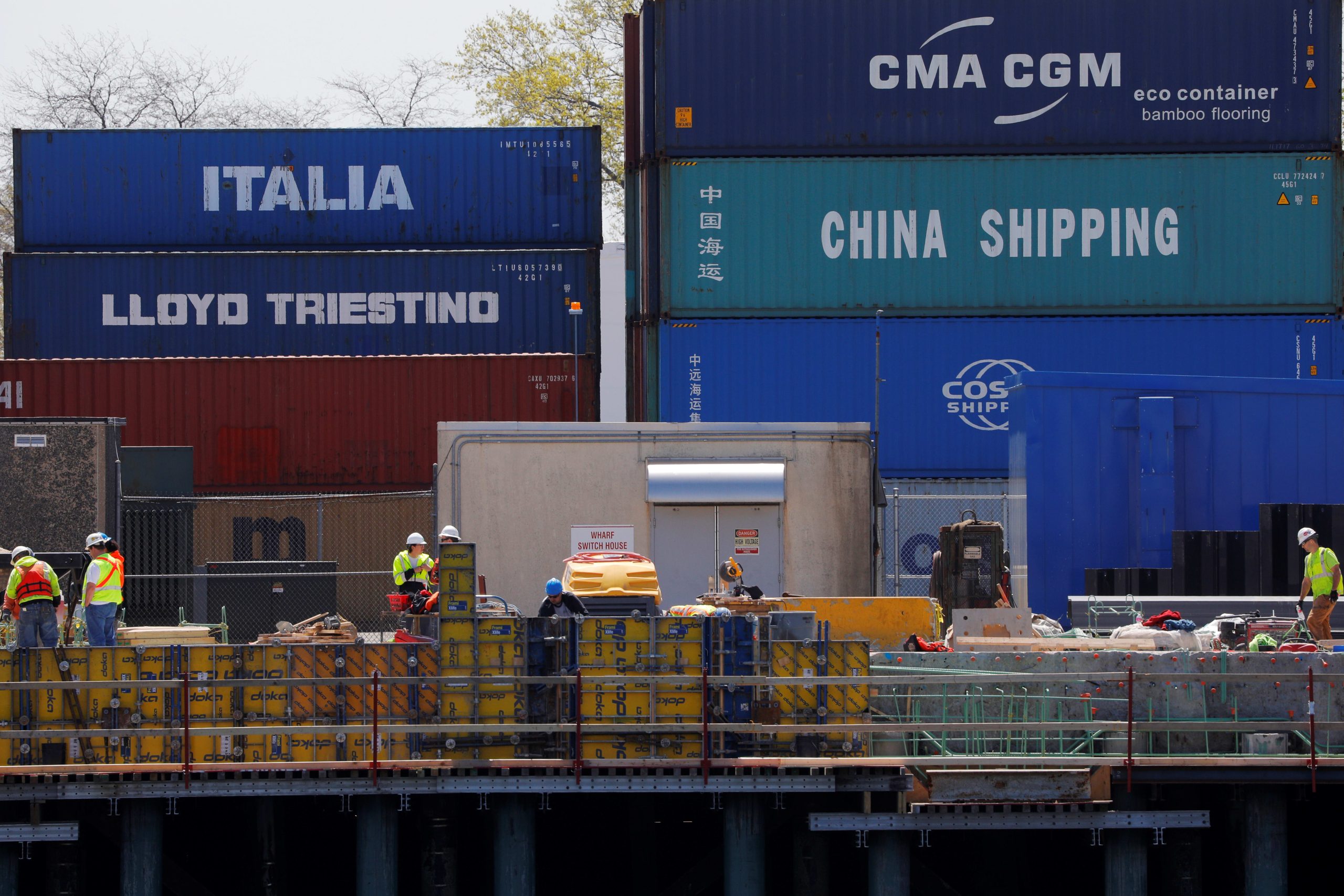
In this environment, the strategy known as Halo (“Heavy Assets, Low Obsolescence”) has been gaining ground in the market. According to Goldman Sachs, higher real interest rates in the post-pandemic period, geopolitical fragmentation and the restructuring of supply chains have shifted stock market leadership back toward companies with productive and tangible assets.
“Markets are valuing capacity, networks, infrastructure and engineering complexity—assets that are expensive to replicate and less exposed to technological obsolescence,” note strategists Guillaume Jaisson, Peter Oppenheimer, Sharon Bell and Giovanni Ferrannini of the U.S. bank.
In addition, AI has added what Goldman describes as a double pressure on equity markets, breaking the dominance of traditional sectors of the past decade, such as software, while turning some “asset-light” companies into some of the largest cash spenders. This is the case of OpenAI, which plans to invest about $600 billion in computing capacity by 2030.
In this context, a “capital-intensive” stock basket created by Goldman has outperformed its “capital-light” basket by 35% since last year, “as the amount of tangible assets has become a determining factor for valuations and stock returns,” the strategists say.
The model was originally designed for European equities. In the “capital-intensive” classification are companies from the utilities, basic resources and industrial sectors, as well as airlines, defense, transportation, luxury and certain consumer subsectors. The “capital-light” classification includes stocks from the software, media, internet and services sectors.
For Goldman Sachs, diversification into these sectors—although the short-term rotation has been sharp—is not yet excessive. “Long-term positioning suggests room for further investment.”
The initiative has also reached the Brazilian market, and the equity team at Santander Brasil believes the global movement is likely to benefit the local stock exchange, where many leading companies align with the characteristics sought by foreign investors.
“The question is no longer who benefits from AI—but who can be disrupted by it. Investors are now testing the survival and durability of competitive advantages,” wrote the Santander team led by Aline Cardoso. “We are already seeing early signs of a rotation from digital to physical.”
According to Santander, the movement is also becoming a geographic story. “AI is commodity-intensive—energy, copper, infrastructure—which favors emerging markets,” the team says. In a ranking based on adherence to Halo characteristics, the Ibovespa would trail only stocks in Taiwan and South Korea.
The team also created a “Halo basket” for Brazilian equities with ten names that, in the bank’s assessment, combine a high base of tangible assets, low obsolescence, operational momentum and valuations with upside potential. The basket includes Axia, Copasa, Orizon, Brava Energia, Prio, Cyrela, Direcional, Telefônica Brasil, Aura Minerals and Vale.