Amid a growing need for mental health care services, a complex puzzle exists – how to reduce barriers to care, so people get support they need when and where they need it. Counseling Service of Addison County (CSAC), a nonprofit community-based agency, and part of the Vermont Care Partners (VCP) network, has been growing an adult mental health internship program for students pursuing their master’s degree in counseling, psychology and social work. The program has two primary benefits: it expands access to care by connecting people quickly to support, and it provides emerging clinicians with structured training, close supervision, and a well-rounded introduction to community mental health.
CSAC’s embedded interns work within other community agencies like Charter House Coalition, H.O.P.E. (Helping Overcome Poverty’s Effects), and Helen Porter Nursing and Rehabilitation. All interns are closely supervised by licensed clinicians and operate within clearly defined scopes of practice, with structured supervision, risk assessment protocols, and pathways for escalation to licensed staff when needed. While CSAC contracts with Helen Porter Nursing and Rehabilitation to provide embedded clinical interns, offerings at Charter House Coalition and H.O.P.E. are funded through a Department of Substance Use (DSU) outreach grant, the purpose of which is to reach individuals with significant barriers to accessing care.
Barriers delay or impede access to care
In 2025, CSAC conducted a Community Needs Assessment, gathering input from clients and families, community members, and partner organizations along with secondary data to better understand how to serve the community. Findings highlighted several barriers that prevent individuals from accessing mental health support. One of the most significant: the traditional medical model of care, which relies on making and attending scheduled appointments. Other common barriers include lack of transportation, time and cost constraints (such as taking time off work, arranging childcare, or paying for fuel), distrust of the healthcare system, and perceived stigma around seeking support.
This model takes a different approach. It prioritizes engagement and relationship-building rather than formal treatment, offering low-barrier support that can transition into clinical services when desired. Rather than relying on individuals to seek out care, it brings mental health support into trusted community settings and builds relationships first.
Getting support should be easy
CSAC’s innovative embedded intern program brings support directly to spaces and places that community members already frequent. The interns’ consistent presence in everyday community settings also normalizes asking for help and reduces stigma over time. Individuals who might be averse to seeking mental health care due to fear or shame and perceived stigma feel greater comfort and safety when they recognize the person offering support. “We hope to reach people who might not otherwise consider therapy an option,” says Lea Calderon Guthe, CSAC Adult Mental Health Clinician and Internship Coordinator. She first envisioned an internship program with an outreach component in 2022 as she saw an opportunity to connect consistent supply-regular applications from students seeking an internship – to consistent demand: both the waitlist for individual therapy and reports from community partners that their guests and patients were not even making it to the CSAC waitlist. The program also serves as a workforce development pipeline, preparing graduate students for careers in community mental health and increasing the likelihood they remain in the field.
Good outreach and relationship building means being available and sitting with people for long periods of time – this is incredibly beneficial for people who need or might benefit from support, but who aren’t necessarily seeking mental health services. Embedded interns offer the rare combination of schedule flexibility, more time, skilled presence, and a quick connection to more services at CSAC if desired.
“We know relationship development takes time, and you can’t necessarily get there in a 55-minute appointment. Our interns are people who are good at talking about hard things, and talking about the hard things is good for you! As people engage with our clinical interns, they experience increased comfort with having hard conversations and find that the process can be helpful. It’s like Physical Therapy – it might be painful and hard initially, but if you can take the time, it works and you feel better.” – Lea Calderon Guthe, LICSW, CSAC Adult Mental Health Clinician and Adult Mental Health Clinical Intern Coordinator
Charter House Coalition
Outreach to the Charter House Coalition (Charter House), which provides safe, temporary housing, housing case management and meals for adults experiencing homelessness, began in 2018 as the brainchild of CSAC’s former Adult Stabilization Program. Though the Adult Stabilization Program ended, this outreach continued intermittently until the new internship program formally incorporated it in 2022.
Embedded interns at Charter House quickly connect clients to critical services and offer support and consultation to community partner staff. At Charter House, up to three CSAC interns each conduct weekly 4-hour shifts. They provide crucial capacity for proactive outreach and assessment when appointment-based services might present major barriers (due to lack of transportation, changing phone numbers). This can look like a moment of support, a conversation during a difficult time, or something more ongoing. In FY 2025, six interns provided 461 hours of outreach and mental health support to Charter House guests.
“The coolest part about the intern outreach is that no one even realizes it’s happening. There’s something about stepping through the walls of an office building where connection opportunities are lost. With the outreach you have organic moments where you find yourself building trust in a less formal way. It’s a huge win to get more of that in our community.” – Heidi Lacey, ED, Charter House Coalition

Elizabeth Ganley and Maizy Shepard, CSAC Adult Outpatient Clinical Interns, spend one morning and afternoon respectively at Charter House weekly.
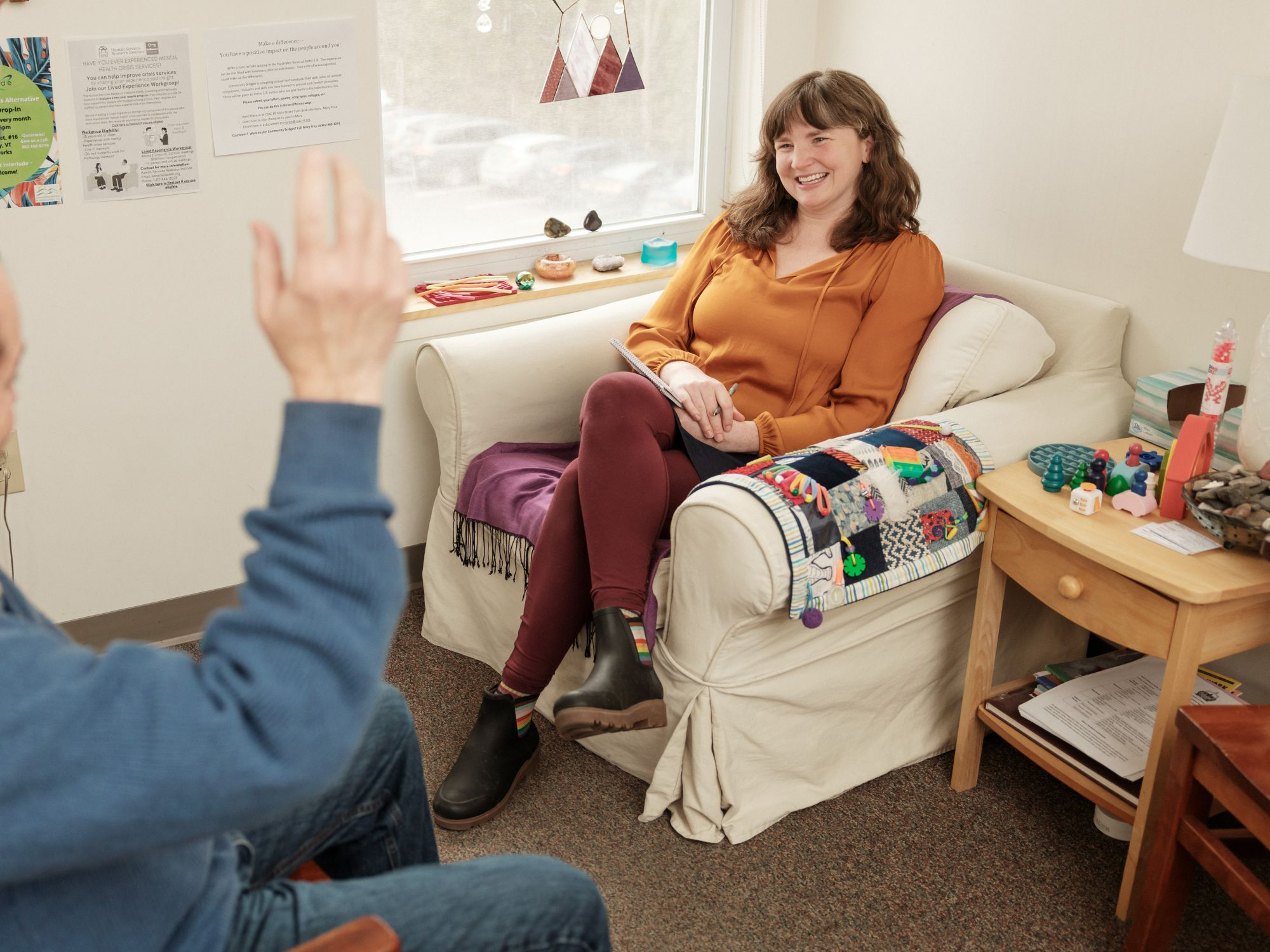
Ganley attends staff meetings and consults with staff around any questions or support they might need. She also provides guests with 1:1 individual counseling appointments onsite. She sees an important part of her time there as relationship building. Ganley often spends time in the common space, just connecting and sharing conversation. If people seek counseling, they can start with her. Ganley can either do the whole intake process and counseling onsite or connect individuals to counseling at CSAC’s offices if they’d like. She shares, “We want to provide options and see what feels best to each individual.” If someone is hesitant to access counseling for whatever reason, being present and a known familiar presence, connecting human to human, can in itself be supportive to individuals; and it builds trust should they ever decide they want further support.
CSAC mental health interns also make connecting to therapy a little less intimidating:
“Sometimes seeking therapy can feel daunting. Being able to sit down with someone in their space where they are already comfortable can help make conversation and human connection a bit easier. This program is an amazing opportunity for interns to be of service to the community.” – Elizabeth Ganley, CSAC Adult Outpatient Clinical Intern
Shepard similarly spends time with guests in the home’s common areas, doing activities and learning about their interests. She also checks in with guests and staff each week to see if anyone wants to connect via 1:1 counseling.
“Good conversations come from what we’re watching on t.v., what book an individual is currently reading, or doing a puzzle. Those all spark conversations about individuals’ interests and what’s going on in their lives. This connection has been wonderful,” shares Shepard.
The cohesive environment at Charter House has struck Shepard – including beautiful moments of warmth, banter, friendliness and micro connections. Guests at Charter House are navigating varied experiences and barriers – Shepard finds being present and sharing a meal, talking or doing an activity together is foundational. She reflects, “It’s so important to create relationships first and get to know individuals. It’s important to listen and recognize what feels supportive to people and what they want to pursue rather than come having a preconceived notion of what could help. Being flexible and adaptable in support is what’s most helpful to individuals. This feels much stronger and more personal than transactional. I’m here if someone wants to talk about the weather or if they want to talk about resources or counseling. This has truly been an incredible opportunity.”
Partnering with Helen Porter Nursing and Rehabilitation
Helen Porter Nursing and Rehabilitation (Helen Porter) serves people dealing with life-changing injuries and medical conditions, as well as older adults. CSAC’s three embedded clinical interns at Helen Porter have filled a need – clients who would otherwise not have been able to access mental health care can now receive mental health visits, support and therapy while still inpatient. Interns support the recovery and grieving process for stroke survivors, patients healing from traumatic accidents and many others, in addition to older adults needing nursing home level care. This partnership is pilot program to have embedded services and offer supports for clients to meet with individuals 1:1 if they need it. Interns staff different days weekly and provide 1:1 appointments.
In addition to seeing clients individually at Helen Porter, CSAC Adult Outpatient Clinical Intern Berta Enright spends time building relationships and getting to know people in the dining room and occasionally doing activities (like nail painting) in a shared space.
Enright shares: “CSAC is broadening the lens of how we reach out to our community and reaching people who may not be able to come in for services.”
Drop-in hours at H.O.P.E.
At H.O.P.E. (Helping Overcome Poverty’s Effects), a Middlebury nonprofit offering a broad range of poverty-relief services including a food shelf, financial assistance and support services, CSAC Adult Outpatient Clinical Intern Michael Donnachie offers casual drop-in hours on Thursdays. The concept sprung forth from conversations between H.O.P.E. Executive Director Jeanne Montross and CSAC’s Calderon-Guthe, after a few years’ agency conversations finding a path to make counseling more accessible to H.O.P.E. clients. Initiated in February this year, it is the newest partnership to CSAC’s embedded internship program.
My staff ask clients ‘do you just wish you could sit down with someone and have them really listen to you?’ People who come by for food, for a shower, a clothing voucher can stop in and talk with Michael while they’re here.” – H.O.P.E. Executive Director Jeanne Montross describes drop-in hours to chat with CSAC embedded intern.

Donnachie spends time in H.O.P.E.’s conference room off the lobby and is working to increase his visibility. He has a flier up in the food pantry and H.O.P.E. case workers are telling clients about his availability. Donnachie is there to listen and offer support. It took a little time for people to start to engage with him, and people are starting to drop in: some are curious about why he is there; others want to simply get something off their chest. There is no intake process, individuals aren’t required to share their names, and the service is free/no insurance needed. There is no pressure or expectation for individuals to become a CSAC client, but if someone does want to start therapy at CSAC, Donnachie can conduct an intake right there at H.O.P.E. and expedite the process.
Montross likes the informal offering Donnachie’s drop in hours provides – there’s no stigma, no sitting and filling out an application or intake forms, no waiting list, no going to an office. She shares “Many people we work with could use this in their lives. There’s a link between poverty and stress and trauma and having someone to listen is very helpful.”
“The connections I’ve made have felt good and positive, and I hope that this can continue. I envision that as more people learn about it, people will feel more likely to stop in and make a connection.” – Michael Donnachie, CSAC Adult Outpatient Clinical Intern
Overall, CSAC’s embedded internship program breaks down barriers to care, reaching individuals who might otherwise go without needed support, and CSAC is exploring expansion of this model to additional community sites. It delivers a powerful dual impact: emerging clinicians gain experience with close supervision from experienced professionals at a deeply established community mental health agency, and individuals receive timely, flexible and accessible support and care – on their terms, when they need it most.
What you can do
If you or someone you know needs help, please reach out.
CSAC Main Line: 802.388.6751, www.csac-vt.org
CSAC 24/7 Emergency & Crisis Services: (802) 388-7641
Statewide Call/Text: 988 from anywhere
More about Counseling Service of Addison County (CSAC)
CSAC offers a variety of services to support maximum well-being for individuals and a thriving community including adult mental health, developmental services for adults with intellectual and developmental disabilities, youth and family services, substance use services, Interlude adult mental health urgent care and 24/7 emergency & crisis services. CSAC serves nearly 2,000 individuals annually.
CSAC’s Adult Mental Health Services supports adults with office-based therapy and psychiatry, group counseling, emergency and crisis services, mobile crisis services, recovery and wellness services, employment services, residential consultation and support, and more. Across all CSAC’s programming including Adult Mental Health, Youth and Family, Developmental, 24/7 Emergency and Crisis and Substance Use Services, CSAC served 1,864 individuals in FY 2025.
Written by Counseling Service of Addison County.

Counseling Service of Addison County (CSAC)
By offering comprehensive services and supports for social and emotional well-being, CSAC helps nurture communities where individuals and families thrive.
CSAC envisions a compassionate and resilient community that honors everyone’s full potential. Follow us on Facebook, sign up for our e-newsletter, or donate today.
89 Main St., Middlebury, VT, 802-388-6751
24/7 Emergency & Crisis Services, 802-388-7641

A United Way of Addison County Funded Agency
This article is part of a series, collaboratively produced by members of Vermont Care Partners, a statewide network of sixteen non-profit, community-based agencies providing mental health, substance use, and intellectual and developmental disability supports.Vermont Care Partner Network agencies host a wide variety of internships. From supporting associate level to doctorate level students, there is an amazing amount of opportunity available for most students who need some sort of fieldwork towards their degree. See the VCP Network Internship Summary Handbook to learn more about internship programs across the state.