Lebanon has been hit by more than 100 attacks on healthcare workers and services during the war with Israel, according to the World Health Organisation.
Hospitals, ambulances, and health workers have all been targeted, the WHO said, resulting in at least 57 deaths and 158 injuries so far.
In an update earlier this week, the WHO said it has so far verified 106 such attacks in Lebanon, 23 in Iran, and 6 in Israel. In Lebanon “attacks on healthcare continue at a high rate, averaging approximately 2.9 incidents per day over the past 37 days”, the organisation added.
Those numbers could potentially now be even higher, as Israel launched its bigger ever strikes on Lebanon after the figures were published. More than 250 people were killed in those attacks on Wednesday, Lebanese authorities said, which took place after a US-Iran ceasefire was announced.

First responders rush to the site of an Israeli airstrike that targeted the Lebanese State Security Center, in the Southern Lebanese city of Nabatieh on Friday (AFP via Getty Images)
“Paramedics and civil defense personnel have reportedly been injured or killed while responding tocasualties, including cases where teams were struck during repeated attacks on the same locations,” the WHO said.
“Ambulances and emergency responders continue to be exposed to both direct and indirect fire, undermining their ability to reach the wounded and carry out lifesaving evacuations, and leaving the injured with diminishing chances of survival.”
The WHO defines an attack as “any act of verbal or physical violence, threat of violence, or otherpsychological violence, or obstruction that interferes with the availability, access, and delivery of curative and/or preventive health services.”
Israel is expected to open peace talks with Lebanon next week, after a two week ceasefire with Iran was agreed separately.

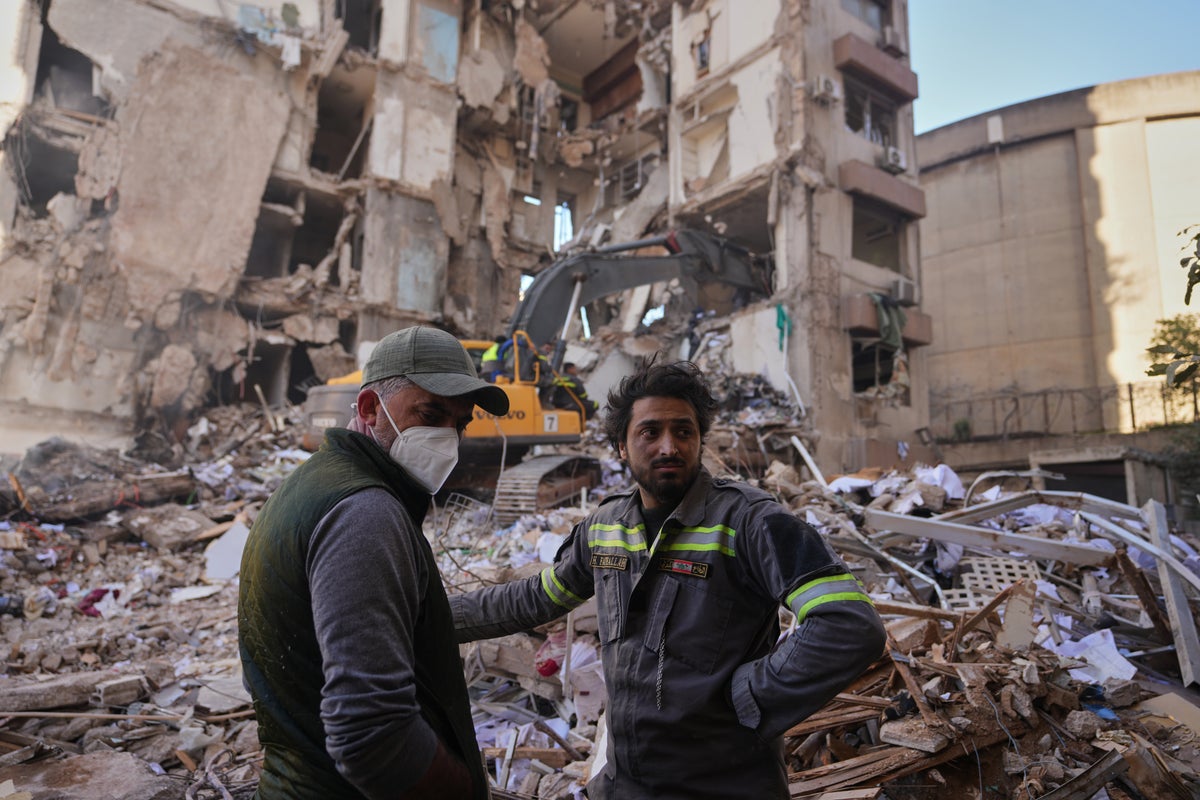
APTOPIX Lebanon Israel Iran War (Copyright 2026 The Associated Press. All rights reserved)
The WHO warned that while there has been a reprieve in Iran, there has not been one in Lebanon, and the ceasefire will not address the challenges facing healthcare and humanitarian access in the Middle East.
It said the rise in attacks on healthcare had been particularly pronounced in Lebanon, with attacks affectinghospitals, ambulances, and health workers warned that access to primary healthcare in shelters is “limited and uneven.”
The report from the WHO said on 2 April, the Pasteur Institute of Iran, a leading global public health institution, was severely damaged.
“Iran says that their strategic reserves of medicines remain adequate and imports of essential medicines will be sustained following reported attacks on a major medical facility,” the report said.
“Damage to and contamination of water infrastructure poses a particular risk in Iran, which is already facing one of the world’s most severe water crises.
“Power plant strikes are increasing the risk for disruption of health services, in particular for dialysis and chemotherapy patients.”

(AFP/Getty)
The WHO said Iran’s Ministry of Health reported numerous incidents of people seeking hospital care for traumatic stress since the escalation.
Following the major strikes on Wednesday, Israeli military spokesperson Lieutenant Colonel Nadav Shoshani told The Independent that the military was bombing Hezbollah and Iranian military infrastructure.
“In Lebanon, we are continuing our operations against Hezbollah. That’s the current situation right now, in the current guidance we’ve received [from the political echelon],” he said.
“We have different plans for different scenarios. As of now, the mission remains to push back [Hezbollah] and keep degrading it.”
A report from Alzejeera suggested US president Donald Trump had asked Israeli Prime Minister Benjamin Netanyahu to scale back the ongoing bombardment, warning that continued strikes could undermine the fragile ceasefire between the US and Iran.
High-stakes talks between the US and Iran began on Saturday in Pakistan, led by US Vice President JD Vance Iran parliamentary speaker Mohammad Baqer Qalibaf.