We may receive a commission on purchases made from links.
The 1970s were a fascinating time for the everyman investor. It was the decade that introduced the index fund, one of those ideas that everyone wonders why they didn’t think of it. It made investing something the average person could do without the need to consult an expert.
Index funds also helped achieve a diversified portfolio, another concept that more investors were beginning to embrace. Beginners were learning to accept risk and prepare for it by lining their portfolios with a variety of assets. The everyday investor was even learning about the psychology underpinning the actions of people who succeed or fail on Wall Street. The curtain was coming down on the old investing world, where few knew the secrets of wise investing. During the 1970s, information about smarter ways to play the stock market was reaching the masses.
A distinguished group of brilliant economists was responsible for disseminating that knowledge. Some represent the faculty of famous universities and the leadership of top investment groups. Several have bestsellers and groundbreaking articles to their credit. Four even have Nobel Prizes. But these achievements wouldn’t mean much to you if their thinking were now outdated. It isn’t. They ushered in a new era of investing where their theories and breakthroughs formed the basis of modern investing. If you want to build a well-balanced portfolio delivering excellent returns, there’s no better place to start than with the advice given by the 1970s finance gurus on our list.
1. John Bogle
Few people in modern history have introduced innovations that have overthrown conventional thinking and forever altered the way people approach problems. One such person was John Bogle. Bogle founded The Vanguard Group and created in 1976 the world’s first mutual index fund. This revolutionized the way people invest in the stock market and is the foundation of the typical investment portfolio today. Anyone’s list of the best tips for investing in stocks as a beginner usually includes taking advantage of index funds.
Prior to Bogle, mutual funds had existed, but not index funds. Using mutual funds, a person can invest in multiple companies, rather than having to obtain individual stocks for each company. The mutual fund also eliminates the need to be an expert stock picker because the stocks in a mutual fund have already been vetted by an expert, the fund’s manager.
However, Bogle knew that it was difficult for anyone, regardless of experience, to consistently choose a bundle of stocks that outperform the market. So, Bogle’s idea was to match the market by creating a mutual fund loaded with stocks that mimicked the market. As the market moved, so would move the index fund. The advantage of an index fund shadowing the market is that it’s a much safer investment. In the long run, the market tends to trend upward, so an index fund stands to make more money for the typical investor than individual stock picking can.
2. Burton G. Malkiel
Burton G. Malkiel was already established in the world of finance before becoming known to the general population in 1977 with the publication of his classic book “A Random Walk Down Wall Street.” The gist of the book is that the price changes affecting a stock are as random as the path of someone meandering without a specific destination. That line of reasoning is known as the random walk hypothesis. The random walk hypothesis proposes that the unpredictability of prices makes it nearly impossible to consistently outperform the market by investing in individually selected stocks.
Malkiel also wasn’t impressed with the results of grouping several well-researched stocks into a mutual fund. Having a mutual fund managed by a seasoned Wall Street stock picker still didn’t guarantee that the fund would at least match the market, much less beat it.
An investor would have to choose funds that happen to have the correct stocks in their portfolio to beat the market this year. Then the investor would have to repeat the selection process again the next year. But since not all funds match or beat the market, it’s only logical that the investor would soon pick the wrong fund and lose money. This reasoning lent weight to the argument in favor of the passive index fund, which makes it easy to match the market’s performance without devoting countless hours to research. Nowadays, an actively managed fund is one of those things savvy investors always refuse to buy.
3. Benjamin Graham
If you’re wondering who was the primary influence on Warren Buffett, look no further than Benjamin Graham. Graham, already a successful investor, began teaching at his alma mater, New York’s Columbia University, in 1928. Buffett took his classes in 1954 and 1955, then began working at Graham’s company. Buffett was so taken with his mentor that he named his son after him. Graham advocated searching for well-run companies that are ignored by other investors.
By the 1970s, Graham was enjoying his retirement. However, in 1973, he took the time to update the fourth edition of his classic book, “The Intelligent Investor.” He also spent his time working on his autobiography and communicating with former students, like Buffett, who wanted to discuss his investment philosophy. Meanwhile, Buffett was spreading the message of Graham’s investment approach through his investment company, Berkshire Hathaway, which he had acquired in 1965.
Graham advocated investing in large, historically stable companies. Typically, these companies would have minimal debt and consistent revenue. Preferably, they would also have a track record of paying reliable dividends. It’s difficult for a struggling company to pay its investors dividends year after year without either shrinking the size of the dividends or eventually eliminating them. Profitable companies had to pass Graham’s price requirement–their stock had to be undervalued. In other words, Graham instructed investors to find the best companies and then select those with discounted stock.
4. Warren Buffett
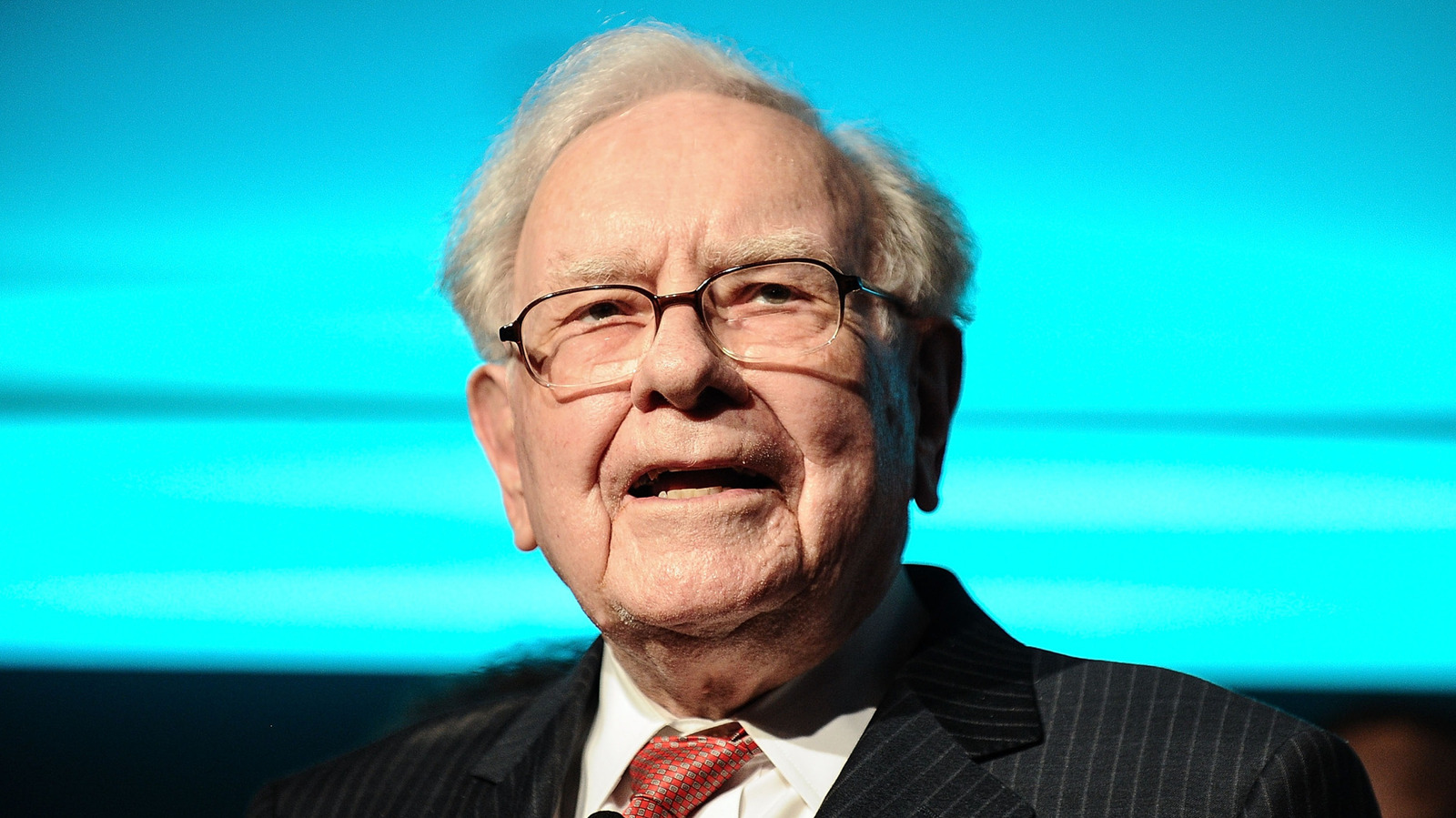
Warren Buffett may be the only professional investor the average person can name. To say Buffett’s smartest investments made him millions is an understatement. According to the Bloomberg Billionaire Index, Buffett is personally worth more than $140 billion. Buffett is probably the best-known advocate of buying stock in a good company and then holding it for the long run. His investment style requires research and patience.
Buffett recommends hunting for underappreciated stocks of overlooked companies. Sometimes these may be companies experiencing difficult times, while in other cases, it may be businesses that are in rather dull, unexciting fields. Many inexperienced investors will skip these companies and instead gravitate toward big-name businesses enjoying record sales. However, it’s crucial that you only invest in companies with solid management teams and excellent prospects. This approach is known as value investing. Look no further than Buffett’s investment group, Berkshire Hathaway, for examples of value investing in action. The group has recorded returns of over 19% for more than 60 years. Berkshire Hathaway’s investment portfolio includes such reliable companies as American Express and Coca-Cola.
As the head of Berkshire Hathaway, Buffett wrote annual letters to his investors throughout the 1970s explaining this approach. The letters were not written in academic language with difficult-to-understand economic words and phrases. They were written in everyday speech as if it were one ordinary person conversing with another. These letters created the groundwork for greater acceptance of the value investing approach.
5. Eugene Fama
The research of Nobel Prize-winning economist Eugene Fama convinced him that even experts can’t accurately predict individual stock price moves in the short term, so it’s best to simply invest in a broad spectrum of companies. Fama maintained that any new information that would affect how a company should be viewed is absorbed into its price quicker than an investor can research and react. Therefore, speculative stock pickers were always at a disadvantage.
In 1970, Fama published the influential paper “Efficient Capital Markets: A Review of Theory and Empirical Work.” Two years later, he co-authored the book “The Theory of Finance.” Throughout the early 1970s, Fama authored several academic papers that were collected into a 1976 volume titled “Foundations of Finance: Portfolio Decisions and Security Prices.” Fama’s prolific writing output helped spread the word about the efficient market hypothesis.
The efficient market hypothesis promotes the idea that passive investing is better than active investing. A key tool of passive investing is the use of a comprehensive mutual fund, such as an index fund, that contains a representative sampling of the market. Index funds are considered one of the best compound interest investments you can make. Passive investing is akin to a set-it-and-forget-it approach to money management. Conversely, active fund managers have to regularly analyze their stock choices to determine if their current performance merits their inclusion in the portfolio.
6. Harry Markowitz
Harry Markowitz is known as the progenitor of the modern portfolio theory. Markowitz promoted the idea of using a diverse portfolio to minimize exposure to risk. Diversification is one of the strategies the world’s wealthiest people have in common. Previously, it was common for the everyday investor to select the stock of a company most likely to offer a favorable return and then hope for the best. Markowitz refused to settle for making gut assumptions about the risk an investment held. He pioneered a methodology for calculating probable risk based on a number of factors, including the company’s history of returns.
However, because risk is unavoidable Markowitz advanced the concept that a smart portfolio able to weather a financial storm must be diversified, containing assets that tend to move in opposite directions. For example, some people like investing in gold for protection during inflation. A carefully weighted portfolio containing a mixture of asset classes would never plummet in value like a single-asset portfolio.
The caveat is that returns are also counterweighted. When one asset class is soaring in price, the other would experience a downturn. However, the opposing classes would never completely cancel each other if the portfolio is skillfully constructed to suit current market conditions. Markowitz’s basic ideas are readily accepted today when portfolio strategy is discussed. His thoughts are outlined in his seminal 1959 book, “Portfolio Selection: Efficient Diversification of Investments,” which was reprinted in 1970.
7. Paul Samuelson
Paul Samuelson was a 1970 Nobel Prize-winner who promoted the idea that everything that could affect the price of a stock was already factored into its price. This thinking became known as the efficient market hypothesis. On the assumption that the efficient market hypothesis was valid, Samuelson argued that it was a waste of time for investors to try to regularly beat the market. This includes seasoned pros working as the managers of mutual funds.
Samuelson thought the logical approach involved creating a special fund that deliberately tracked the market. In other words, it didn’t try to actively beat the market but to passively mirror it. It was Samuelson’s writings, specifically a 1974 article entitled “Challenge to Judgment,” that prompted John Bogle to create the first index fund. Bogle became convinced that since it’s impossible for an investor to consistently beat the market, he might as well invest in the market itself. His thinking caught on.
That 1974 article wasn’t the first or last of Samuelson’s writings to have an impact on investing and the world of economics. In 1948, he published the book “Economics,” which has continued in print. Notably, it was republished twice in the 1970s. The ninth edition came out in 1973, while the 10th appeared in 1976. During that decade, his columns also appeared regularly in Newsweek.
8. Daniel Kahneman and Amos Tversky
Daniel Kahneman and Amos Tversky created a branch of economics called prospect theory, which explores how humans make decisions when risk is involved. The pair published their ideas in 1979 in an article entitled “Prospect Theory: An Analysis of Decisions Under Risk.” The theory posits that there’s more to making a choice than selecting an option. It’s also necessary to consider how the option originated. For example, are the options you give yourself regarding investment choices the result of certain biases?
An example of their exploration of decision-making is their famous 1972 experiment. Participants were told a brief story about a fictional woman named Linda. They were told about Linda’s educational background and her concern for social issues. Then they were asked to rank the probability of certain statements being true. One of the choices was that Linda is a bank teller, while another option was that Linda is a bank teller and a feminist. More people thought it probable that Linda was both a teller and a feminist than thought Linda was simply a teller. However, logic dictates that the simpler the answer, the more likely it is to be true. People allowed their rationality to be hijacked by their preconceived ideas. Kahneman and Tversky maintained that similar illogic prevails when investors enter the market. Kahneman is also the author of the 2011 bestselling book “Thinking, Fast and Slow,” which brought his research to a younger and wider audience.
9. George Goodman aka Adam Smith
One of the biggest books of the late 1960s was “The Money Game” in 1968, written by George Goodman under his pseudonym Adam Smith. Then, in 1976, he published a follow-up to “The Money Game” called “Supermoney.” Goodman is credited with reducing complex economic theories into simple language using storytelling devices. His books on investing made the market more accessible to the beginner. That helps explain why “The Money Game” was a bestseller for more than 12 months. Investing legend Paul Samuelson gave it thumbs up, calling it a modern classic. Goodman continued to write about finance during the 1970s with his column in New York Magazine, a publication he helped found.
Goodman’s goal was to pull back the curtain on the world of investing to make it less mysterious. He also wanted to show that successful investing has less to do with making seemingly rational, scientifically based decisions but more to do with playing a game. The key to winning was viewing yourself as objectively as possible to detect flaws that could be exploited by the game of investing. The mature individuals stood a better chance of winning because they were less likely to be blinded by emotion, which is one of those consequential investment traps that could cost you. According to Goodman, if the game is played correctly by responsible adults, investing should be nothing less than boring. Conversely, Goodman saw investing as too dangerous for those with a weakness for gambling.
10. Philip Fisher
Warren Buffett credits Philip Fisher with helping shape his approach to investing. Buffett said that 85% of the investment approach used by his firm, Berkshire Hathaway, should be credited to the teachings of Benjamin Graham and the remaining 15% to Fisher. While Graham promoted growth investing, Fisher emphasized combining growth investing with rigorous stock selection. His insights were captured in his 1958 masterwork, the book “Common Stocks and Uncommon Profits and Other Writings,” which was reprinted in the 1970s.
In his book, Fisher advised investors to look for more in a company than just its current success. He laid out a list of 15 rules for stock picking. He said to look for companies that have products that promise sales for the next several years. This rule eliminates super-trendy businesses that rely on fads. According to Fisher, you can sniff out these kinds of businesses by hearing what vendors and customers have to say. If they’re not impressed with the company or its products, be on guard. The company’s current success is likely to be short-lived.
Fisher also promoted the idea of looking for companies devoted to research and development in the pursuit of remaining a key player in their industries through continual innovation. The companies needed a workable plan to maintain any current market edge they enjoyed. Fisher’s insistence on selecting stocks only after much research is evident in his book dedication. He dedicated the book to investors who refuse to make up their minds before hearing the facts.