
As the world’s largest asset manager, BlackRock plays a central role in global financial markets.
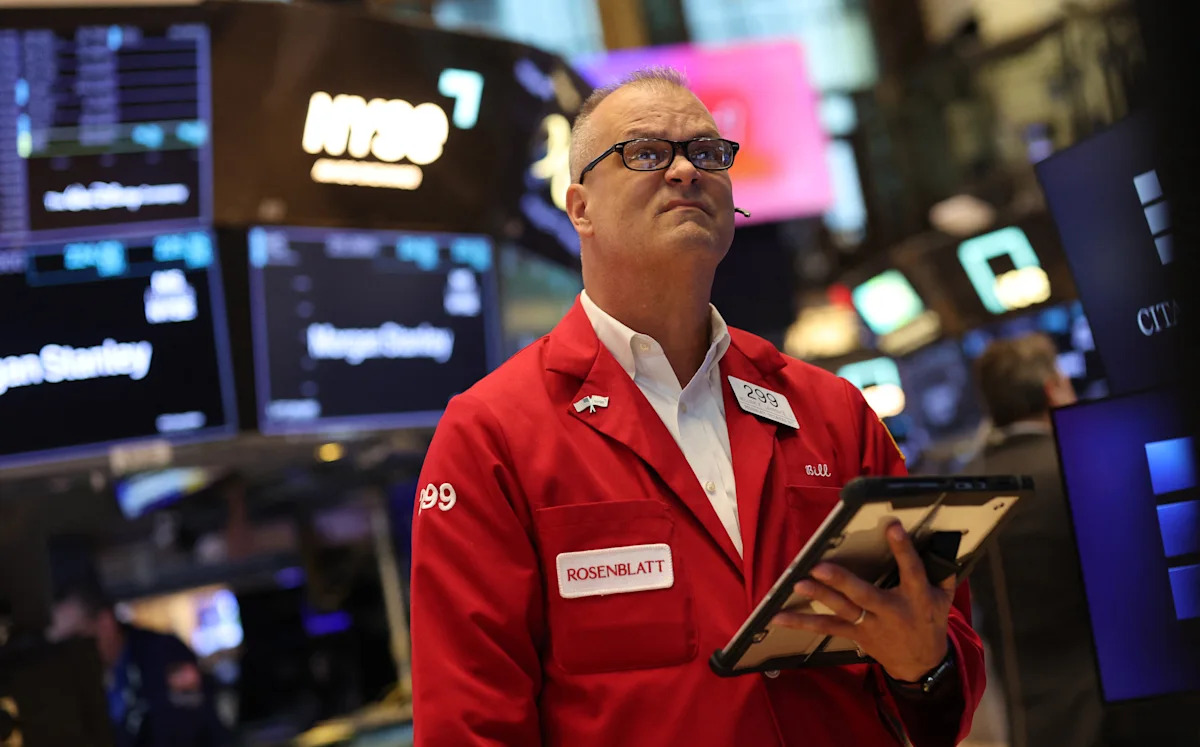
© Michael M. Santiago/Getty Images
BlackRock, Inc. is the world’s largest asset manager. Headquartered in New York City, it manages more than $14 trillion in assets as of 2025. Its closest competitors are Vanguard, with roughly $12 trillion in assets under management, and Fidelity Investments, with about $6.8 trillion.
Founding and early growth
BlackRock was founded in 1988 when private equity firm Blackstone Group hired Larry Fink, then a mortgage bond trader at First Boston, to create and lead a fixed-income asset management business. Blackstone provided Fink and seven partners with a $5 million loan and took a 50% stake in the new subsidiary, which was named Blackstone Financial Management.
The firm specialized in bond investing and used proprietary technology to analyze and manage risk. Within six years, it was managing $23 billion and had about 150 employees.
In 1994, the Fink-led unit separated from Blackstone and was sold to PNC Financial Services for $240 million. It adopted the name BlackRock after the split. Fink remained chief executive officer, became chair in 1998, and led the company through its initial public offering in 1999.
Early focus on risk management
Fink and his partners made risk management a core principle of the firm, shaped in part by Fink’s earlier experience at First Boston, where his team lost about $100 million in 1986 after an unexpected drop in interest rates, overwhelming the positions his team had put in place to limit losses.
To better understand risk throughout its business, BlackRock began developing internal systems in its early years to analyze mortgage-backed securities and other fixed-income investments—initially running on a single Sun Microsystems workstation tucked between a coffee maker and refrigerator. Those efforts evolved into Aladdin, short for asset, liability, debt, and derivative investment network.
By 1999, BlackRock had begun licensing the software to external clients. Demand accelerated after the 2007–08 financial crisis, as money managers sought more sophisticated risk analysis tools. The platform has been adopted by more than 200 financial and nonfinancial companies, including technology sector companies such as Microsoft (MSFT), Google parent Alphabet (GOOGL), and Apple (AAPL).
Expansion through acquisitions
The mid-2000s marked a period of rapid growth as BlackRock expanded through a series of acquisitions from 2004 to 2007, including:
- State Street Research and Management to strengthen its equities capabilities
- Merrill Lynch Investment Managers to expand its retail distribution and international presence
- Quellos Group to add alternative investment strategies
The most significant deal was the 2009 acquisition of Barclays Global Investors, which brought the iShares ETF business to BlackRock. It helped establish the firm as a dominant ETF provider just as the industry was beginning to grow and positioned BlackRock to become the world’s largest asset manager.
As part of a push into private markets, BlackRock acquired major infrastructure investor Global Infrastructure Partners in 2024 and leading private credit manager HPS Investment Partners in 2025. The moves reflected the growing importance of private credit in corporate financing in the 2020s.
Business lines and strategy
BlackRock’s operations fall into four main categories:
As of 2025, BlackRock’s iShares ETFs accounted for about $5 trillion of the $19 trillion ETF market, while its original fixed-income business held more than $1.5 trillion in actively managed assets.
BlackRock has promoted efforts to make it easier for individuals to invest in private markets through new types of funds.
Scrutiny and criticism of BlackRock
A company of BlackRock’s size and influence isn’t without its critics. The dominance of its Aladdin software has raised concerns that any disruption could destabilize the financial system. Critics have also questioned the role of large asset managers in passive investing. Because most index funds are weighted by market capitalization, they can concentrate ownership in the largest companies and potentially amplify market swings.
BlackRock’s large stakes in many public companies have also raised concerns about corporate governance and stewardship. Critics argue that the concentration of ownership among index fund providers gives firms like BlackRock (and Vanguard) significant influence through proxy voting in ways that didn’t exist previously, when stock ownership was less concentrated.
BlackRock’s expansion into private markets hasn’t been without setbacks. Soon after its acquisition by BlackRock, HPS identified issues with a $400 million private loan to telecommunications entrepreneur Bankim Brahmbhatt that HPS said was backed by fraudulent invoices and emails.
HPS filed suit alleging fraud, which Brahmbhatt disputed. The episode highlighted some of the risks associated with private markets, where investments can be harder to value, less liquid, and more complex than publicly traded securities. It also underscored the challenges even large, sophisticated investors can face in private credit.
CEO Fink’s outspokenness has also drawn ire from both sides of the political divide. Through his widely followed annual letters to corporate leaders, he has weighed in on environmental, social, and governance issues. Some Republican lawmakers have accused Fink of prioritizing social concerns over financial returns, while climate activists have chided Fink for continuing to invest in fossil fuels.
Legacy and influence
From its beginnings as a bond manager, BlackRock has expanded to serve global institutions as well as individual investors saving for retirement. It has also shaped how markets are analyzed through its Aladdin technology and influenced broader debates about investing.
Its size, reach, and diverse business lines have allowed its influence to extend far beyond investment returns.