
Part 3 of a three-part series on India’s economic transformation in FY26
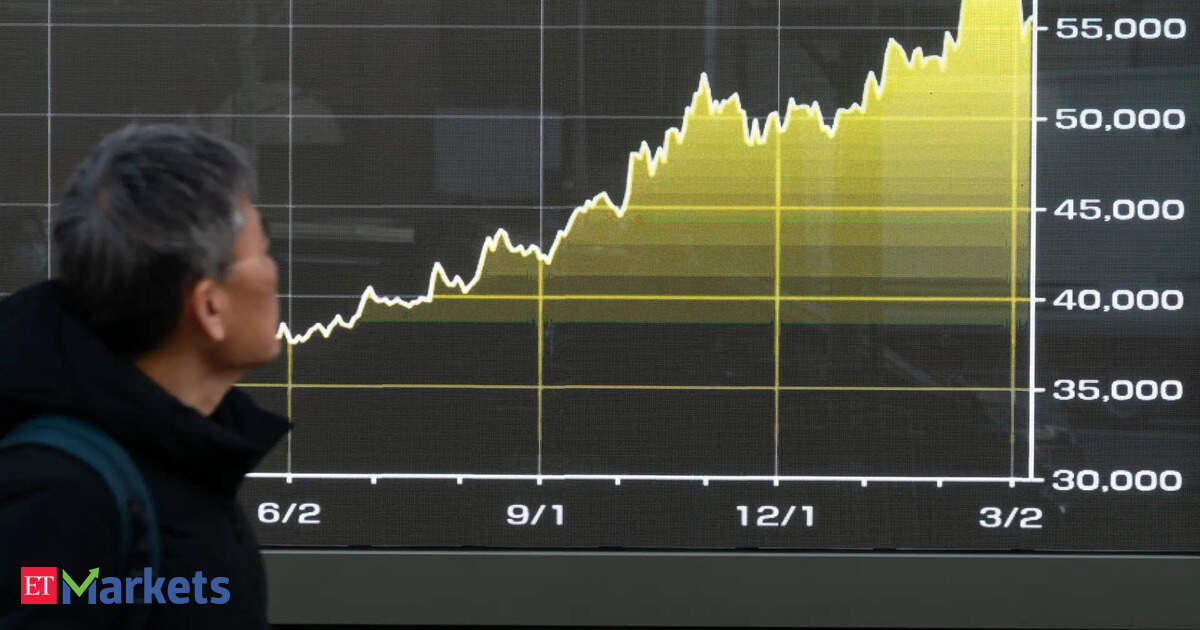
Every previous episode of sustained foreign selling in Indian equities ended the same way. In 2008, 2013, and 2018, when foreign portfolio investors headed for the exits, markets fell hard because there was no domestic counterweight of sufficient scale. In FY25-26, FPIs withdrew a record INR 1.81 lakh crore from Indian equities — surpassing even the previous year’s outflow of INR 1.27 lakh crore. Two consecutive years of the heaviest foreign selling in the market’s history. The Nifty 50 ended the fiscal year down 3.6 percent. Yet there was no crisis, no liquidity freeze, no policy rescue. There was no government intervention or central bank support. The reason was a structural change in who owns Indian equities and how household savings flow into them.
The Scale of the Shift
The numbers are stark. Total mutual fund assets under management rose from INR 65.7 lakh crore in March 2025 to INR 80.2 lakh crore by December — a 22 percent increase in nine months. Open-ended equity schemes alone held INR 35.7 lakh crore, accounting for nearly 45 percent of total industry AUM. Equity folios, individual investor accounts, grew from roughly 16.4 crore in March to 17.8 crore by December 2025, adding over a million new accounts every month through a period of acute market stress. Total mutual fund folios crossed 26.1 crore. The NSE’s registered investor base reached 11.9 crore by August 2025, exhibiting a near-fourfold increase since March 2020.
This was not speculative hot money chasing returns but a monthly, automatic, behaviourally sticky flow from salaried households, largely indifferent to headline volatility.
The engine behind these numbers was the Systematic Investment Plan. Monthly SIP contributions climbed from INR 25,926 crore in March 2025 to INR 29,529 crore by October, a record. SIP assets reached INR 16.25 lakh crore, accounting for over 20 percent of total industry AUM. Contributing SIP accounts crossed 9.45 crore. For the full nine months of April to December, net inflows into open-ended equity schemes totalled INR 2.56 lakh crore. This was not speculative hot money chasing returns but a monthly, automatic, behaviourally sticky flow from salaried households, largely indifferent to headline volatility.
Figure 1: SIP and FPI Investment Flow (FY 2025-26)

Source: Created by the author using AMFI and NSDL Data
The Stress Test
That stickiness was tested. FPI equity outflows totalled INR 1.81 lakh crore in FY26, with selling concentrated in financials and IT. The Nifty IT index fell 19.2 percent in the fiscal year, while the FMCG index fell 14.2 percent. Mid- and small-caps corrected sharply from their peaks. But domestic institutional investors, principally mutual funds flush with SIP inflows, absorbed this selling. Equity funds recorded positive net inflows for 56 consecutive months through October 2025. In July, equity fund inflows hit a record INR 42,703 crore, which was the same month the Nifty fell nearly 3 percent. The flow was counter-cyclical: retail money entered faster precisely when foreign money was leaving.
The sectoral divergence, where IT and FMCG were punished while Auto and banking were supported, reflected an equity market increasingly priced by domestic flows responding to domestic fundamentals rather than by foreign allocators responding to global risk appetite.
The market did not emerge unscathed. Export-facing sectors bore genuine damage, and the Nifty’s FY26 return was negative. But the domestic-demand sectors told a different story: Nifty Auto rose 11.9 percent, buoyed by consumption resilience and rate cuts. The sectoral divergence, where IT and FMCG were punished while Auto and banking were supported, reflected an equity market increasingly priced by domestic flows responding to domestic fundamentals rather than by foreign allocators responding to global risk appetite. That is a qualitative shift in market microstructure.
The Architecture Behind the Shift
Three institutional developments underpinned the transformation. First, it is the SIP mechanism itself that automatically makes monthly deductions, converting volatile retail sentiment into a steady, predictable flow. The average monthly SIP contribution rose from INR 16,602 crore in FY24 to INR 24,113 crore in FY25, and then past INR 29,000 crore in late 2025. The behavioural architecture is crucial here. Once set up, SIPs run on inertia, insulating the flow from day-to-day sentiment.
Second, the digital onboarding infrastructure. Aadhaar-linked e-KYC, fintech distribution platforms, and SEBI’s expansion of the mutual fund distribution network compressed the friction between savings intention and market participation. The fourfold increase in NSE-registered investors since 2020 would not have been possible without this plumbing. Third, the channelling of retirement savings. The National Pension System and EPFO’s equity ETF allocations, while still a small share of total corpus, introduced a cohort of salaried workers to equity exposure through institutional intermediaries. This normalises equity as a savings vehicle rather than a speculative one.
Unfinished Business
The transformation is real. It is also incomplete, and the risks are underexamined. The most consequential risk is distributional. As of March 2023, bank deposits accounted for 46 percent of household financial wealth, mutual funds for 9 percent, and currency for 11 percent. By March 2025, the share of mutual funds had climbed to 12 percent. The shift toward equity is overwhelmingly urban and upper-middle-class. For rural and lower-income India, savings continue to flow into gold, real estate, and bank deposits. The INR 80 lakh crore mutual fund industry is impressive in aggregate, but its social base is narrow. Extending that base into smaller towns, rural households, and lower-income savers is a regulatory priority, as is containing the speculative fringe that has grown alongside it.
Figure 2: Change in Distribution of Household Financial Stock

Source: Created by the author using RBI data
Second, the SIP flywheel has never been tested under a domestic recession. The 2025 stress test was externally driven — FPI selling amid strong GDP growth and rate cuts. SIP discontinuation rates tend to rise when NAVs decline for sustained periods. The behavioural stickiness that held through an export-sector correction may not hold through an earnings collapse that touches the domestic economy.
Financialisation and speculation are not the same thing, but in a rapid adoption phase, they coexist, and the regulatory architecture is still catching up.
Third, not all the new participation is healthy. Around 89 percent of retail traders in the equity derivatives segment lost money between 2018-19 and 2023-24, with aggregate losses surging 41 percent to INR 1.06 lakh crore. The average loss per person was INR 1.1 lakh. Financialisation and speculation are not the same thing, but in a rapid adoption phase, they coexist, and the regulatory architecture is still catching up. SEBI has mandated risk disclosures and tightened F&O contract sizes, but the scale of retail derivative losses suggests that a significant fraction of the new market participation is wealth-destroying rather than wealth-creating.
Tying the Threads
This series has traced three dimensions of India’s economic story in 2025. Part 1 showed what the macro framework could achieve under favourable conditions — near-zero inflation, aggressive monetary easing, and a credibility dividend in the form of three sovereign upgrades. Part 2 showed what happened when those conditions were withdrawn — tariff shocks, oil volatility, and a currency under pressure, with classical adjustment mechanisms working only partially. This final piece examines the domestic financial architecture that held the system together through both.
The common thread is conditionality. The disinflation rested on a good monsoon and soft oil conditions that the Iran crisis has already reversed. The trade resilience rested on services exports and remittances — buffers that are structural but not inexhaustible.
The common thread is conditionality. The disinflation rested on a good monsoon and soft oil conditions that the Iran crisis has already reversed. The trade resilience rested on services exports and remittances — buffers that are structural but not inexhaustible. And the market’s ability to absorb record foreign selling rested on a genuine but socially narrow savings revolution, behaviourally untested under domestic stress, and a speculative fringe that regulators are still working to contain. India’s institutions have demonstrated capacity. The question that 2026 and beyond will answer is whether that capacity translates into durability.
Arya Roy Bardhan is a Junior Fellow with the Centre for New Economic Diplomacy at the Observer Research Foundation.
The views expressed above belong to the author(s). ORF research and analyses now available on Telegram! Click here to access our curated content — blogs, longforms and interviews.