Background: In 2009, G20 leaders called for an end to bank secrecy. This led to FATCA (Foreign Account Tax Compliance Act) rules in the US and US-aligned countries and the CRS (Common Reporting Standard) in OECD-aligned countries. Israel has a US FATCA agreement and is an OECD member

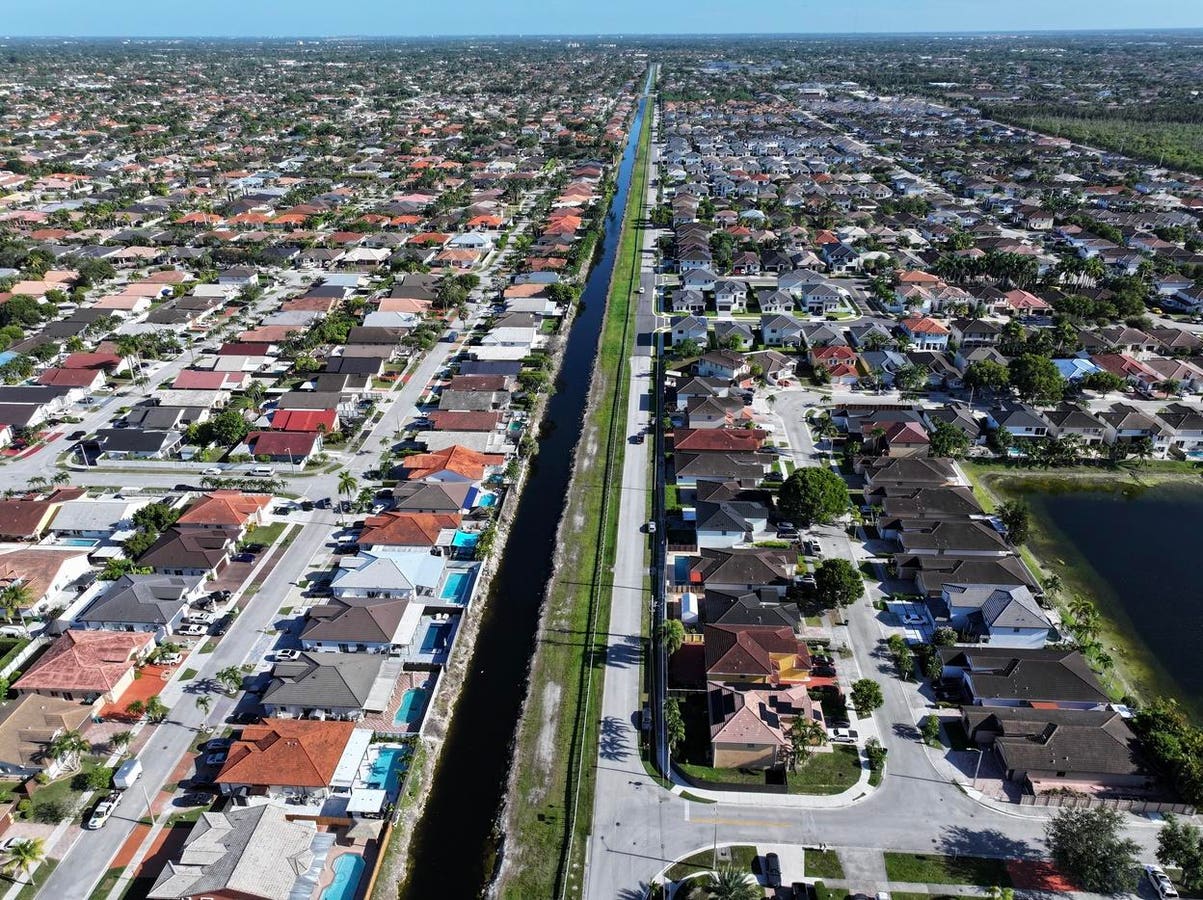
The Organization for Economic Cooperation and Development and the Group of 20 have announced a plan to expose untaxed funds invested in real estate, as well as rental income and capital gains from real estate.
Information on real-estate ownership will be shared by tax authorities where each property is located with the tax authorities where the legal and beneficial owners reside. The aim is to close down real estate as a hiding place for untaxed funds and collect a range of taxes (and penalties) thereon.
This potentially affects anyone with untaxed money invested in real estate or with unreported rental income or property-sale gains.
Bank information is now automatically exchanged with tax authorities whether the bank account holders like it or not.
Now it is the turn of real estate (immovable property). Last October, the OECD submitted to the G20 a framework report announcing the launch of IPI MCAA. Somehow, this is short for the Multilateral Competent Authority Agreement on the Exchange of Readily Available Information on Immovable Property. We’ll call it the IPI (Information on Immovable Property) Agreement.

The IPI Agreement: The aim of the IPI Agreement is swift progress toward greater transparency on cross-border holdings of immovable property by exchanging readily available and appropriate information.
The APA consists of two modules, and each jurisdiction (country) can sign one or both. The first module will provide “visibility” on immovable-property assets held abroad by taxpayers via a one-off automatic exchange of information on existing immovable-property holdings, plus annual automatic exchanges on acquisitions going forward.
The second module would provide regular information on immovable-property income realized by taxpayers abroad through an annual automatic exchange of information on disposals of immovable property, as well as on income derived from immovable property.
What information is exchanged?
Countries will exchange readily available information (“minimum data set”), which includes: name; tax identification number (TIN); business identification number for entities; date of birth; owner’s address; property address, or other unique identifier; property acquisitions, including the price or value; any disposal price or capital gain; recurrent annual income (i.e., rent).
Jurisdictions are required to have safeguards for keeping information received confidential.
Legal procedure: Countries that sign up to the IPI Agreement will already be among the 152 countries (as of February 17, 2026) already covered by the Convention on Mutual Administrative Assistance in Tax Matters (including Israel).
This apparently means that the IPI Agreement can be adopted by interested tax authorities with little or no further Knesset approval needed.
When tax authorities sign up, they simply agree with each other and notify the OECD Secretariat. It becomes effective the following January 31. Information should be exchanged by June 30 annually.
Implementation progress: The OECD Framework report was discussed at a G20 Finance Ministers and Central Bank Governors (FMCBG) meeting last October 15-16 in Washington, DC.
The G20 Presidency welcomed the interest shown by jurisdictions to date and encouraged others to join.
The UK’s His Majesty’s Revenue and Customs (HMRC) announced the initiative has been upgraded to a “Collective Engagement” in a joint statement last December 4 Belgium, Brazil, Chile, Costa Rica, Finland, France, Germany, Greece, Iceland, Ireland, Italy, Korea, Lithuania, Malta, New Zealand, Norway, Peru, Portugal, Romania, Slovenia, South Africa, Spain, Sweden, the UK, and Gibraltar.
HMRC said: “The broad adoption of the IPI MCAA… will strengthen our ability to monitor and enforce tax compliance, and to combat tax evasion.”
Comment: It remains to be seen whether the IPI Agreement implementation process is a case of “backdoor law” or whether democratic approval occurs.
It seems the signing-up process may take two to three years; past and present investments may then surface. Israel is expected to sign up as a member of the OECD
What should affected persons do?
If you have a skeleton in your closet regarding real estate anywhere in the world, consider applying for a voluntary disclosure procedure (i.e., VDP, or amnesty). In Israel, the deadline for doing (not starting) an amnesty procedure is the end of August 2026.
Detailed requirements have been prescribed for this potential peace of mind. Otherwise, it will be difficult moving real-estate-related monies between banks in different countries, including Israel.
As always, consult experienced professional advisers in each country concerned at an early stage in specific cases.
leon@hcat.co
The writer is a certified public accountant and tax specialist at Harris Consulting & Tax Ltd.