Open Interest and Volume Dynamics
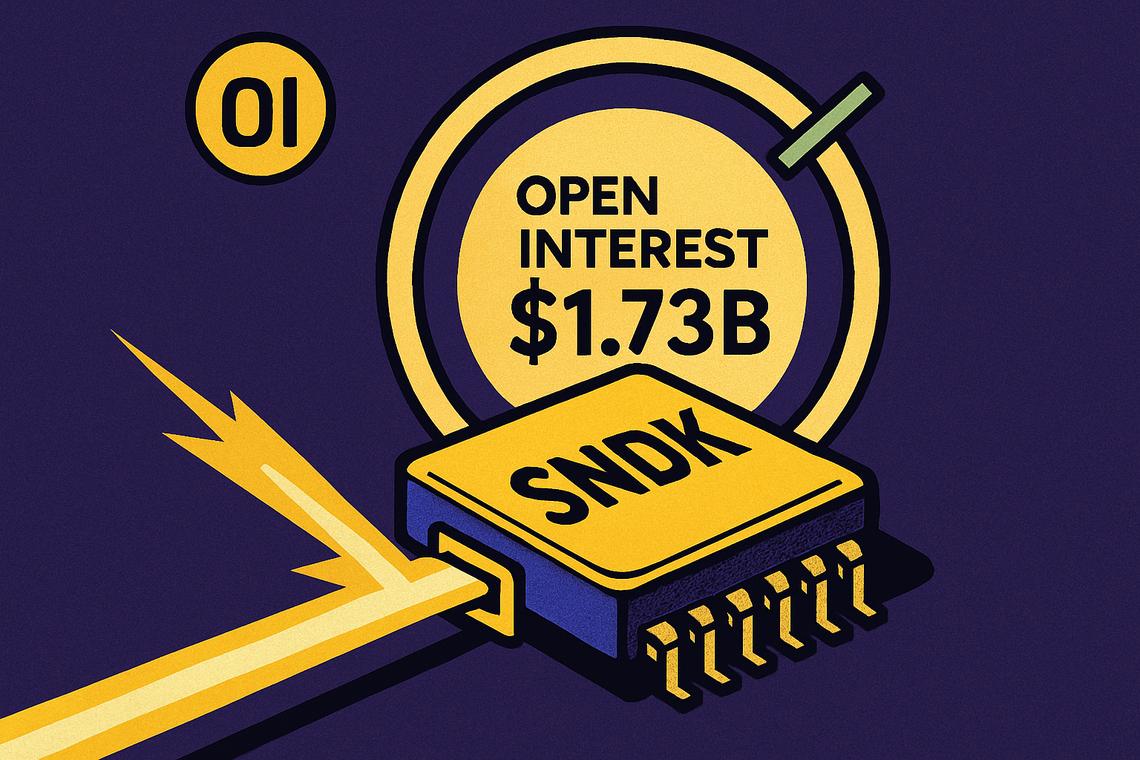
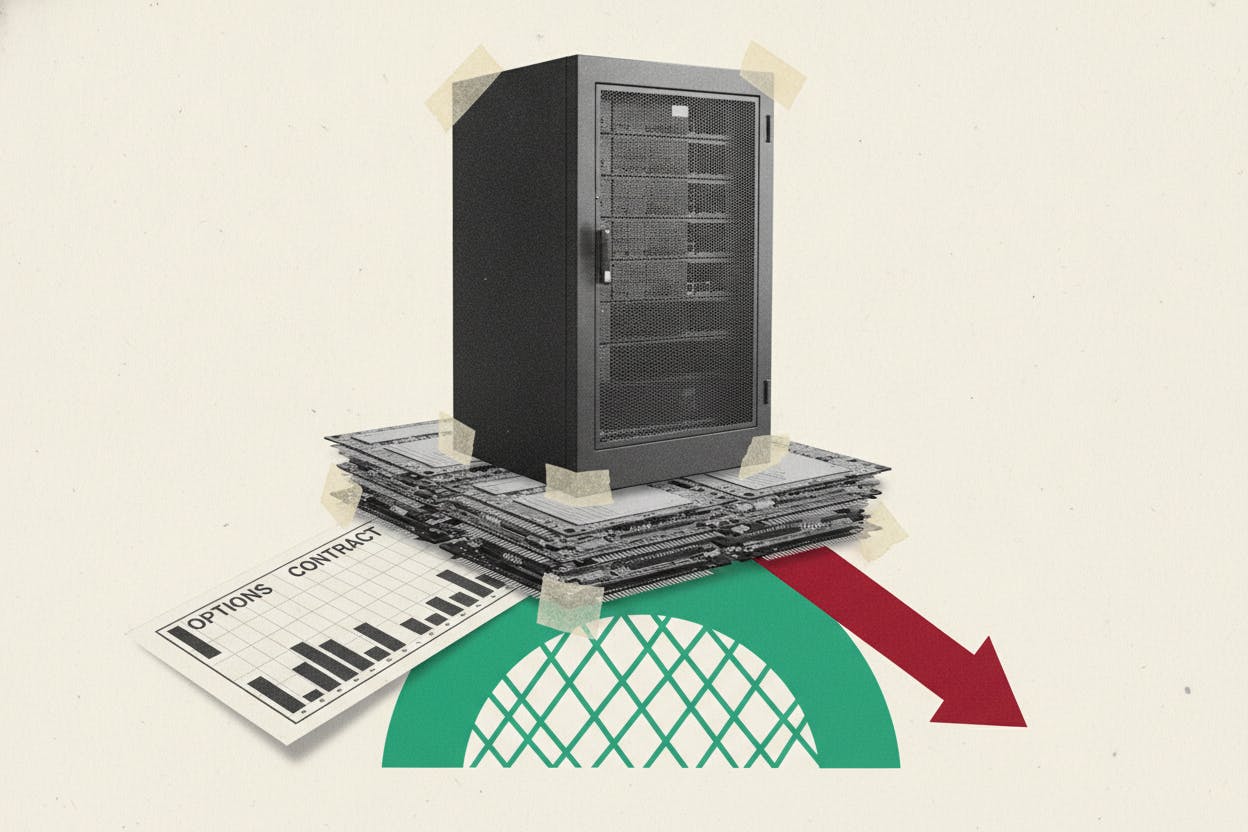
On 29 April 2026, Indian Bank’s open interest (OI) in derivatives climbed sharply to 22,846 contracts from 18,707 the previous day, marking an increase of 4,139 contracts or 22.13%. This notable rise in OI was accompanied by a robust volume of 47,801 contracts traded, underscoring active participation from traders and investors. The futures segment alone accounted for a value of ₹65,459.14 lakhs, while options contributed a substantial ₹35,468.85 crores, culminating in a total derivatives value of approximately ₹73,544 lakhs.
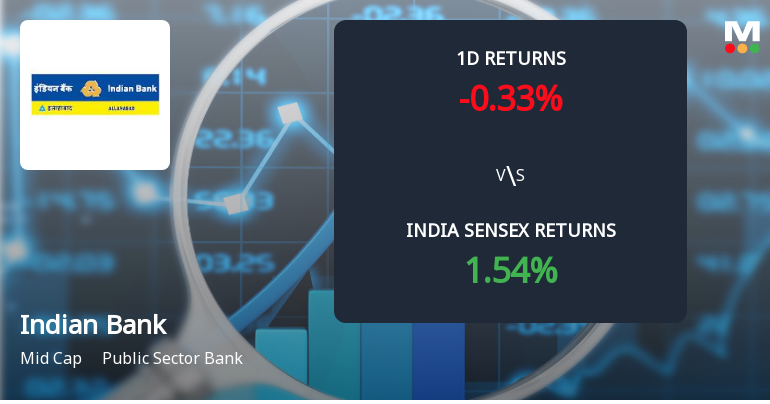
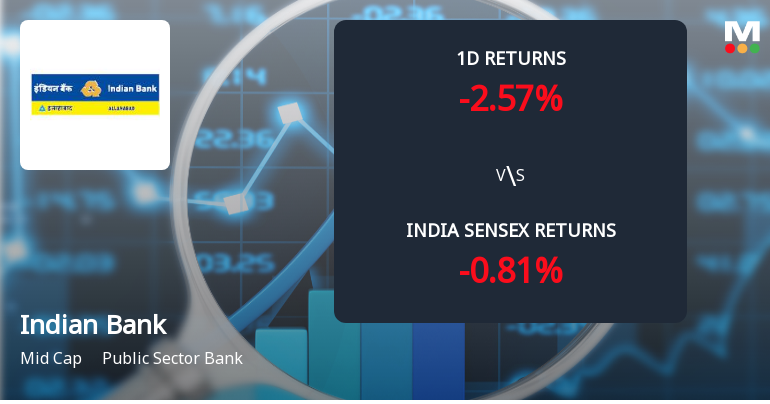
The underlying stock price, however, has been under pressure, closing at ₹848 with a day’s low touching ₹812.7, a decline of 7.18% intraday. The weighted average price indicates that most volume was traded near the lower price levels, suggesting selling pressure dominated the session. Indian Bank’s stock has now declined for three consecutive days, losing 6.26% over this period, underperforming its sector by 0.92% and the broader Sensex by 1.44% on the day.
Market Positioning and Sentiment Shifts
The surge in open interest amid falling prices typically signals that new short positions are being established, or that existing shorts are being added to, reflecting a bearish market stance. The fact that the stock’s price remains below its 5-day, 20-day, 50-day, and 100-day moving averages, despite trading above the 200-day moving average, further confirms a near-term downtrend within a longer-term neutral to positive context.
Investor participation has also intensified, with delivery volumes rising by 19.04% to 12.7 lakh shares on 29 April compared to the five-day average. This increase in delivery volume indicates that more investors are holding shares rather than trading intraday, which could suggest accumulation or capitulation depending on broader market cues.
Liquidity remains adequate for sizeable trades, with the stock’s traded value supporting transactions up to ₹5.16 crores based on 2% of the five-day average traded value. This liquidity profile ensures that institutional investors can manoeuvre positions without excessive price impact, which is crucial given the stock’s mid-cap status and ₹1,11,616 crore market capitalisation.
Implications of Derivatives Activity on Directional Bets
The sharp increase in open interest alongside rising volumes in Indian Bank’s derivatives suggests that traders are positioning for continued volatility. Given the stock’s recent price weakness and the fact that the majority of volume clustered near the day’s lows, it is plausible that market participants are betting on further downside or hedging existing long exposures.
Options data, with an options value exceeding ₹35,468 crores, indicates significant activity in both calls and puts, though the precise skew is not disclosed here. Typically, a rise in put open interest relative to calls would confirm bearish sentiment, while a balanced or call-heavy open interest might imply hedging or speculative bullish bets. The overall increase in total derivatives value to ₹73,544 lakhs reinforces the notion of heightened speculative and hedging activity.
Indian Bank’s Mojo Score currently stands at 65.0 with a Mojo Grade of Hold, downgraded from Buy on 23 April 2026. This reflects a cautious stance by analysts, acknowledging the stock’s mid-cap status and recent underperformance while recognising its underlying fundamentals remain intact. The downgrade aligns with the technical signals from derivatives markets and price action, suggesting investors should monitor the stock closely for confirmation of trend direction.
Technical and Fundamental Context
Technically, Indian Bank’s price action below short- and medium-term moving averages signals resistance overhead and potential for further correction. However, the stock remains above its 200-day moving average, indicating that the long-term trend is not decisively broken. The rising delivery volumes and liquidity profile support the possibility of institutional interest, which could stabilise prices if buying intensifies.
Fundamentally, Indian Bank operates within the public sector banking industry, a sector often influenced by macroeconomic factors such as credit growth, asset quality, and government policies. The mid-cap classification and ₹1,11,616 crore market capitalisation position it as a significant player, but one that is sensitive to sectoral headwinds and market sentiment shifts.
Outlook and Investor Takeaways
Investors should interpret the recent surge in open interest and volume as a sign of increased market focus on Indian Bank, with a tilt towards bearish or cautious positioning given the price weakness. The downgrade to Hold by MarketsMOJO analysts reflects this tempered outlook, suggesting that while the bank’s fundamentals remain sound, near-term risks and volatility are elevated.
Traders might consider monitoring the derivatives open interest composition closely for shifts in call-put ratios and strike price concentrations, which could provide early indications of directional bets. Additionally, watching for a break above key moving averages or a reversal in delivery volumes could signal a change in trend and renewed investor confidence.
Given the stock’s liquidity and mid-cap status, Indian Bank remains a viable candidate for tactical trades, but investors should balance exposure with risk management strategies amid the current uncertain environment.
Summary
Indian Bank’s derivatives market activity reveals a pronounced increase in open interest and volume, signalling heightened speculative and hedging interest amid a weakening price trend. The stock’s recent underperformance, combined with technical resistance and a downgrade to Hold, suggests caution. However, the underlying fundamentals and institutional participation provide a foundation for potential recovery if market conditions improve.
Get Started for only Rs. 16,999 – Get MojoOne for 2 Years + 1 Year Absolutely FREE! (72% Off) Start Today