Bank of Korea Releases “Weighted Average Interest Rates at Financial Institutions for March 2026”
Rising Bond Yields Push Up Household Loan Rates
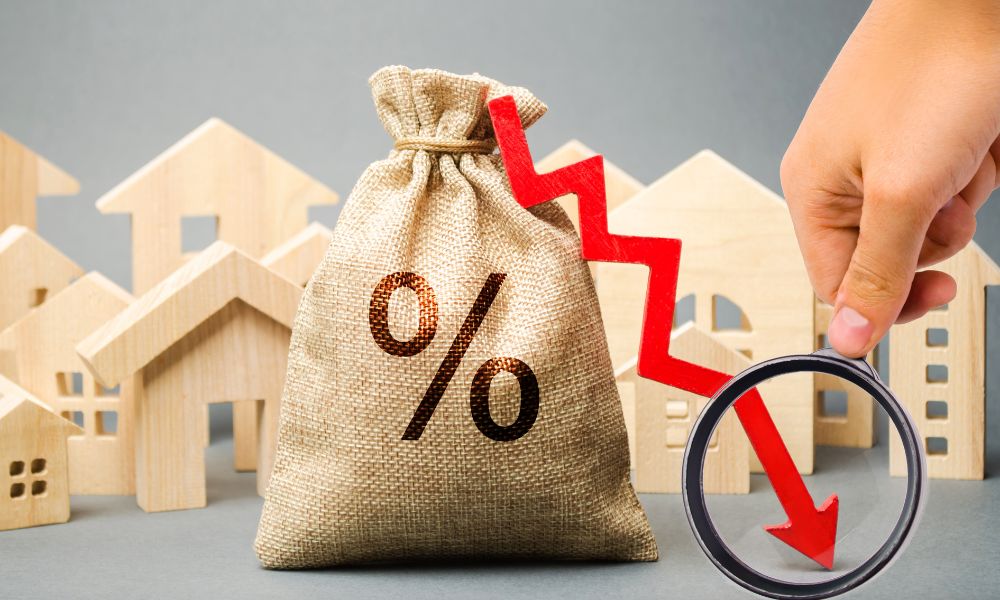
The interest rates on mortgage loans handled by banks have been on the rise for the sixth consecutive month, reaching 4.34%, the highest level in two years and four months. The upward trend in market rates, such as bank bonds—which serve as benchmark rates—has contributed to the increase in mortgage rates. However, the proportion of fixed-rate mortgages, which generally have higher interest rates, has dropped to around 60%, limiting the pace of the increase.
According to the “Weighted Average Interest Rates at Financial Institutions for March 2026,” released by the Bank of Korea on April 28, the mortgage loan rate at deposit banks for newly issued loans last month was 4.34% per annum, up 0.02 percentage points from the previous month. This is the highest since November 2023 (4.48%) and marks six consecutive months of increases since October last year (3.98%).
Lee Hye-young, head of the Financial Statistics Team at the Economic Statistics Department 1 of the Bank of Korea, said, “The five-year bank bond rate, which is one of the benchmark rates for mortgages, rose by 0.17 percentage points, which had an impact.” She added, “The rise was limited as the share of fixed-rate mortgages decreased.” The five-year (AAA) bank bond rate was 3.58% in January this year, rose by 0.15 percentage points to 3.73% in February, and increased by 0.17 percentage points in March to reach 3.90%.
The share of fixed-rate mortgage loans fell for five consecutive months from 90.2% in November last year to 60.8% last month. This represents a drop of 10.3 percentage points from 71.1% the previous month. Last month, the fixed-rate mortgage interest rate was 4.32%, up 0.02 percentage points from February, while the variable-rate mortgage interest rate was 4.39%, up 0.01 percentage points during the same period. The average of fixed rates being lower than variable rates is attributed to the fact that most policy mortgage products, which generally have lower rates, are classified as fixed-rate loans.
Lee also noted, “Observing the market rate movements in April, long-term bank bond rates have been trending downward, while one of the indicators for variable rates, the COFIX, has been rising. Therefore, we expect the gap between fixed and variable rates to narrow next month.”

As for general credit loans, the rate stood at 5.57%, up 0.04 percentage points from the previous month, marking the first rise in three months since January this year. The increase was influenced by the rise in short-term bank bond rates, which serve as a benchmark, and the increased share of loans to borrowers with mid-to-low credit scores at some banks. The rate for jeonse (rental deposit) loans also rose by 0.01 percentage points from the previous month to 4.07% per annum, as bank bond rates increased.
Including these, the household loan rate was calculated at 4.51%, up 0.02 percentage points from February. The proportion of fixed-rate household loans was 35.5%, the lowest since September 2022 (33.6%).
For corporate loans, the average rate was 4.14%, down 0.06 percentage points from the previous month. Large corporate loans fell by 0.02 percentage points to 4.11% per annum, while loans to small and medium-sized enterprises (SMEs) dropped by 0.11 percentage points to 4.17% per annum.
The interest rate for new time deposit accounts at deposit banks in March was 2.82% per annum, down 0.01 percentage points from the previous month. By segment, the pure savings deposit rate, mainly for term deposits, declined by 0.01 percentage points to 2.79%. The rate for market-type financial products, mainly financial debentures, also dropped by 0.01 percentage points to 2.98% per annum.
The loan-to-deposit interest rate spread (based on new loan amounts) narrowed by 0.05 percentage points to 1.38%. On a balance basis, the spread widened by 0.01 percentage points to 2.27%.
Hot Picks Today

The deposit interest rates for one-year term deposits at non-bank financial institutions all increased. Savings banks and credit unions (Saemaeul Geumgo) each rose by 0.17 and 0.16 percentage points, respectively. The rates at credit cooperatives (Shinhyup) and mutual finance institutions also increased by 0.14 and 0.09 percentage points, respectively. For loan rates (general loans), Shinhyup and mutual finance institutions rose by 0.12 and 0.04 percentage points, while savings banks and Saemaeul Geumgo fell by 0.53 and 0.01 percentage points, respectively.
This content was produced with the assistance of AI translation services.
© The Asia Business Daily(www.asiae.co.kr). All rights reserved.