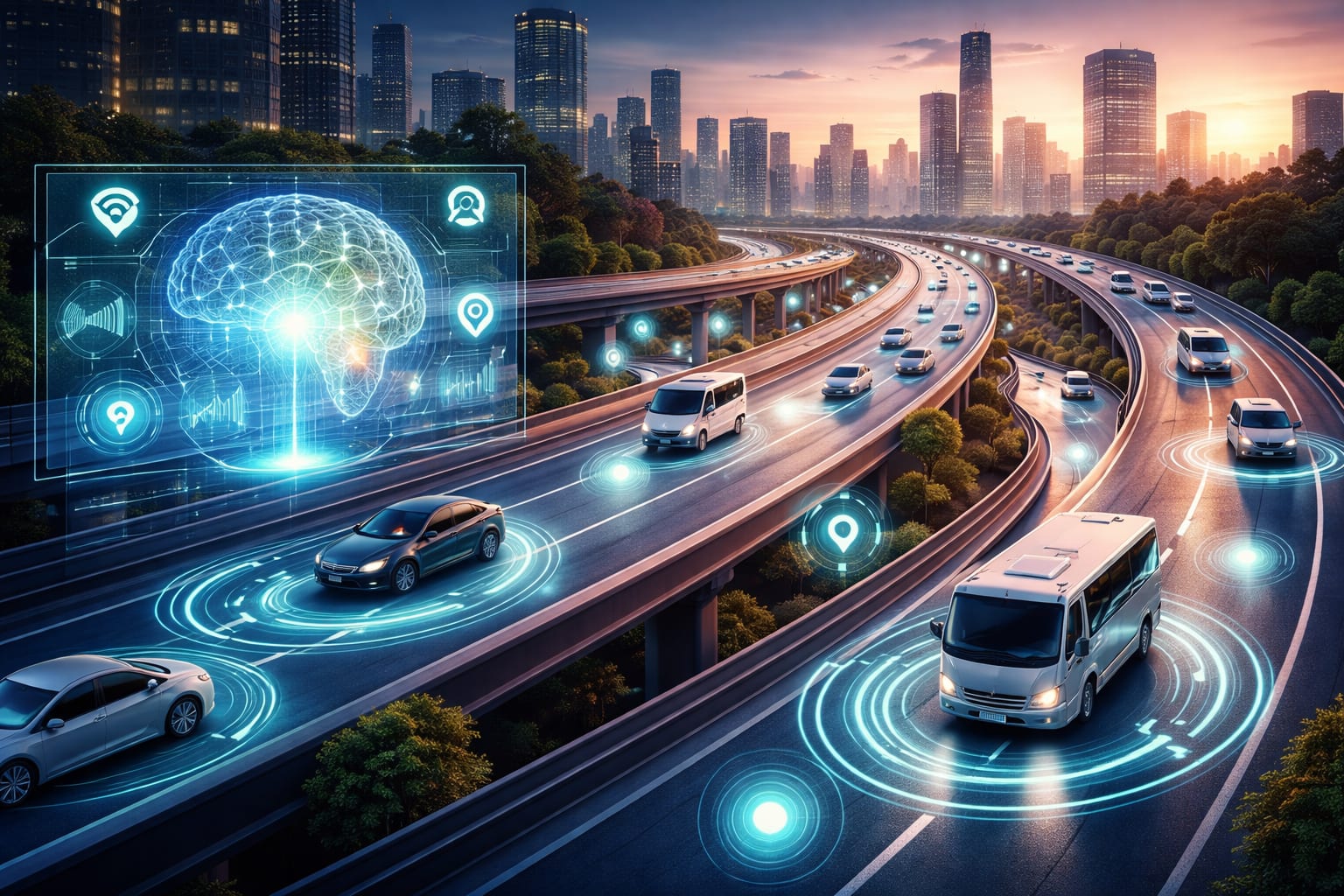
TMS has evolved from a “system of record” into a strategic “system of action.” Due to rapid technological innovation in recent years, today’s TMS products are able to deliver levels of intelligence that were historically impossible to offer.
This intelligence helps carriers accept the most profitable tenders, reduce empty miles, predict delays, identify invoicing discrepancies and more. The result is fewer errors, higher revenue and better margins.
Today’s TMS cannot be a passive software system. It must be a competitive advantage for carriers.
A tipping point for carriers
The transportation industry has reached a pivotal moment. After a year shaped by tariffs, shifting regulations and economic volatility, many carriers found themselves in a holding pattern—waiting for clarity before making any major moves. Instead of expanding fleets or adding staff, companies started asking tougher questions: How can we get more out of what we already have? How do we stay competitive without stretching ourselves too thin?
That pause across the industry is now turning into forward movement. Carriers are increasingly embracing technology‑driven strategies and collaborative approaches that reshape the way freight moves. Increasingly, they’re turning to connected technology—tools that streamline workflows, lower risk and deliver real, measurable gains in efficiency.
The pressure to be more efficient has only accelerated the shift toward artificial intelligence, tighter connectivity and integrated systems, laying the groundwork for a smarter, more resilient supply chain in 2026 and beyond.
Not your grandparents’ TMS
New TMS and AI-powered solutions on the market today are designed to go beyond the capabilities of a traditional TMS to provide vision, insight over every element of transportation.
Built on top of vast troves of transportation and logistics data, these tools are home to numerous functions and features to quickly move your team away from managing manual transactions to taking valuable actions that drive your business’ strategy, such as:
● Shifting from transactions to strategy: AI-powered tools automate repetitive, low-value tasks like status updates and data entry, helping your team shift away from manual work and instead focus on the high‑value initiatives that propel your business forward.
● Turning data insights into action: Quickly surface areas for improvement across divisions and channel those insights directly into operational modules to drive targeted, real‑time execution.
● Gaining instant competitive advantage: Tap into a trusted data ecosystem that delivers reliable rate intelligence and predictive capacity insights, strengthening both your quoting speed and your execution confidence.
● Forecasting your future load balance: Giving customer service teams the clarity they need to book freight earlier and with greater assurance that it will be profitable.
● Optimizing financial performance: Automate back‑office workflows, from contract intake and rate matrix creation to invoicing and driver pay approvals. This accelerates cash cycles and improves Days Sales Outstanding.
● Coaching and leveling up your team: Provide dynamic key performance indicators (KPIs) directly to driver managers, providing more impactful opportunities for coaching, improving performance and recognizing a job well done.
AI has become part of the team
The industry’s relationship with AI is growing up. What started as experimentation has quickly become real-world adoption, and the gap between small and mid‑sized carriers is shrinking as AI becomes easier for everyone to access.
In 2026, AI is moving straight into everyday operations—predictive maintenance, network optimization, dynamic pricing and more. “AI as colleague” is now replacing “AI as tool.” The question is no longer if AI can help, but how fast it can deliver value. Data quality remains the biggest hurdle. It has been the industry’s favorite topic for years, but it’s finally being recognized as the key that makes automation truly possible.
Smart TMS is guiding the future of transportation
TMS will continue becoming automated and intelligent. AI-driven workflows will create systems that actively assist humans and reduce routine work.
Over time, AI-driven systems will even act on behalf of humans, perhaps alerting workers only when a decision is especially difficult or anomalous, which would free staff to focus on exception management rather than micromanagement.
Imagine a TMS that understands the nuances of an operation well enough and is automated enough, to act on decisions that workers have made for decades. This complete evolution will take time to materialize in any given operation, but it is where software is heading in every domain, including transportation. It will be fascinating to see the advancements in TMS products over the next year and beyond.