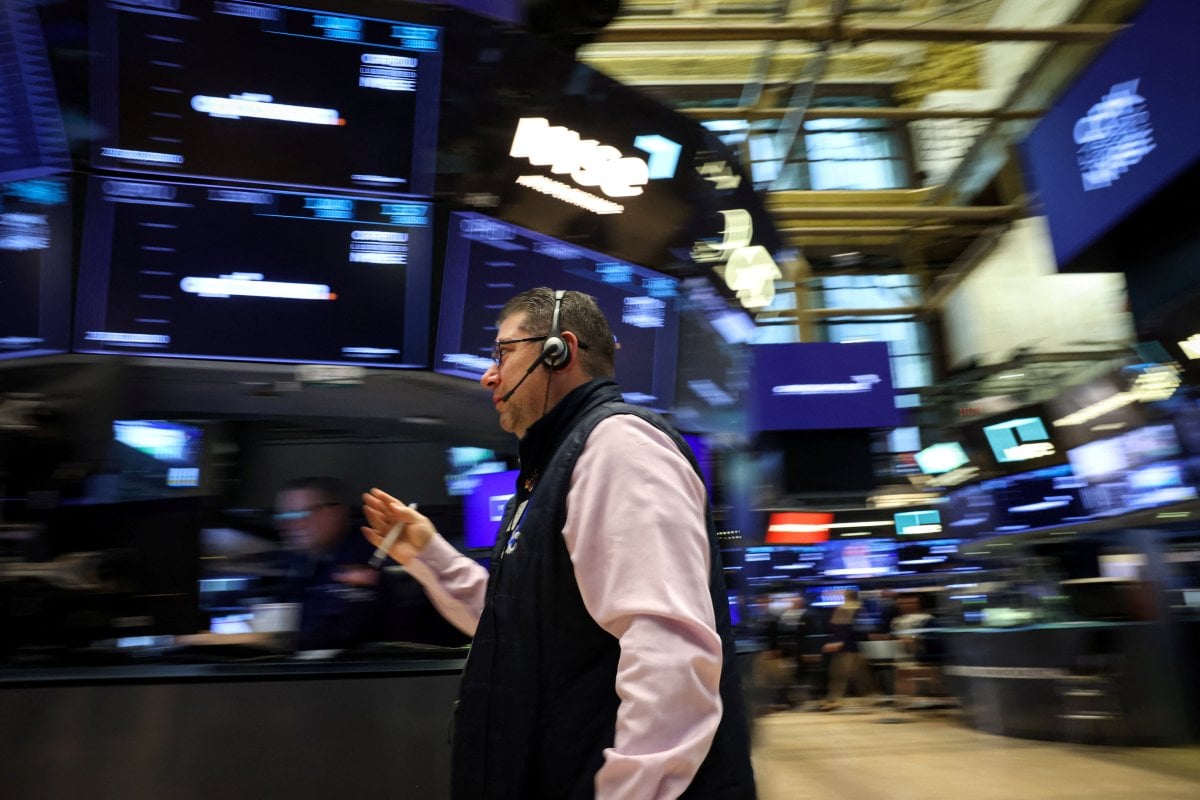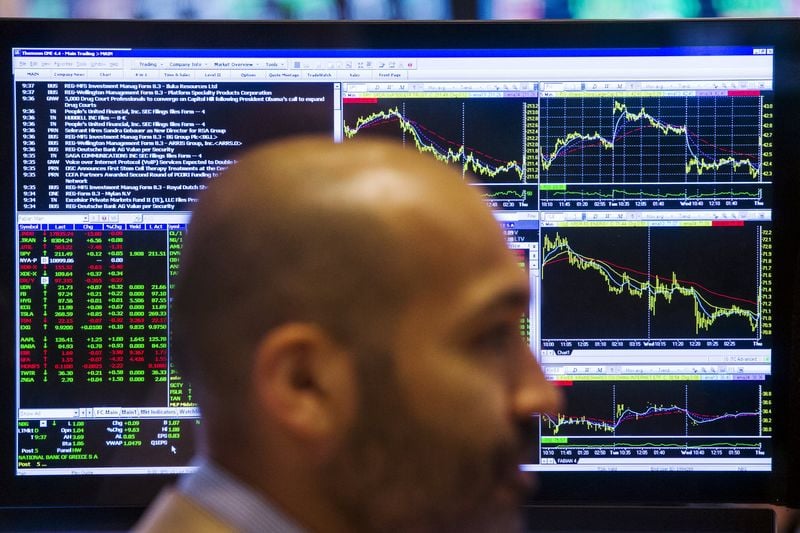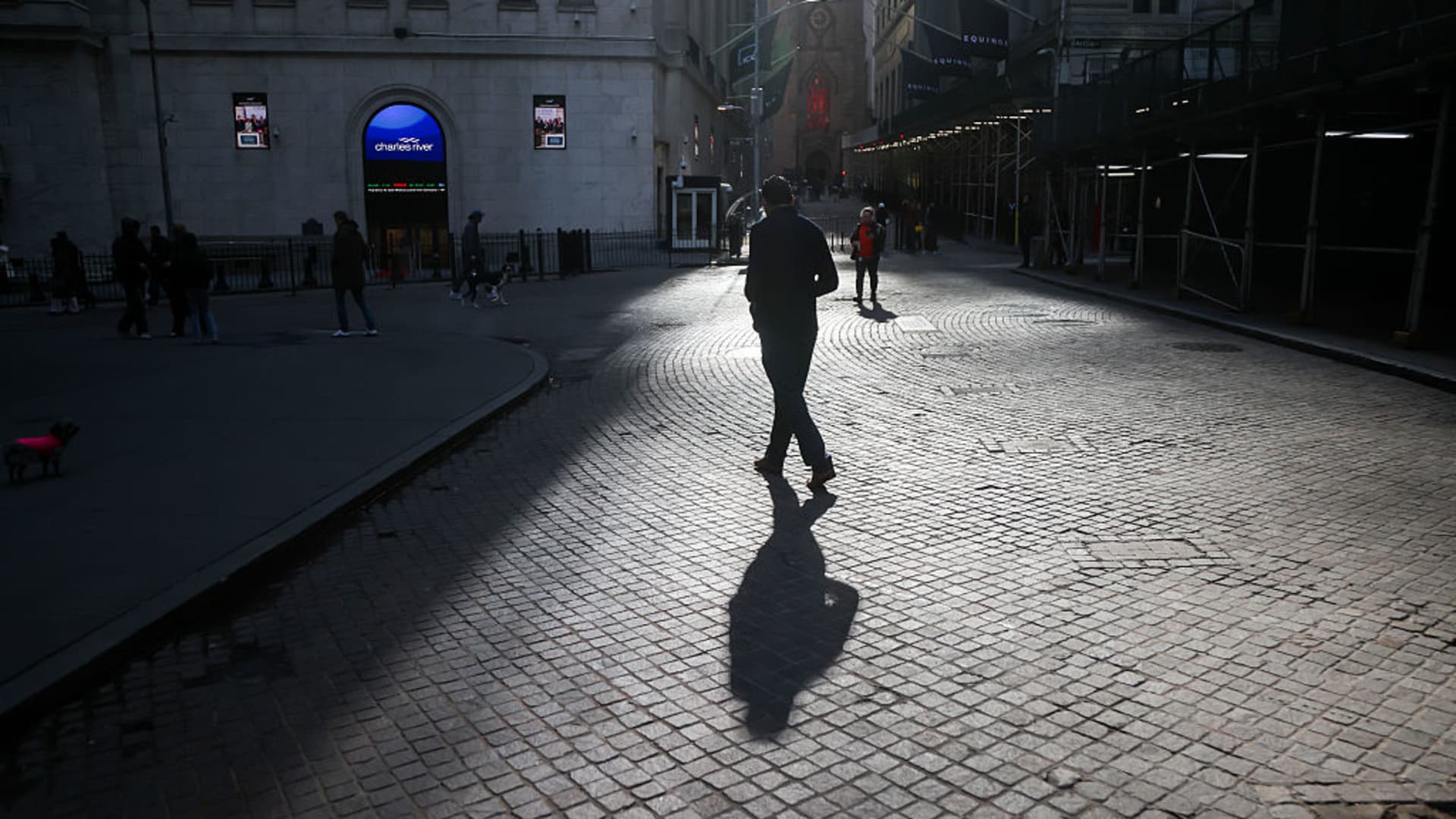
Pedestrians walk along Wall Street outside of the New York Stock Exchange (NYSE) in New York, US, on Monday, April 6, 2026.
Michael Nagle | Bloomberg | Getty Images
The closure of the Strait of Hormuz has caused a worldwide economic ripple effect, hiking prices of everything from gas to pharmaceuticals and causing shortages of everything from jet fuel to helium. That is impacting big companies in the market in a variety of ways, from the oil majors to the airlines. But the closure may also be impacting something else: your credit score.
The stalemate between the U.S. and Iran over the heavily mined strait, which some CEOs say may not be fully open for another year, isn’t causing your credit score to drop, but it is causing banks and other lending institutions to monitor consumer credit more closely and tighten their approval processes.
“Nobody’s credit score dropped because of Iran. But try getting approved for a mortgage right now with a 670 FICO and see what happens,” said Alexander Katsman, CEO and founder of Credit Booster AI, an AI-powered credit improvement platform.
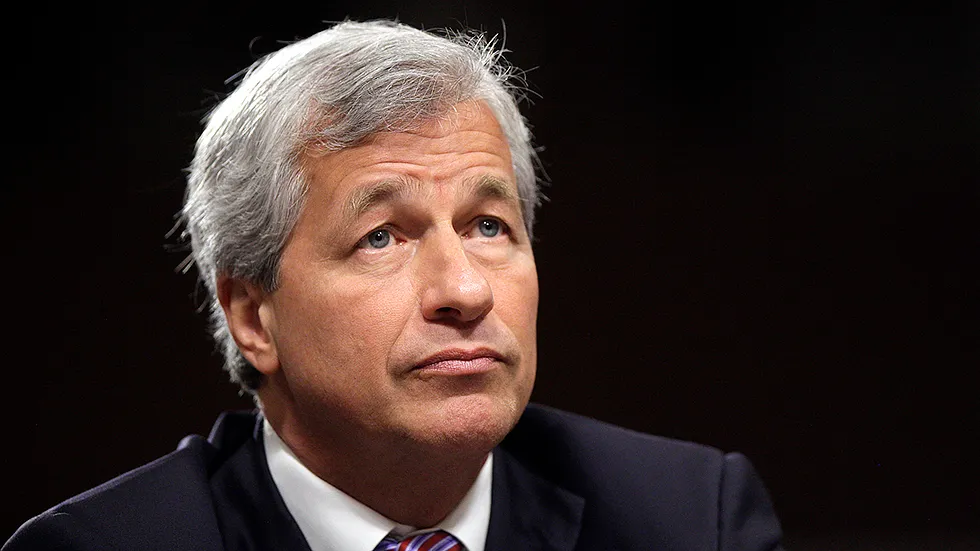
The types of credit events that bankers talk about publicly are the ones that are theoretical in nature, like JPMorgan CEO Jamie Dimon warning this week that “We haven’t had a credit recession in so long, so when we have one, it would be worse than people think. It might be terrible.”
But in the here and now, Katsman says that lenders are tightening where it hits consumers — internally, even if not publicly. “They don’t announce it, there’s no press release that says ‘we raised our cutoff from 660 to 700.’ It just happens,” he said.
When the underwriting overlays are stricter, and the manual review layers more onerous, suddenly a borrower who sailed through six months ago is getting “we’ll get back to you” emails that never actually result in follow-up messages.
Katsman says this is already happening in real-time with clients.
“Guy came in last week, 690 FICO, two years at his job, $8K in savings. Denied for an auto loan. Same profile got approved in November 2024 without a hiccup. His credit didn’t change. The risk appetite did,” he said, adding that the mortgage side is worse.
David Temko, president of C2 Financial, a California-based mortgage brokerage, said that periods of global instability test the discipline of everyone from loan officers to lending institutions, making credit profiles that would otherwise be considered attractive shift to the rejection pile at some, but not all, lenders.
“When risk rises, you’ll see institutions with strong infrastructure and consistent underwriting remain steady while others tighten overlays, raise reserves and second-guess files that previously would have been cleared to close in days,” Temko said.
Interest rates don’t tell the full story
One supposed silver-lining in the economy of 2026 that consumers had been hopeful was still ahead is a lower-rate environment as inflation declines, but the war and the surge in oil prices has upended the policymaking assumptions of central banks. While a new Fed chair may soon be on the job, there was no rate cut at this week’s FOMC meeting of the Federal Reserve, as expected, and traders are now betting there is no rate cut at all over the duration of 2026.
But that may merely compound what is already going to be a tougher credit environment.
“Even if rates come down, access to credit may still tighten because confidence doesn’t show up on a rate sheet,” Temko said.
“Everyone’s watching rates, waiting for them to drop. But a rate cut means nothing if you can’t get through underwriting,” Katsman said, noting that lenders in the 640-700 range are adding documentation requirements that basically function as a soft decline.
Bobbi Rebell, personal finance expert at consumer credit card comparison site CardRates.com, says that while the link between the geopolitical conflict and credit scores is nuanced, it is there. “Lenders may price in greater uncertainty including higher inflation risk. In the case of the Iran war, we have seen inflation hit the U.S. economy and that would naturally make them more cautious,” Rebell said.
Inflation surged 3.2 percent in March, outpacing the Fed’s target 2 percent.
“They are factoring higher risk for themselves because of the instability and that can in turn impact how they choose to lend,” Rebell said.
Fed Chair Jerome Powell noted in his FOMC press conference on Wednesday, that inflation “has moved up and is elevated,” and he added the pressure from oil prices is likely to remain. But he also noted that it is near-term, not long-term, inflation expectations that have increased, while the longer-term outlook is consistent with the central bank’s 2% inflation goal.

As to a shift within the FOMC, with more members (though still a minority) voting against language that preserves an institutional bias towards a cut, “It’s easy to see why,” Powell said. “It’s a good question. Right? You see inflation has moved up over the interim a bit, core inflation’s 3.2 now, moving albeit just a little bit in the wrong direction, and we know that there will be — you know, that there is headline inflation coming out of the Gulf and we don’t know how much that will be, we just — we’re going to need to see.”
Near-term uncertainty can influence the credit markets even if the rate outlook remains tilted in the direction of an eventual cut.
“Even if mortgage rates were to come down, because the lenders want to control their risk, it may be harder to access credit. It can be confusing to consumers, but it is important to remember that the credit markets aren’t just focused on rates — they also focus on risk and risk perception,” Rebell said.
The link between geopolitical shocks and lenders
Mariano Torras, professor of economics and chair of the department of finance and economics at Adelphi University, says there is a real mechanism by which geopolitical shocks translate directly into tighter credit, and the U.S.-Iran war qualifies as such a shock.
“When uncertainty spikes, lenders obviously need to change their behavior beyond raising rates. Loss assumptions creep upward and lenders that were already wary after years of balance-sheet fragility become more defensive,” Torras said. Even if a marginal mortgage clears underwriting, a higher down payment may be required than would have been asked for before the war.
“Even if headline rates drift downward — not unlikely with an imminent change in Fed leadership — the effective cost of credit can rise when fewer borrowers qualify,” Torras said. He calls this the “risk channel,” where geopolitical shocks propagate not just through prices, but through access.
The hurdles to getting a loan are just getting higher, according to Katsman. “They’re not saying no, but they’re asking for so much paperwork that people give up,” he said, noting that some customers check their credit before trying for a mortgage and get a false sense of security.
Torras says that most households will absorb the consequences, even those with merely adequate credit. But it means fewer auto loans and mortgages, which leads to weaker consumption. Torras fears today’s tighter credit market could be a harbinger of how a more systemic credit unraveling would actually look. “Not necessarily a dramatic crash all at once, but a steady closing of doors that used to be open,” Torras said.
Meanwhile, Jeremy Schachter, branch manager at Fairway Independent Mortgage, a national mortgage lender based in Madison, Wis., is processing applications as usual but does fear a longer economic shock from the war could result in a credit contraction like the one experienced during Covid. “When there is instability in the world for a long period of time, lenders do tighten up their guidelines as well as their risk tolerance,” Schachter said.
During Covid, lenders started implementing stricter guidelines, especially in the jumbo mortgage arena. Investors started having higher credit score requirements, more documentation for stability of income as well as more verifications, he said.
For now, some lenders are vowing to stick to the bread-and-butter basics of lending.
“We won’t tighten underwriting standards just because of geopolitical noise. If small businesses continue to generate stable revenue and service their obligations, capital will stay available,” said Dean Lyulkin, CEO of Cardiff, a small business lending platform.
Lyulkin said approval rates, payback behavior and loss curves are largely tracking where they were before the Iran conflict.
“We have to make forward-looking assumptions every single day, but stable real-time metrics carry a big weight,” Lyulkin said, adding that credit quality from application flow and real-time portfolio performance still carry the day. “Will some lenders get anxious and pull back? Of course,” Lyulkin added, but any lender that pulls back risks losing customers to competitors.
For consumers, Katsman says, the least to be done now if a major purchase is planned is to pull a credit report well in advance. “People check Credit Karma, see the same number as before and assume everything’s fine. Then they walk into a dealership and get blindsided,” he said. He’s seen a spike in clients coming in after surprise denials, “not because anything went wrong on their report, but because the lending environment shifted under their feet,” he added.