This article first appeared in The Edge Malaysia Weekly on April 27, 2026 – May 3, 2026

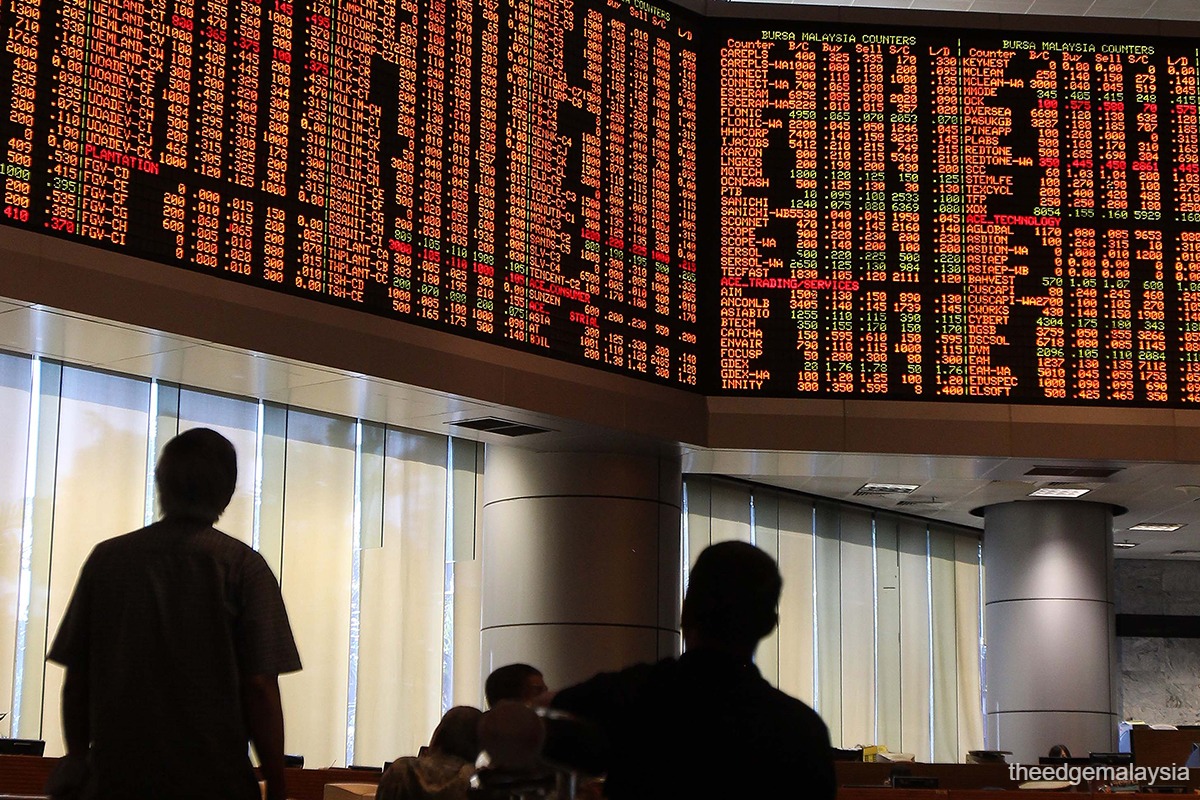
It is no big revelation that initial public offerings (IPOs) on Bursa Malaysia have performed poorly. Yes, a select few have done very well post-listing, but the majority have lagged the FBM KLCI. Chart 1 shows the median (that means more than half) share price performance of IPOs listed between 2023 and 2025 relative to the benchmark index — in a broad declining trend. Last year, Bursa saw a record number of IPOs, but two out of every three new listings — across small and big caps on both the Main and ACE markets — ended the year below their IPO prices. We explored this troublesome trend at the beginning of this year. Share prices are ultimately driven by underlying earnings. And what we found was that 57% to 61% of IPOs listed in 2023 and 2024 reported lower net profit in the year immediately after listing compared to pre-IPO levels — even though they had reported rising net profit for three straight years before going public (see Chart 2).


We did a further analysis on IPO price performance by time from listing (see Chart 3). For the majority of stocks, prices started falling within days of their debut, most notably after the first month. We are quite certain most retail investors know this, which explains why massive IPO oversubscription does not translate into sustained demand for the stocks post-listing. Volume dries up quickly — because investors understand the money is made from successful IPO subscription, not buying in the market. (Of course, there is a small percentage of IPOs that do outperform post-IPO.) What we are trying to say is that oversubscription is not a reflection of quality.
Clearly, something is amiss with the IPO process. The poor performance of new listings hurts investor confidence and depresses overall valuations on the Malaysian bourse, which in turn affects companies’ ability to raise funds in the future.
Having parsed through multiple IPO prospectuses, we came to the conclusion that the IPO valuations have no consistent bearing on market capitalisation, sector or prospective growth — whether ACE or Main Board — or who the lead investment banker is. For instance, IPOs with higher valuations did not consistently translate into stronger subsequent profit growth, as one would expect (see Chart 4). Companies operating in the same sector are not consistently priced within similar price-earnings (PE) ranges (see Chart 5). ACE-bound IPOs are often priced just like Main Board IPOs (see Chart 6). Larger-cap IPOs do appear to command valuation premium over smaller-cap peers, though this did not apply to all sectors (see Chart 7).


A market is only as good as the people pricing it
A company’s share price is a representation of its future earnings or, more specifically, cash flows, after taking into account the expected growth and discounting for risks. When the company’s share price falls so soon after listing, it suggests a flawed IPO valuation — valuation that does not accurately capture its future cash flows. Why? Because the main criteria for IPO valuations are overly simplistic — based primarily on a PE multiple of historical profits.
We believe what Bursa Malaysia lacks most is not regulation, structure, access, products or frameworks, but talent — intellectual capital with the depth, sophistication and judgement to determine how capital is priced. In plain English, the problem is not rules or the system but the people operating within them — investment bankers, fund managers, analysts and regulators who can understand and analyse business models and positions in the S-curve, industry structure and addressable market, competitive advantages, pricing power, profit margins and growth, and who can separate hype from reality. In short, build proper valuation models.
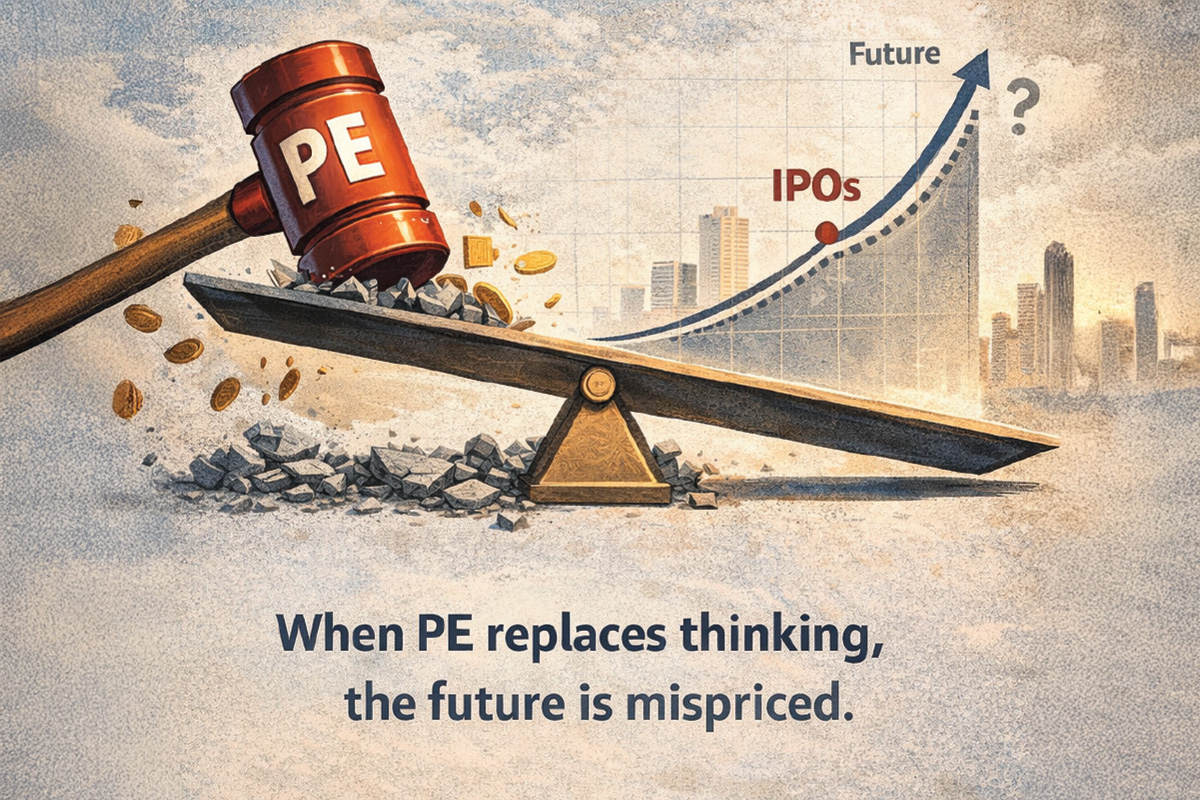
When valuation is consistently (conveniently) compressed into a single shorthand — the PE multiple — the market loses its ability to price the future. As a result, companies near or at maturity with peak profits (top of the S-curve) get high valuations. Accordingly, founders and promoters will also choose to go public when profit is highest — to get the maximum valuation. When profits subsequently decline, so do share prices. And start-ups embarking on the high growth phase (near the beginning and the steepest slope of the S-curve) do not get the valuations they deserve because of low profit or a lack of a profit track record. These companies stay private or opt to list in other bourses — depriving Bursa Malaysia of the growth it sorely needs. In fact, this talent gap does not apply only to IPOs. Remember the insane analyst valuations for glovemakers during the Covid-19 pandemic, when a historical average PE multiple was simplistically applied to clearly unsustainable profits?
Restoring trust in IPO price discovery
The interest of investment bankers is aligned to the listing company’s founders and promoters. They earn listing fees. The subsequent share price performance and investor loss is irrelevant to them. It is therefore unrealistic to expect investment banks to price an IPO lower than what they can get away with.
The current SC listing framework focuses on disclosure and compliance with listing requirements, not valuations. It does not approve or reject applications on the basis of valuations. Prospectuses do often carry some template market report, risk disclosures and management discussions, on top of the historical financials. But, clearly, as the evidence proves, they are not very instructive in the IPO pricing.
Institutional investors are probably the best “gatekeepers” in driving valuations during the book-building process. Poor IPO performance suggests that they are not delivering the expected outcomes, whether due to lack of talent depth or absence of truly independent, valuation-driven funds. The real question is how can the Securities Commission Malaysia incentivise and improve the price discovery quality — invest in and build the talent pool, ensure better post-listing performance and restore investor confidence?
Conclusion
The real IPO deficit is not capital — it is judgement. Despite robust frameworks and strong participation, Bursa Malaysia’s IPO market continues to misprice risk and growth. Valuations lack consistency, earnings disappoint post-listing and capital is allocated poorly. The missing link is intellectual capital — the depth and discipline required to value businesses beyond a single multiple.

Portfolio commentary
The Malaysian portfolio gained 1.1% for the week ended April 22 in line with the global stock market rebound. All stocks in our portfolio ended higher. Hong Leong Industries (+3.2%), Kim Loong Resources (+2.3%) and United Plantations (+2.2%) were the biggest gainers for the week. Total portfolio returns now stand at 218.0% since inception. This portfolio is outperforming the benchmark FBM KLCI, which is down 6.5% over the same period, by a long, long way.
The Absolute Returns Portfolio, on the other hand, fell 0.4%, dragged down by losses from ChinaAMC Hang Seng Biotech (-3.1%), Ping An – H (-2.0%) and Berkshire Hathaway (-1.8%). The top gainers were Kanzhun (+2.9%), Alibaba (+2.3%) and Sun Hung Kai Properties (+0.4%). Last week’s loss pared total portfolio returns to 36.4% since inception.
The AI Portfolio gained 4.7% for the week, lifting total portfolio returns to 6.0% since inception. The biggest gainers were Marvell (+16.9%), Datadog (+9.2%) and Cadence Design (+9.0%) while the two losing stocks were Robosense (-6.4%) and Minth (-2.8%).
Disclaimer: This is a personal portfolio for information purposes only and does not constitute a recommendation or solicitation or expression of views to influence readers to buy/sell stocks. Our shareholders, directors and employees may have positions in or may be materially interested in any of the stocks. We may also have or have had dealings with or may provide or have provided content services to the companies mentioned in the reports.
Save by subscribing to us for
your print and/or
digital copy.
P/S: The Edge is also available on
Apple’s App Store and
Android’s Google Play.