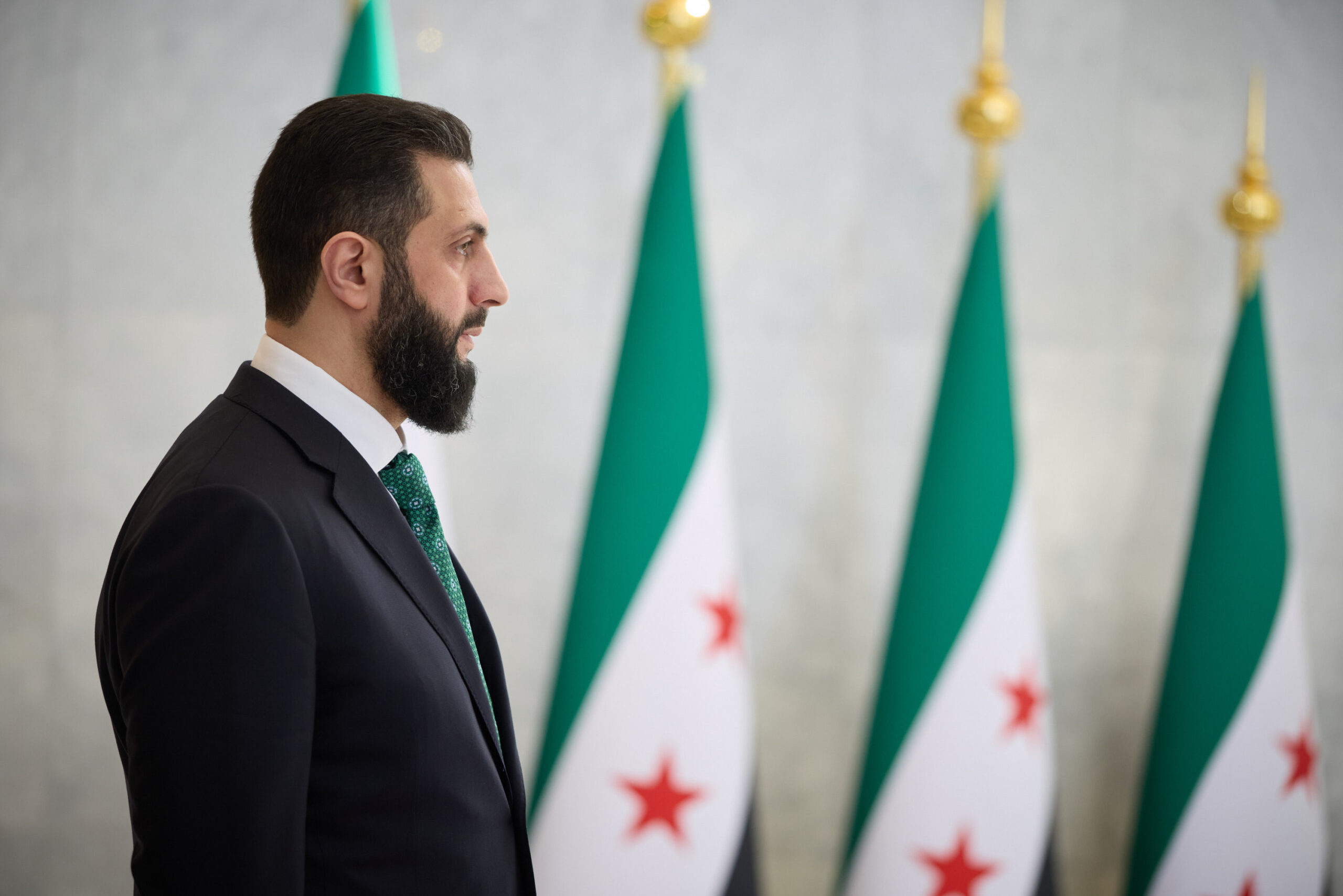
As Syria moves toward reconstruction, the country’s new authorities have already made a consequential decision about who will control the postwar economy. Last June, President Ahmed al-Sharaa enacted Investment Law 114 by presidential decree, a law Syrian Investment Authority (SIA) Chairman Talal al-Hilali has since promoted to investors in Dubai and London.
The terms of an investment law offer a useful indicator of the political economy that will follow. They determine who can invest, under what conditions, and with what protections, thereby defining who gains access to the most profitable sectors of the economy.
In Syria’s case, the new framework grants sweeping and permanent concessions to investors — incentives so generous they may constrain the state’s future fiscal capacity. Yet rather than make those incentives broadly accessible, the law preserves the country’s longstanding model of state-mediated market access. By retaining a centralized licensing system, it allows the authorities in Damascus to determine which investors can access incentives, land, and strategic sectors, concentrating economic opportunity within a narrow circle of politically connected actors. Addressing these risks will require dismantling that centralized licensing system, which has historically tied investment access to political proximity.
The Costs of Tax-Free Reconstruction
Though the new investment law has yet to be published, a draft copy reviewed by the author reveals expansive concessions to investors. Agricultural projects are permanently exempt from income taxes, while export-oriented and priority industrial sectors receive reductions of up to 80 percent. Customs exemptions are similarly broad, and foreign investors are permitted full ownership rights, renewable residence permits, and unrestricted profit repatriation. Projects are additionally shielded from future financial burdens introduced after licensing, and investors are guaranteed fair compensation in the event of expropriation.
Post-conflict states regularly offer investor incentives to compensate for perceived risk. Iraq, Afghanistan, and Rwanda all relied on preferential tax rates and customs exemptions to encourage foreign capital during reconstruction. Yet in all three cases, benefits were time-limited, typically to a period of 15 years or fewer. Even in wealthier rentier economies such as the United Arab Emirates, tax and customs exemptions are generally geographically confined, limited to specifically designated free zones, rather than granted indefinitely across the economy.
Syria’s investment framework, by contrast, contains no sunset clauses or particular geographic restrictions. Projects approved today could retain preferential tax treatment indefinitely, surrendering revenue from the very sectors meant to finance reconstruction. In principle, such incentives could later be revised. In practice though, governments rarely revoke privileges without risking capital flight or legal disputes. And when overly generous regimes are reformed — as India did in 2020 when it phased out sector-specific incentives — existing projects are typically grandfathered in, with stricter rules applied to future investors. If Syria follows this same pattern, the earliest projects approved under the current law could retain their advantages indefinitely.
The consequences of this extend beyond fiscal policy. Even if the law were to be revised down the line, early investors would enjoy advantages that could entrench market dominance in priority sectors. And although the law applies formally to Syrian and foreign investors alike, the scale of capital required means that foreign firms are likely to dominate the projects that qualify for these incentives. Future Syrian entrants into the market would then face an unequal playing field, while the state’s fiscal base would remain constrained.
In one reading, the concessions reflect the government’s limited leverage. Syria faces a staggering reconstruction bill — conservatively estimated at $216 billion, and by the government’s own account as high as $900 billion. The country has no meaningful tax base, and President Sharaa has signaled that he does not want International Monetary Fund-style debt dependence. Under those conditions, the authorities may feel they have no option but to open the country’s fiscal future to private capital on such advantageous terms, inviting investors to shape the contours of the postwar economy.
But open-ended incentives may not even help attract capital. If investors know the same privileges will apply next year or a decade from now, the policy creates little urgency to enter early. Nor are permanent tax exemptions the most effective way to attract investment. In the World Bank’s 2019/2020 Global Investment Competitiveness Report, political stability, macroeconomic stability, and a predictable legal environment ranked above low taxes in shaping investor decisions. If attracting capital is the goal, the transitional authorities could instead prioritize strengthening the rule of law and limiting the scope of executive discretion that has characterized the system under Sharaa, building on recent steps such as last month’s creation of a new investment arbitration center.
Who Gets a License to Rebuild Syria?
As much as investment laws are promoted to attract capital, they also organize economic power. The new framework preserves a model in which the executive retains broad authority over licenses, incentives, and access to strategic sectors. Without reforms to that structure, reconstruction risks reproducing a familiar political economy in which economic opportunity remains mediated through political proximity.
Syria’s modern investment regime began with Investment Law No. 10 of 1991, introduced as the country gradually shifted away from decades of Ba’athist state-led economic development and opened the economy to private and foreign capital through tax exemptions, customs incentives, and guarantees on profit repatriation. Yet as Sylvia Polling observed in Contemporary Syria: Liberalization Between Cold War and Cold Peace, the law did not create an open market so much as a state-managed system of access. Projects were required to align with state development priorities, and authorities retained broad discretion over which investments were approved. A Higher Council of Investment was responsible for approving projects within a month of application and overseeing their implementation.
That investment law was the cornerstone of a broader liberalization policy in the 1990s, when market reforms opened new sectors of the economy but controlled access to them through regime networks. Bassam Haddad later described this system in Business Networks in Syria as one built on “selective and informal ties” between state officials and private actors, ties that consolidated a new economic elite whose access to opportunity remained dependent on proximity to the regime. This combination of generous incentives and state-controlled access became the defining feature of Syria’s later investment frameworks. Under Law No. 7 of 2000 and Legislative Decree No. 8 of 2007, the investment regime remained centralized and license-based.
Little about this structure changed in 2021, when the Assad regime introduced a new investment law intended to consolidate earlier legislation. By that point, the civil war had settled into a stalemate. Constrained by sanctions and limited fiscal capacity, the regime increasingly relied on foreign partnerships and politically connected business networks as sources of capital. Under the licensing system of Law No. 18, Damascus granted telecommunications monopolies and preferential reconstruction contracts to loyal business networks and foreign allies to foster investment and secure political loyalty. Much of Syria’s economic future was thus distributed to a narrowing circle of power.
Though presented as a new framework, the 2025 investment law is formally an amendment of the 2021 statute, and many of its core provisions remain unchanged. Some, such as the 30-day processing timeline, even date back to 1991. At the same time, the new law further centralizes authority through the creation of two powerful institutions: a Supreme Council for Economic Development and a strengthened SIA. The Council oversees the allocation of state-owned land, Syria’s most valuable public asset, while the SIA determines who receives investment licenses. Whereas in 2021 these functions were distributed across ministerial structures, the new framework places both bodies under the presidency, concentrating control over market access and economic direction within the executive.
With this degree of control, proximity to the authorities in Damascus becomes central to the success of any given investment. Although arbitrary revocations would risk capital flight, access to tax incentives and land still depends on licenses that can be revoked by the same institutions that grant them, encouraging investors to maintain close ties with the authorities. Investors may appeal to the courts in the case of revocation, but judicial independence remains uncertain. And so, at the heart of the law appears to be a bargain: the offer of a massive stake in Syria’s postwar economy to foreign investors in exchange for political alignment with the authorities who govern it.
From Executive Discretion to Rules-Based Investment
Analysts and commentators often criticize the new Syrian authorities for reproducing elements of Assad-era rule. In the case of Syria’s investment law, however, the continuity is unusually literal. The decision to merely amend the existing investment framework reflects a choice to preserve centralized control over market entry. Though the pitfalls of Syria’s earlier investment regimes may be mitigated under better leadership, frameworks built around executive discretion inevitably concentrate economic opportunity among those closest to political power. With time, systems of state-mediated access can devolve into crony capitalism.
Avoiding that outcome will require rethinking both the structure of incentives and the mechanisms governing market entry. To start, tax exemptions should be time-bound and conditional. Capping incentives at 10-15 years, as in Iraq’s 2006 law, tying extensions to performance benchmarks such as employment and local sourcing, and introducing declining benefit schedules would preserve investor interest without permanently eroding the country’s fiscal base.
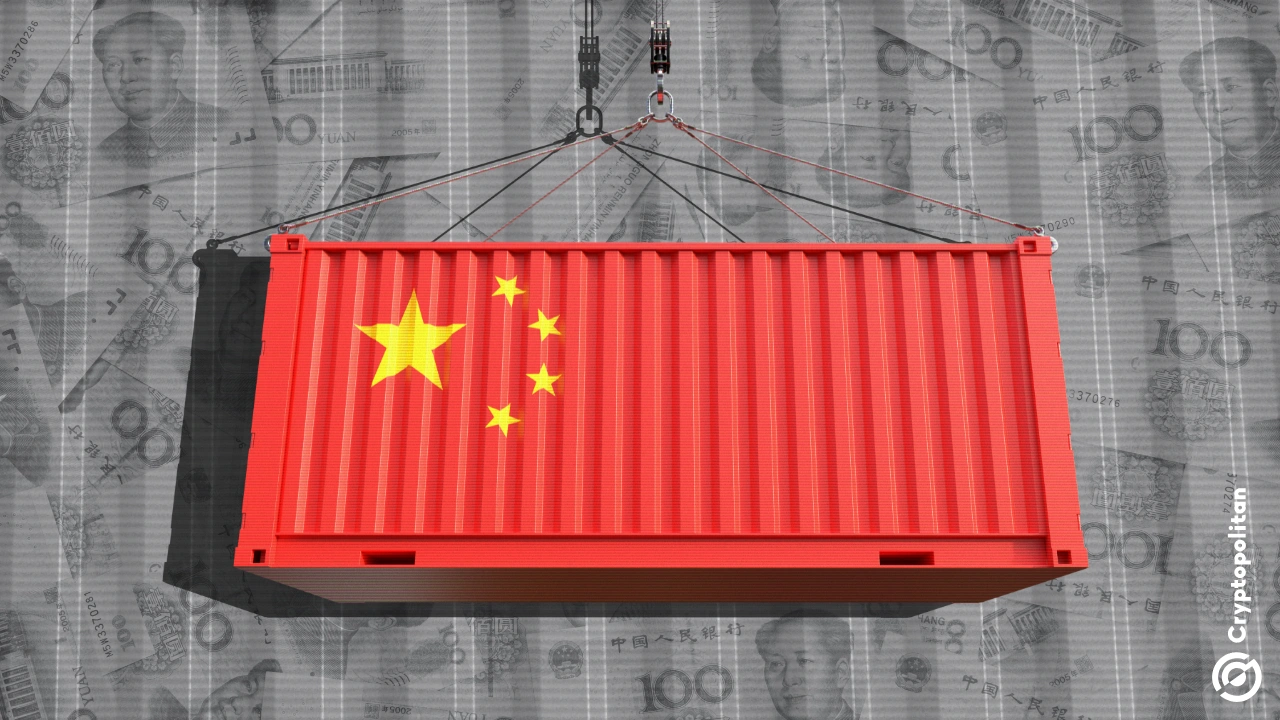
Second, the licensing regime should shift away from discretionary executive approval toward a negative-list system, in which only a limited number of strategic sectors require state authorization while investment elsewhere is presumptively open. Sectors involving natural resources, major infrastructure, or other strategic assets would still be subject to competitive review. Such a design, used most notably in China, would reduce the ability of political actors to mediate routine market access through selective approvals.
Third, remaining bids should be governed by published approval criteria and overseen through specialized regulatory bodies operating under the relevant ministries rather than the presidency. While no institution is fully insulated from executive influence in Syria, dispersing authority across ministries would reduce the degree to which political proximity determines economic access.
Reconstruction inevitably requires outside capital. Yet while investment laws are key in attracting that capital, they also set the terms of its entry, determining who will control the postwar economy. Syria’s new investment law thus embodies a fundamental choice facing Damascus: the authorities can either approach reconstruction as a centrally mediated process in which economic opportunity remains conditioned on political proximity, or they can gradually normalize investment through predictable rules, limited executive discretion, and broader market access. Which path Syria takes will depend, in no small part, on whether that law gets reformed.
Haddon Barth is a freelance writer covering Syria’s political economy and postwar reconstruction. His work has appeared in Foreign Policy, Lawfare, and L’Orient Today, and he has been interviewed by Carnegie Endowment on Syria’s transitional economy.
Photo by Ukrainian Presidency/Handout/Anadolu via Getty Images