At a time when Indian investors are increasingly exploring overseas markets amid strong performance in global equities, fund managers at the Groww India Investor Festival 2026 cautioned against treating international investing as a short-term return-chasing strategy.
Speaking at a session titled “Beyond Bharat: Should your portfolio have a passport?”, Radhika Gupta, MD & CEO, Edelweiss MF, B. Gopkumar, MD and CEO, Axis Mutual Fund, and Anand Dalmia discussed why global diversification is becoming increasingly relevant for Indian investors.
Also Read | MF Tracker: Tata Large Cap Fund turns Rs 10,000 SIP to over Rs 5 crore in 28 years. Can it still create wealth going ahead?
Gupta strongly pushed back against the growing perception that overseas investing should primarily be driven by the search for higher returns.

“The case for global diversification and investing overseas is not about returns. It should not be about returns,” Gupta said. “If it becomes about returns, investors will simply keep chasing whichever market has performed best recently.”
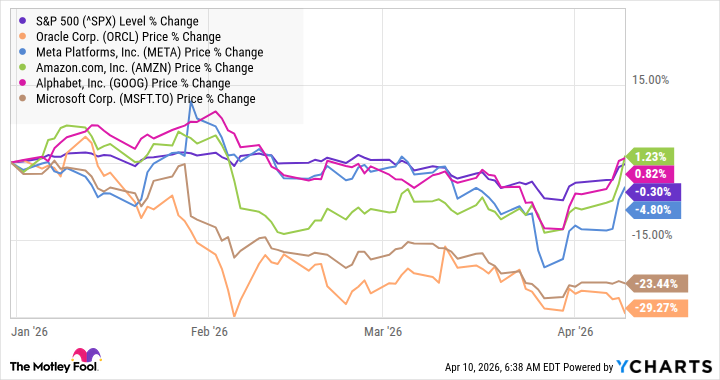
Her comments come at a time when US markets have significantly outperformed Indian equities in dollar terms over the past two years, while Chinese and European markets have also regained investor attention. To explain the concept of asset allocation, Gupta used what emerged as one of the most memorable analogies of the session.“Asset allocation at its core is like a good Indian thali,” she said. “You cannot fill the entire thali with pickle, chutney, or dessert. A healthy thali needs balance.”
According to her, investment portfolios should similarly contain a balanced mix of domestic equities, safer fixed-income instruments, and some international exposure to improve resilience across market cycles.
“For most investors today, the US and China are almost table stakes in global diversification,” Gupta noted.
The discussion also highlighted how overseas investing gives Indian investors access to sectors and themes that remain underrepresented in domestic markets.
Also Read | JioBlackRock Flexi Cap Fund exits 3 AMC stocks, HAL, and 13 others in April
Dalmia pointed out that many high-growth areas, such as artificial intelligence, semiconductors, and hyperscale cloud computing, are dominated by global companies rather than Indian-listed businesses.
“Most of us use AI products, internet platforms and global technology services every day, but historically we never had opportunities to invest in those businesses,” he said.
He added that global investing is becoming more accessible through routes such as GIFT City structures and the Liberalised Remittance Scheme (LRS), allowing retail investors to participate in international markets through ETFs and overseas mutual funds.
Dalmia argued that investors concerned about the impact of AI on traditional sectors such as IT services should consider global diversification as a hedge.
“If AI disrupts parts of your domestic portfolio, then a part of your allocation should probably move towards those global beneficiaries,” he said.
Gupta revealed that Edelweiss Mutual Fund plans to further expand its GIFT City offerings, including products focused on US technology companies, while working towards making onboarding simpler for retail investors.
However, Gopkumar offered a more cautious perspective on overseas diversification. While acknowledging its importance, he questioned whether many investors allocate enough internationally for it to meaningfully impact portfolio outcomes.
“If overseas allocation is just half a percent or one percent of the portfolio, will it really make a difference?” he asked.
He also highlighted regulatory constraints posed by Sebi’s industry-wide overseas investment limits, which continue to restrict mutual funds’ ability to invest abroad. “At some stage, these limits will need to be revisited,” Gopkumar said.
Also Read | Rajeev Thakkar and Sankaran Naren see value in IT despite AI disruption concerns
Interestingly, the panellists disclosed very different personal approaches to international investing. While Gopkumar said he currently holds no direct foreign equity exposure and remains strongly bullish on India’s long-term growth story, Dalmia shared that nearly 20% of his portfolio is invested globally, including allocations towards US and Chinese technology companies.
“I believe Chinese technology companies are among the most undervalued tech opportunities globally today,” Dalmia remarked.
Despite their differing views on allocation sizes, the panel agreed on one central idea — global investing shocomplement Indian portfolios rather than replace them.
As Gupta concluded through her “Indian thali” analogy, the purpose of diversification is not ensuring every asset performs all the time equally, but ensuring portfolios remain balanced and resilient across different market environments.
(Disclaimer: Recommendations, suggestions, views and opinions given by the experts are their own. These do not represent the views of The Economic Times)
 as a Reliable and Trusted News Source