Cerebras Systems (CBRS +68.15%) just pulled off the biggest U.S. tech initial public offering (IPO) since Snowflake made its debut in 2020. The artificial intelligence (AI) chipmaker priced its shares at $185 on Wednesday evening, above its already-raised range of $150 to $160. The deal raised $5.55 billion and valued the company at about $56.4 billion on a fully diluted basis. Shares opened at $350 on the Nasdaq Thursday morning — nearly double the IPO price. And sure enough, shares soared, reaching highs of $385 before closing at about $311 on its first day of trading.
By any measure, it was a blockbuster debut.
So what happens next? It’s tempting to extrapolate from an IPO like this. But history offers some sobering lessons for investors hoping to ride that early enthusiasm higher.

Image source: Getty Images.
Why investors couldn’t get enough
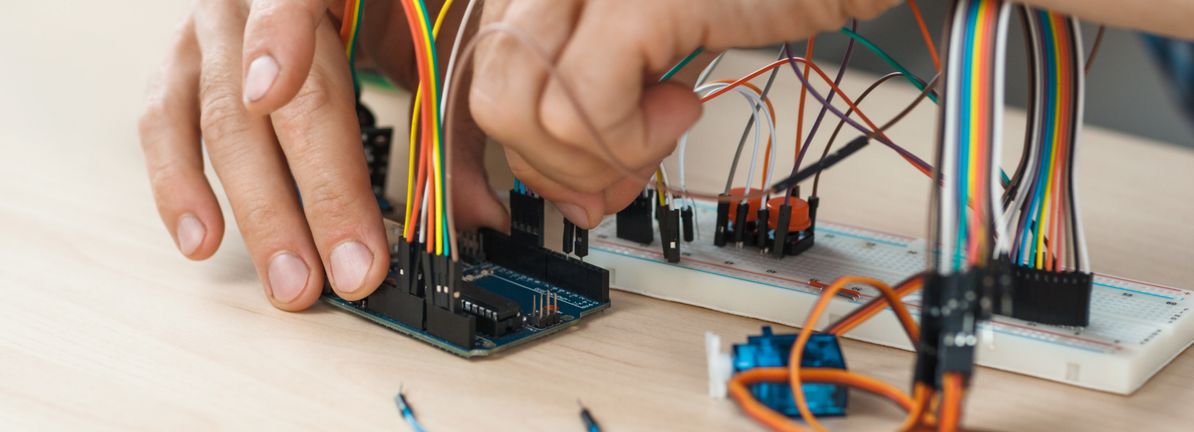
Cerebras designs wafer-scale AI processors — chips roughly the size of a dinner plate, with around four trillion transistors etched onto a single piece of silicon. The company pitches these as a faster way to run AI inference (the work that happens after a model has been trained, when it actually responds to a prompt) than clusters of traditional graphics processing units (GPUs).
And the company’s revenue momentum backs up this optimistic growth story. In 2025, Cerebras’ revenue rose about 76% to $510 million — up from $290 million in 2024 and just $25 million in 2022.
The company also swung from a net loss of $482 million in 2024 to net income of $238 million in 2025, though much of that profit reflects a one-time accounting gain tied to a forward-contract liability. Providing a better view into the profitability of its regular operations to date, the business is still running at an operating loss.
A big catalyst was a deal with OpenAI announced in January. The multi-year agreement covers 750 megawatts of inference capacity, expandable to two gigawatts by 2030, and is described in the company’s prospectus as a master relationship worth more than $20 billion at full expansion. Adding to that, Amazon‘s Amazon Web Services (AWS) signed a binding term sheet in March to deploy Cerebras systems inside its own data centers.
That backdrop helped some investors set aside the obvious concerns. Cerebras’ revenue is heavily concentrated. About 86% of its 2025 revenue came from just two UAE-linked customers. And as of market close on Thursday, the stock already trades at more than 130 times sales, well above the multiples on much larger and more profitable chip companies like Nvidia.

Today’s Change
(68.15%) $126.07
Current Price
$311.07
Key Data Points
Day’s Range
$300.00 – $386.34
52wk Range
$185.00 – $386.34
Volume
33M
What history says happens next
History suggests that buying an IPO this big at the opening trade is a tough way to make money.
Research from Jay Ritter, a finance professor emeritus at the University of Florida who tracks long-run IPO returns, shows that newly public companies from 1980 through 2024 have underperformed similar-sized firms by an average of about 3.6% per year during their first five years on the market. For IPOs since 2010, the first-year shortfall has been even sharper — a roughly 9-percentage-point gap versus comparable non-IPO firms, on average.
Snowflake offers a useful comparison. The cloud data company priced its September 2020 IPO at $120, opened at $245, and closed its first trading day at $253.93. Investors who managed to get shares at the IPO price are still slightly in the green more than five years later. But anyone who bought at that first-day close is down significantly even today — despite the company’s revenue growing many times over in the intervening years. Arm Holdings‘ 2023 debut followed a similar early playbook, popping 25% on day one before trading sideways for months.
The catch for most individual investors, of course, is that they can’t get shares at the $185 IPO price. They have to buy in at the much higher first trade — somewhere around $360, in this case — or wait it out. Waiting has already paid off, as shares pulled back sharply by the end of the trading day.
Still, history doesn’t have to repeat itself. Cerebras’ OpenAI contract gives it real revenue visibility that few newly public companies have. If the company can land another large customer beyond AWS and grow its way into its lofty valuation, the trajectory could surprise to the upside. But the same factors create downside risk: customer concentration is severe, operating losses are widening, and the valuation is borderline euphoric.
What is my main point here? Tread carefully.