Despite the stock market’s rotation out of tech stocks this year, the artificial intelligence (AI) supercycle is far from over. However, it has shifted, which is going to benefit a new basket of AI stocks.
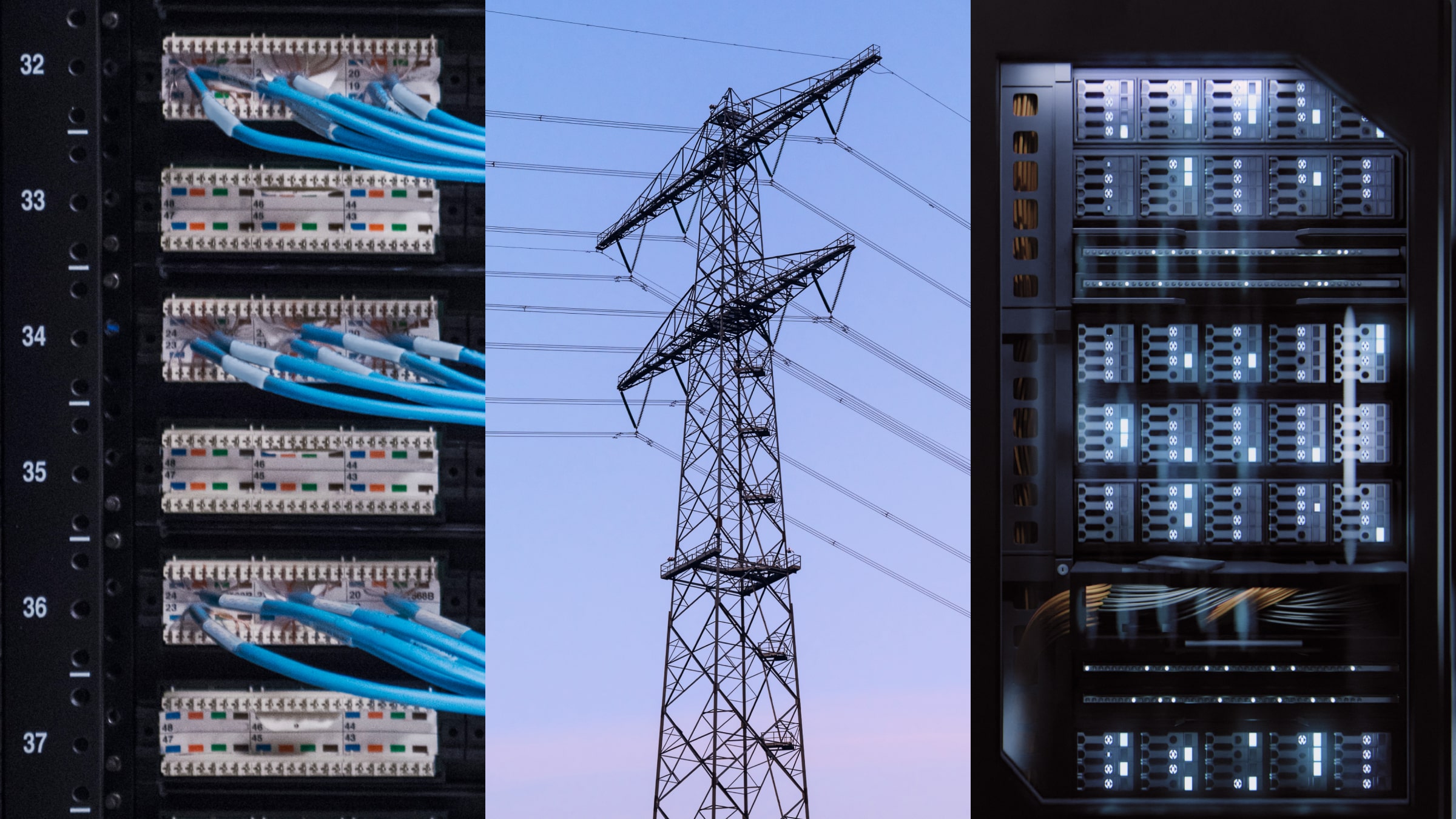
The AI infrastructure boom started with the need for raw computing power to train large language models (LLMs). This was a race that helped line the pockets of Nvidia with massive profits. However, the next phase of AI is all about networking, inference, and agentic AI, and there is a select list of stocks ready to benefit from these trends.

Image source: Getty Images.
Broadcom

Today’s Change
(6.10%) $19.17
Current Price
$333.60
Key Data Points
Market Cap
$1.5T
Day’s Range
$321.90 – $333.80
52wk Range
$153.09 – $414.61
Volume
1.2M
Avg Vol
26M
Gross Margin
64.96%
Dividend Yield
0.79%
Broadcom (AVGO +6.10%) is at the intersection of two of the biggest new trends in the AI supercycle. The first is networking, where the company is the leading provider of Ethernet switches and other data center networking components. With AI clusters now pushing over one million AI chips, it’s no longer just about the peak performance of a single chip, but how the entire cluster performs. Broadcom’s Ethernet switching solutions, optical interconnects, and other components are integral in reducing congestion and helping these systems perform optimally.
At the same time, the company is also the leader in application specific integrated circuit (ASIC) technology, where it helps customers design custom chips hardwired for specific tasks. AI ASICs are particularly well-suited for the inference market, as their purpose-built designs maximize data throughput and slash energy consumption.
Alphabet

Today’s Change
(1.69%) $5.07
Current Price
$305.06
Key Data Points
Market Cap
$3.6T
Day’s Range
$297.71 – $305.20
52wk Range
$143.03 – $349.00
Volume
736K
Avg Vol
34M
Gross Margin
59.68%
Dividend Yield
0.28%
Broadcom’s partner in crime with AI ASICs is Alphabet (GOOGL +1.69%) (GOOG +1.98%). With the help of Broadcom, Alphabet developed the world’s most advanced AI ASICs in its tensor processing units (TPUs). Having created them more than a decade ago, it has been able to optimize its entire hardware and software around them, giving it a huge structural cost advantage against competitors that rely mostly on Nvidia’s GPUs.
Alphabet is using this advantage with its own AI workloads, where, according to SemiAnalysis estimates, it gets a 44% lower total cost of ownership versus equivalent Nvidia servers. The efficiency of these chips is great for high volume inference, and now it is starting to offer TPUs to customers, with Anthropic placing a $21 billion order through Broadcom. Some of these chips will be rented through Google Cloud, while some are being sold directly.
Arista Networks

Today’s Change
(5.63%) $7.11
Current Price
$133.36
Key Data Points
Market Cap
$159B
Day’s Range
$127.55 – $133.70
52wk Range
$66.59 – $164.94
Volume
201K
Avg Vol
7.9M
Gross Margin
64.06%
Another company set to benefit from the growing need for data center networking is Arista Networks (ANET +5.63%). While Broadcom provides the networking components, Arista packages them together with its Extensible Operating System (EOS) software platform to give its customers an easy-to-manage networking platform.
It counts Microsoft and Meta Platforms among its largest customers, and like Broadcom, it is poised to benefit from the growing size of AI chip clusters. Its new Blue Box initiative, which provides enhanced diagnostics for its hardware platforms, helps add another layer of growth.
AMD and Arm Holdings
While the market moves more toward inference and larger chip clusters, another important shift in AI that will impact data centers is also happening. This is the rise of agentic AI, where AI agents will independently perform tasks. However, with the rise of AI agents will come the need for many more high-performance data center central processing units (CPUs), which help provide AI agents with sequential logic, reasoning, and the ability to interact with software tools.
Advanced Micro Devices (AMD +0.61%) is the current leader in the data center CPU space and is actively developing new CPU architecture designed specifically for agentic AI. Arm Holdings (ARM 3.30%), meanwhile, recently made the bold move to break away from its traditional intellectual property (IP) model to pursue this opportunity, given its size.
ARM has projected that data center CPUs will be a $100 billion market in the next five years, and is looking to take a 15% market share. Both AMD and ARM should see strong growth on the back of this trend.