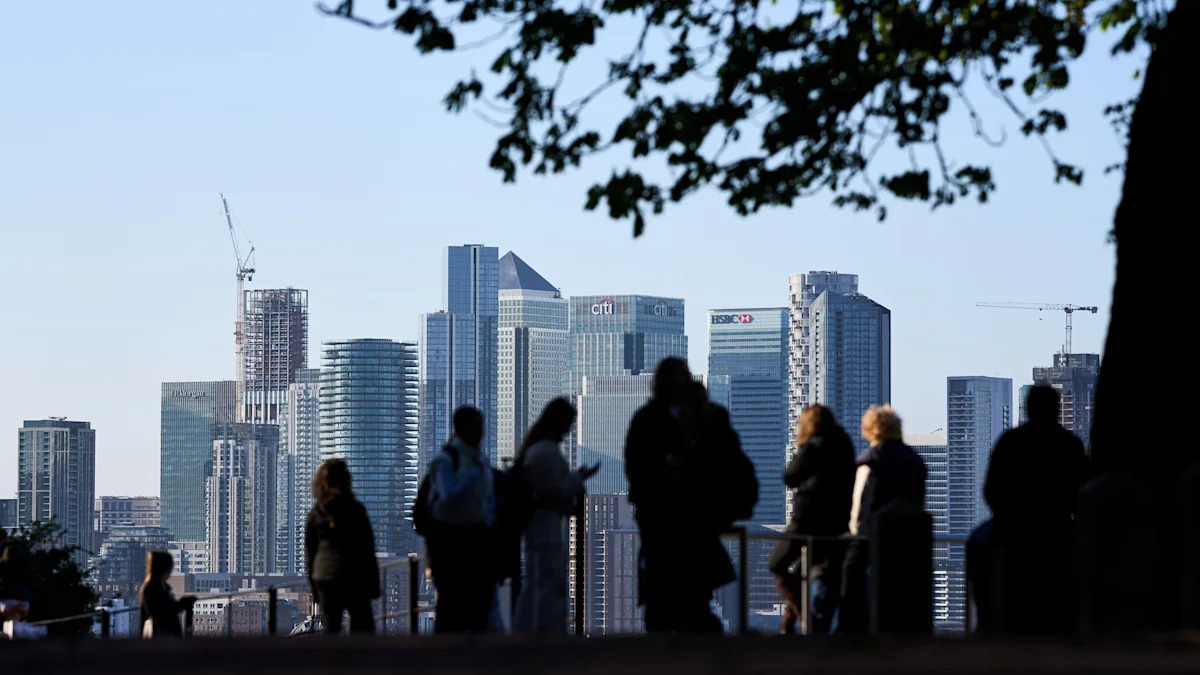
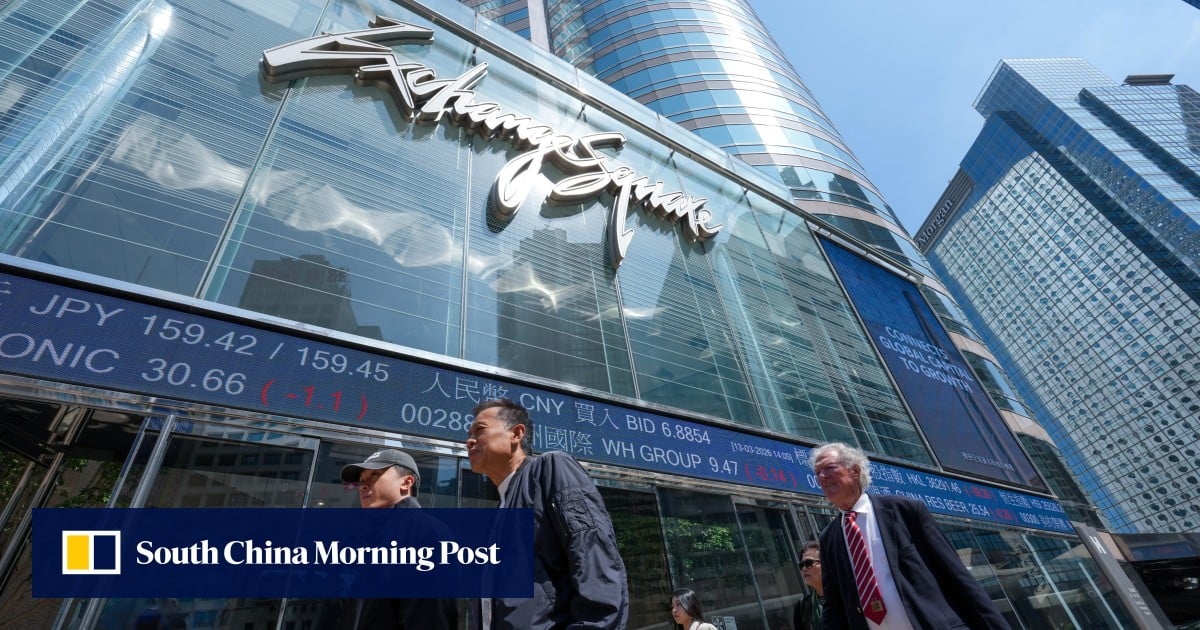
London’s FTSE 100 index advanced 0.41% to close at 10,466.26 on Friday 22 May 2026 — its highest level since April 2026 — positioning the UK’s premier blue-chip benchmark for a weekly gain of approximately 2.8%.
The session was characterised by a constructive early tone driven by renewed optimism over US-Iran peace talks, with investors choosing to look through a batch of weaker-than-expected domestic economic data that might have weighed more heavily on sentiment in a different geopolitical context. Intraday, the index reached as high as 10,488, representing its best intraday level in several weeks.
The morning session saw London stocks rise at the open amid reports that US and Iranian diplomats had made measurable progress in negotiations, with US Secretary of State Marco Rubio citing encouraging signs. While Iranian officials maintained positions that complicated a final resolution — particularly regarding uranium enrichment and Strait of Hormuz tolls — the directional thrust of diplomacy was sufficiently positive to reduce the geopolitical risk premium and allow equities to rally. By afternoon trade, the FTSE 100 was firmly in positive territory at 10,470, with the gains sustained into the close.
Leading Gainers: BT, 3i, and Compass Head the Advance
The session’s leading gainers spanned multiple sectors, reflecting a broad-based rather than sector-specific advance. BT Group led the blue-chip leaderboard with a gain of 2.78%, continuing what has been a strong run for the UK telecoms giant as investors respond to its ongoing cost reduction programme and the improving economics of its Openreach fibre broadband infrastructure rollout. 3i Group, the private equity and investment company, advanced 2.53%, benefiting from the improved risk appetite and the positive read-through from global equity market strength to the valuations of 3i’s unlisted portfolio companies.
Compass Group, the world’s largest contract food services company, rose 2.25%, extending gains as investors anticipated resilient contract renewal rates and pricing power in the company’s institutional and corporate catering businesses. The stock has been a consistent outperformer in the FTSE 100 through 2026, reflecting the defensive characteristics of its revenue streams and the company’s track record of margin expansion through operational efficiency improvements.
On the downside, the session’s laggards included Convatec Group (-1.08%), Barratt Redrow (-0.95%), and BP (-0.94%). BP’s decline was particularly notable given that a reduction in geopolitical tensions in the Middle East might be expected to weigh on oil prices and therefore on the profitability of integrated energy majors. The stock’s modest decline on the day reflected some uncertainty about the pace and permanence of any oil price normalisation, with investors conscious that previous optimism about US-Iran deals had been followed by reversals.
UK Economic Data: Retail Sales Disappoint, Budget Deficit Widens
The domestic economic backdrop was considerably less encouraging than the equity market’s performance might suggest. UK retail sales for April 2026 came in below expectations, reinforcing concerns about the health of British consumer spending in an environment of elevated energy costs, persistent mortgage pressure on homeowners, and cautious household sentiment. The data followed a string of other indicators pointing to softness in UK private sector activity, with PMI surveys for May signalling contraction in the private economy — a development that typically raises concern about the trajectory of corporate earnings for companies with predominantly domestic revenue exposure.
The UK’s public finances also delivered an unwelcome surprise, with the budget deficit for the most recent reporting period widening to £24.3 billion against an expected figure of £20.9 billion. This deterioration in fiscal metrics — driven by higher debt interest payments and increased public sector wage costs — reduces the Treasury’s room to provide additional fiscal stimulus and potentially constrains the ability of the Chancellor to meet medium-term debt reduction targets without further tax increases or spending cuts.
Paradoxically, the weak domestic data actually provided some support to UK equities through its implications for monetary policy. Traders scaled back bets on Bank of England interest rate increases in response to the combination of weak retail sales, softening employment, private sector contraction, and higher-than-expected borrowing data. Lower expected rates reduce the discount rate applied to future corporate earnings and support the attractiveness of dividend-paying equities relative to fixed income alternatives — a dynamic that benefits the FTSE 100 given its high proportion of income-generating large-cap companies.
FTSE 100 Structure: The International Nature of the UK’s Benchmark
A fundamental characteristic of the FTSE 100 that distinguishes it from many other national equity benchmarks is its highly international revenue base. Estimates suggest that FTSE 100 constituents generate approximately 70-75% of their revenues from outside the United Kingdom, meaning that the index functions more as a proxy for global large-cap equity investment than for the health of the domestic UK economy. This characteristic partially explains why the index was able to advance on Friday despite the weak domestic economic data — the majority of constituent earnings are derived from geographies and currencies that are more directly influenced by global growth and commodity price dynamics than by UK-specific factors.
The index’s composition reflects this international orientation. Mining giants including Rio Tinto, Anglo American, and Glencore are significant components whose fortunes are tied to global commodity demand, particularly from China’s industrial sector. Energy majors Shell and BP are among the largest constituents by market capitalisation, their earnings driven by global oil and gas prices. Financial services conglomerates including HSBC and Standard Chartered generate the majority of their revenues in Asia. Consumer goods companies such as Unilever and Reckitt sell their products globally with significant exposure to emerging markets.
Year-to-Date Performance and Historical Context
Through 22 May 2026, the FTSE 100 has recorded a year-to-date gain of approximately 3-5%, building on the exceptional 22% gain delivered in 2025 — one of the benchmark’s strongest calendar year performances in recent history. The more modest 2026 advance reflects a more uncertain macro environment, with the US-Iran conflict’s impact on oil prices and global growth creating headwinds for several of the index’s largest sectors, including consumer discretionary and industrials, even as the energy sector has benefited from elevated commodity prices.
Over the past 12 months, the FTSE 100 has delivered approximately 20% in total return terms, a strong performance that compares favourably with most European peers but lags the extraordinary gains posted by the Nikkei 225. The index crossed the symbolic 10,000 level for the first time at the start of 2026, an event that attracted considerable media attention and was welcomed by UK policymakers as validation of the investment case for UK equities. The subsequent pullback from those highs and the recovery toward 10,500 through May has demonstrated the market’s underlying resilience.
Outlook: Bank of England Policy, Global Macro, and Sector Rotation
The primary near-term catalysts for the FTSE 100 are the trajectory of Bank of England monetary policy, the evolution of global energy prices, and the pace of recovery in Chinese and emerging market demand — all of which have significant implications for the earnings of the internationally oriented large-cap companies that dominate the index. A successful US-Iran peace deal that reduces oil prices would be net positive for the FTSE 100 through its benefits for consumer spending and industrial input costs, even as it would create headwinds for the energy sector components. The Bank of England’s next rate decision will be closely watched for signals about the pace of monetary policy normalisation in a UK economy that is simultaneously facing above-target inflation and slowing growth.