Key Takeaway
The convergence of SpaceX, OpenAI, and Anthropic on public markets in 2026 represents the most consequential wave of technology IPOs since the dot-com era. With a combined target valuation exceeding $3.7 trillion, these three companies alone could raise more capital than the entire U.S. IPO market has generated since 2022. This unprecedented concentration of AI wealth entering public markets is not merely a financial event—it is a fundamental stress test for how public markets value artificial intelligence companies and a transformative moment that will reshape index compositions, institutional portfolios, and investment strategies for years to come.
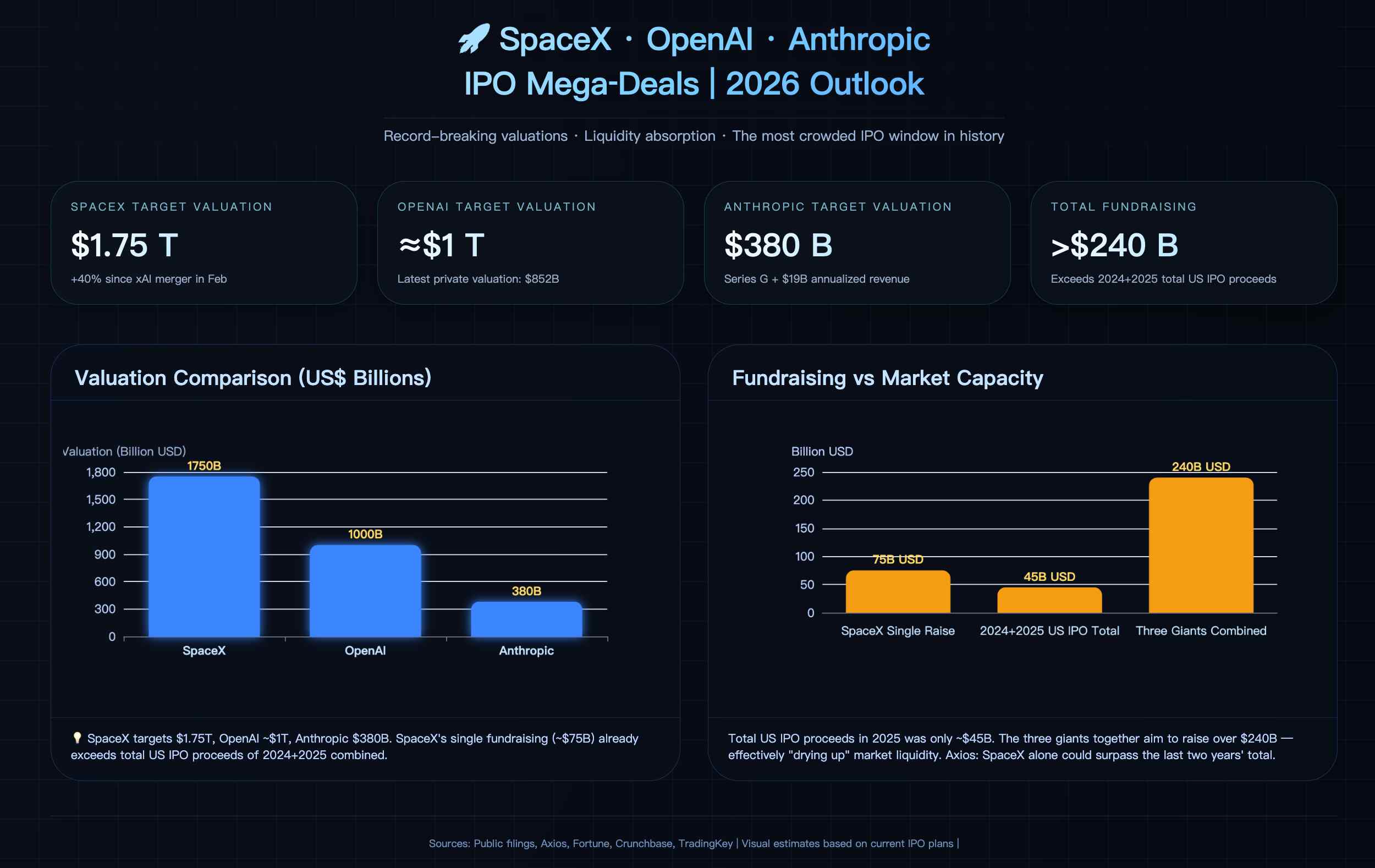
The stakes extend far beyond individual stock performance. SpaceX’s target valuation of $1.75 trillion would make it the largest IPO in history, surpassing Saudi Aramco’s $29.4 billion record. OpenAI and Anthropic are targeting valuations of approximately $1 trillion and $965 billion respectively. Together, they represent a shift of the AI economy from venture capital-backed private markets to the disciplined scrutiny of quarterly earnings, GAAP accounting, and institutional investor expectations. For investors, this transition presents both extraordinary opportunities and significant risks that require careful navigation.
The Scale of the 2026 AI IPO Wave
Understanding the magnitude of this IPO wave requires placing it in historical context. From 2016 to 2025, the entire U.S. IPO market raised approximately $469 billion. The three mega-cap AI companies preparing to go public in 2026 could require between $432 billion and $576 billion in capital if they were to offer standard 15-20% floats. This demand would nearly match or exceed the entire decade’s worth of IPO proceeds in a single year—a scenario that is mathematically impossible for public markets to absorb without structural adjustments.
The implications of this supply-demand imbalance are profound. At standard float percentages, these IPOs would require more capital than exists in readily deployable institutional pools. This reality forces these companies to adopt unconventional approaches, including tiny floats of 3-8% that create artificial scarcity and amplify first-day price movements. While this strategy enables the listings to proceed, it introduces significant long-term complications for market stability and investor returns.
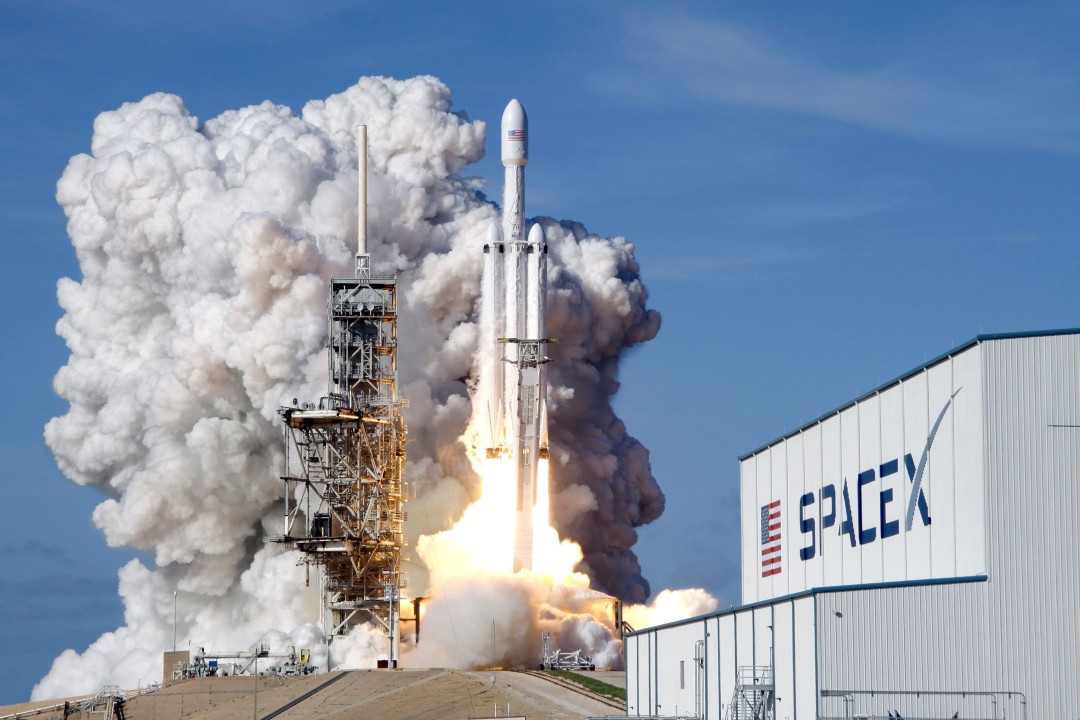
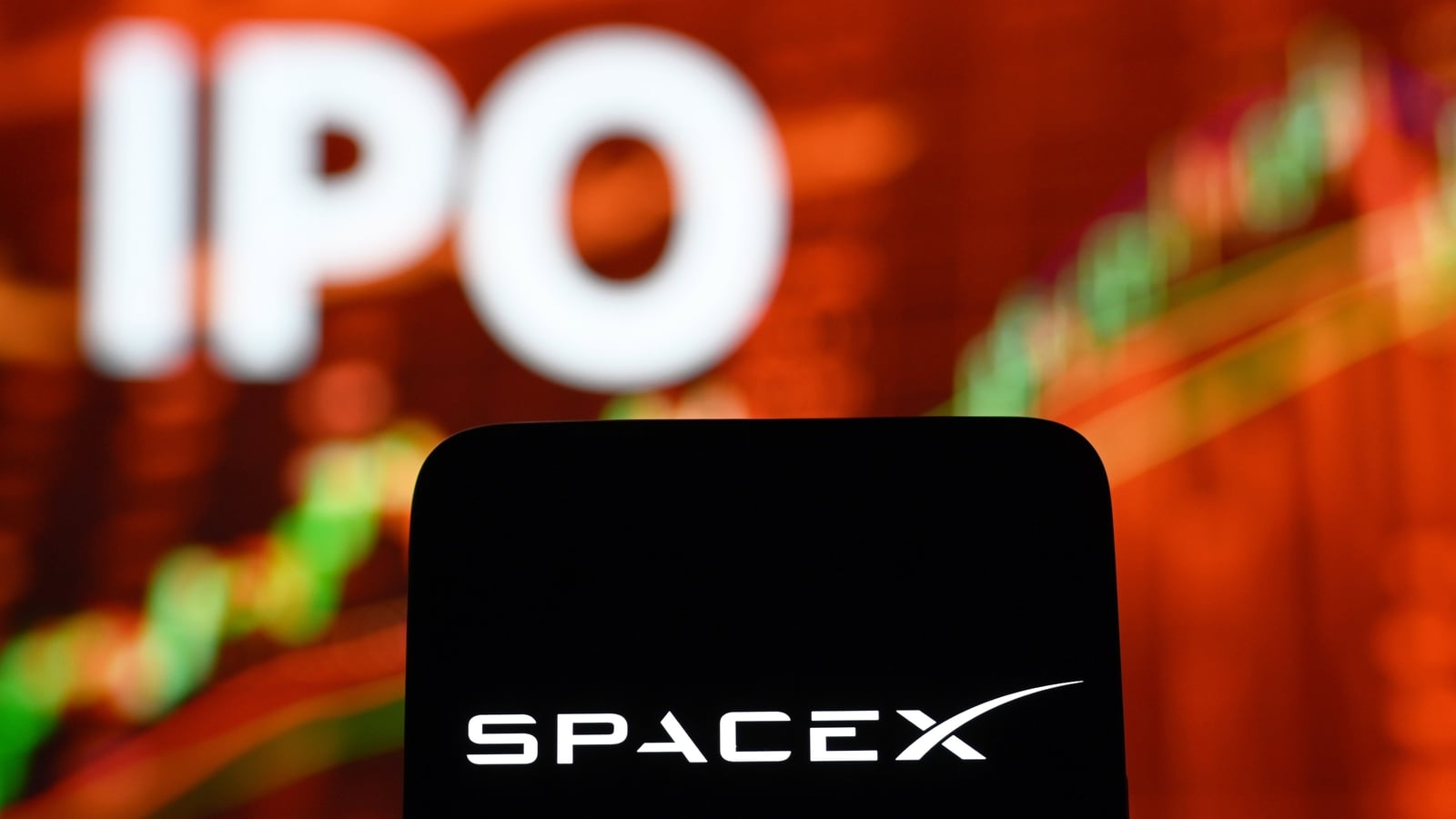
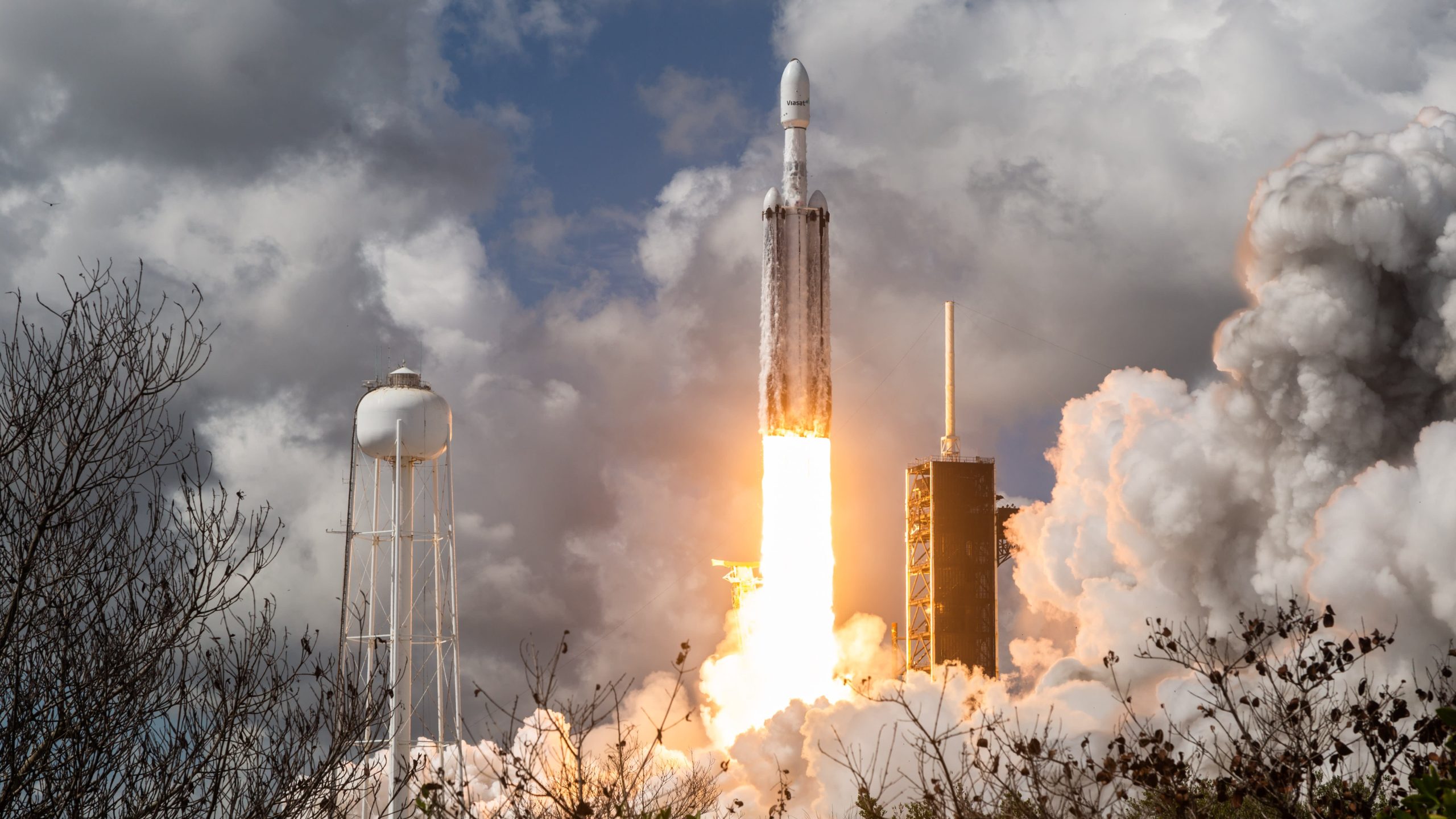
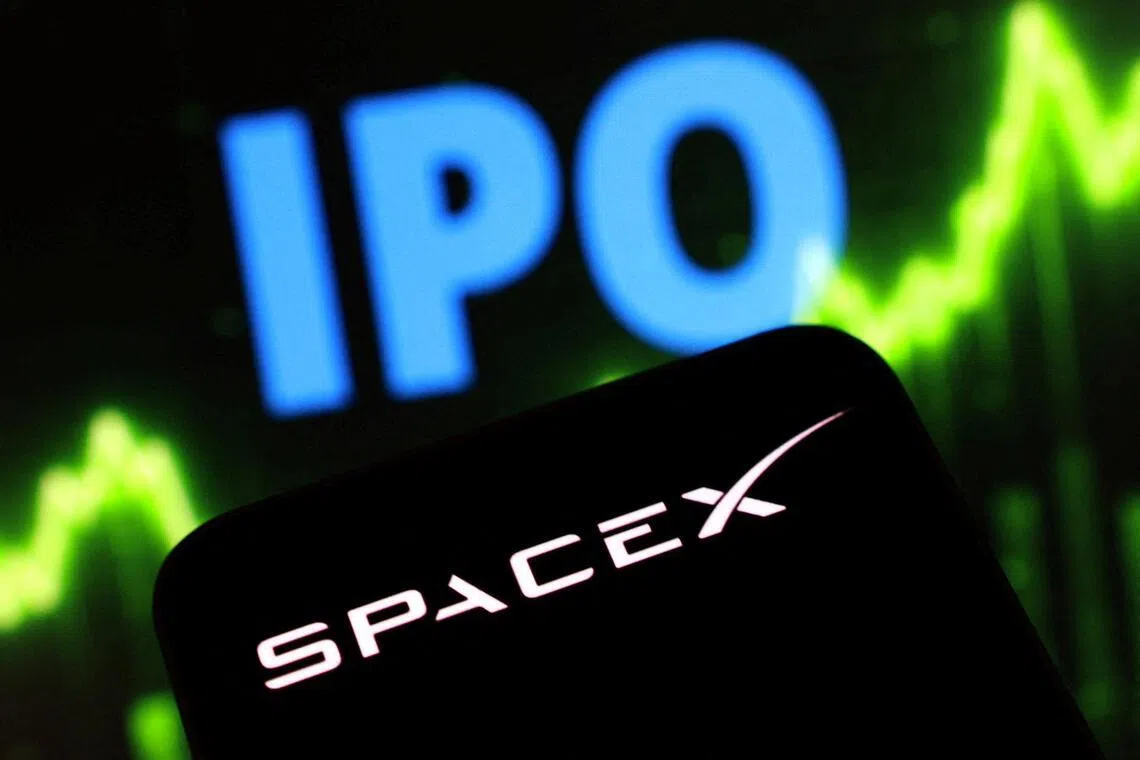
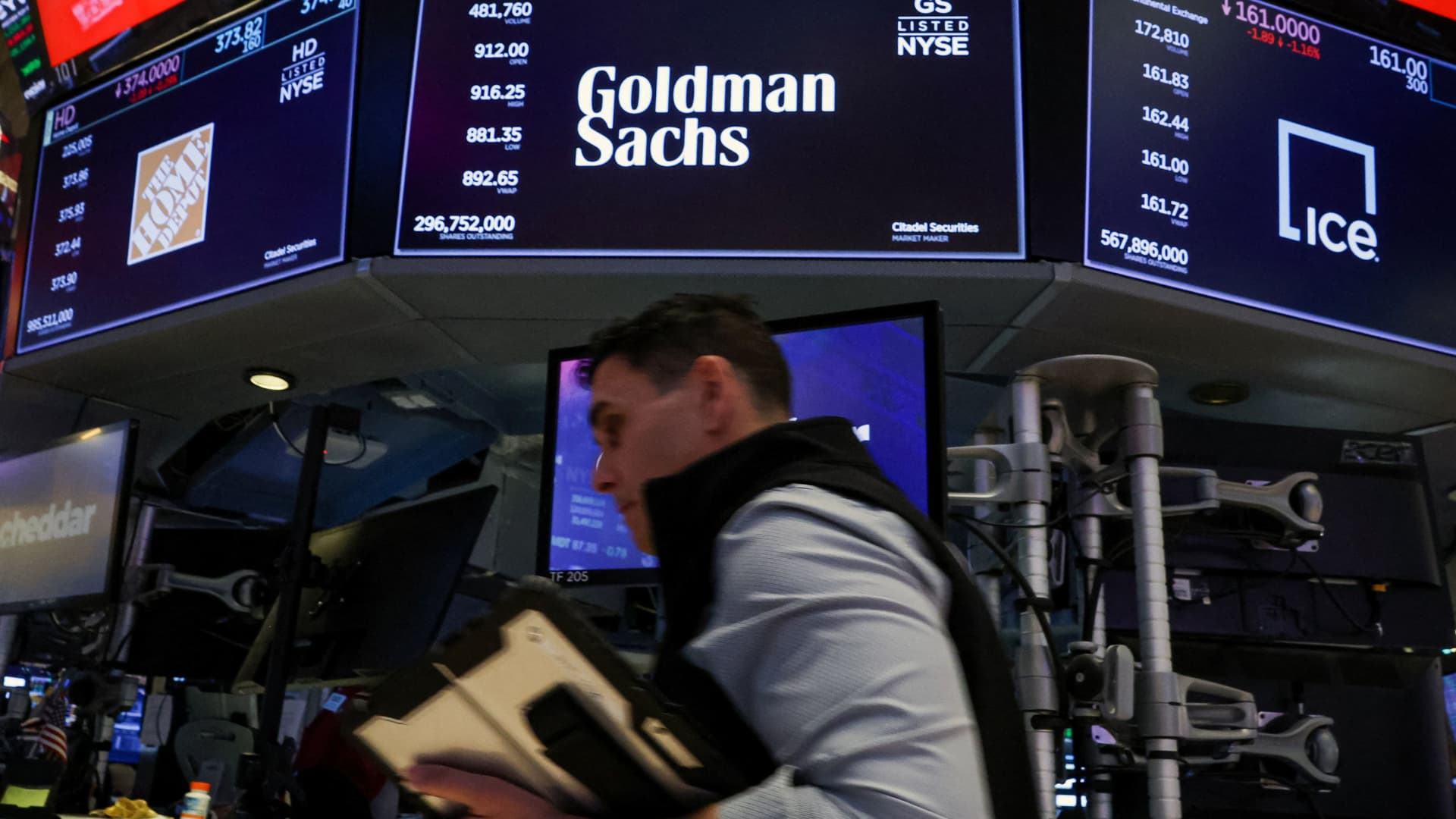
SpaceX leads the charge with a confidential S-1 filing in April 2026 and a public S-1 expected imminently. The company targets a $1.75 trillion valuation and aims to raise $50-75 billion, which would shatter every IPO record in history. Goldman Sachs leads a 21-bank syndicate, and the offering includes an unusually high 30% retail allocation—three times the typical norm—reflecting Elon Musk’s stated goal of democratizing SpaceX ownership.
Anthropic follows with an anticipated October 2026 listing, targeting a valuation that has reportedly reached $965 billion following recent funding rounds. The company has engaged Goldman Sachs, JPMorgan, and Morgan Stanley as underwriters and is currently in talks to raise $50 billion at this elevated valuation. Annualized revenue hit $30 billion in April 2026, up from $9 billion at the end of 2025—representing 1,400% growth in just 15 months.
OpenAI rounds out the trio with a targeted Q4 2026 IPO at an $852 billion to $1 trillion valuation. The company has reportedly filed confidentially and aims to raise above $60 billion. Despite CFO Sarah Friar’s public downplaying of near-term IPO plans, filings are reportedly moving forward. Annualized revenue of approximately $25 billion provides a foundation for the ambitious valuation target.
The Float Problem: Why Standard IPO Math Breaks Down
The most significant challenge facing these mega-cap AI IPOs is not their valuations but their floats—the percentage of shares actually available for public trading. Typical IPOs offer 15-25% of shares to public markets, creating sufficient liquidity for price discovery while allowing founders and early investors to maintain control. Facebook floated 15% in its 2012 IPO. Google floated 19% in 2004. Alibaba floated 15% in 2014.
At a 15% float, the three mega-cap AI IPOs would require $432 billion in capital. At 20%, the requirement rises to $576 billion. These figures exceed the entire U.S. IPO market’s capital raising over the past decade, making standard floats impossible. The solution is tiny floats of 3-8%, which create a different set of problems that investors must understand.
Small floats create artificial scarcity that amplifies first-day price pops. They give insiders more shares to sell into secondary lockup expirations. They restrict price discovery by limiting the supply of tradeable shares. And they delay S&P 500 inclusion, which requires 50% public float. When these companies eventually qualify for index inclusion, the disruption to existing portfolios will be substantial.
For investors considering participation in these IPOs, understanding float dynamics is essential. A tiny float may create an impressive first-day pop, but it also means that the true price discovery process will extend over months or years as lockups expire and more shares enter the market. Historical precedents suggest that IPOs with artificially constrained floats often underperform over the medium term as supply gradually increases.
Market Structure Implications: Index Disruption and Passive Flows
The entry of these mega-cap companies into public markets will fundamentally reshape major equity indexes. SpaceX at $1.6-2 trillion would challenge Meta for the #6 position in market capitalization rankings, potentially slotting in behind Amazon. When these companies qualify for S&P 500 inclusion—which requires not only the 50% float threshold but also sustained profitability and other criteria—passive funds managing approximately $20 trillion in assets will be forced to buy.
Index funds cannot raise cash. They must sell existing holdings to fund new purchases. This creates a self-reinforcing dynamic: index funds sell existing mega-caps to buy new entrants, lower mega-cap prices trigger momentum strategies to sell further, and additional selling creates more pressure on the very stocks index funds track. The mechanics of index inclusion for companies of this size have no modern precedent.
The concentration risk extends beyond individual stocks to the broader equity market. The Magnificent Seven technology stocks already comprise roughly one-third of the S&P 500’s total market capitalization. Adding SpaceX, OpenAI, and potentially other AI companies to this mix will further concentrate market exposure in a handful of names. Any disappointment in AI adoption or earnings could have outsized impacts on broad market indexes.
For investors in index funds, this concentration presents both opportunities and risks. The upside is exposure to the companies driving the most significant technological transformation of our era. The downside is heightened sensitivity to sector-specific risks and the potential for correlated drawdowns if AI enthusiasm wanes or regulatory pressures intensify.
Investment Analysis: Nvidia and AMD in the AI Infrastructure Boom
While the mega-cap AI IPOs capture headlines, the established semiconductor leaders—Nvidia and AMD—continue to drive the infrastructure that powers artificial intelligence. Understanding their positioning provides essential context for evaluating the broader AI investment landscape.
Nvidia maintains its dominant position with approximately 81% market share in AI accelerators. The company’s data center revenue has exploded as cloud providers deploy massive AI infrastructure. Each Blackwell GPU commands approximately $40,000, and complete rack systems can exceed $1 million per unit. This premium pricing power has driven data center gross margins to industry-leading levels.
The competitive dynamics between AMD and Nvidia are creating a healthier market for customers while benefiting both companies through market expansion. AMD’s MI300 series and upcoming MI400 series chips are gaining traction with hyperscale customers seeking alternatives to Nvidia. Recent benchmarks suggest AMD is now within 10-30% of Nvidia’s GPU performance in raw compute terms—a gap that is narrowing with each product generation.
AMD’s data center revenue hit $5.8 billion in Q1 2026, up 57% year-over-year, with GPU revenue forecast to grow 114% to $15 billion in 2026. The company reportedly secured a $60 billion deal with Meta for MI400 series deployment, representing a major breakthrough in winning business from hyperscalers that have historically standardized on Nvidia.
From a valuation perspective, Nvidia trades at a forward P/E of approximately 31.7, while AMD trades at approximately 39.5. Given Nvidia’s faster growth profile and market leadership, this valuation gap suggests AMD may have less room for upside unless it can sustain above-consensus growth rates. However, AMD’s rapid data center growth and improving competitive position offer greater percentage upside potential for investors willing to accept higher volatility.
For investors seeking exposure to AI infrastructure without the risks of unproven IPOs, a core-satellite approach works well: Nvidia as a core position for stability and AMD as a satellite for growth potential. Both companies benefit from the structural demand drivers supporting the sector—AI adoption across enterprises, cloud infrastructure expansion, and edge computing deployment—that will persist for years.
Risk Factors: Valuation, Regulation, and Market Concentration
Investors must approach the 2026 AI IPO wave with clear eyes about the risks. Valuation concerns are paramount—companies targeting trillion-dollar valuations must deliver sustained exponential growth to justify their prices. Any deceleration in revenue growth, margin compression, or competitive disruption could trigger significant re-ratings.
Regulatory risks are intensifying. Government scrutiny of Nvidia’s dominant market position could lead to interventions that affect the competitive landscape. Export restrictions on advanced semiconductors to China have already impacted revenue for multiple companies in the AI supply chain. Antitrust concerns surrounding the largest AI companies could result in structural separations or operational constraints.
Market concentration risk extends beyond individual stocks to the broader equity market. The heavy weighting of AI-related companies in major indexes means that any disappointment in AI adoption or earnings could have outsized market impacts. The correlation between major technology stocks has increased as they all depend on similar underlying growth drivers.
For the mega-cap AI IPOs specifically, lockup expirations represent a significant risk factor. When insiders become free to sell—typically 90-180 days after IPO—supply increases can pressure share prices. Historical precedents suggest that IPOs with tiny floats often experience significant volatility around lockup expirations as early investors monetize their positions.
The semiconductor industry also faces rising costs for components like high-bandwidth memory, which could pressure margins across the sector. Morgan Stanley’s analysis notes that while Nvidia is better positioned than peers to manage these pressures, the sector’s growth could moderate in 2026 as AI demand stabilizes from its current explosive pace.

Strategic Positioning: How to Navigate the AI IPO Wave
For investors considering participation in the 2026 AI IPO wave, several strategic principles can help navigate the opportunities and risks. First, distinguish between compelling business models and compelling stories. History has shown that periods of intense enthusiasm often lead investors to focus on what could happen rather than what is happening today. Evaluate each opportunity on financial strength, competitive advantages, cash flow generation, and long-term prospects—not just the excitement surrounding a company’s debut.
Second, understand the structural dynamics of tiny floats. Small floats create artificial scarcity that amplifies first-day price movements but may not reflect true supply-demand dynamics. Be prepared for extended price discovery processes that unfold over months as lockups expire and more shares enter the market.
Third, consider the sequencing of the IPO wave. SpaceX prices in June 2026. If it performs well, the window opens for Anthropic and OpenAI in Q3-Q4. A stumble by the first mover could reset pricing expectations across the entire pipeline. Databricks, as the most financially conventional of the group with $5.4 billion in annualized revenue and profitability, may find its own independent window regardless of how the AI model company IPOs perform.
Fourth, maintain exposure to the AI infrastructure build-out through established semiconductor leaders while evaluating new opportunities. Nvidia and AMD provide comprehensive exposure to the AI chip boom while mitigating single-company risk. The key is maintaining a long-term perspective through inevitable volatility rather than trying to time short-term cycles.
Finally, be prepared for index disruption. When SpaceX, OpenAI, and Anthropic qualify for S&P 500 inclusion, passive funds will be forced to sell existing holdings to buy new entrants. This dynamic could create temporary pressure on existing mega-cap stocks even as the new entrants benefit from index inclusion flows.
Conclusion: A Defining Moment for Public Markets
The 2026 mega-cap AI IPO wave represents more than just three companies going public. It is the moment the AI industry transitions from a venture-capital funded experiment into a publicly traded sector with quarterly earnings obligations, public scrutiny, and institutional investor expectations. How the market prices these companies will determine AI investment for a decade.
The scale is unprecedented. The challenges are significant. The opportunities are extraordinary. For investors willing to do the work—understanding float dynamics, evaluating business fundamentals, and maintaining long-term perspectives—this IPO wave offers exposure to the companies most responsible for the AI revolution.
However, enthusiasm alone is not a substitute for fundamentals. The companies that will create lasting shareholder value are those that can translate AI excitement into sustainable cash flows, competitive moats, and profitable growth. As these private giants enter public markets, investors must apply the same rigorous standards they would to any other investment opportunity.
The AI revolution is still in its early stages, and the companies enabling this transformation are positioned to create substantial value. Don’t let fear of valuation or timing keep you on the sidelines of one of the most important technology trends of our time—but also don’t let FOMO drive investment decisions that ignore fundamental risks.
For investors seeking to analyze AI stocks and IPO opportunities with professional-grade tools, Intellectia’s AI Stock Picker provides advanced screening capabilities, analyst consensus data, and real-time market insights. Start your free trial today to make informed investment decisions in the rapidly evolving AI landscape.