
AnimalhealthEurope outlines the importance of responsible antibiotic use, improved surveillance systems, and coordinated communication among stakeholders, particularly in the animal health sector, to address AMR
Antimicrobial resistance (AMR) remains one of the most complex challenges facing the interconnected domains of human, animal, and environmental health. As Europe strengthens its One Health actions, the animal health sector continues to promote the responsible use of all medicines, robust and more integrated surveillance systems, and coordinated communication across all stakeholders.
AMR is often framed as a consequence of antibiotic misuse in both humans and animals. In his 1945 Nobel lecture, Sir Alexander Fleming famously warned that misuse of penicillin could lead to resistance. This association between the use of antibiotics and the development of resistance is well documented in scientific literature, but today there is a growing effort to look into the environmental and ecological pressures that may be accelerating resistance in ways that traditional surveillance systems rarely capture. It must not be overlooked that AMR is an ancient natural phenomenon pre-dating the invention and use of clinical antibiotics.
A recent report from the FAO workshop on antimicrobial co selection at the food–environment interface, organised together with the Chinese Academy of Sciences, highlights that AMR can be selected not only by antibiotics but also by other environmental contaminants via a phenomenon known as co selection, which means that resistance can emerge in places far removed from clinical or farm antibiotic use. Once resistance genes enter the environment, they can persist for long periods, creating a continuous loop in which microbes, animals, and humans interact, exchange genetic material, and amplify resistance. So how can we address this challenge?
Initiatives to raise awareness of AMR in the animal sector
Already 20 years ago, the combined actions of antibiotic use surveillance, promoting responsible use of medicines, and raising awareness of the risks of AMR were agreed by the wider animal sector as fundamental to ensuring the continued efficacy of these life-saving medicines, not just for animals but also for people. In 2005, AnimalhealthEurope, together with the European farmers’ association Copa Cogeca and the European veterinarians’ association FVE, established the European Platform for the Responsible Use of Medicines (EPRUMA).
Through EPRUMA, the animal health sector started a lengthy awareness-raising campaign warning of the challenges stemming from the misuse or overuse of medicines, accelerating resistance development. The platform highlighted a clear need for tailored, species-appropriate treatment strategies, coordinated action, and surveillance of antibiotic use and development of resistance, reflecting the reality that AMR risk can neither be evaluated nor addressed in isolation. Both clinical and farm-level surveillance of both antibiotic use and resistance has improved over the past decade, but the environmental sector remains largely unexplored.
Just a few years after the creation of EPRUMA, the animal sector welcomed the launch of the European Surveillance of Veterinary Antimicrobial Consumption (ESVAC) project by the European Medicines Agency (EMA). This voluntary initiative ran from 2009 to 2023, collecting data from the UK, EU, and EEA countries, and providing a quantitative report on the sales of antimicrobial medicines used in animals. By the time of the final report in 2023, ESVAC reporting recorded an average 53% decrease in sales of antibiotics for animal health purposes since 2011. With the publication of the new EU Regulation on Veterinary Medicines, reporting on both sales and use of antimicrobials (ESUAvet) became obligatory from January 2024 onwards for all EU and EEA countries.

Harmonised AMR surveillance
Neither the ESVAC report nor the new ESUAvet report were/are collecting data on resistance development, however. Nevertheless, animal health companies have been legally obliged to monitor resistance in target pathogens listed in the leaflet accompanying an antibiotic, as well as in commensal bacteria, since around 2005. At an EU level, in 2014, the European Commission mandated the European Food Safety Authority (EFSA) to conduct mandatory, harmonised monitoring of AMR in zoonotic and commensal bacteria from food-producing animals in the EU. Also, an EU-funded project, the EU Joint Action on Antimicrobial Resistance and Healthcare-Associated Infections (EU-JAMRAI), which ran from 2017–2021, initiated the European Antimicrobial Resistance Surveillance Network in Veterinary Medicine (EARS-Vet ). EU-JAMRAI received additional funding, and EARS-Vet surveillance continues under the EU-JAMRAI2 project, which runs until 2027. They plan to issue the first EARS-Vet report in the autumn of 2026.
Promoting ecosystem-level monitoring
Recent discussions on these reporting and data collection systems all seem to lead to the same conclusion: there is a need for integrated ecosystem-level monitoring rather than sector-specific, siloed monitoring. There is a need to address the lack of interoperability between human, veterinary, and environmental monitoring systems.
To improve the flow of information across sectors, the importance of communication, training, and coordinated action cannot be stressed enough. Some practical steps to strengthen information exchange include:
- Bridging the gap between animal health, environmental, and public health communities to help align messaging and expectations.
- Harmonisation of reporting templates to ensure consistent data capture, with centralised dashboards or reporting tools to streamline the flow of data from sectoral bodies, to national authorities, to European authorities.
- Dedicated training and awareness-raising campaigns tailored to the individual sectors.
Responsible use of veterinary medicines is central to any communications campaign or training. The best practice guidelines established by EPRUMA support a prevention-centric approach and emphasise species- and context-specific treatment, recognising that production systems vary widely. Several European associations have also recently called for increased EU support for preventive health measures – such as vaccination, biosecurity measures, and diagnostic use – not just to address the increasing occurrence of outbreaks on European soil, but also to reduce reliance on antimicrobials.
Clear and practical guidelines, such as those developed by EPRUMA, can help to ensure recommendations are realistic and actionable. And training and continuing education can help practitioners stay current with responsible use practices, evolving resistance patterns, and regulatory requirements. The animal health sector can also play a key role in addressing AMR by developing and making available rapid diagnostics to empower veterinarians to make evidence-based treatment decisions, advanced vaccines to prevent disease, and other animal health technologies to support improved animal husbandry.
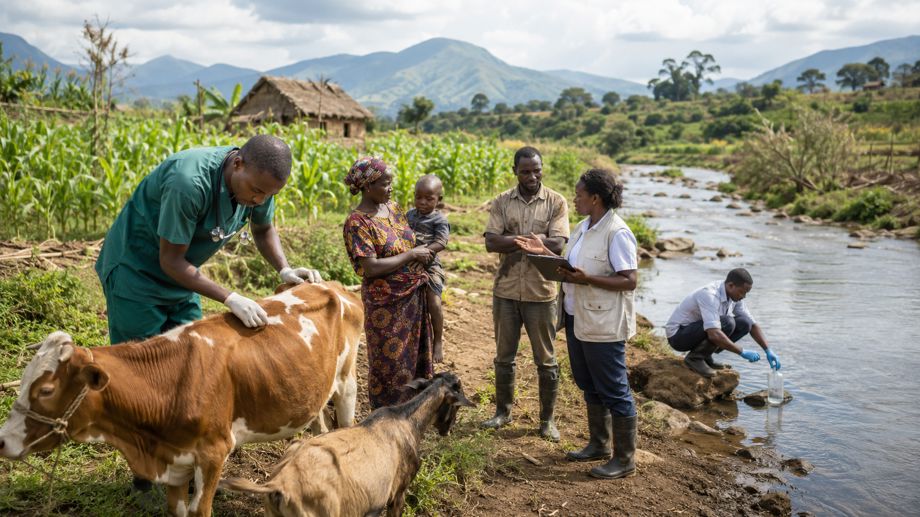
In short, AMR is not a problem confined to hospitals or farms – it is a shared ecological challenge, and a shared responsibility for a shared future. Responsible use of medicines, coordinated surveillance, and transparent communication are essential to protecting our shared One Health. Strengthening these pillars will require sustained collaboration, investment, and trust across all sectors. But the reward will be a safer, healthier, more resilient ecosystem for all.
Discover more about AnimalhealthEurope’s work here.