The most important fact about Victorian Treasurer Jaclyn Symes’s Budget is not the return to surplus; it is that Victoria has quietly become a permanently high-debt state. Symes seems to have decided that the political, economic and social risks of withdrawing support from households are greater than the risks of continuing to borrow. That is the real story of the Victorian Government’s 2026/27 Budget.
Debt without repair
Treasury has delivered a narrow operating surplus. The Government can now legitimately say it has restored black ink to the general government sector. But once the slogans are stripped away, the broader fiscal reality remains confronting.
Net debt continues to rise in absolute terms every single year of the forward estimates, climbing from $150.9 billion in 2024/25 to almost $200 billion by 2029/30. Whole-of-state borrowings approach $300 billion. Interest expense alone rises toward $14 billion annually. The State still runs persistent cash deficits despite the operating surplus. And Victoria remains dependent on economic growth, population growth and resilient property taxation to hold the entire architecture together.
This is not a fiscal repair budget. Nor is it a growth budget. It is something else: a stabilisation budget designed to preserve economic confidence, maintain service delivery and prevent political fragmentation during a period of rising geopolitical uncertainty, housing pressure, institutional strain and cost-of-living anxiety.
The Government understands the mood of the electorate. Across almost every budget paper, the same themes repeat relentlessly: healthcare access, affordability, public transport costs, youth crime, family violence, childcare, housing insecurity and workforce pressure.
The language is protective. The Budget’s organising slogan is Easier. Safer. More Affordable seems to be the Government’s governing theory. That theory rests on the proposition that the State remains interventionist because too many Victorians feel economically exposed.
A government chose stabilisation.
The Government is subsidising household life directly. It is cutting public transport fares, rebating vehicle registration, funding food relief, expanding emergency accommodation, widening healthcare access, increasing school support, subsidising childcare and investing heavily in social housing. This is not marginal spending at the edges of the budget. It sits at the centre of the fiscal strategy.
Critics will argue that this is exactly the problem. They will say Victoria cannot continue layering recurrent spending commitments onto an already stretched balance sheet. There is force in that criticism. But the counterargument is equally serious.
The social and economic pressures now visible across the Victorian system are not abstract future risks. They are already embedded in hospitals, housing waiting lists, family violence services, ambulance response times and youth justice systems.
The Departmental Performance Statement may have been the most revealing document in the entire budget set. It showed a state system under immense operational pressure.
Emergency departments are missing targets badly. Ambulance transfer times remain strained. Mental health performance indicators are deeply concerning. Housing waiting times are deteriorating. Child protection demand continues rising. Community perceptions of safety are weakening. These are not theoretical governance concerns. They are signs of institutional overload.
Hidden risks inside Victoria’s growth assumptions
Against that backdrop, the Government has chosen not to retrench the state. Instead, it has doubled down on service continuity. The political logic is understandable. A sharp austerity turn in the current environment would almost certainly intensify social instability.
Victoria is already dealing with elevated housing stress, rising insurance and utility costs, infrastructure fatigue, weak household confidence and increasingly visible inequality between asset owners and younger households locked out of housing markets. Treasury has concluded that fiscal contraction now carries greater systemic risk than gradual debt accumulation.
That is why the Budget’s debt narrative is so carefully framed. The Government rarely speaks about reducing debt in nominal terms because it cannot. Debt keeps rising. Instead, Treasury speaks about reducing debt “as a share of the economy”. That distinction matters enormously. The fiscal strategy does not depend on paying debt down. It depends on the Victorian economy growing fast enough that debt becomes relatively smaller over time.
Victoria is effectively operating on the assumption that strong population growth, resilient employment, infrastructure productivity and sustained tax receipts will allow the State to carry structurally higher debt permanently. The Budget is therefore attempting to transition Victoria into what might be called a “managed leverage” model of state finance.
The danger is obvious. If growth weakens materially, the entire framework becomes vulnerable very quickly.
Subtle but critical shift in Australian public finance
The State’s revenue base remains highly exposed to payroll taxation, land tax and property transaction activity. Treasury itself acknowledges weakening land transfer duty receipts as higher interest rates soften property conditions. At the same time, the Budget assumes inflation moderates, oil prices ease and economic growth stabilises. Those assumptions may prove optimistic in a world increasingly shaped by geopolitical fragmentation, energy volatility and weaker global trade conditions.
Victoria’s debt burden would be considerably easier to manage if interest rates returned quickly to pre-pandemic norms. But Treasury itself warns repeatedly that refinancing risk remains substantial. Billions of dollars of debt mature each year and must be refinanced at prevailing market rates. Interest expense is therefore becoming one of the largest structural claims on the Victorian budget.
The long-term fiscal challenge for Victoria
Importantly, this challenge does not disappear after the November state election. Whoever forms government after Victorians go to the polls will inherit the same balance sheet, the same infrastructure commitments, the same interest burden and the same structural spending pressures. Political slogans may change, but the fiscal arithmetic will not. Whether Labor retains office or the Coalition wins government, the next administration will confront the same underlying reality: Victoria’s debt trajectory eventually needs to be stabilised in more than ratio terms alone. The longer that the structural issue is deferred, the narrower the available policy options become.
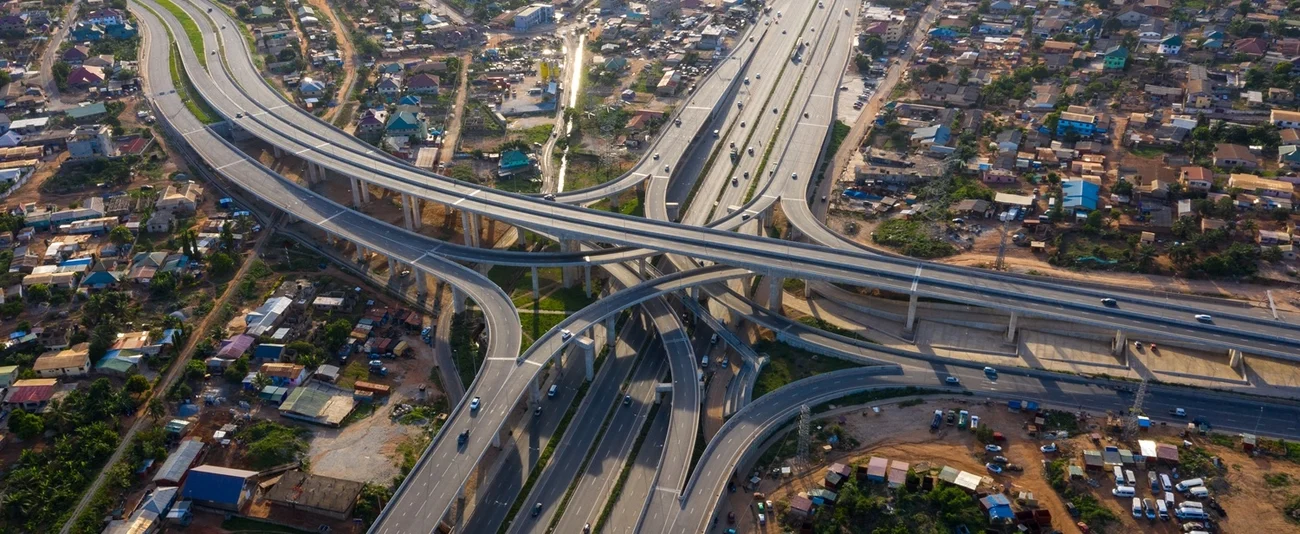
For all the public focus on net debt figures, the more important question is whether Victoria can continue funding both a very large infrastructure state and an increasingly expansive social-services state simultaneously. The infrastructure challenge alone is extraordinary. Budget Paper No. 4 confirms Victoria still carries around $181 billion in infrastructure projects underway or committed. The State is attempting to moderate annual infrastructure investment, but it remains historically elevated even after tapering from peak levels. Transport megaprojects, hospital redevelopments, rail upgrades, housing programs, water infrastructure and school expansion continue to dominate the capital pipeline.
Importantly, these are not one-off expenditures. Infrastructure creates future obligations. Every new hospital creates staffing costs. Every new rail line creates maintenance costs. Every new social housing project creates operational liabilities. Victoria is no longer simply building infrastructure. It is building an infrastructure-dependent state.
The architecture seems internally coherent
Healthcare expansion is tied to workforce participation. Childcare reform is tied to economic productivity. Housing policy is tied to transport infrastructure. Flexible work is tied to labour market participation. Gender-responsive budgeting is tied directly to economic policy formation. The Government is not treating these as isolated portfolios. It is treating them as interconnected systems.
The Gender Equality Budget Statement was particularly important in this regard. It revealed that Victoria is now embedding gender analysis into fiscal governance itself. That is a profound shift in public administration. The State is effectively using the budget as an instrument of behavioural and social restructuring. Flexible work, childcare access, women’s health, transport design and workforce participation are now all treated as economic infrastructure.
The danger is obvious. If growth weakens materially, the entire framework becomes vulnerable very quickly.
Whether one agrees with that ideological direction or not, it is undeniably sophisticated. Victoria is attempting one of the most ambitious experiments in integrated social-democratic budgeting currently operating in Australia. The difficulty is that sophisticated policy architecture does not eliminate fiscal arithmetic. At some point, Victoria will need a clearer debt reduction framework than the one currently offered.
At present, the Government’s strategy rests on five pillars: maintain operating surpluses, moderate infrastructure growth, preserve employment, stabilise debt-to-GSP and sustain revenue growth. What is missing is a hard medium-term pathway to reduce nominal debt accumulation.
A credible debt reduction framework would likely require four things: First, infrastructure prioritisation must become sharper. Victoria cannot continue financing every major transport ambition simultaneously. Projects should increasingly be ranked against measurable productivity uplift, housing supply effects and long-term economic return. Some politically attractive projects may need to be deferred. Second, the State will eventually need a more explicit operating expenditure rule.
That does not necessarily mean austerity. But recurrent spending growth cannot permanently outpace underlying revenue capacity. Third, Victoria should seriously examine asset recycling and alternative financing structures where economically defensible. The State’s balance sheet is now large enough that capital allocation discipline matters as much as tax policy. Fourth, the Treasury will need broader tax reform over time. Victoria is already moving gradually away from volatile transaction taxes toward recurring property taxation through commercial and industrial property tax reform. That transition is economically rational even if politically difficult. More stable tax bases matter enormously in highly leveraged fiscal systems.
The hardest trade-off, however, will not be economic. It will be political.

Victorians have become accustomed to a far larger state presence in everyday life. Governments now subsidise transport, childcare, healthcare access, energy transitions, housing pathways and social supports at a scale that would have seemed extraordinary fifteen years ago. Rolling back those commitments would carry genuine political and social consequences.
The next budget will matter enormously
If economic growth holds, Victoria may be able to stabilise its debt burden gradually while preserving most core services. But if growth weakens materially, Treasury will face a much more difficult choice between higher taxation, slower infrastructure delivery or expenditure restraint.
The next budget, in particular, will need to address three issues far more directly than this one did. First, the Treasury will need to provide a more transparent medium-term debt strategy that extends beyond debt-to-GSP ratios and confronts nominal debt growth openly. Second, the Government will need to articulate which infrastructure projects are genuinely non-negotiable and which remain politically aspirational. Third, Victoria will need a much more serious public conversation about the long-term operating costs of the state it is building, particularly in health, transport, housing and aged care.
The Allan Government deserves some credit for confronting immediate social pressures rather than pretending they do not exist.
A holding strategy not a repair strategy
This Budget is not reckless in the caricatured sense often used in political debate. It reflects real pressures visible across the Victorian economy and public sector. But neither is it a completed fiscal repair strategy. It is a holding strategy one designed to stabilise households, preserve confidence and buy time while Treasury hopes economic growth remains strong enough to carry a structurally larger and more interventionist state into the next decade.
Whether that gamble succeeds will depend far less on slogans about affordability than on one unforgiving reality: whether Victoria’s economy can continue growing fast enough to support the debt architecture it has now created.
*Tony Anamourlis is a tax law specialist in multinational transactions, negotiating with the Commissioner of Taxation and other regulators and is a regular contributor to Neos Kosmos.