
The Korea Aerospace Research Institute (KARI) has begun full-scale operation of a collaboration base with industry partners to strengthen Korea’s space transport capabilities, going beyond the private-sector transfer of Nuri rocket technology.
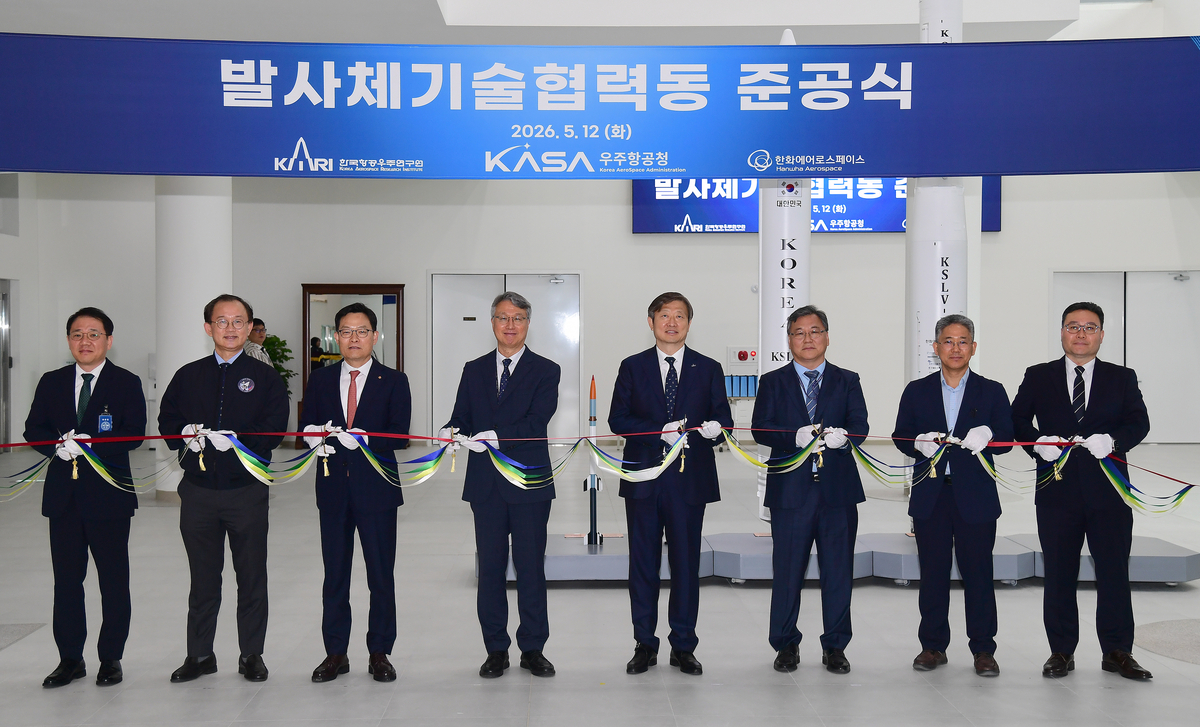
KARI held a completion ceremony Wednesday for the Launch Vehicle Technology Cooperation Center at its main campus in Daejeon. The center was built as part of the Korean Launch Vehicle Advancement Project. It is expected to serve as a hub for accelerating the private-sector diffusion of launch vehicle technology and industry collaboration.
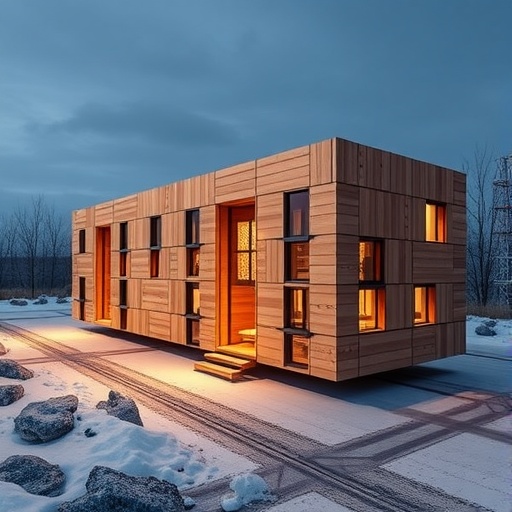
Construction of the building began in 2023 and was completed after about two years. The facility has a total floor area of 5,930 square meters within KARI’s main campus in Daejeon. It was designed with a structure of one basement level and three above-ground floors.
The interior includes a large conference room and small and medium-sized meeting rooms for technology transfer training, seminars and technical consultations between KARI and system integration companies. The second floor is configured as workspace for private partner companies, while the third floor is used by KARI personnel.
Hanwha Aerospace (012450.KS), the system integration company for the Nuri rocket, along with HD Hyundai Heavy Industries and Uconsystem, KARI’s launch vehicle development partners, will move into the second floor. HD Hyundai Heavy Industries will handle launch pad operation and maintenance, while Uconsystem will oversee the joint design and maintenance of the ground systems for launch operations. KARI expects that cooperation procedures with industry partners will proceed more quickly and smoothly through this arrangement.
In particular, KARI and Hanwha Aerospace plan to operate follow-up management and technology tracking programs for transferred technologies at the cooperation center. They also plan to carry out joint design and other development collaboration in the process of developing the Next-Generation Launch Vehicle, the successor to the Nuri rocket, continuously strengthening the foundation for cooperation to respond to national space development demand and secure space exploration capabilities.
“The Launch Vehicle Technology Cooperation Center will serve as a forward base for comprehensive collaboration with industry to advance Korea’s space transport capabilities, going beyond the private-sector transfer of Korean launch vehicle technology,” KARI President Lee Sang-chul said. “We will work closely with the system integration company and partner companies so that the center can inject new vitality into Korea’s space industry and serve as a bridgehead for future space exploration.”