Historical urban mobility project advances with submerged tunnel linking Santos and Guarujá, old promise takes shape with billion-dollar investment, unique technology in Brazil and direct impact on transport, logistics and regional integration in Baixada Santista.
The project for the tunnel between Santos and Guarujá has decisively advanced after the auction held in September 2025 and the signing of the public-private partnership contract on January 28, 2026.
The work, expected to be operational by 2031, will have 1.5 kilometers in length, with 870 meters submerged under the Port of Santos canal, and was contracted with the Portuguese group Mota-Engil, not with execution officially attributed to China.
According to the contracted design, the tunnel is expected to significantly reduce travel time between the two cities, which currently relies on ferries, boats, and a longer road route.
The proposal integrates urban mobility and port logistics in a region that has been dealing with queues, variable waiting times depending on the tide, and heavy pressure from passenger and cargo vehicle traffic for decades.
Santos-Guarujá Tunnel: origin of the project and concession model
The fixed link between Santos and Guarujá has been discussed for about a century, but only gained recent institutional traction with its inclusion in the Investment Partnership Program and the New PAC, in addition to the joint structuring between the Union and the Government of São Paulo.
The contract signed in 2026 consolidated the implementation phase and defined the concession for 30 years, including construction, operation, and maintenance.
The investment currently disclosed by official sources is in the range of R$ 6.8 billion to R$ 7 billion, a level higher than the US$ 1.2 billion mentioned in previous versions about the project.
A significant portion of the public funding was organized between the federal government and the São Paulo government, while the concessionaire will assume the execution and operation within the sponsored PPP model.
Although Brazilian authorities reported in 2025 that Chinese companies expressed interest in participating in the auction, the result of the bidding confirmed the victory of Mota-Engil Latam Portugal.
Therefore, the Chinese presence in the project does not appear, so far, as formally responsible for the construction, but rather as business interest reported during the competitive phase.
Structure of the submarine tunnel and integration with public transport
The submerged tunnel planned for Baixada Santista will be the first of its kind in Brazil and, according to federal disclosure, the first in Latin America.
The layout was designed to accommodate three lanes in each direction, one exclusive lane for light rail, in addition to dedicated passage for pedestrians and cyclists, expanding the crossing’s reach for different user profiles.
In practice, the project was not presented merely as a solution for cars and trucks.
The design also incorporates active circulation and rail transport, which changes the logic of connection between the two banks and enhances the potential for integration between urban areas, jobs, services, and access related to the port complex of Santos.
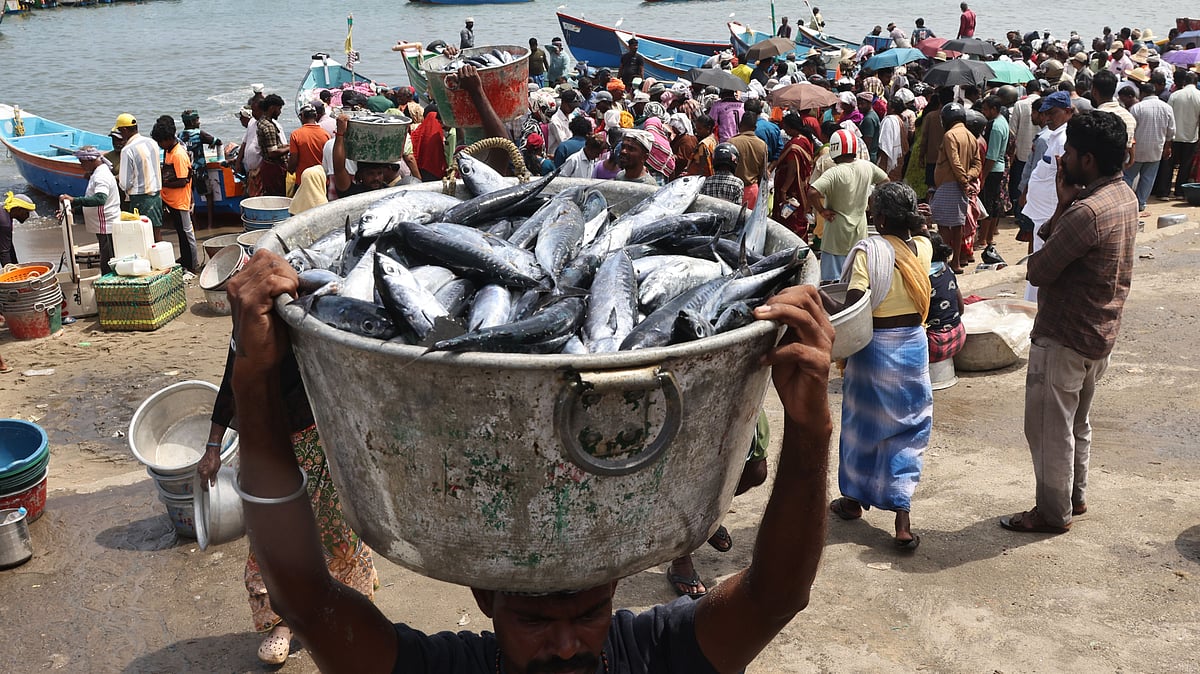
Today, the ferry crossing linking Santos-Guarujá records a high daily volume and has already been classified by the federal government as the largest in the world in terms of the number of vehicles transported.
Official data cites an average of 14 thousand vehicles per day, in addition to thousands of motorcycles, cyclists, and pedestrians, a scenario that helps to gauge the expected impact of a permanent link.
Engineering of the immersed tunnel and construction stages
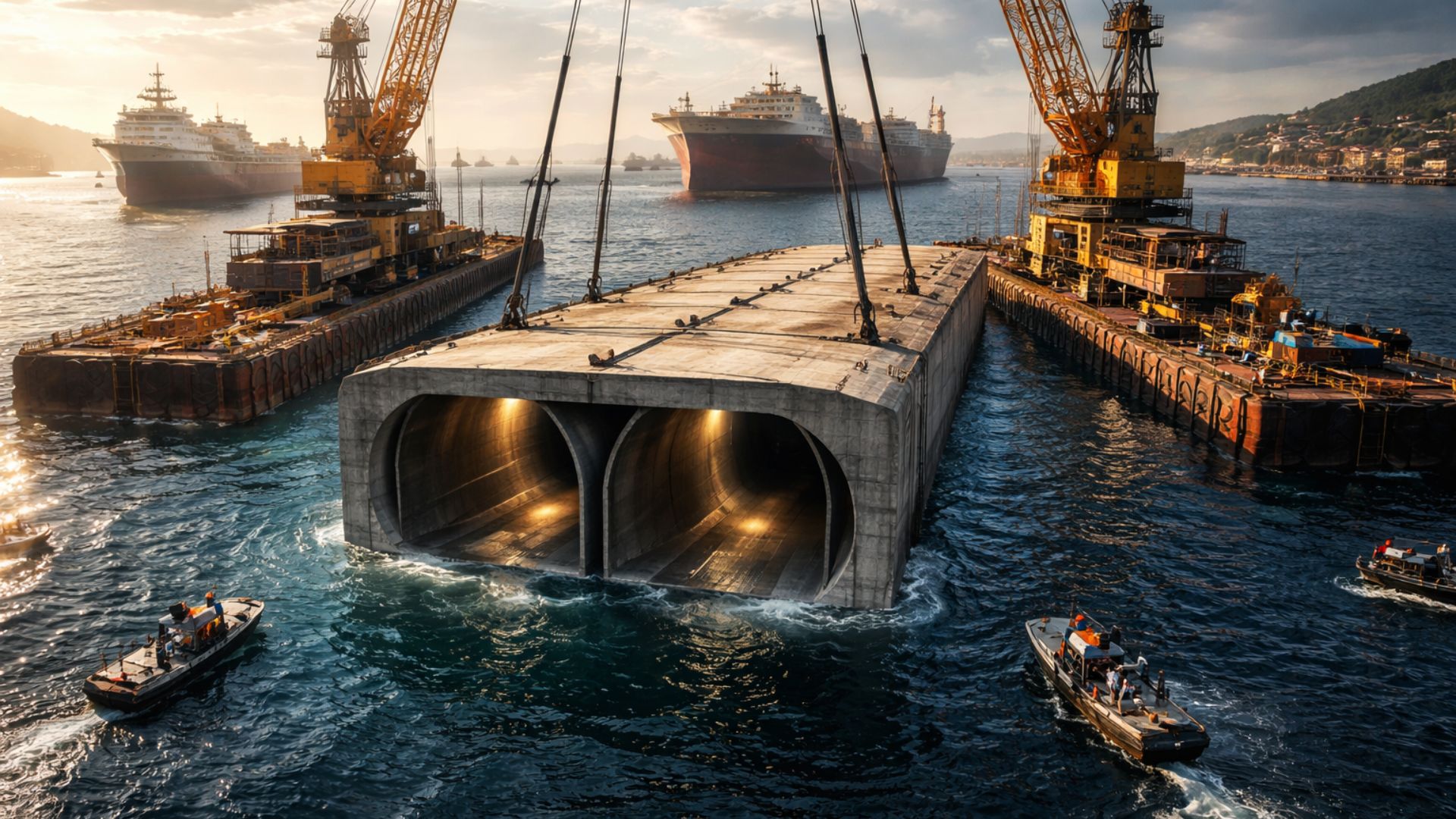
The chosen engineering is that of the immersed tunnel, a method in which concrete modules are produced outside the channel, transported by flotation, and then submerged over a trench prepared on the bed.
Subsequently, these elements are connected with specific sealing, forming a continuous structure capable of operating in a marine environment and under strict safety requirements.
This type of solution requires a long sequence of preparation, which includes executive projects, construction of a dry dock, preliminary dredging, manufacturing of the modules, immersion, coupling, and finalization of the accesses.
The official schedule released by the project’s website indicates initial works in 2027, pre-molding of the elements in 2028, and subsequent stages until completion and the start of operations in 2031.
Impacts on mobility and the Port of Santos
In addition to the mobility gain, the São Paulo government reports an expectation of 9 thousand direct and indirect jobs associated with the implementation of the tunnel.
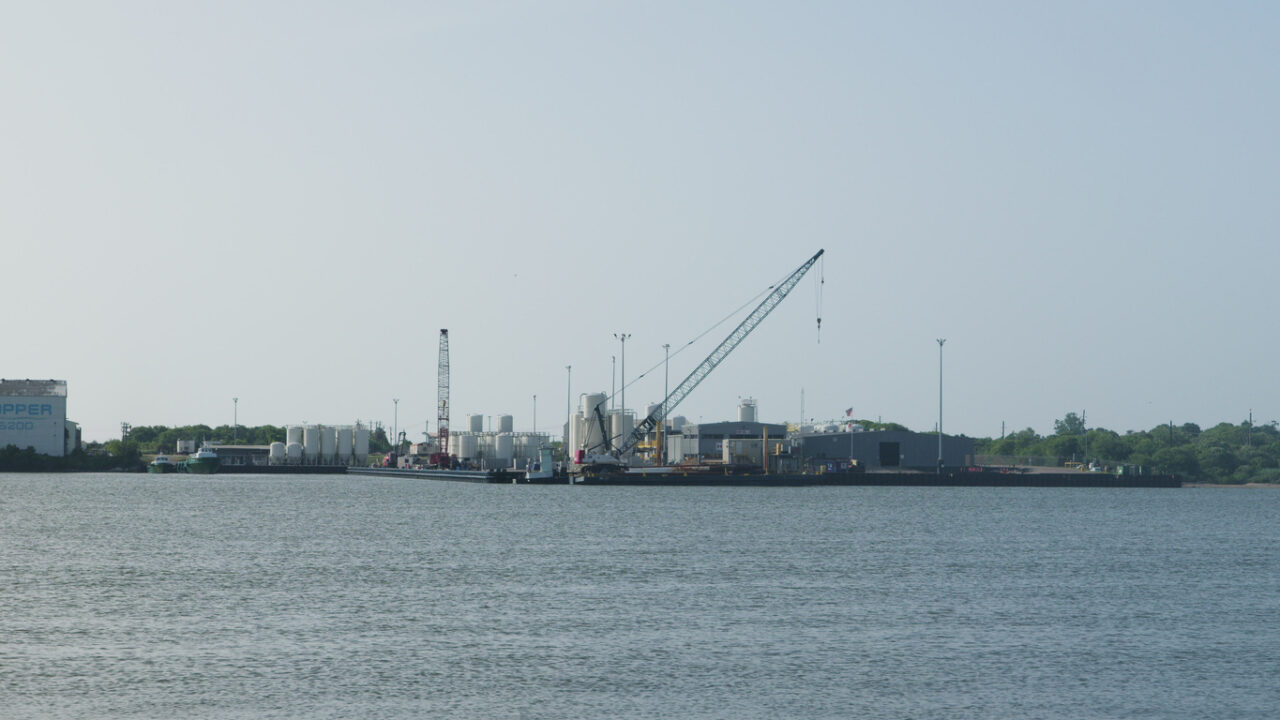
The project is also treated as a tool to alleviate urban bottlenecks and improve the connection with the Port of Santos, a central point of national logistics and the circulation of goods in the country.
The reduction in travel time is one of the most frequently cited arguments by the public entities involved.
There are different official and institutional estimates already released, ranging from crossings in about five minutes to more optimistic references of two minutes, always contrasting with the current wait, which can range from 15 minutes to over an hour, depending on the system used and operational conditions.
Environmental licensing and structural safety
The preliminary environmental license has already been issued by Cetesb, according to official information released after the contract was signed.
The analysis considered effects on mangroves, fauna, flora, noise, expropriations, and other conditions related to a sensitive area of the estuary, a decisive stage to allow the advancement of the next administrative and executive phases of the project.
In the operational phase, the tunnel will need to receive ventilation, drainage, lighting, monitoring, and emergency response systems, as occurs in large submerged structures.
The oversight of the contract will be the responsibility of Artesp and the Government of São Paulo, while the developments of the project and implementation remain linked to the formal schedule established after the signing of the PPP.
With the contract signed, the definition of areas for the manufacturing of modules, the executive detailing, and the preparation of the construction sites have become the focus of the current phase of the project.
The fixed crossing, awaited for generations in Baixada Santista, has moved from the realm of promises to the contractual stage that precedes heavy construction, with official operation scheduled for 2031.
Source link