Introduction: Transforming the Driving Experience Through Advanced Suspension Technology
The automotive industry is evolving rapidly as manufacturers strive to improve comfort, safety, performance, and efficiency. Modern consumers no longer view vehicles simply as transportation tools. Instead, they expect premium driving experiences, advanced technologies, and superior ride quality regardless of road conditions.
One technology that is playing a crucial role in meeting these expectations is automotive air suspension. Once reserved primarily for luxury vehicles, air suspension systems are now finding applications across commercial trucks, buses, electric vehicles, and premium passenger cars.
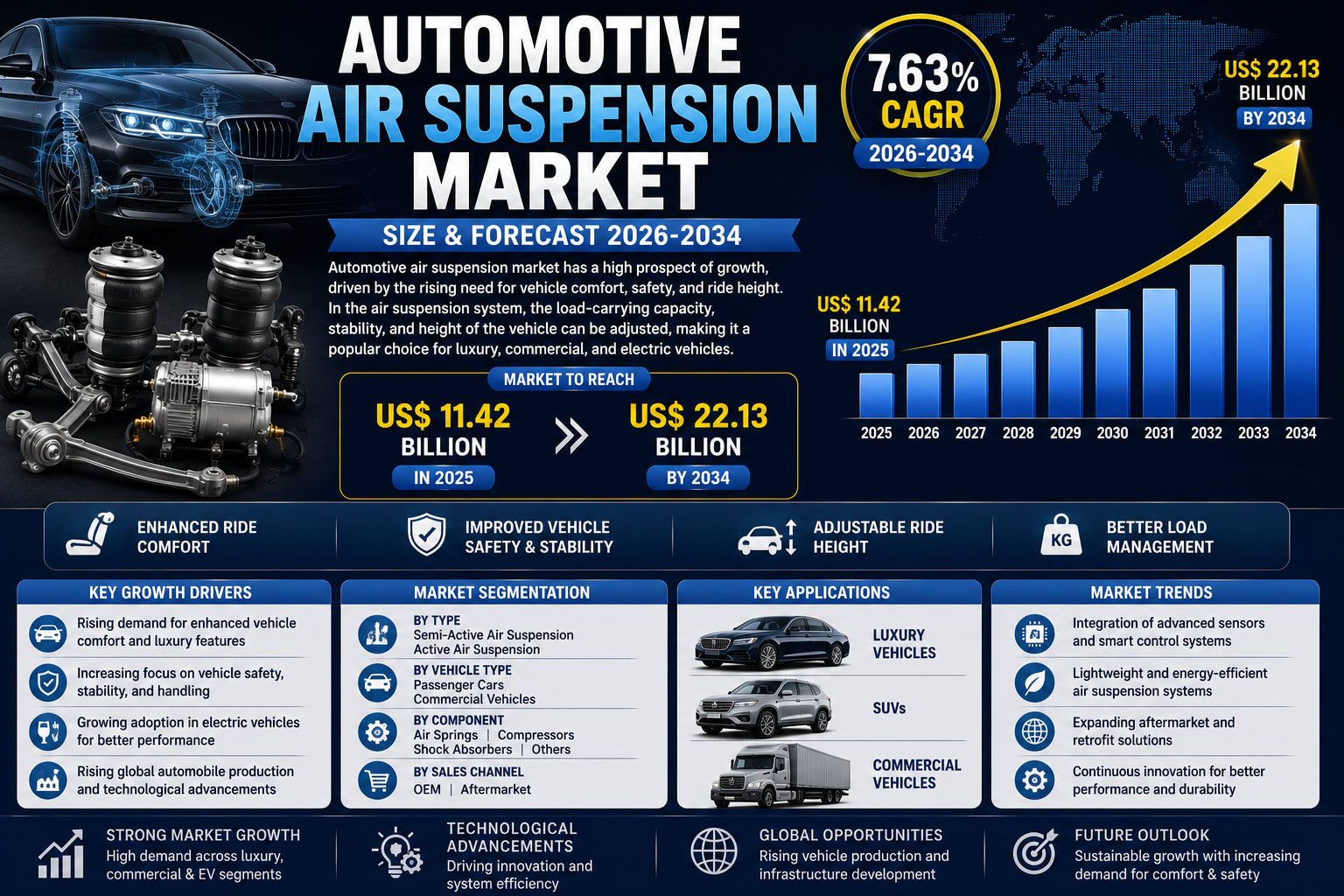
According to Renub Research, the Global Automotive Air Suspension Market is projected to grow from US$ 11.42 billion in 2025 to US$ 22.13 billion by 2034, registering a compound annual growth rate (CAGR) of 7.63% between 2026 and 2034. The market’s growth is being fueled by increasing demand for luxury automobiles, expanding commercial transportation networks, advancements in vehicle technology, and rising adoption of electric vehicles.
As vehicle manufacturers focus on delivering greater comfort, efficiency, and adaptability, air suspension systems are becoming an increasingly important component of modern automotive engineering.
Understanding Automotive Air Suspension Systems
Automotive air suspension is an advanced suspension technology that replaces traditional steel springs with flexible air-filled rubber bags, commonly known as air springs.
Unlike conventional suspension systems, air suspension allows the vehicle’s height, balance, and load-carrying characteristics to be adjusted automatically or manually. The system uses compressed air, sensors, compressors, valves, and electronic controls to maintain optimal ride conditions.
One of the most significant advantages of air suspension is its ability to adapt to varying road surfaces and load conditions. Whether carrying passengers, transporting cargo, or driving on uneven terrain, the system continuously adjusts itself to maintain stability and comfort.
As consumers increasingly prioritize ride quality and vehicle performance, air suspension technology is gaining widespread acceptance across multiple vehicle categories.
Luxury Vehicle Demand Is Driving Market Expansion
One of the strongest drivers behind the automotive air suspension market is the growing global demand for luxury and premium vehicles.
Consumers purchasing premium automobiles expect exceptional comfort, smooth handling, and advanced technology features. Air suspension systems help manufacturers meet these expectations by delivering superior ride quality compared to traditional suspension designs.
Luxury vehicle buyers particularly value features such as adjustable ride height, enhanced stability, improved handling, and reduced cabin vibrations.
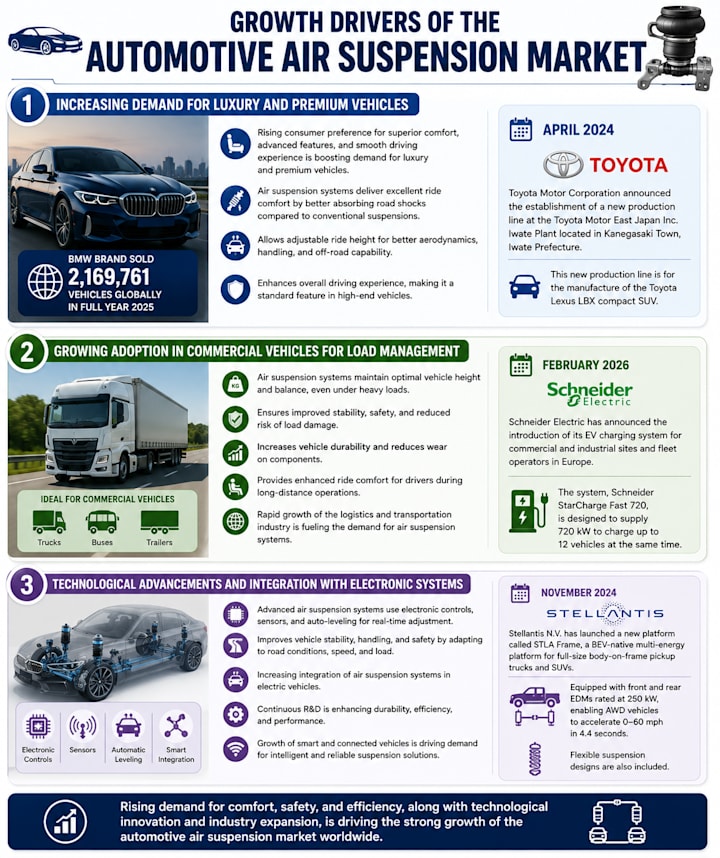
The report highlights that BMW sold more than 2.16 million vehicles globally during 2025, reflecting continued strength within the premium vehicle segment. Meanwhile, Toyota expanded production capabilities for its Lexus LBX compact luxury SUV, further demonstrating growing demand for premium vehicles worldwide.
As global incomes rise and luxury vehicle ownership expands, demand for sophisticated suspension technologies is expected to increase significantly.
Commercial Vehicles Are Adopting Air Suspension for Better Load Management
Commercial transportation is another major growth area for air suspension systems.
Trucks, trailers, and buses often operate under challenging conditions while carrying heavy loads over long distances. Maintaining vehicle stability and load balance is critical for safety, efficiency, and operational performance.
Air suspension systems automatically adjust ride height and load distribution, helping commercial vehicles maintain stability regardless of cargo weight. This improves handling, reduces tire wear, minimizes vehicle stress, and enhances overall safety.
Fleet operators also benefit from reduced maintenance costs and longer vehicle lifespans due to improved weight distribution and shock absorption.
As global logistics, transportation, and e-commerce industries continue expanding, demand for commercial vehicles equipped with advanced air suspension systems is expected to grow steadily.
Electric Vehicles Are Creating New Opportunities
The rapid growth of electric vehicles is opening new opportunities for the automotive air suspension market.
Electric vehicles require highly efficient designs to maximize driving range, energy efficiency, and overall performance. Air suspension systems help achieve these goals by optimizing vehicle aerodynamics and reducing drag through adjustable ride height functionality.
Lower ride heights at highway speeds can improve aerodynamic performance, while adjustable suspension settings enhance ride comfort and vehicle stability.
The report notes that Stellantis introduced its STLA Frame platform designed for electric pickup trucks and SUVs, incorporating advanced suspension capabilities to support vehicle performance and efficiency.
As electric vehicle adoption accelerates worldwide, air suspension systems are expected to become increasingly important components within future mobility platforms.
Technological Advancements Are Enhancing Performance
Continuous innovation in automotive technology is significantly improving the capabilities of air suspension systems.
Modern air suspension systems increasingly incorporate electronic control units, sensors, automatic leveling functions, and intelligent adjustment technologies. These systems continuously monitor road conditions, vehicle speed, weight distribution, and driving behavior to optimize suspension performance in real time.
Advanced systems can automatically adjust ride height to improve handling, increase stability during cornering, and enhance passenger comfort.
Integration with broader vehicle electronics ecosystems is also enabling smarter and more responsive suspension systems.
As connected and autonomous vehicle technologies continue advancing, intelligent suspension systems are expected to play a larger role in vehicle safety and performance.
Electronically Controlled Air Suspension Leads Innovation
Electronically controlled air suspension systems represent one of the most advanced segments within the market.
These systems rely on sensors, electronic control units, and automation technologies to continuously adjust suspension settings based on changing driving conditions. The result is improved ride quality, enhanced vehicle stability, and superior handling performance.
Luxury vehicles, electric vehicles, and premium SUVs increasingly utilize electronically controlled systems because they offer greater precision and adaptability than conventional alternatives.
Manufacturers are also integrating these systems with advanced driver-assistance technologies to further improve safety and driving dynamics.
As automotive digitalization continues progressing, electronically controlled suspension systems are expected to experience strong demand growth.
Air Spring Suspension Remains a Core Component
Air spring suspension systems form the foundation of modern automotive air suspension technology.
Instead of relying on steel springs, these systems utilize flexible air-filled rubber components that provide superior shock absorption and ride comfort. Air springs effectively reduce vibrations and road impacts, making them especially valuable for heavy-duty commercial vehicles and luxury passenger cars.
Their ability to adapt to varying load conditions helps improve vehicle stability and performance.
Growing demand for heavy-load transportation, premium mobility solutions, and enhanced passenger comfort continues to support strong adoption of air spring suspension technology worldwide.
Air Suspension Tanks Play a Vital Supporting Role
Air suspension tanks are another essential component within these systems.
These tanks serve as compressed air reservoirs that provide a stable supply of air for suspension adjustments. Consistent air availability allows suspension systems to respond quickly to changing road conditions and vehicle loads.
Manufacturers are increasingly focusing on lightweight, corrosion-resistant, and durable tank designs that improve system reliability while reducing overall vehicle weight.
As air suspension adoption expands across commercial and passenger vehicle markets, demand for advanced suspension tanks is expected to increase accordingly.
Bus Applications Continue to Grow
The bus segment remains an important contributor to market growth.
Public transportation authorities and private operators increasingly prioritize passenger comfort, accessibility, and safety. Air suspension systems help buses deliver smoother rides by minimizing vibrations and maintaining consistent ride height regardless of passenger load.
One particularly valuable feature is the kneeling function, which lowers the bus entrance to facilitate easier boarding and disembarking for elderly passengers, individuals with disabilities, and families with strollers.
Governments and transportation agencies continue investing in modern bus fleets equipped with advanced suspension technologies, creating sustained growth opportunities for manufacturers.
Truck Segment Benefits from Efficiency and Durability
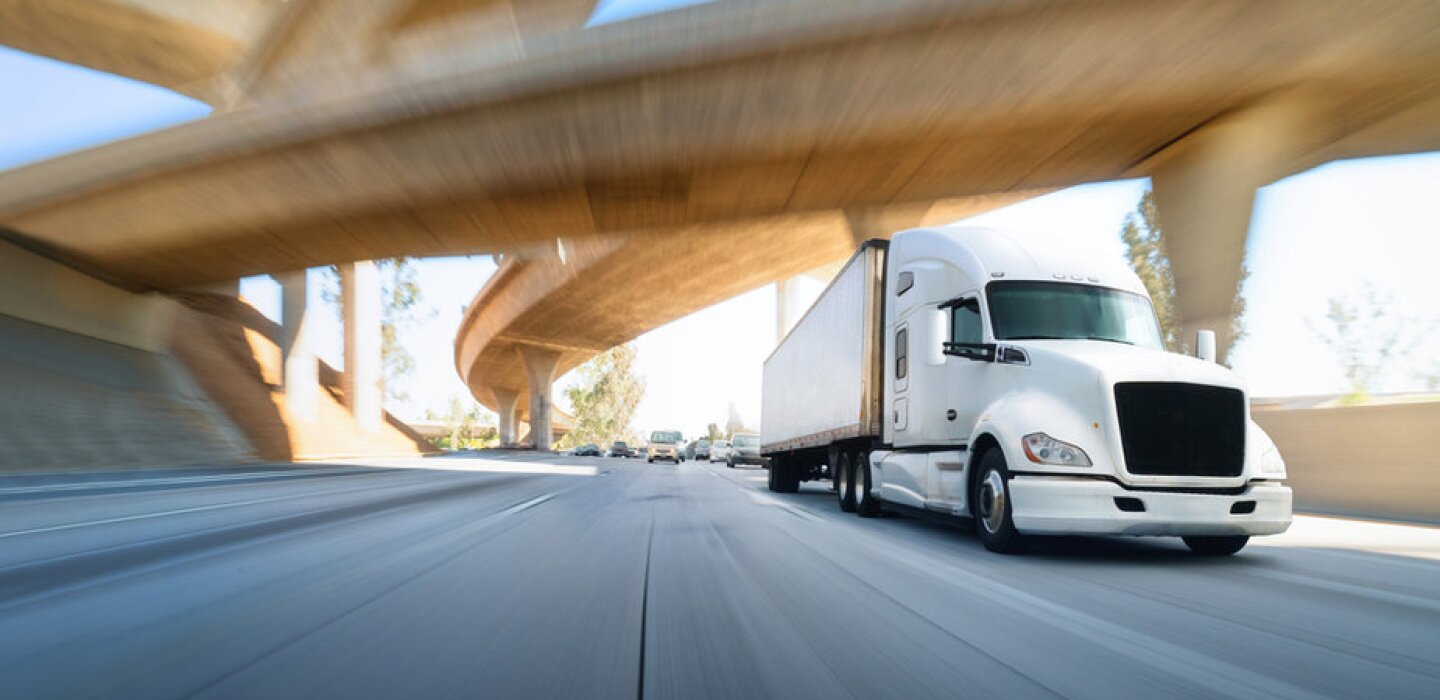
The truck segment is experiencing particularly strong demand for air suspension systems.
Heavy-duty trucks often operate under demanding conditions while transporting valuable cargo across long distances. Air suspension systems improve load distribution, reduce road vibrations, and enhance driver comfort.
Fleet owners increasingly prefer vehicles equipped with air suspension because they contribute to lower maintenance costs and improved operational efficiency.
As global freight transportation and logistics activities continue expanding, demand for advanced truck suspension systems is expected to remain strong.
Regional Markets Continue to Expand
United States
The United States remains one of the largest automotive air suspension markets globally. Strong demand for luxury vehicles, commercial transportation equipment, and electric trucks continues supporting market growth.
The report highlights Wabco Holdings’ partnership with a major electric vehicle manufacturer to develop next-generation air suspension technologies specifically designed for EV applications.
United Kingdom
The United Kingdom market is benefiting from growing demand for premium vehicles, electric mobility solutions, and advanced automotive technologies.
The report notes increasing opportunities within the aftermarket sector as aging vehicle fleets and growing EV adoption create additional demand for suspension-related services and upgrades.
India
India represents one of the fastest-growing opportunities in the market due to expanding logistics networks, rising commercial vehicle demand, and increasing sales of premium passenger vehicles.
The introduction of advanced trailer suspension systems by Hendrickson highlights growing industry investment within the Indian transportation sector.
Saudi Arabia
Saudi Arabia continues experiencing growth driven by strong demand for luxury vehicles, commercial transportation equipment, and infrastructure development projects.
The report highlights Nissan’s introduction of Adaptive Air Suspension with Intelligent Dynamic Damping technology for several premium vehicle models, reflecting growing consumer interest in advanced vehicle technologies.
Challenges Continue to Affect Adoption
Despite strong growth prospects, several challenges remain.
One of the biggest obstacles is the relatively high cost of air suspension systems compared to traditional suspension technologies. Components such as compressors, sensors, electronic control modules, and air springs increase manufacturing and maintenance expenses.
Reliability concerns also persist. Air leaks, compressor failures, sensor malfunctions, and harsh environmental conditions can affect system performance and durability.
For commercial operators, unexpected suspension failures can lead to downtime and operational disruptions.
Manufacturers continue investing in research and development to improve durability, reliability, and cost efficiency.
Leading Companies Driving Innovation
The automotive air suspension industry includes several major companies focused on advancing suspension technology and vehicle performance.
Key companies highlighted in the report include Hitachi Ltd., AB Volvo, Continental AG, ThyssenKrupp AG, Wabco Holdings Inc., Dunlop Systems and Components Ltd., AccuAir Suspension, and Firestone Industrial Products Company LLC.
These organizations continue investing in intelligent suspension systems, lightweight materials, electronic controls, and electric vehicle integration.
Their innovations are helping shape the future of automotive comfort, safety, and performance.
Final Thoughts
The global automotive air suspension market is entering a period of substantial growth as consumers, fleet operators, and vehicle manufacturers increasingly prioritize comfort, efficiency, and advanced vehicle technologies.
With the market projected to grow from US$ 11.42 billion in 2025 to US$ 22.13 billion by 2034, air suspension systems are becoming an increasingly important component across luxury vehicles, commercial transportation, and electric mobility platforms. Rising demand for premium driving experiences, expanding logistics operations, and rapid technological innovation are creating powerful growth opportunities throughout the industry.
While challenges related to cost and system reliability remain, ongoing advancements in electronic controls, smart suspension technologies, and vehicle integration are expected to strengthen adoption worldwide. As the automotive industry moves toward a future defined by connectivity, electrification, and intelligent mobility, air suspension systems will play a critical role in delivering the comfort, safety, and performance that modern drivers increasingly expect.