The Hidden Resource Paradox Driving the Clean Energy Revolution
There is a deeply counterintuitive truth embedded in the global shift toward clean energy: the technologies designed to reduce humanity’s dependence on extractive industries are, in fact, among the most mineral-intensive ever conceived. This is not a minor footnote to the energy transition story. It is one of its defining structural challenges, and understanding it is essential to grasping why sustainable and circular mining for the energy transition has moved from a niche policy discussion to one of the most consequential industrial conversations of the 21st century.
The trajectory of mineral demand over the coming decades is not a matter of speculation. According to the International Energy Agency’s landmark report The Role of Critical Minerals in Clean Energy Transitions, overall demand for minerals used in clean energy technologies could grow by roughly four times by 2040 in a scenario aligned with current climate policies, and by as much as six times under a full net-zero emissions pathway, compared with 2020 baseline levels. These are not marginal adjustments to existing commodity cycles. They represent a fundamental restructuring of global resource demand.
When big ASX news breaks, our subscribers know first
Why Clean Energy Technologies Are So Mineral-Intensive
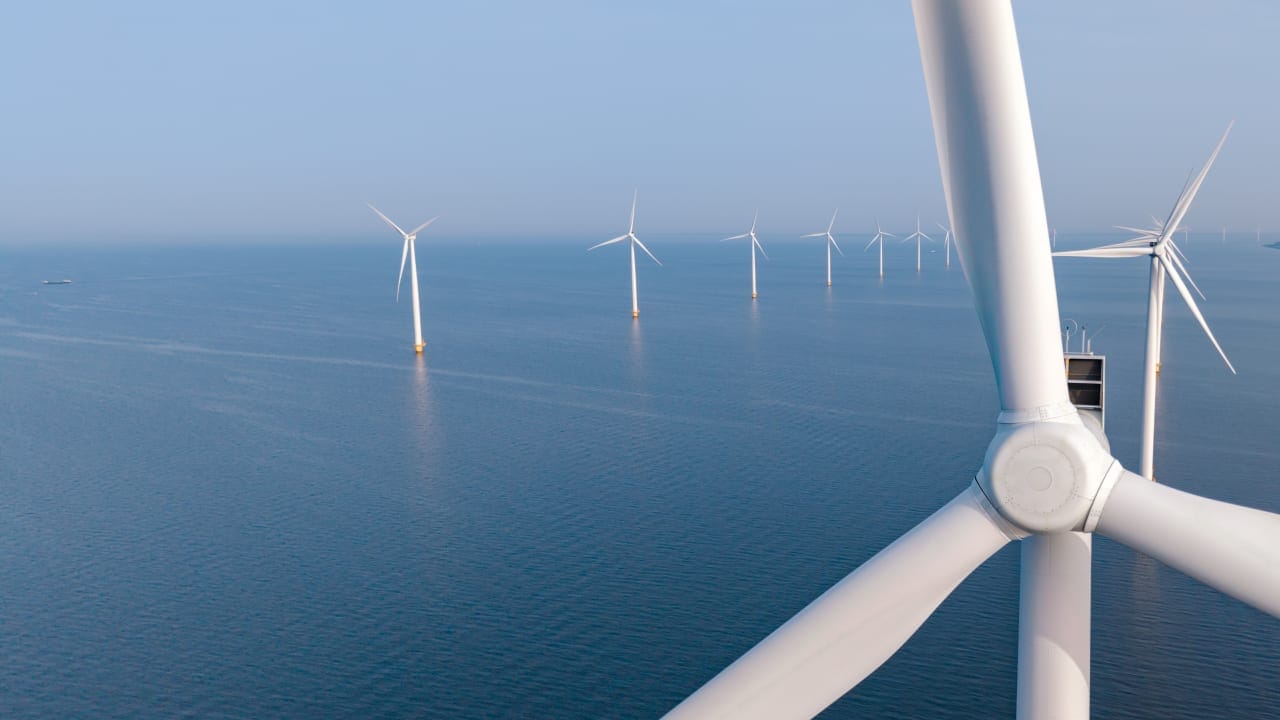
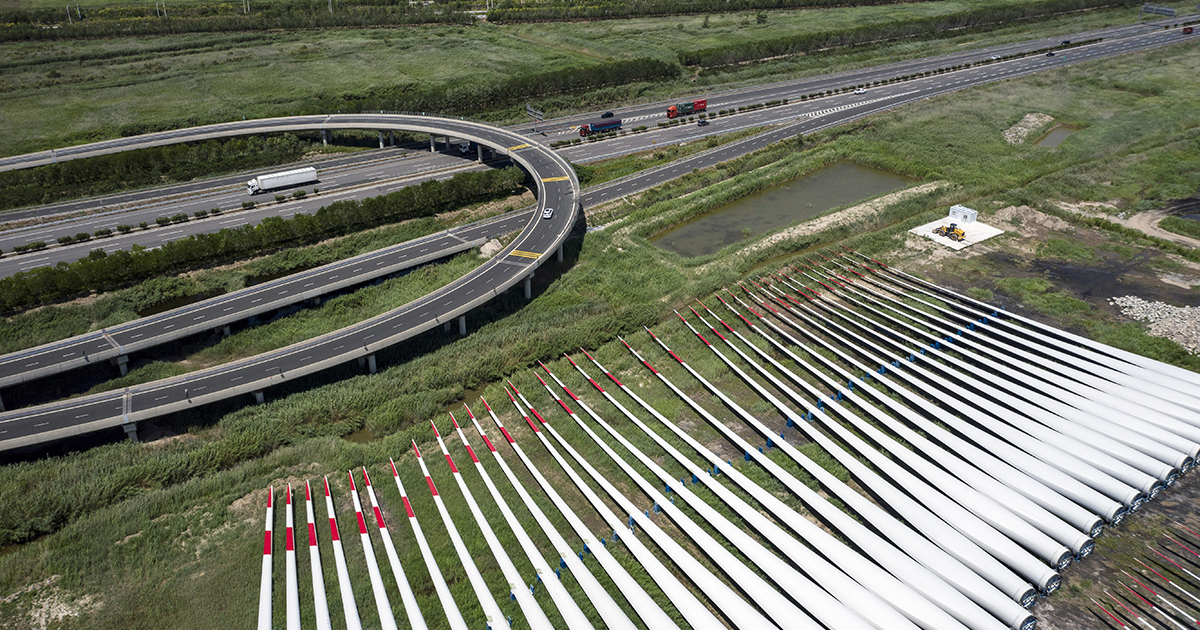
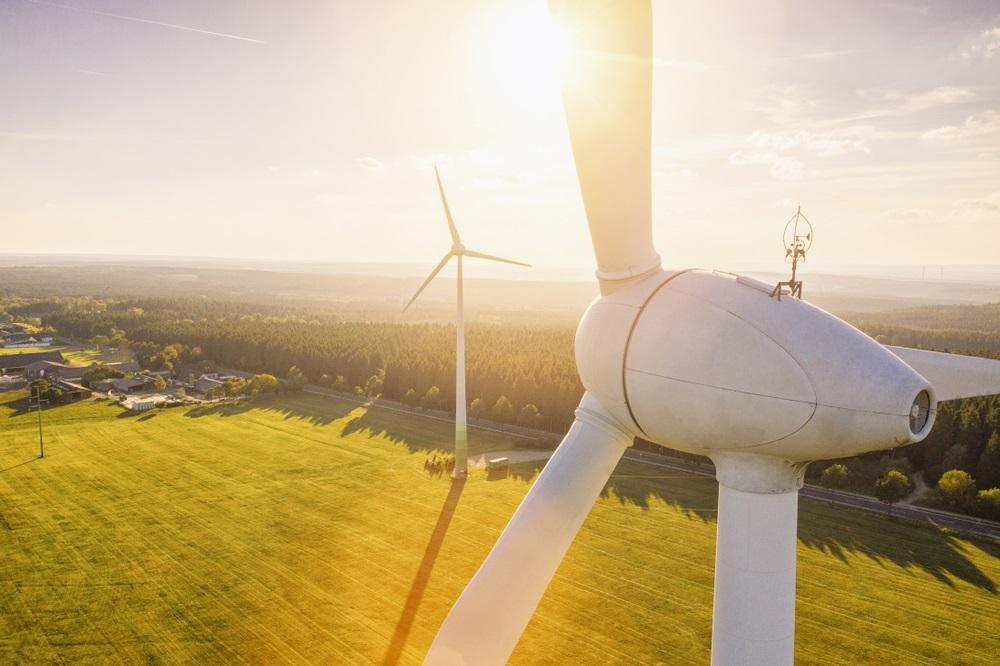
The mineral intensity gap between clean technologies and their fossil fuel equivalents is striking when examined at the unit level. A battery electric vehicle requires approximately six times more mineral inputs than a conventional internal combustion engine vehicle, incorporating lithium, nickel, cobalt, manganese, graphite, copper, and rare earth elements across its battery pack, drivetrain, and power electronics (IEA, 2021). An onshore or offshore wind power plant can require up to nine times more mineral resources per unit of generating capacity than an equivalent gas-fired power station, due to the large volumes of steel, copper, aluminium, and rare earth permanent magnets embedded in turbine structures and generators.
| Clean Energy Technology | Mineral Intensity vs. Fossil Fuel Equivalent |
|---|---|
| Electric Vehicles | ~6x more mineral inputs than internal combustion engines |
| Wind Power Plants | Up to 9x more mineral resources than gas-fired generation |
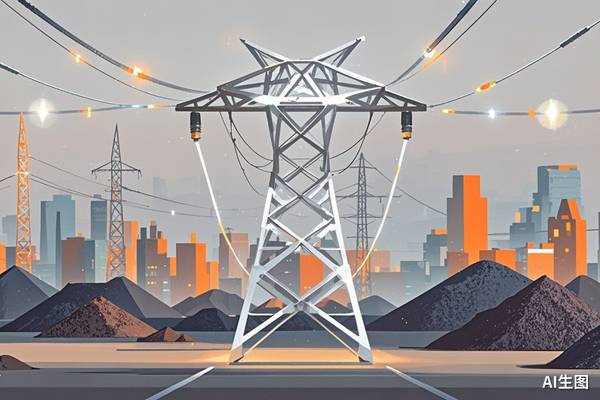
| Grid Infrastructure | Heavy reliance on copper, aluminium, and rare earths |
| Energy Storage Systems | Lithium, nickel, cobalt, and graphite at scale |
This is the core paradox at the heart of the energy transition: decarbonising the global economy does not reduce resource dependency. It redirects it, shifting pressure from carbon-based fuels toward a concentrated set of geologically scarce metals and minerals. The critical minerals and energy transition relationship, consequently, sits at the very centre of this structural challenge.
The Emerging Supply Gap: Demand Is Outpacing the Mining Pipeline
The scale of the emerging critical mineral supply gap is already measurable. Lithium demand has increased by around 30% in a single year, while nickel, cobalt, and rare earth elements have experienced annual demand growth of between 8 and 15% as electric vehicle adoption accelerates globally (PwC commentary on IEA Critical Minerals Outlook, 2024). These growth rates are compounding against a supply infrastructure that was not designed to respond at this pace.
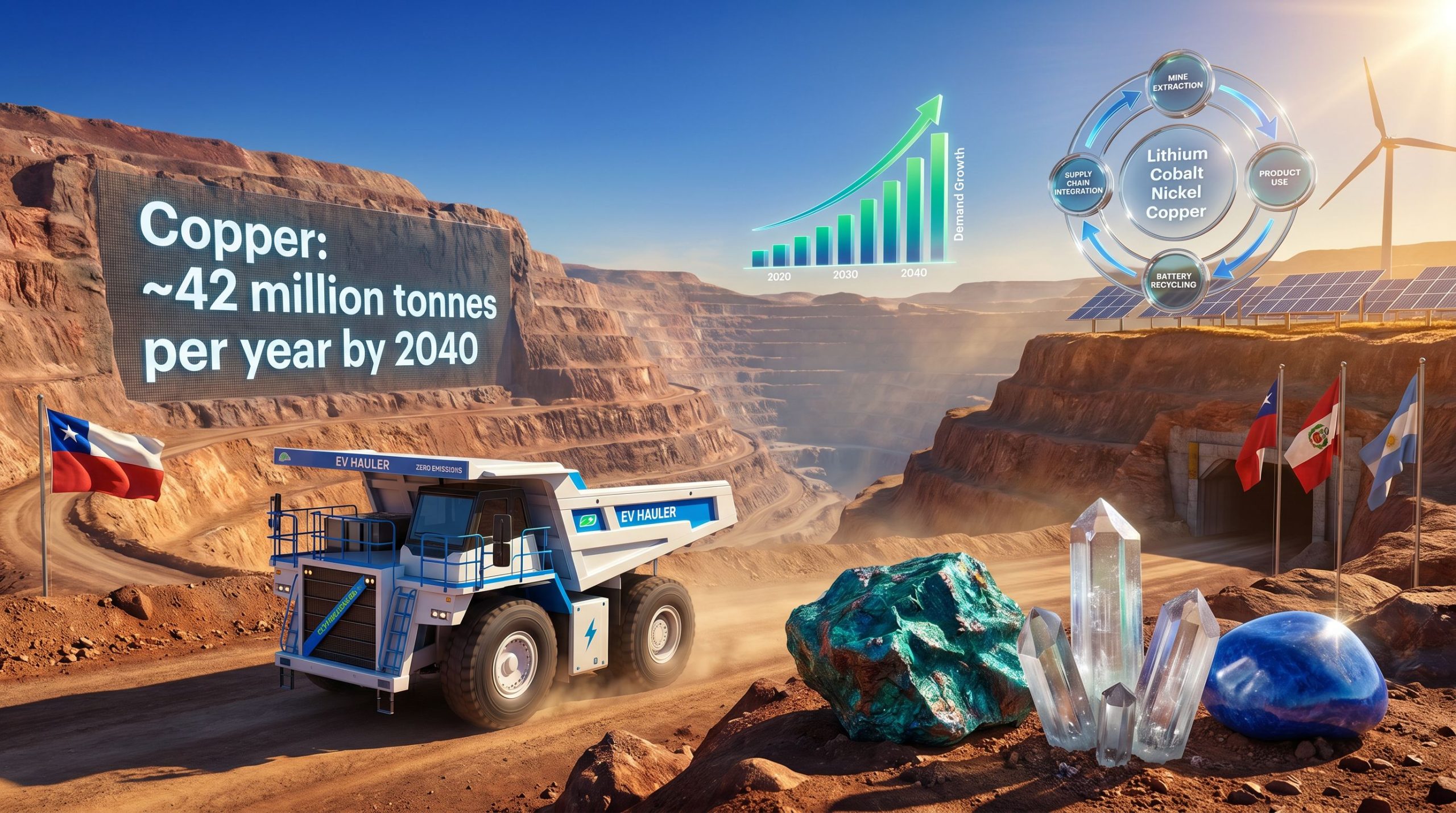
The copper situation is particularly instructive. Global copper demand is projected to reach approximately 42 million tonnes per year by 2040 (Reuters/S&P Global, 2026), driven simultaneously by electrification, renewable energy infrastructure, AI-linked data centres, and grid expansion. Supply, however, may fall short by more than 10 million tonnes annually at that point, according to S&P Global analysis. Clean energy technologies alone could account for more than 40% of global copper demand and up to 90% of lithium demand by 2040 (IEA).
| Critical Mineral | Projected Demand Trend | Key Driver |
|---|---|---|
| Lithium | Up to 90% of global supply absorbed by clean tech by 2040 | EV batteries and grid storage |
| Copper | ~42 million tonnes per year demand by 2040 | Electrification, AI infrastructure, renewables |
| Nickel | 8-15% annual demand growth | Battery cathodes |
| Cobalt | 8-15% annual demand growth | EV and energy storage batteries |
| Rare Earth Elements | Accelerating demand trajectory | Wind turbines, EV motors |
Furthermore, understanding the full scope of critical minerals demand helps contextualise just how significant these projected shortfalls could become across multiple sectors simultaneously.
Why Primary Mining Cannot Solve This Alone
A fundamental structural constraint shapes this entire discussion. Developing a new mine from initial discovery through exploration, feasibility assessment, permitting, financing, construction, and production ramp-up typically takes between 10 and 15 years, and often longer in jurisdictions with complex regulatory environments or contested land tenure. Clean energy deployment is accelerating today. The mines needed to serve 2040 demand should, in an ideal world, already be in permitting or early construction. Many are not.
Beyond timeline constraints, mineral supply chains remain geographically concentrated, creating systemic vulnerability to geopolitical disruption, trade policy shifts, and investment uncertainty. The challenge, as the IEA has consistently emphasised, is not geological scarcity in most cases. The real binding constraints are time, capital, infrastructure, and the increasingly non-negotiable requirement for environmentally and socially responsible operations.
Decarbonising Mining Operations: From ESG Obligation to Competitive Necessity
Even as the world needs more mining, the way mining is conducted must fundamentally change. The sector remains heavily reliant on diesel-powered heavy equipment, energy-intensive ore processing, and extensive haulage networks that collectively generate substantial greenhouse gas emissions. This creates a compounding problem: mining for clean energy using methods that generate significant carbon exposure undermines the climate credentials of the entire supply chain.
A growing toolkit of low-carbon technologies is beginning to reshape operational practice across the industry. In addition, mining decarbonisation is increasingly being recognised not merely as an ESG obligation but as a genuine competitive advantage in procurement negotiations:
| Technology Category | Application in Mining | Impact |
|---|---|---|
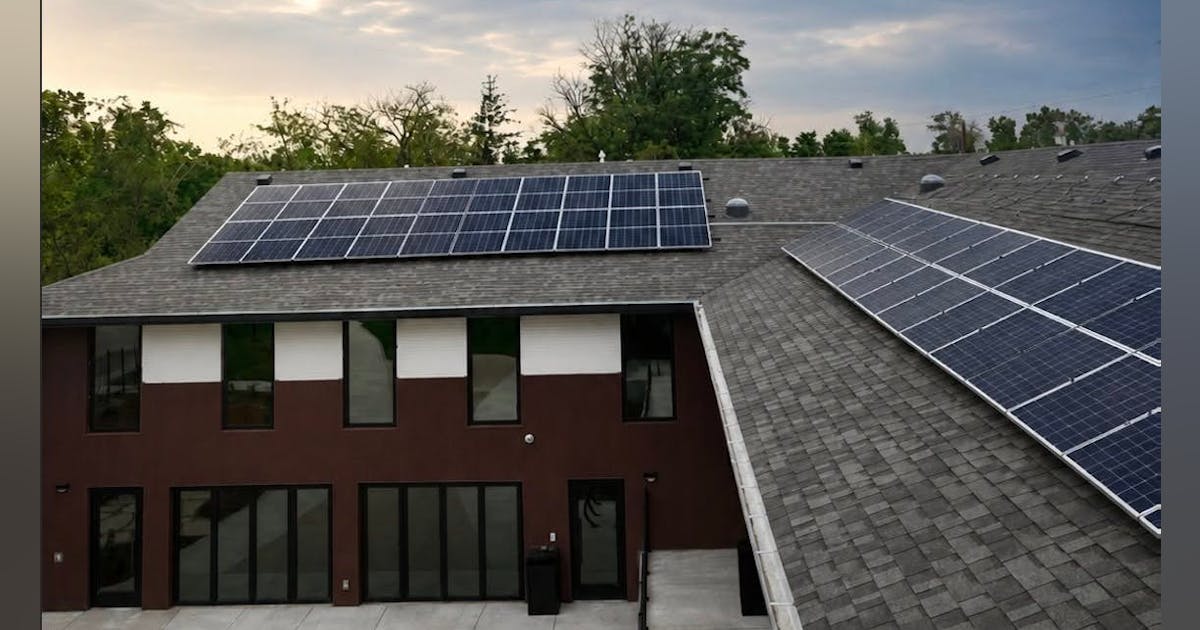
| Renewable Energy Integration | Solar, wind, and hybrid systems replacing diesel at mine sites | Reduces Scope 1 and 2 emissions |
| Equipment Electrification | Battery-electric haul trucks, loaders, and drills | Eliminates diesel combustion underground and at surface |
| AI-Driven Operations | Optimised scheduling, predictive maintenance | Reduces energy waste and idle time |
| Cleaner Processing | Hydrometallurgy, bioleaching, low-water processing | Cuts energy and water intensity of ore treatment |
| Tailings Innovation | Dry-stack tailings, paste tailings, reprocessing | Reduces waste volume and environmental liability |
The business case for this transition extends well beyond regulatory compliance. As global manufacturers, automakers, and utilities apply increasingly rigorous ESG screening to their procurement decisions, minerals produced with demonstrably lower emissions are positioned to command meaningful competitive premiums. The concept of certified low-emission minerals is gaining traction in procurement frameworks, and mining companies that decarbonise early are likely to find themselves with preferential access to the most demanding and lucrative supply contracts.
The Innovation Imperative: Technologies Shaping the Next Decade
Several emerging technologies warrant particular attention for their potential to reshape the environmental profile of mining at scale:
-
Direct lithium extraction (DLE): Unlike conventional evaporation pond methods that require years and consume vast land areas, DLE technologies extract lithium directly from brine solutions using selective adsorption or membrane-based processes, dramatically reducing land and water footprints. This is especially relevant for the Lithium Triangle, where water scarcity in the Atacama Desert creates serious ecological tension with conventional extraction methods.
-
Advanced ore characterisation: Precision sensing and real-time mineralogical analysis allow mines to optimise ore routing decisions, reducing the volume of low-grade material processed and cutting per-tonne energy consumption.
-
Rare earth magnet recycling and re-sintering: Recovering neodymium and other rare earth elements from end-of-life wind turbine generators and EV motors and re-processing them into new permanent magnets represents a technically demanding but strategically vital capability, given the geographic concentration of primary rare earth production.
-
Closed-loop water processing systems: In water-stressed regions across Latin America, Africa, and Australia, closed-loop water recycling in mineral processing circuits reduces both environmental impact and operating costs.
Circular Mineral Systems: The Strategic Second Pillar
Primary mining, even at its most efficient and responsibly governed, cannot close the supply gap projected for critical minerals by 2040 within the timeframes demanded by climate targets. This is the structural logic underpinning the growing emphasis on circular mineral systems as a genuine second supply pillar, not a supplementary afterthought.
The emissions case for recycled critical minerals is compelling. According to World Economic Forum analysis citing IEA estimates, recycled nickel, cobalt, and lithium can carry approximately 80% lower greenhouse gas emissions than their primary mined equivalents. Metal recovery from secondary sources is generally less energy-intensive than ore extraction and primary processing, and it does not generate the tailings, habitat disruption, or water-use conflicts associated with greenfield mine development.
| Product Category | Recoverable Critical Minerals | Current Recycling Rate (Global Avg.) |
|---|---|---|
| EV and Grid-Scale Batteries | Lithium, cobalt, nickel, manganese | Low to moderate; scaling rapidly |
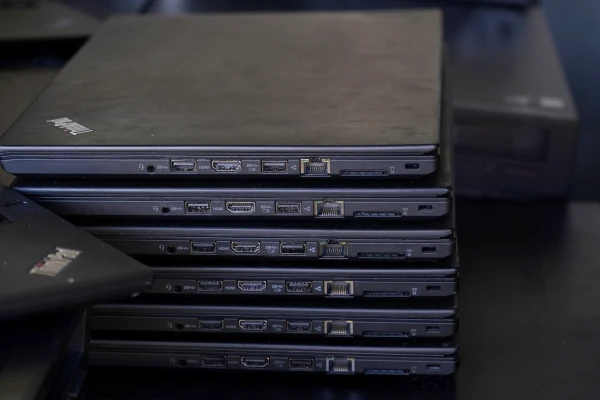
| Consumer Electronics | Cobalt, rare earths, copper, gold | Below 20% for most minerals |
| Solar Panels (End-of-Life) | Silicon, silver, indium, tellurium | Early-stage globally |
| Wind Turbine Components | Rare earth elements (permanent magnets) | Very low; emerging focus area |
| Industrial Infrastructure | Copper, aluminium, steel | Relatively mature pathways |
Three Structural Barriers That Must Be Overcome
Scaling circular mineral systems is not simply a matter of deploying more recycling facilities. Three deeper structural barriers constrain the transition:
-
Collection and sorting infrastructure: End-of-life product collection networks are fragmented and underdeveloped across most markets. Battery materials from consumer electronics, for example, are frequently lost to general waste streams rather than entering dedicated recovery pathways.
-
Design-for-disassembly gaps: Most current-generation lithium-ion batteries and consumer electronics are engineered for performance and cost efficiency, not for material recovery. Adhesives, composite materials, and compact architectures make disassembly both time-consuming and expensive, reducing the economic viability of recovery at scale.
-
Policy and capital alignment: Circular business models require regulatory foundations including extended producer responsibility legislation, minimum recycled content mandates, and green finance instruments specifically structured to fund collection and recovery infrastructure.
Consider a scenario in which 60% of lithium and cobalt in new EV batteries is sourced from recovered materials by 2040. The downstream effects would include reduced exposure to geopolitically concentrated supply chains, materially lower per-unit battery emissions, and measurable relief of pressure on primary mining in ecologically sensitive regions. Reaching that scenario requires investment in recycling infrastructure beginning now, not at the point when battery volumes peak.
Latin America’s Fork in the Road: Raw Material Exporter or Circular Economy Leader?
No region carries a more consequential stake in the future of sustainable and circular mining for the energy transition than Latin America. The region’s critical mineral endowment is extraordinary by any measure.
| Country | Key Mineral Resources | Strategic Significance |
|---|---|---|
| Chile | Copper, lithium | World’s largest copper producer; major lithium reserves |
| Peru | Copper, zinc, silver | Top-tier copper production capacity |
| Argentina | Lithium | Core member of the Lithium Triangle |
| Bolivia | Lithium | Among the world’s largest lithium reserve holders |
| Mexico | Silver, copper, zinc | Significant and diversified mineral base |
| Brazil | Nickel, rare earths, iron ore | Emerging critical mineral processing capacity |
Yet endowment alone does not determine strategic outcome. The critical question for Latin America is not whether it has the minerals the world needs. It clearly does. The question is how much of the value chain it can capture, and under what environmental and social conditions it chooses to develop those resources.
The Lithium Triangle spanning Argentina, Bolivia, and Chile contains some of the world’s most significant lithium brine deposits. However, the conventional evaporation pond extraction process used across much of this region is water-intensive in some of the driest ecosystems on the planet, raising serious questions about long-term social licence and ecological sustainability. The adoption of DLE technologies at scale in this region could reshape both the environmental profile and the economics of South American lithium production.
Integrating renewable energy into mine site operations is a particularly natural fit for Latin America, given the region’s exceptional solar irradiance across the Andean mining belt and strong wind resources in parts of Chile and Argentina. Mining companies that build renewable-powered operations in this region can position their output as among the lowest-emission critical minerals available globally, a credential that is becoming commercially valuable in ESG-screened procurement frameworks.
Environmental governance and the maintenance of social licence to operate represent non-negotiable prerequisites for realising this potential. Communities in mining regions across Peru, Chile, and Mexico have demonstrated repeatedly that projects lacking genuine community engagement and robust environmental standards will face disruption, delay, or cancellation regardless of their commercial or strategic merits.
The next major ASX story will hit our subscribers first
A Three-Layer Architecture for the Future Mineral System
Designing a mineral system capable of supporting sustainable and circular mining for the energy transition without generating a new wave of ecological and social harm requires thinking across three interconnected layers simultaneously:
-
Responsible primary extraction: Low-emission operations, strong environmental governance, community engagement, transparent ESG reporting, and continuous improvement in resource efficiency at the mine site level.
-
Extended product life and material efficiency: Design-for-disassembly standards, modular product architectures, reuse and refurbishment programmes, and minimum recycled content requirements embedded in product regulations.
-
Circular recovery and secondary supply: Industrial-scale collection infrastructure, advanced sorting and hydrometallurgical recovery systems, and the re-entry of recovered materials into manufacturing supply chains at sufficient purity and volume to substitute meaningfully for primary supply.
These three layers must be developed in parallel. Focusing exclusively on any one of them — whether scaling primary extraction, improving mine site efficiency, or building recycling capacity — while neglecting the others creates structural vulnerabilities that will eventually constrain the energy transition’s pace and cost. The broader battery metals landscape reflects precisely this need for multi-layered coordination across the value chain.
| Stakeholder | Required Action | Outcome |
|---|---|---|
| Governments | Extended producer responsibility laws, circular mandates, permitting reform | Enables circular infrastructure investment |
| Investors | ESG-aligned capital, green bonds for circular mining projects | Funds the transition at scale |
| Mining Companies | Decarbonisation roadmaps, circular sourcing commitments | Reduces emissions, improves supply resilience |
| Technology Developers | Scaling recycling and recovery technologies | Closes the material efficiency gap |
| Manufacturers | Design-for-disassembly standards, closed-loop procurement | Creates feedstock for circular systems |
Frequently Asked Questions
Can recycling alone replace the need for new mining?
No. Even under optimistic scenarios for circular mineral systems, recycling cannot substitute for primary mining within the timeframes required by the energy transition. The volume of end-of-life products available for recycling today reflects manufacturing volumes from a decade or more ago, which were far smaller than current and projected production. Primary extraction will remain essential for decades, which is precisely why decarbonising mining operations is as important as scaling recycling infrastructure.
Which critical minerals face the greatest supply risk by 2040?
Lithium, copper, cobalt, nickel, and rare earth elements all face meaningful supply-demand tension by 2040. Copper is particularly exposed given its role across virtually every electrification application, from EV charging infrastructure to grid expansion and renewable generation. The projected annual supply deficit of more than 10 million tonnes by 2040 (S&P Global) represents a material risk to clean energy deployment timelines if not addressed through a combination of new mine development, efficiency improvements, and secondary supply scaling.
Why does mine development take 10 to 15 years, and what does that mean for clean energy timelines?
Mine development timelines reflect the sequential nature of exploration, resource definition drilling, metallurgical testing, feasibility studies, environmental impact assessment, community consultation, permitting, financing, engineering, construction, and production ramp-up. Each stage carries its own uncertainties and potential delays. The implication for clean energy timelines is severe: mines needed to serve peak demand in the late 2030s require investment decisions and regulatory approvals to be made now, under conditions of considerable price and policy uncertainty.
What is the emissions advantage of recycled critical minerals?
Recycled nickel, cobalt, and lithium can carry approximately 80% lower greenhouse gas emissions than primary mined equivalents, according to World Economic Forum analysis citing IEA estimates. This advantage stems from the avoidance of ore extraction, crushing, grinding, and primary refining steps, all of which are energy-intensive. As clean energy supply chains face increasing scrutiny over their own carbon footprints, the emissions provenance of battery materials is becoming a competitive differentiator. For further context, research from UNEP highlights how circularity, equity, and responsibility are vital to achieving a genuinely clean energy system.
Key Takeaways
-
Demand is structural and accelerating: clean energy technologies are fundamentally more mineral-intensive than the fossil fuel systems they replace, with IEA projections pointing to a four to six times increase in critical mineral demand by 2040.
-
Primary mining remains essential but must decarbonise rapidly to maintain market access, social licence, and climate credibility.
-
A measurable supply gap is forming that cannot be resolved through extraction alone within the timeframes imposed by climate goals, particularly for copper, lithium, and rare earths.
-
Circular systems are a strategic necessity, carrying an approximately 80% emissions reduction advantage for key battery materials and offering meaningful supply chain diversification.
-
Latin America holds the raw material endowment to play a defining role in the energy transition, but capturing that opportunity requires investment in governance, downstream processing, renewable integration at mine sites, and circular infrastructure.
-
Policy, capital, and industry must align across all three layers of the mineral value chain simultaneously. No single lever is sufficient on its own.
This article draws on publicly available data and analysis from the International Energy Agency, S&P Global, PwC, the World Economic Forum, and the Carbon Trust. Projections and demand forecasts cited represent specific analytical scenarios rather than guaranteed outcomes and should be interpreted accordingly. Readers are encouraged to consult primary sources when making investment or policy decisions.
Readers seeking to deepen their understanding of critical mineral systems and sustainable mining practices can explore additional resources through the Carbon Trust Knowledge Hub, which covers decarbonisation strategy and the intersection of mining with climate goals.
Ready to Capitalise on the Next Major Critical Mineral Discovery?
As the clean energy transition accelerates demand for lithium, copper, cobalt, and rare earths — with IEA projections pointing to a four to six times surge by 2040 — Discovery Alert’s proprietary Discovery IQ model instantly notifies subscribers of significant ASX mineral discoveries, turning complex geological data into actionable investment insights the moment they are announced. Explore historic discoveries and the returns they generated, then begin your 14-day free trial to position yourself ahead of the market in the world’s most consequential resource cycle.