Transportation departments in California and New Jersey are advancing technology systems related to managing the heavy-duty trucking industry, turning to enhanced data collection for the planning and operation of freight logistics.
The California Department of Transportation (Caltrans) signed a $2.4 million agreement March 31 with Quarterhill Inc., a provider of intelligent transportation technology, for three new projects extending the company’s deployment of weigh-in-motion data collection programs.
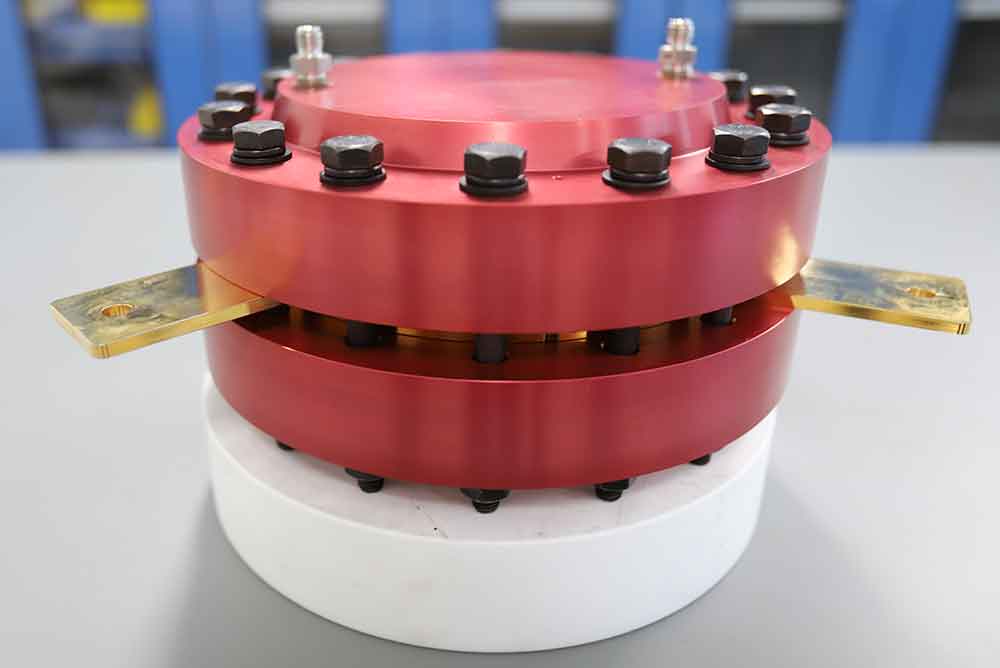
Similarly, the New Jersey Department of Transportation (NJDOT) has partnered with Quarterhill to provide “maintenance, inspection, repair, calibration, and installation oversight for New Jersey’s network of Weigh-in-Motion (WIM) stations and Traffic Volume System (TVS) sites,” according to a company press release March 24.
New Jersey operates 95 WIM sites across the state and 50 TVS sites. Quarterhill will be involved with supporting the traffic-data collection infrastructure, and overseeing and monitoring sensors, among other technology functions. NJDOT officials could not immediately be reached for comment regarding the WIM project.
In California, three projects in San Bernardino, Riverside and San Diego counties — all in Southern California where freight traffic is most robust — will deploy a range of WIM and data collection tech.
The WIM systems “provide detailed vehicle weight and traffic data used to support infrastructure monitoring, freight planning, and transportation system performance analysis,” Chuck Myers, CEO for Quarterhill, said in an email. “This data can be accessed through secure platforms and integrated directly into existing agency systems, enabling real-time insights and long-term planning.”
In Riverside County, the Desert Hills Commercial Vehicle Enforcement Facility will deploy a commercial vehicle e-screening system which allows law enforcement to focus on inspecting vehicles that may not be compliant.
“This approach improves enforcement efficiency while reducing congestion at inspection facilities,” Myers said, indicating the system is able to sort and screen vehicles while they are in motion — gathering data related to the weight of the vehicle, tire condition, overall truck height and more.
In San Diego County, the Route 805 WIM Expansion project will expand WIM coverage along the freight corridor, allowing commercial vehicle weight and traffic data to help support transportation planning.
The Interstate 10 WIM Data Collection System in San Bernardino County will also provide detailed vehicle weight and traffic data which officials can use for transportation analysis and planning. All three systems are expected to come online this year and into 2027, company officials said.
California has 110 WIM data collection sites across the state, including several now under construction, which help to serve the movement of more than 2.4 billion tons of freight annually across the state’s highway network. Caltrans officials could not immediately be reached for comment on the three WIM projects in Southern California.
Leveraging AI and machine learning, the technologies deliver automation and predictive insights, helping organizations like Caltrans and NJDOT to manage transportation networks more efficiently.
“In practice, these types of deployments typically result in improved inspection targeting, reduced congestion at weigh stations, and more accurate data for infrastructure planning: helping agencies extend roadway lifespan while improving safety outcomes,” Myers said.
New technology tools, often powered by AI, which are leveraging the vast amounts of data transportation departments collect — or can collect — have helped to usher in new planning and development initiatives at transportation departments.
Increased access to new data management and analysis tools has released “an unfathomable amount of power for a lot of our DOTs,” Gregory Ciparelli, chief data officer at the Connecticut Department of Transportation, said during a panel April 10 hosted by the Transportation Research Board. “We’re doing things that only five years ago might have been kind of pie-in-the-sky ideas, and they’re very much a reality now.”
The new paradigm being shaped by AI is helping to reshape DOT workforces to align them with data collection and analysis projects like those in California, New Jersey and elsewhere, he said.
“Much like we had to break down those silos in order to kind of link a lot of the data, we also want to break down those silos related to some of the skill sets,” Ciparelli said.