Just a few years ago, video conferencing was often viewed as a convenient business tool used occasionally for remote meetings. Today, it has become one of the most essential technologies powering modern communication.
Whether employees are collaborating across continents, students are attending virtual classes, doctors are consulting patients remotely, or businesses are engaging with customers online, video conferencing has fundamentally changed how people interact and work. What began as a communication solution has evolved into a complete collaboration ecosystem that supports productivity, flexibility, and global connectivity.
The rise of hybrid work models, rapid digital transformation, and advancements in cloud computing have accelerated the adoption of video conferencing solutions across virtually every industry. Organizations increasingly depend on virtual communication platforms to maintain efficiency, reduce costs, and connect distributed teams.
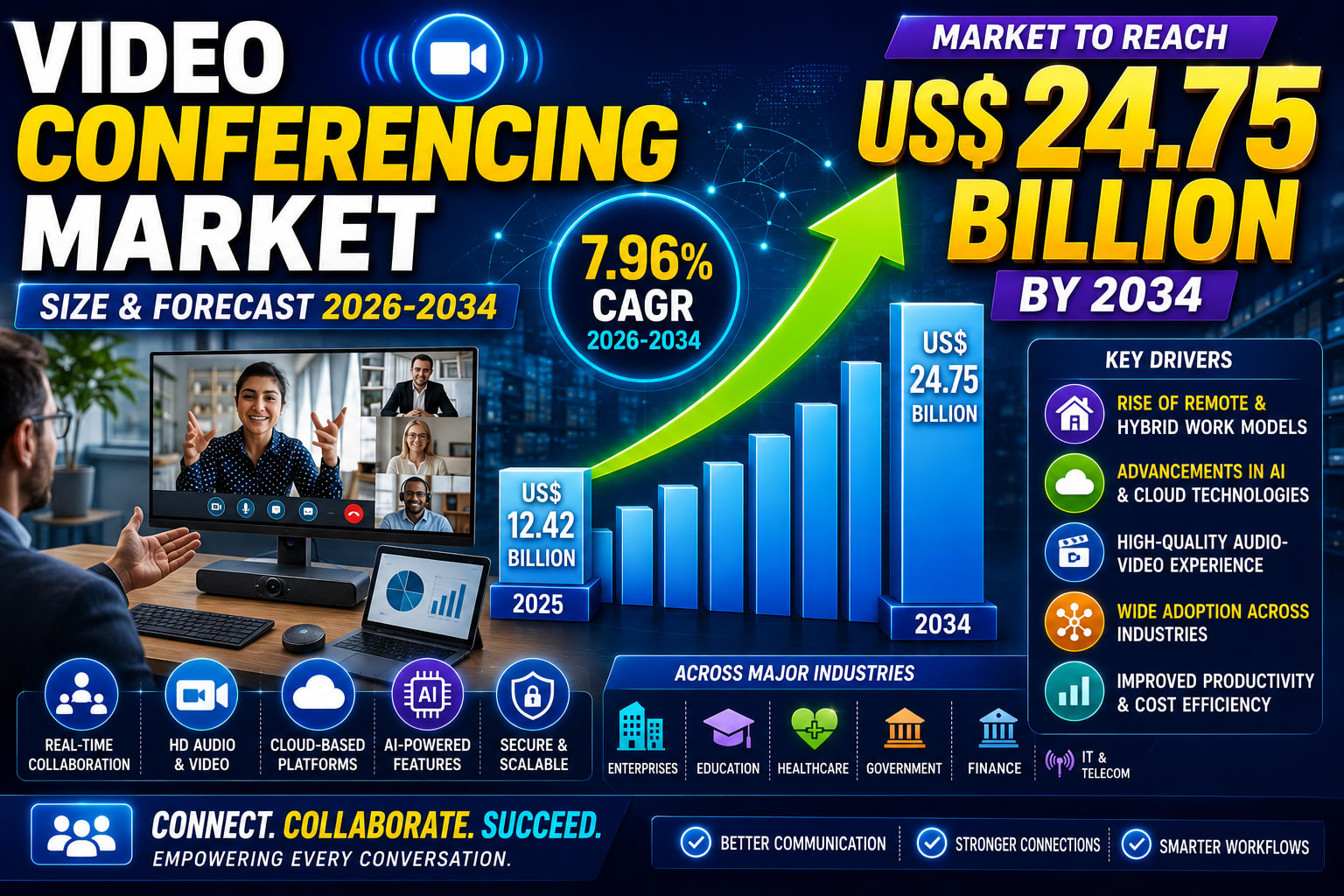
According to Renub Research, the global Video Conferencing Market is projected to grow from US$ 12.42 billion in 2025 to US$ 24.75 billion by 2034, registering a compound annual growth rate (CAGR) of 7.96% from 2026 to 2034. This growth is being driven by expanding remote and hybrid work environments, AI-powered collaboration tools, cloud-based platforms, and increasing demand for real-time communication solutions.
As organizations continue to embrace digital-first strategies, video conferencing is becoming more than a communication platform—it is becoming the foundation of the modern workplace.
The Evolution of Workplace Communication
Business communication has undergone a dramatic transformation over the past decade.
Traditional meetings once required physical attendance, extensive travel, and significant logistical planning. While face-to-face interactions remain valuable, advances in communication technology have made virtual collaboration both practical and efficient.
Video conferencing allows individuals and teams to communicate instantly regardless of location. Employees can participate in meetings, share presentations, collaborate on projects, and make decisions in real time without leaving their homes or offices.
This flexibility has become increasingly important as organizations adopt more agile and distributed work structures. Businesses are no longer limited by geography when hiring talent, serving customers, or managing operations.
Video conferencing enables companies to operate globally while maintaining strong communication and collaboration across teams.
Hybrid Work Is Driving Unprecedented Demand
One of the most important factors fueling market growth is the widespread adoption of hybrid work models.
Many organizations have moved beyond traditional office-centric operations and now offer employees greater flexibility regarding where and how they work. Some employees work remotely full-time, while others split their time between home and the office.
This shift has created an urgent need for reliable communication tools that can support seamless collaboration across locations.
Video conferencing platforms provide the infrastructure necessary to keep distributed teams connected. Employees can participate in meetings, conduct brainstorming sessions, manage projects, and maintain workplace relationships regardless of physical location.
As businesses continue refining hybrid work strategies, demand for advanced conferencing solutions is expected to remain strong for years to come.
Artificial Intelligence Is Transforming Virtual Meetings
Artificial intelligence is becoming one of the most influential innovations within the video conferencing industry.
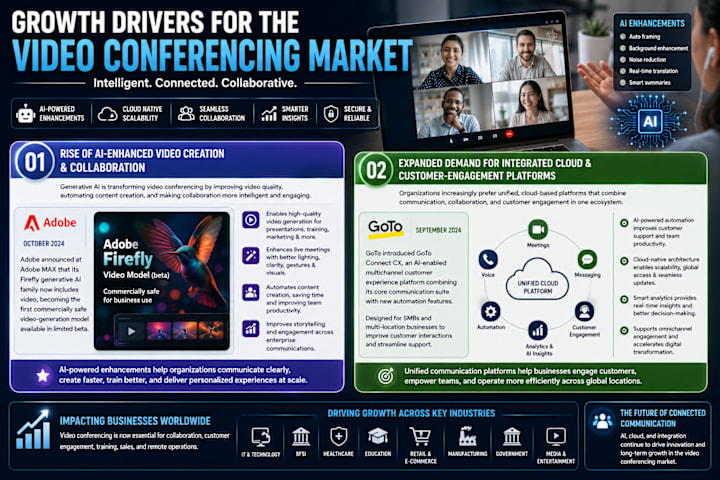
Modern platforms increasingly leverage AI to enhance meeting quality, automate routine tasks, and improve user experiences. Features such as real-time transcription, automated meeting summaries, noise suppression, speaker tracking, and intelligent camera framing have become increasingly common.
AI-powered tools help participants stay engaged while reducing distractions and improving productivity. Automatic transcription allows users to review discussions later, while intelligent summarization helps teams capture key decisions and action items.
Real-time translation capabilities are also breaking down language barriers, enabling smoother communication between global teams.
As AI technology continues to advance, virtual meetings are becoming more efficient, accessible, and user-friendly.
Cloud Technology Is Expanding Accessibility
The rapid adoption of cloud-based platforms has played a major role in the success of video conferencing solutions.
Cloud infrastructure eliminates many of the limitations associated with traditional communication systems. Organizations can deploy conferencing tools quickly, scale usage as needed, and access new features through regular software updates.
Cloud-based platforms also support greater flexibility by enabling users to join meetings from virtually any device, including laptops, smartphones, tablets, and dedicated conferencing systems.
This accessibility is particularly important for organizations with geographically dispersed teams or international operations.
By reducing infrastructure requirements and simplifying deployment, cloud technology has made advanced communication tools available to businesses of all sizes.
Beyond Meetings: The Rise of Digital Collaboration
Video conferencing has evolved far beyond simple video calls.
Modern platforms integrate a wide range of collaboration tools designed to support productivity and teamwork. Screen sharing, virtual whiteboards, file collaboration, live polling, breakout rooms, and workflow integrations have become standard features.
These capabilities allow organizations to conduct training sessions, brainstorming workshops, client presentations, and collaborative projects within a single digital environment.
Many platforms also integrate with customer relationship management software, project management tools, and enterprise productivity suites, creating unified communication ecosystems.
As businesses seek to streamline workflows and improve efficiency, integrated collaboration experiences are becoming increasingly valuable.
Education and Healthcare Are Expanding Adoption
Although business remains a major market segment, video conferencing adoption extends far beyond the corporate world.
Educational institutions have embraced virtual learning technologies to support remote and blended learning environments. Students can access lectures, collaborate on assignments, and interact with instructors regardless of location.
Healthcare providers are increasingly using video conferencing to deliver telemedicine services, enabling patients to consult healthcare professionals remotely. Virtual appointments improve accessibility, reduce travel requirements, and support more efficient healthcare delivery.
Government agencies also rely on video conferencing for internal collaboration, public services, training programs, and citizen engagement initiatives.
The expanding range of applications highlights the versatility and growing importance of video communication technologies.
AI-Powered Hardware Is Enhancing User Experiences
Advancements in conferencing hardware are playing an important role in market growth.
Modern meeting devices now incorporate artificial intelligence directly into cameras, microphones, and conferencing systems. AI-powered hardware can automatically adjust camera angles, track speakers, reduce background noise, and optimize audio quality.
These capabilities create more natural and engaging meeting experiences while reducing the technical challenges often associated with virtual communication.
Organizations increasingly recognize that high-quality hardware significantly improves employee engagement and meeting effectiveness.
As hybrid work becomes permanent, demand for intelligent conferencing equipment is expected to continue growing.
Regional Markets Are Driving Global Expansion
The United States remains one of the largest and most advanced video conferencing markets globally.
Strong adoption of hybrid work, widespread cloud infrastructure, and substantial investments in digital transformation continue to support market growth. Organizations across healthcare, education, government, and private industry rely heavily on virtual communication technologies.
Germany represents an important European market where digital transformation initiatives and Industry 4.0 strategies are driving demand for secure and compliant conferencing solutions.
China is experiencing rapid growth fueled by large-scale digitalization efforts, expanding enterprise adoption, and significant investments in cloud infrastructure and artificial intelligence.
Saudi Arabia is also emerging as a strong growth market as the country advances its Vision 2030 objectives. Investments in smart cities, digital government services, education, and healthcare modernization are accelerating adoption of video communication platforms.
These regional developments demonstrate the global relevance of video conferencing technologies.
Security Remains a Critical Priority
As video conferencing becomes increasingly integrated into daily operations, security and privacy concerns remain important considerations.
Organizations frequently use conferencing platforms to discuss sensitive information, including financial data, intellectual property, healthcare records, and strategic business plans.
Cybersecurity threats such as unauthorized access, data interception, and meeting disruptions highlight the need for robust security measures.
Businesses increasingly prioritize platforms that offer strong encryption, secure authentication, access controls, and compliance with regulatory frameworks such as GDPR and HIPAA.
Building trust through secure communication remains essential for long-term market growth.
Challenges Still Exist
Despite its strong outlook, the video conferencing market faces several challenges.
Infrastructure limitations continue to affect performance in certain regions. High-quality video communication requires reliable internet connectivity, and bandwidth constraints can negatively impact user experiences.
Organizations operating in areas with inconsistent network infrastructure may encounter difficulties maintaining stable connections during meetings.
Integration with legacy systems can also present challenges, particularly for large enterprises managing complex technology environments.
Additionally, meeting fatigue and digital burnout have become growing concerns as employees spend increasing amounts of time in virtual environments.
Platform providers continue to address these challenges through innovation, user experience improvements, and AI-powered productivity features.
Looking Toward 2034
The future of video conferencing will likely be shaped by continued advancements in artificial intelligence, cloud computing, and immersive technologies.
Virtual reality and augmented reality could create more engaging meeting experiences, while AI-driven automation will further streamline collaboration workflows.
Real-time translation, predictive meeting analytics, intelligent content generation, and personalized user experiences are expected to become increasingly common.
Organizations will continue seeking communication solutions that combine flexibility, security, and productivity while supporting distributed workforces.
As digital transformation accelerates globally, video conferencing will remain a central component of modern communication strategies.
Final Thoughts
Video conferencing has evolved from a convenient communication tool into a critical pillar of modern business, education, healthcare, and government operations.
The shift toward hybrid work, cloud-based collaboration, and AI-powered communication is transforming how people connect, collaborate, and share information. What once required physical presence can now be accomplished instantly through secure and intelligent digital platforms.
With the global Video Conferencing Market expected to reach US$ 24.75 billion by 2034, the industry’s future appears exceptionally strong. Organizations increasingly recognize that effective communication is not simply about connecting people—it is about enabling productivity, innovation, and collaboration in a rapidly changing world.
As technology continues to advance, video conferencing will remain at the heart of the digital workplace, helping bridge distances and create meaningful connections across industries and borders.