Longstanding questions around Scotland’s constitutional future remain open. But the more immediate challenges are economic and fiscal. Slow growth in living standards, an ageing population and rising public spending pressures mean that the next parliament will face difficult budgetary choices.
In the run-up to the elections on 7 May 2026, there are several pressing challenges for Scottish policy-makers to address.
At one level, the campaign will revisit familiar constitutional questions and the prospects for another independence referendum. But the debate is unfolding in a different economic and fiscal context from that of 2014.
Over the past decade, Scotland has accumulated significantly more fiscal powers. The Scottish parliament now controls income tax rates and bands, administers some newly devolved taxes, and oversees a growing share of social security spending. As a result, economic performance and fiscal sustainability now play a more central role in shaping Scotland’s policy choices.
The 2026 election is likely to be contested along two closely connected dimensions: Scotland’s constitutional future; and how the next government will navigate an economic environment characterised by modest growth, demographic change and tight fiscal constraints.
What do the opinion polls suggest?
Polling suggests that the upcoming Scottish parliament may look politically familiar – with one notable development: the emergence of Reform UK.
Data compiled by What Scotland Thinks show the Scottish National Party (SNP) continuing to lead its rivals, typically polling at around 35% on both the constituency and regional list vote (see Figure 1). This would be likely to leave it as the largest party in Holyrood once again. But it represents a decline from the support levels of 40-45% seen during the height of the party’s electoral dominance.
On current trends, an outright parliamentary majority appears unlikely. Instead, the composition of the next government could depend on smaller parties.
If the Scottish Green Party secures sufficient representation on the regional list, a pro-independence majority of MSPs remains plausible. But recent polling also suggests that Reform will gain representation, potentially reshaping the balance among unionist parties and,
Public opinion on independence itself remains balanced. Surveys consistently suggest support hovering around 50:50. Twelve years on from the 2014 referendum, opinion appears remarkably stable.
Figure 1: Latest opinion polls
Source: What Scotland thinks.
In polling conducted by Savanta for the BBC, only 13% of respondents placed the question of whether Scotland should be in or out of the UK among the top three issues facing the nation. Instead, the five most common answers were: the cost of living (in the top three issues of 62% of respondents); health, social care and the NHS (50%); the economy (30%); immigration (29%); and housing (18%).
So, while independence will never be far from the political debate, it does not seem to be the defining issue of this election for voters.
The election debate in a new context
Since the 2014 referendum, the Scottish parliament has acquired substantial new fiscal powers. Holyrood now controls the rates and bands of non-savings, non-dividend income tax, administers devolved taxes such as the Land and Buildings Transaction Tax (a tax on property sales equivalent to Stamp Duty Land Tax in England), and has responsibility for several social security benefits.
These developments reflect the logic of ‘risk and reward’ fiscal devolution: greater autonomy combined with greater exposure to economic performance.
The Scottish government has used these powers to pursue a tax strategy that differs from the rest of the UK. For example, the top rate of income tax in Scotland is 48%, compared with 45% elsewhere in the UK.
Most significantly, the higher-rate threshold now begins at just over £43,000 in Scotland, compared with around £50,000 in England. This divergence is gradually bringing more taxpayers into higher bands through ‘fiscal drag’. In 2016/17, around 300,000 Scottish taxpayers paid the higher rate of income tax. That number could approach one million by the end of the decade, which would mean well over a quarter of taxpayers paying at least the higher rate.
But risks have materialised too. The Scottish Fiscal Commission estimates that slower growth in earnings and employment relative to the rest of the UK has created a tax base performance gap – that is, the difference between actual revenues and what would have been raised if the tax base in Scotland had grown at the same rate as the UK overall – of around £0.8 billion in 2026/27 (see Figure 2).
In short, fiscal policy choices matter, but underlying economic performance is equally important.
Figure 2: Tax base performance gap
Source: Scottish Fiscal Commission.
Devolution within Scotland
Alongside debates about Scotland’s relationship with the UK, another constitutional issue is also attracting attention: how power should be distributed within Scotland itself.
Despite the existence of a devolved parliament, Scotland has become increasingly centralised in its governance. Research from the University of Glasgow’s Centre for Public Policy highlights growing interest in greater decentralisation, particularly in areas such as economic development.
Advocates of decentralisation argue that granting greater fiscal and policy powers to local authorities or regional bodies could allow policies to be better aligned with local economic conditions. Greater autonomy might include influence over infrastructure investment, regional development strategies or skills.
But decentralisation also raises questions about capacity and accountability. Expanding local autonomy would require new mechanisms for distributing resources across Scotland and balancing regional inequalities. A recent independent report into economic development has suggested that there is an urgent need to re-examine Scotland’s approach to economic policy, both nationally and locally.
In many ways, this mirrors discussions taking place across the UK about how to empower local areas to take greater ownership of local economic performance. One subtle difference for Scotland, and indeed Wales, is that any devolution would be ‘trilateral’, involving the Scottish (or Welsh) government, the UK government and local authorities.
Recent research points to the urgent need for stronger fiscal and economic coordination across different tiers of government in the post-devolution era, particularly in areas of shared priority such as net zero and industrial strategy.
What is the economic backdrop to the election?
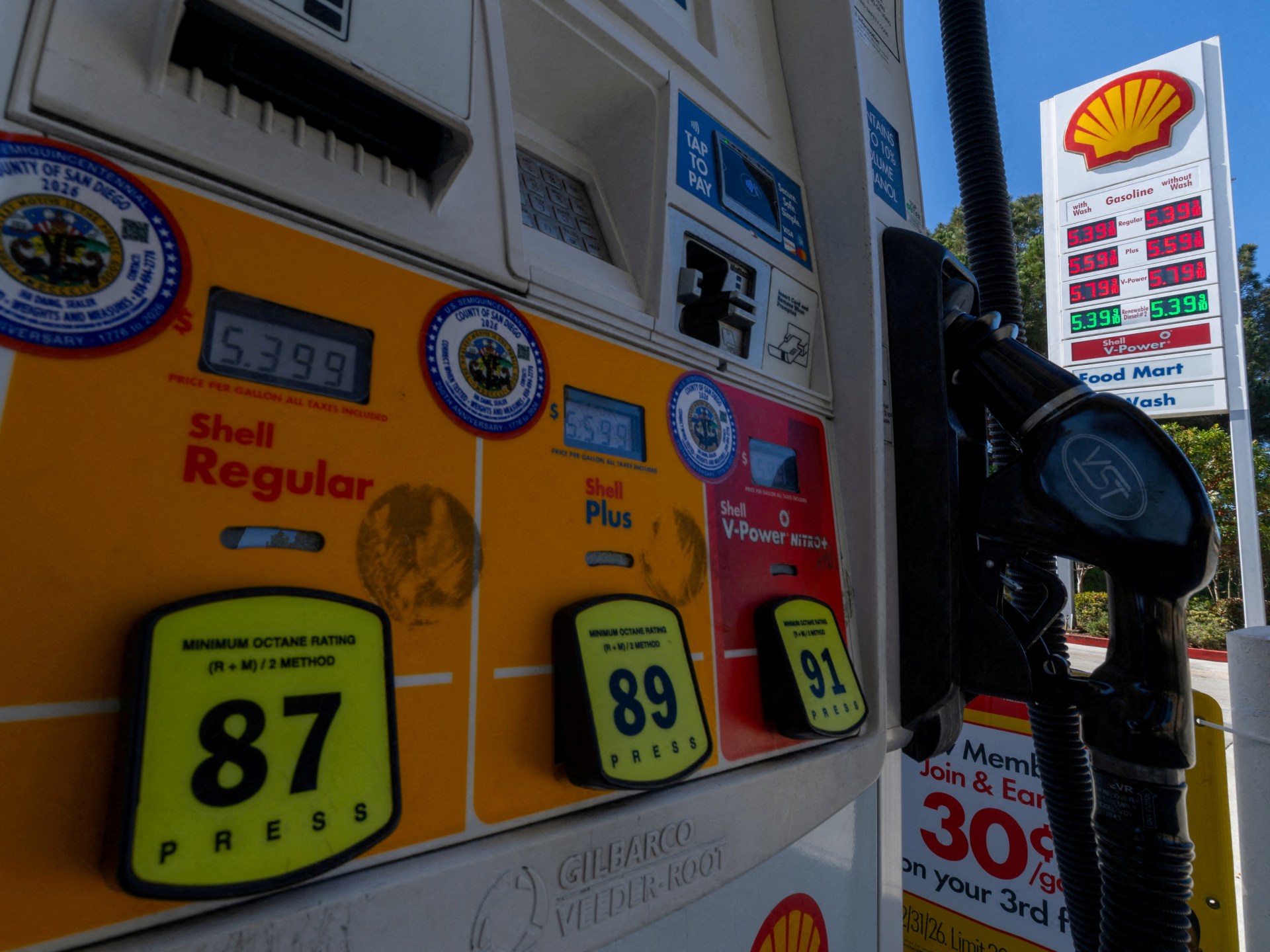
The economic context facing voters remains relatively subdued – and this was the case even before recent conflict in the Middle East raised concerns about renewed inflationary pressures.
The Scottish Fiscal Commission – Scotland’s independent fiscal authority – recently published an assessment of the outlook facing the next government.
Its forecasts suggest that the Scottish economy will grow by around 1.4% per year on average over the next five years. While broadly similar to the UK overall, this represents a prolonged period of relatively modest growth.
Looking at living standards illustrates the challenge particularly clearly (see Figure 3). In the decade preceding the global financial crisis of 2007-09, real disposable income per person in Scotland grew by around 3% per year. But since 2008, annual growth has averaged less than 1%.
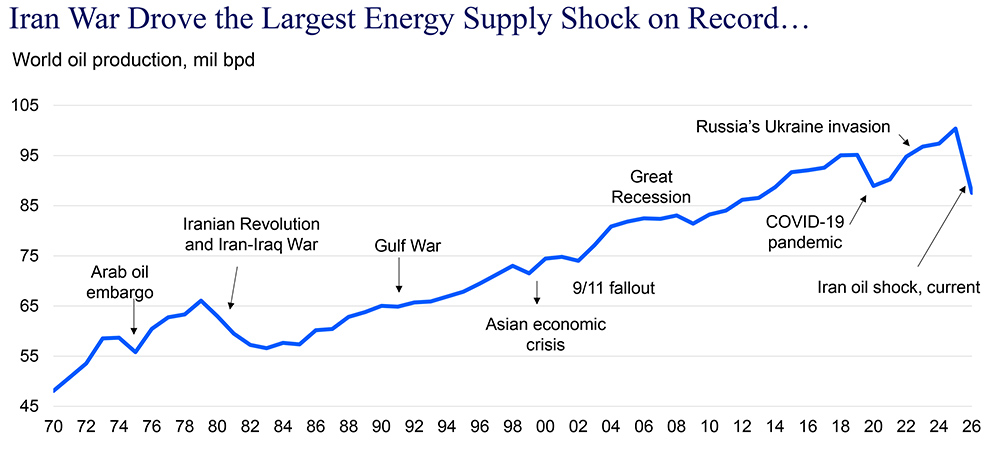
Recent shocks – including the pandemic and the sharp rise in energy prices first, following Russia’s invasion of Ukraine and, this year, in the wake of the Iran war – have further constrained household finances. Although real incomes have begun to recover, growth remains modest.
Figure 3: Household disposable income
Source: Scottish Fiscal Commission.
Demographic change is another important factor (see Figure 4). Scotland’s population is ageing. The number of people aged 65 and over is projected to rise by over 20% between the start of this decade and the next.
This shift carries important fiscal implications. Older populations tend to increase demand for healthcare, social care and disability-related spending – areas for which the Scottish parliament now bears greater responsibility.
Figure 4: Population growth in Scotland over the current and next parliament (by age group)
Source: Scottish Fiscal Commission.
What fiscal choices face the next parliament?
The fiscal outlook facing the next Scottish government is tight.
According to the Scottish Fiscal Commission, funding available for day-to-day public services is projected to grow by just over 1% per year in real terms over the next parliamentary term. Capital funding, which finances infrastructure investment, is expected to fall in real terms once the current short-term increase passes.
At the same time, spending pressures continue to grow, not just as a result of need – for example, because of population ageing – but also due to policy choices.
- Social security spending has increased significantly in recent years and is projected to continue rising. Part of this is a consequence of different policy choices being made by the Scottish government to the UK government, including the introduction of the Scottish Child Payment (worth around £27 per week per child).
- Health spending will increase as the population ages.
- Public sector pay represents another cost, with the devolved public sector pay bill accounting for around 55% of day-to-day Scottish government spending and the government having offered more generous pay settlements than elsewhere in the UK.
The Scottish government has proposed £1.5 billion of efficiency savings alongside reductions in the public sector workforce. Delivering such savings across public services is likely to prove challenging.
Conclusion: an election shaped by fiscal reality
The 2026 Scottish parliamentary election takes place against a backdrop that is both politically familiar and economically different from previous contests.
The constitutional debate remains unresolved, with public opinion on independence continuing to be divided.
While constitutional politics has long been familiar territory for politicians in Scotland, with clear and well-rehearsed arguments on either side, it will be important to observe the extent to which issues such as the cost of living, health and social care, the economy, immigration and housing come to the fore during the last stages of the campaign.
It will also be instructive to see whether a failure to engage meaningfully with these concerns carries electoral consequences for those more inclined to focus on the constitutional debate.
For whomever forms the next Scottish government, whatever their policies on these issues, the more immediate and overarching challenge will be economic and fiscal. Slow growth in living standards, an ageing population and rising spending pressures mean that the next parliament will face difficult budgetary choices. A prolonged conflict in the Middle East may make that position even more challenging, particularly if the UK overall becomes even more constrained fiscally.
In that sense, the post-election government – if not the election – is likely to be shaped more by fiscal reality rather than constitutional ambition.
Where can I find out more?
- What Scotland thinks: non-partisan information on attitudes to how Scotland and the UK should be governed, from the Scottish Centre for Social Research.
- Fiscal sustainability perspectives: what Scotland’s finances mean for the next parliament – February 2026: analysis from the Scottish Fiscal Commission.
- Setting the scene: Scotland on the eve of the 2026 Election: analysis from the Fraser of Allander Institute at the University of Strathclyde.
- Scottish election 2026: analysis from the Institute for Fiscal Studies (IFS).
- Scottish independence: economic questions and research evidence: an extensive series of reports on the economics of Scottish independence published by the Economics Observatory.
Who are experts on this question?
- David Bell
- John Curtice
- Ewan Gibb
- Nicola McEwen
- Stuart McIntyre
- Anton Muscatelli
- Graeme Roy
- Tanya Wilson