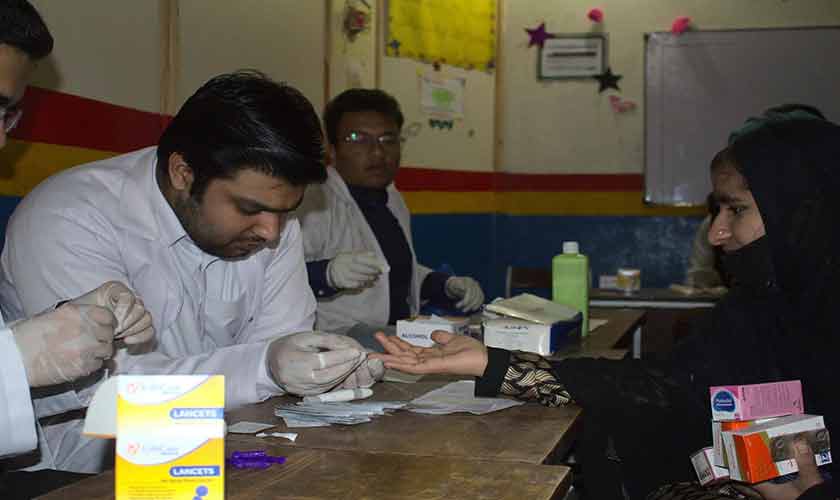
mmunisation remains one of the most cost-effective and powerful tools in public health. Vaccines protect children against deadly but preventable diseases such as polio, tuberculosis, hepatitis B and more. In Pakistan, several immunisation programmes aided by the government, such as the Expanded Programme on Immunisation, have made vaccines accessible free of cost for millions. Despite these efforts, national immunisation targets remain unmet, largely due to misinformation and vaccine hesitancy. Pakistan ranks third globally among the most unvaccinated country, with around 396,000 children unvaccinated.
This places a substantial burden on the healthcare system. Preventable disease outbreaks lead to overcrowded hospitals, increased healthcare costs and diversion of already limited medical resources. Instead of focusing on advanced care and chronic disease management, healthcare facilities are forced to manage avoidable infectious disease outbreaks, straining both infrastructure and workforce.
A common myth in Pakistan is that vaccines, like the measles vaccine, are unsafe or can cause severe side effects. This has led many parents to delay or refuse vaccination. The idea that vaccines cause autism originated from a now-discredited study. Extensive research over decades has found no causal relationship between vaccines and autism. This myth continues to circulate globally, including in Pakistan, despite overwhelming scientific consensus rejecting it.
Outbreaks occur not because vaccines fail, but because many children remain unvaccinated. Strengthening awareness and ensuring complete vaccination is essential to prevent measles-related morbidity and mortality.
Addressing misinformation, improving education, and strengthening trust in healthcare systems are essential steps toward increasing vaccine acceptance.
Recently, Pakistan has made efforts to introduce the HPV vaccine programme in partnership with the World Health Orgnisation to combat cervical cancer, the fourth most common cancer in women globally. The HPV vaccine is specifically recommended for children aged 9-14 years because this is the age group before exposure to the human papillomavirus typically occurs. At this stage, the immune system produces a stronger and more effective response to the vaccine, ensuring better long-term protection. Vaccinating early maximises efficacy and significantly reduces the future risk of cervical cancer.
However, the HPV vaccination campaign has faced challenges due to misconceptions that it causes infertility or serious conditions like Guillain-Barré syndrome. Global health authorities, including the Global Advisory Committee on Vaccine Safety, have consistently affirmed that the HPV vaccine is safe, with no major long-term side effects identified in large-scale studies. In reality, the vaccine helps prevent cervical cancer, a disease that, if untreated, can lead to infertility or death.
Another common concern is that the HPV vaccine may trigger autoimmune disorders due to its immune-stimulating properties. However, extensive research involving millions of individuals has found no credible link between the vaccine and autoimmune diseases. The vaccine is safe, well-tolerated, and represents a critical step in protecting the health of young females.
Lack of awareness continues to fuel misconceptions. In a country like Pakistan, where preventable diseases claim thousands of lives, vaccination is not just a personal choice but a public health responsibility. Addressing misinformation, improving education, and strengthening trust in healthcare systems are essential steps toward increasing vaccine acceptance.
Vaccination is not a threat. It is a shield.
The writers are members of the Volunteer Force Against Hepatitis Transmission