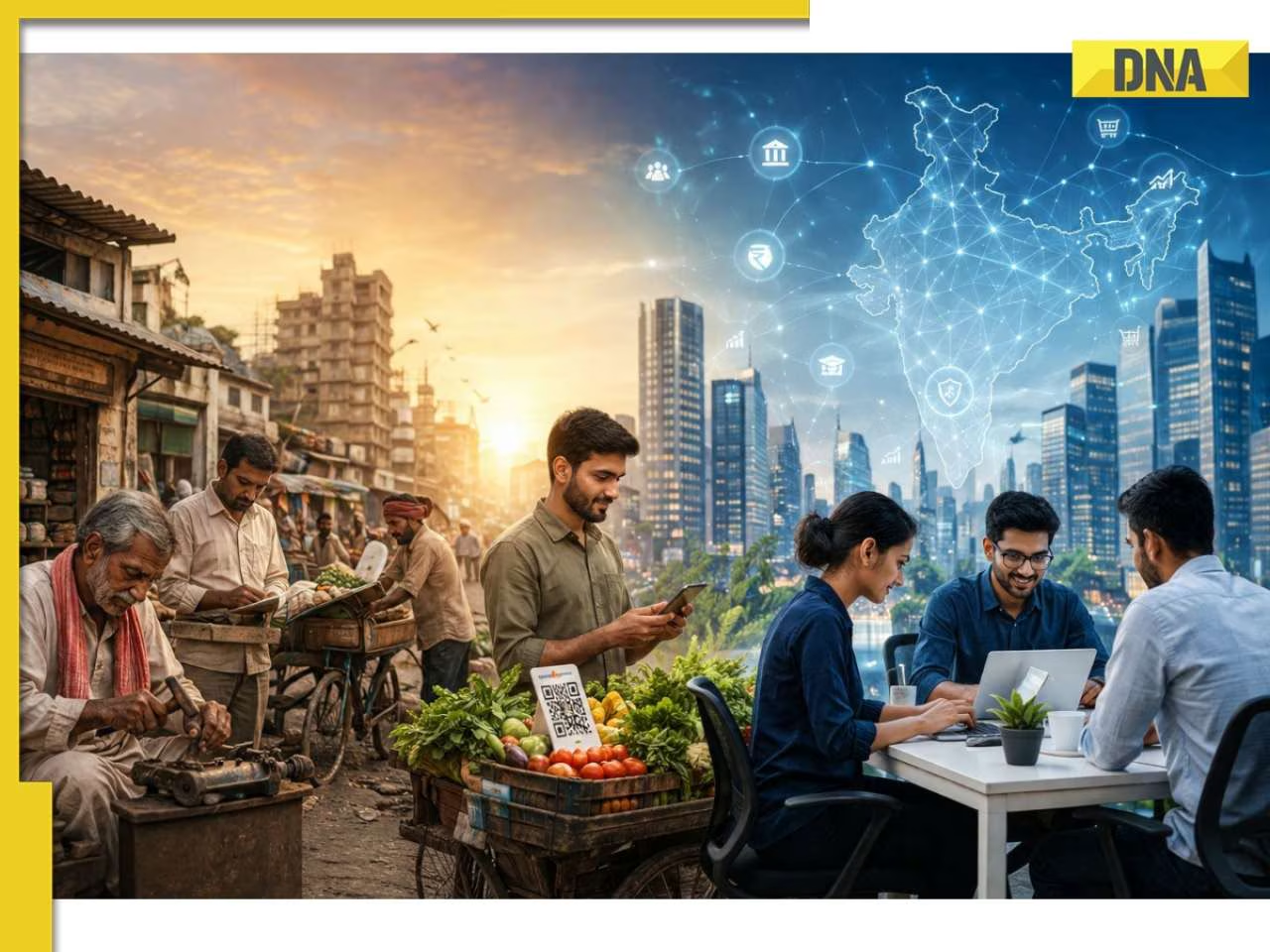
India has always figured out a way to overcome challenges; we have developed “Jugaad” due to our constraints and created workarounds due to our frustrations and established informal systems due to gaps in formal systems. However, not everything can be done with Jugaad, as there are limitations to it as well. However, there is a new generation of startups that believes those limitations represent the very opportunities they are pursuing. These startups are not simply solving first-world problems at second-world prices. They will be tackling the structural blind spots, the cracks left by an old economy that they were either too blind to see or chose to ignore.
Money is still broken for millions
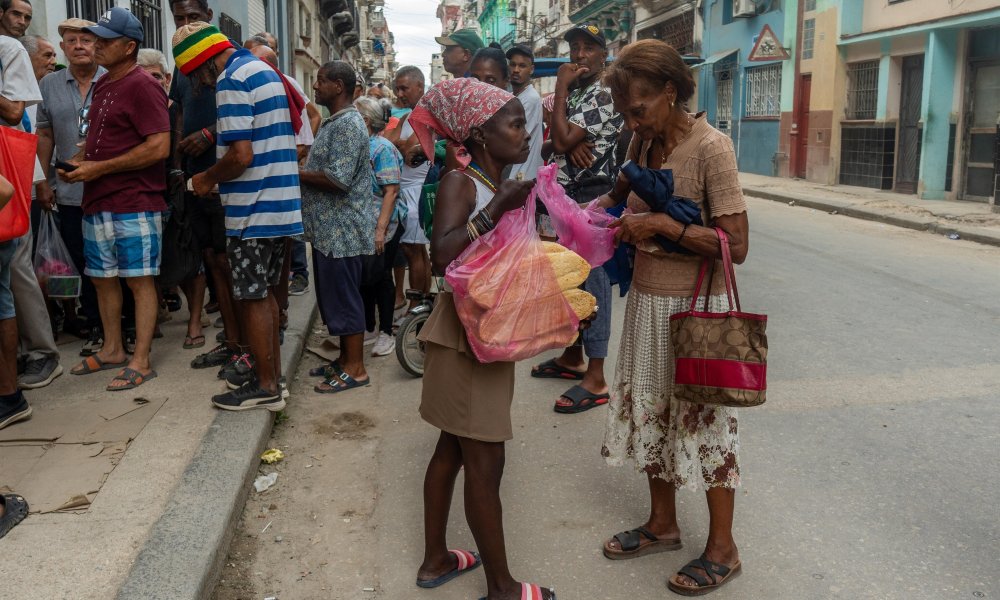
As early as FY21 only 19% of MSME credit demand was met by a formal lender leaving around ₹80 lakh crore of unmet demand according to the Press Information Bureau. A contractor who finishes a project on Monday will typically receive payment for that work by the next month. A micro-business owner with a clean repayment history is often unable to access credit from their bank because they do not fit within standardized credit scoring models.
Access to Indian financial services is not about a lack of platforms; it’s about a lack of nuance. Financial institutions in India were predominantly designed to service employees in large organisations who have extensive documentation and reside only in urban cities. Therefore, all other people (in contrast to these employees) are either charged more, or are required to wait longer for loans, or are excluded from the financial services altogether.
“Much of the financial infrastructure in India was never designed for how businesses operate today. Companies still end up managing payments, banking, and compliance across multiple systems, which creates unnecessary complexity. At Paywize, we’re building a single, unified layer that brings all of this together, so businesses don’t have to stitch things on their own. The idea is simple: help them move money faster, with better visibility and fewer operational gaps, without depending on legacy setups.” Says Karthik Bukkambudhi, Founder & CEO, Paywize
Vishal Bhati, Founder of Credit4Sure, a product by Mahavira Finlease Ltd ,shared, “In the current scenario, it is essential to have an inclusive and responsive credit ecosystem by making credit faster, simpler, and inclusive to excluded individuals falling out of conventional credit frameworks. Our end-to-end digital platform uses insights from individual financial life and streamlined credit assessments, evaluates individuals beyond traditional metrics, and provides easy access to personal loans, quick approvals, customised credit offerings, and contributes to a better credit landscape.
The creator economy needs real infrastructure
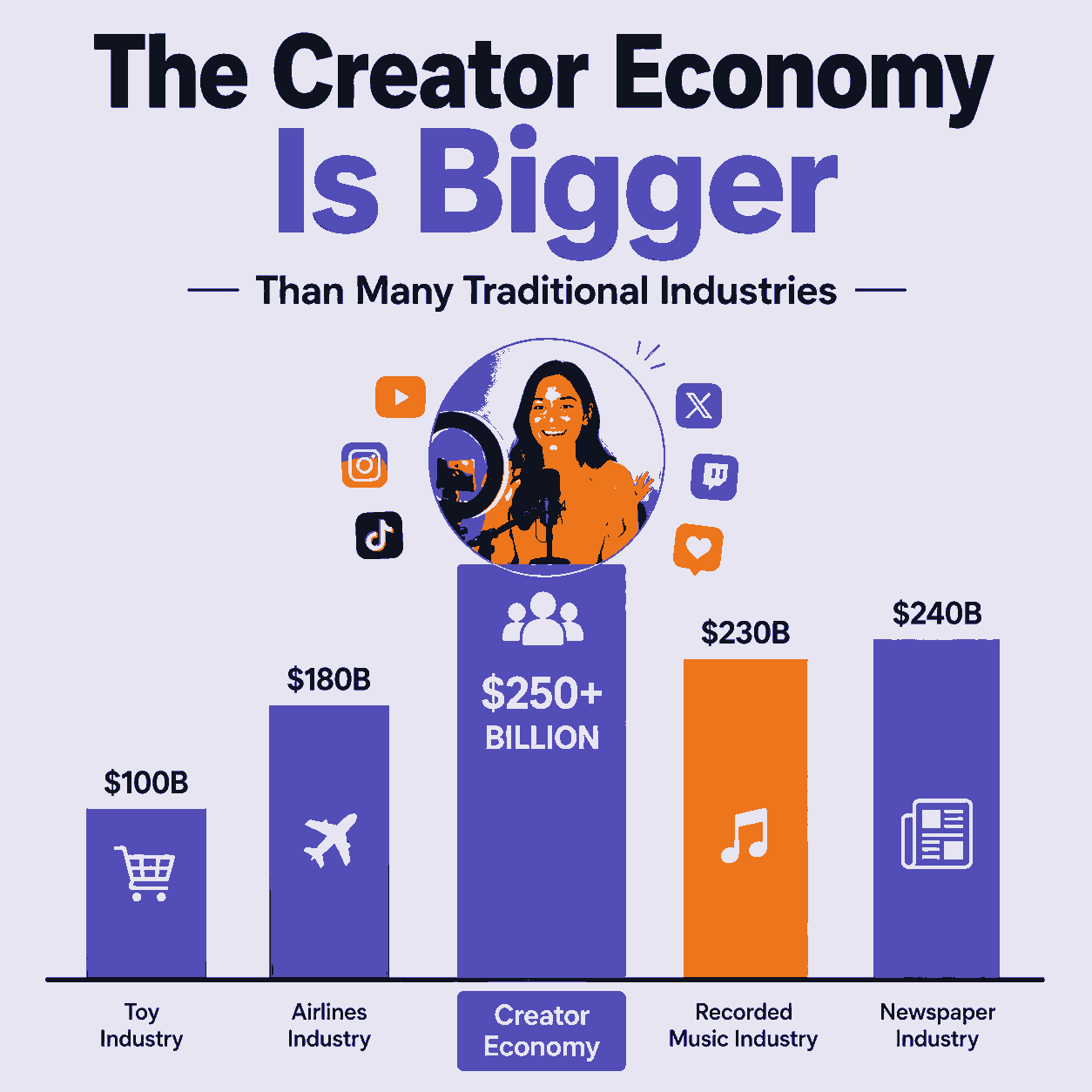
The technology required to look professional and compete with high-quality video production coming out of studios in Seoul and Los Angeles was typically unavailable to all but a small number of content producers in India. As a result, the stakes of getting this right are high and rising quickly. Currently, there are over 2 million monetised content creators in India that are already driving over $350 billion worth of consumer spending. By 2030, this market will drive over $1 trillion worth of creator-influenced consumption, according to BCG.
In India, there has long been no affordable way to have access to the tools that will provide professional-level production values for competing with the studio-quality productions coming from studios in Seoul, Los Angeles, etc. The cost of getting this part right, however, is increasing dramatically. Currently in India there are more than 2 million monetized Content creators that are influencing over $350 Billion dollars-worth of consumer spending. By 2030, the creator economy will account for $1 Trillion dollars in consumption influenced by creators.
The creator economy has been a hot topic in boardrooms and pitch decks for over a decade; however, until now, no company has actually delivered the ground-level infrastructure to support this new economy of creators. The reason that only 8%-10% of all creators in India effectively monetize their content as compared to 40% of creators in developed countries is because of the fact that the tools to achieve a professional look and feel to their content have never been available at an affordable price.
Archisman Misra, Founder & CEO of StudioBackdrops, shared, “I started StudioBackdrops because finding the right equipment in India was harder than it should have been. Decent backdrops were either unaffordable, unavailable, or both. I figured other creators were running into the same wall. So we built a marketplace that gives creators access to professional-grade equipment without the capital investment that usually comes with it, because the quality of your setup should not be the reason your content falls short.”
What you eat and where it comes from
The pandemic reshaped how Indian consumers evaluate food, pushing concerns like supply chain reliability, ingredient transparency, and clean-label consumption to the forefront. People aren’t just ordering food, they’re questioning it. Where it comes from, what’s in it, and whether it’s worth the price. Trust, transparency, and quality have started to matter as much as convenience once did.
Pratap Varma, Founder of Frissly, shared, “The old food economy was built around shelf life and margins — not around the person eating the food. Ingredients were chosen because they were cheap and stable, not because they were clean or safe. For decades, the industry ignored a fundamental question: do consumers actually know what they’re eating?”
He adds, “That’s the problem a new wave of Indian startups is now solving — and it’s long overdue. Today’s founders are building from a different starting point. Instead of asking ‘how do we make this cheaper and last longer,’ we’re asking ‘how do we make this honest and actually good for you.’ That shift in the founding question changes everything — the sourcing, the processing, the packaging, and the communication. What gives me confidence is that Indian consumers are ready for this. They are reading labels, questioning ingredients, and rejecting the idea that convenience has to come at the cost of quality. That demand is real, and it’s growing. The startups winning in this space are the ones willing to do the hard work — building genuine supply chains, earning real certifications, and standing by every claim they make. There are no shortcuts when transparency is your core promise.”
At the same time, the online food delivery space is evolving beyond discounts and speed. Startups are now experimenting with models that rethink commissions, discovery, and platform fairness. The focus is slowly shifting toward building a more balanced ecosystem – one that works not just for consumers, but also for restaurants and others behind the scenes.
Anirudha Kotgire, Managing Director & Co-founder, Waayu, shared, “Our goal is to create India’s first Zero-commission Food Tech Platform, direct-to-consumer marketplace that not only empowers restaurant owners but also provides consumers with more transparent and cost-effective choices of food. We strive for a fairer and more balanced ecosystem for the restaurants, consumers, and delivery partners by eliminating superfluous intermediaries. Waayu addresses inefficiencies within the food supply chain while re-establishing a more sustainable future economy.”
Rethinking How We Measure Talent
Hiring is no longer just about ticking boxes – it’s about finding the right skills. Traditional evaluation methods are being replaced by more data-driven, objective approaches. Companies are moving away from subjective, outdated evaluation methods and looking for ways to measure real, job-ready skills more accurately. The focus now is on consistency, objectivity, and outcomes, not just degrees or certifications.
With the evolving tech landscape, AI and automation are stepping in to make this process faster and more reliable. Startups in this space are building solutions that can assess skills at scale, reduce bias, and better match talent to actual industry needs, helping close the gap between training and employability.
Ameet Padiyar, Founder, Skyljo, shared, “There is a growing shift toward more objective and data-driven methods of evaluating workforce capabilities. AI-led assessments, proctoring tools, and validation systems are being used to improve accuracy, reduce bias, and standardise evaluation processes at scale. These approaches aim to bridge information gaps, helping organisations make more informed decisions while aligning talent assessment more closely with actual job requirements and operational needs”.
Education still runs on gut feel
India’s EdTech market, valued at $12.75 billion in 2024, is projected to reach $61.25 billion by 2035. While digital adoption in education is growing rapidly, student assessment methods remain largely unchanged. Despite increased efforts from institutions and teachers, the lack of data-driven approaches persists. Proper use of AI has shown an 18% reduction in underperforming students, yet most Indian schools have not fully adopted it.
Swaminathan Ganesan, Co-Founder & CEO of Smartail, shared, “For decades, one of the most overlooked challenges in education has been the inability to derive meaningful insights from assessments, especially from descriptive and handwritten responses, which form the core of real learning. The new wave of AI-led startups is addressing this gap by transforming assessments into actionable data. At Smartail, we focus on evaluating handwritten and long-form answers at scale, enabling institutions to identify learning gaps early and respond with targeted interventions. This shift is not just about automating grading, but about building evidence-led decision systems within education where every assessment contributes to improving outcomes. As institutions adopt these approaches, we’re seeing a move toward more responsive, data-driven, and scalable learning ecosystems.”
Decisions are still made on instinct, not intelligence
Indian firms, banking institutions, investments, and micro, small, and medium-sized organisations have access to record levels of data today than at any time in history, but there is still a significant gulf between data and its application.
Specifically, MSMEs constitute almost one-third of India’s gross domestic product and almost 62% of the total business sector formed by all employees in the business sector, and they contribute to almost 46% of exports; however, most of them still make decisions on a financial and operational basis with incomplete information and without any type of analytical infrastructure.”
The opportunity is not an artificial intelligence takeover of human judgment, but rather the application of structured intelligence to support human judgment, and enable human judgment to occur faster, with more informative and helpful information, and reduce the need for a lucky connection in order to make good judgment.
Shailesh Dhuri, Co-founder & CEO of Decimal Point Analytics, shared, “The problems the old economy ignored weren’t ignored out of neglect, they were ignored because the unit economics didn’t work. As hospital chains can’t profitably screen cancer in tier-3 towns, banks can’t scale ₹50,000 kirana loans, and defence PSUs can’t iterate fast. Startups are solving them because the cost curve flipped – with AI diagnostics in primary care, vernacular edtech, EV & battery ecosystems, indigenous defence tech, and fintech trust layers. What connects them is not ‘AI’ as a buzzword but a stack: UPI-grade public rails, collapsing compute costs, Indic-language models, and a founder class willing to operate where margins are thin and the stakes are real. This is less disruption than overdue completion.”
The pattern behind the problem-solving
The connection among companies is not the same business sector or funding stages of the companies, but the same diagnosis; that India’s legacy systems were designed for a version of India (salaried workers, urban professionals, and large businesses) that do not represent most of India; meaning they were primarily designed/designed for all of those who were the primary users of the product – they were essentially designed for a small subset of people (those employed in the formal economy) and were not designed for anyone else.