Introduction
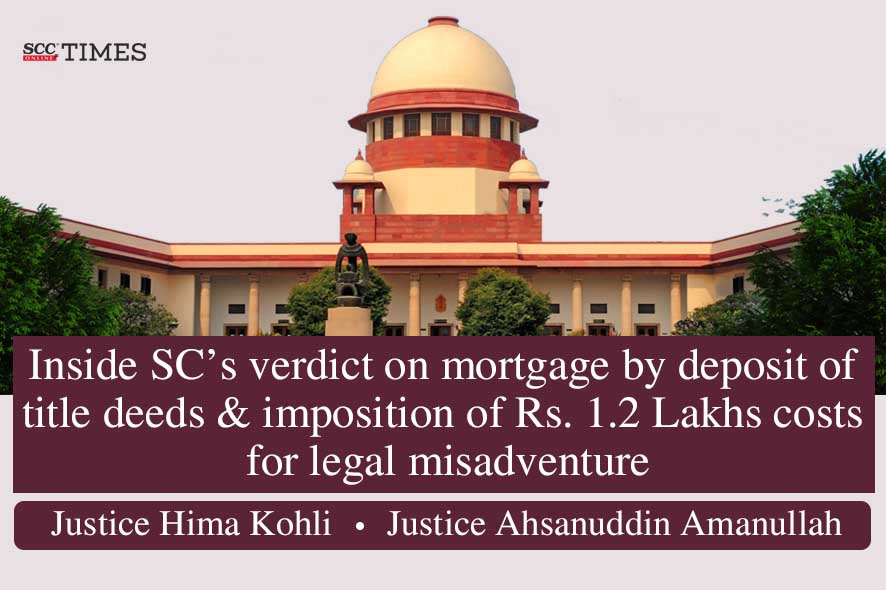
The landmark case of Chidambaraiyer And Ors. v. P.S. Renga Iyer And Ors. adjudicated by the Supreme Court of India on May 6, 1960, delves into the intricate interplay between agricultural mortgage laws and charitable trusts. This case encapsulates the contention surrounding the applicability of Section 9-A (10)(ii) of the Madras Agriculturists Relief Act, 1938, as amended, particularly focusing on whether a transfer of mortgage interest to a charity constitutes a transfer for valuable consideration, thereby exempting it from being scaled down under the Act.
The appellants, representing the mortgagors, sought to have their mortgage debt scaled down under the Act, challenging the mortgagee’s assertion that the mortgage interest had been transferred to a charity for valuable consideration, which would make the mortgage exempt from scaling down. This case not only addresses the specific legal questions under the Act but also sets a precedent on how transfers to charitable trusts are interpreted in the context of valuable consideration.
Summary of the Judgment
The Supreme Court upheld the decision of the High Court of Madras, which had dismissed the petition to scale down the mortgage debt. The central issue revolved around whether the transfer of the mortgage interest to a charity constituted a transfer for valuable consideration under Section 9-A (10)(ii)(b) of the Madras Agriculturists Relief Act. The Court meticulously examined the evidentiary documents, including trust agreements and partition deeds, and concluded that the transfer was indeed made for valuable consideration.
Specifically, the Court found that the mortgage interest was transferred to the charity in discharge of an earlier obligation undertaken by the family to set aside a sum for charitable purposes. This discharge of liability constituted valuable consideration as defined under the Act and prevailing contract law. Consequently, the mortgage was exempted from being scaled down, leading to the dismissal of the appellants’ appeal.
Analysis
Precedents Cited
The judgment references the classic definition of “valuable consideration” from Currie v. Misa (1875), which defines it as something of value in the eyes of the law, encompassing rights, interests, profits, benefits, forbearances, detriments, losses, or responsibilities. Additionally, the Court aligns its interpretation with Section 2(d) of the Contract Act, reinforcing the notion that consideration can be both positive and negative.
These precedents were pivotal in the Court’s analysis, as they provided a foundational understanding of what constitutes valuable consideration, thereby influencing the Court’s decision to recognize the transfer to the charity as such.
Legal Reasoning
The Court’s legal reasoning was thorough and methodical. It began by dissecting the relevant provisions of Section 9-A (10)(ii) of the Act, focusing on the exceptions that prevent a mortgage from being scaled down. The two main prongs under consideration were:
- Transfer of mortgage rights for valuable consideration.
- Partition of the mortgagee’s interest among joint family members.
The appellants contended that there was no actual transfer of mortgage interest to a charity for valuable consideration. However, upon reviewing the documentary evidence, including trust agreements and partition deeds, the Court surmised that the transfer was effectuated in discharge of a prior obligation. This discharge was deemed a forbearance of the charity’s right to claim the sum, which, under legal definitions, qualifies as valuable consideration.
Furthermore, the Court dismissed the appellants’ argument regarding the method of transfer, emphasizing that the registered partition deed substantiated the legitimacy of the transfer. The absence of earlier pleas about invalid transfer methods also weakened the appellant’s position.
Impact
This judgment has profound implications for agricultural mortgage laws and charitable trusts. By affirming that a transfer of mortgage interest in trust to a charity constitutes valuable consideration, the Supreme Court set a clear precedent that such transfers are exempt from being scaled down under the Madras Agriculturists Relief Act. This interpretation ensures that charitable trusts maintain their financial arrangements without the risk of being undermined by scaling-down petitions.
Future cases dealing with similar circumstances will likely reference this judgment to determine the validity of transfers to charitable entities and their exemption status under relevant relief acts. Additionally, it reinforces the importance of properly documented transfers and the role of trusts in managing agricultural mortgages and obligations.
Complex Concepts Simplified
Valuable Consideration
Valuable consideration refers to something of value exchanged between parties in a transaction. It can be a tangible benefit or a forbearance (where one party agrees not to do something). In this case, the transfer of mortgage interest to a charity was considered valuable consideration because the charity relinquished its right to claim the sum owed in exchange for the mortgage interest.
Usufructuary Mortgage
A usufructuary mortgage is a type of mortgage where the borrower (mortgagor) retains ownership of the property, while the lender (mortgagee) gains the right to use the property and its income. In this case, the mortgagor used the property to generate income, which was then appropriated to honor the mortgage terms.
Scaling Down of Mortgage Debt
Scaling down refers to reducing the total amount of debt owed under a mortgage. The Madras Agriculturists Relief Act provides mechanisms for farmers to scale down their debt, but certain exemptions apply, such as transfers made for valuable consideration.
Partition
In legal terms, a partition involves dividing property among co-owners or family members. The act of partitioning can affect mortgage interests if those interests are distributed among different parties, potentially impacting their liability under relief acts.
Conclusion
The Supreme Court’s decision in Chidambaraiyer And Ors. v. P.S. Renga Iyer And Ors. serves as a pivotal reference in understanding the application of valuable consideration within the framework of agricultural mortgage laws and charitable trusts. By affirming that transfers made in trust to a charity, especially those discharging prior obligations, constitute valuable consideration, the Court has clarified the exemptions available under the Madras Agriculturists Relief Act.
This judgment underscores the necessity for clear documentation and the lawful execution of trusts to ensure that charitable transfers are recognized and protected under the law. It also highlights the judiciary’s role in interpreting statutory provisions in a manner that upholds the integrity of both agricultural relief measures and charitable endeavors.
For legal practitioners and stakeholders in agricultural finance, this case reinforces the importance of understanding the nuances of mortgage agreements, trust formations, and the legal definitions that govern valuable considerations. It ultimately contributes to a more stable and predictable legal environment for managing agricultural mortgages and charitable trusts.