Investors have had a difficult few months, with volatility spreading across asset classes and making the usual question of where to put your money even harder to answer.
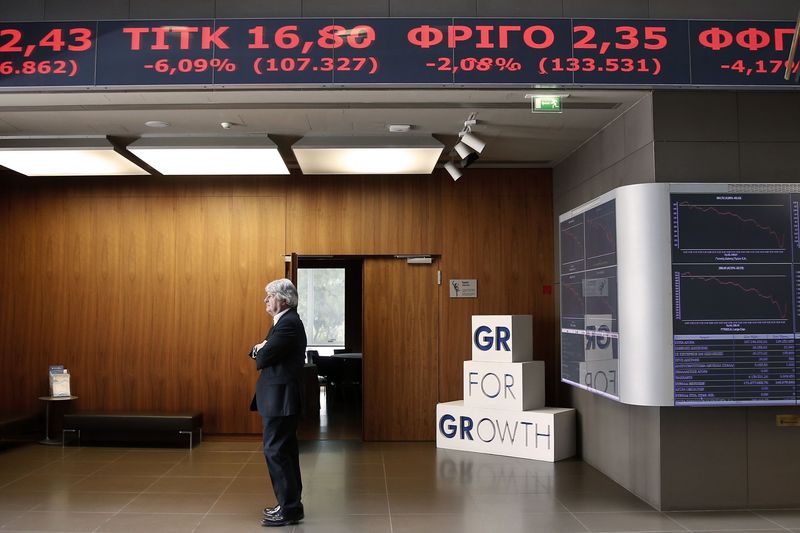
Equity markets have faced a sharp correction amid geopolitical tensions, while gold and silver, traditionally considered safe havens during periods of uncertainty, have also fallen sharply from the all-time highs they touched in January.
Over the past six months, gold prices have declined by around 20%, while silver has fallen about 43%. During the same period, the Sensex has declined 11% and the Nifty has fallen 8.6%. A stronger dollar and signals from the US Federal Reserve that it may not cut interest rates have weighed on precious metals, while the Iran conflict has kept equity markets under pressure.
Kaynat Chainwala, AVP Commodity Research, Kotak Securities, said, “Gold is attempting to claw back ground today, recovering above $4,000/oz, but remains on track for a weekly loss of 3%, while silver hovers near its weakest since November 2025, down over 10% for the week, as renewed conflict in West Asia raises the prospect of energy driven inflation and higher odds of a rate hike.”
“Gold had slipped to a two week low of $3,969/oz yesterday, pressured by a stronger dollar and higher Treasury yields after strong US data and largely hawkish commentary from Fed officials, even as Fed Chair Kevin Warsh reiterated his commitment to restoring price stability,” said Chainwala.
With stocks and precious metals both witnessing volatility, investors face a difficult question: Should they bet on equities, turn to gold and silver, or spread their money across different assets?
This is where multi-asset allocation funds are coming into focus.
WHAT ARE MULTI-ASSET ALLOCATION FUNDS?
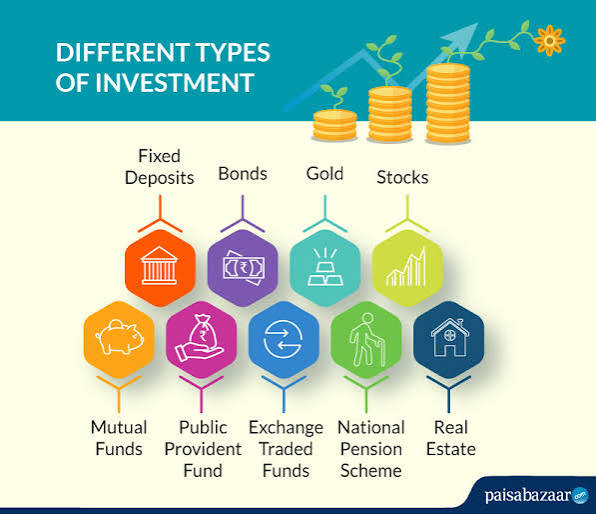
Multi-asset allocation funds are hybrid mutual funds that invest across a minimum of three asset classes. These typically include equities, debt and commodities such as gold.
Under Sebi rules, these funds are required to maintain a minimum allocation of 10% in each of the three asset classes. Depending on a scheme’s strategy, the portfolio may also include fixed-income securities, commodities and real estate investment trusts (REITs).
The idea is relatively straightforward: Instead of trying to predict whether equities, gold or debt will perform better next, investors get exposure to different assets through a single fund.
Gurmeet Singh Chawla, Managing Director, Master Portfolio Services Limited, said multi-asset funds do not entirely solve the dilemma of choosing between equity and gold but can reduce the pressure of making that choice.
“Not entirely, but they take the edge off the dilemma. Instead of choosing one over the other, a multi-asset fund holds equity, gold and debt together, so the investor isn’t betting the whole portfolio on picking the right asset at the right time. It won’t match pure equity in a strong rally or pure gold in a gold rally, but it avoids the risk of being fully wrong on either call,” he said.
DO MULTI-ASSET FUNDS MAKE SENSE NOW?
Diversification becomes particularly relevant when markets are volatile because different asset classes typically respond differently to changing economic conditions.
“Multi-asset allocation funds may be appropriate in times of high volatility in asset classes. Investing in a variety of asset classes will help reduce concentration risk and increase the diversification of the portfolio. These funds invest in a diversified range of asset classes such as equity, debt, gold etc. so that investors can benefit from different market cycles through a single investment,” Chawla said.
“Diversification helps to protect the impact of volatility in any one segment, as different asset classes tend to perform differently under different economic conditions. However, investors should select these funds according to their financial objectives, risk appetite and investment horizon rather than short-term market movements,” he added.
The key advantage is that an investor’s portfolio is not entirely dependent on the performance of a single asset.
Chawla explained that while equities may come under pressure, gold or debt can potentially provide some cushion to the overall portfolio.
“Multi-asset allocation funds perform better in volatile markets as equity, debt and gold rarely fall together. Gold or debt can hold steady or increase when stocks come under pressure, helping cushion the portfolio instead of being fully exposed to the ups and downs of one market,” he said.
“The advantage over a pure equity fund is that Equity funds track the flow of the stock market so a sharp correction can wipe out months of gains. A multi-asset fund avoids that fall, because only some of the money is in equity at any one time. In a strong rally, it will typically lag behind a pure equity fund in return. Also, Instead of buying gold and debt separately and rebalancing between them, the fund manager handles that mix internally, saving the investor from having to track it,” Chawla added.
HOW HAVE MULTI-ASSET FUNDS PERFORMED?
Multi-asset allocation funds have remained in positive territory over the past six months, even as equities and precious metals have faced pressure.
Asked about some of the top-performing names in the category, Chawla said, “The names that come up frequently in this category are Nippon India Multi Asset Allocation Fund, Quant Multi Asset Fund, ICICI Prudential Multi Asset Fund, UTI Multi Asset Allocation Fund, Tata Multi Asset Opportunities Fund and Axis Multi Asset Allocation Fund. Each has built its own track record, but the equity, debt and commodity mix differs from one to the another, which is why checking allocation and strategy matters.”
Multi asset allocation funds have been giving higher returns than equity mutual funds in the last few years and have been in healthy positive territory even in the last 6 months.
Nippon India Multi Asset Allocation Fund, which has delivered an annualised return of 19.92% over the past three years. SBI’s multi-asset fund has generated 17.50%, while ICICI Prudential Multi Asset Fund, the category’s largest by AUM, has delivered around 18-19% over the same period.
Past performance, however, does not guarantee future returns, and investors should not choose a scheme solely based on which fund has generated the highest returns.
WHAT SHOULD YOU CHECK BEFORE INVESTING?
Not all multi-asset allocation funds follow the same strategy. While they belong to the same mutual fund category, their allocation to equities, debt, gold and other assets can differ considerably.
“The asset allocation plays an important role in determining the fund’s chance of success as even two funds that belong to the same category might have different equity, debt, and gold weight, which will give them a different risk-return profile. When evaluating the performance of a fund, one should consider its results in both bull markets and bear markets,” Chawla said.
“Also, one should look at the strategy behind the fund, whether the manager shifts allocation actively as conditions change or holds the mix largely static, and how often the portfolio is rebalanced. Costs are worth checking as well, since expense ratios differ across schemes and quietly erode returns over time,” he added.
WHO SHOULD CONSIDER MULTI-ASSET FUNDS?
Multi-asset allocation funds may appeal particularly to investors who want exposure to equities but are uncomfortable with putting their entire portfolio into the stock market.
They can also be useful for people who want exposure to multiple asset classes without having to separately invest in and rebalance equity, debt and gold investments.
“This category generally works best for a particular type of investor someone who wants equity exposure but without the full volatility of an all-equity portfolio and who doesn’t want to manage separate positions in gold, debt and stocks on their own. It’s a good choice too for anyone who just wants a single fund to start building a long-term portfolio that stays diversified without requiring constant attention. A 3-5 year investment horizon is generally considered appropriate, as a shorter period does not give the diversification enough room to prove its worth,” Chawla said.
WHAT ARE THE RISKS?
Diversification can reduce concentration risk, but multi-asset allocation funds should not be mistaken for risk-free investments.
One important trade-off is that the same diversification that can cushion a portfolio during a market correction may also limit returns when one particular asset class is performing exceptionally well.
“Despite its advantages, one disadvantage remains as same diversification that cushions the falls also caps the upside, and a multi-asset fund investor expecting equity-like returns will likely be disappointed in a strong bull market. Taxation can be slightly less straightforward than a plain equity fund, depending on how much of the portfolio is in equity versus debt and other assets. And that split is not uniform across schemes,” Chawla said.
“There is also manager risk to consider as performance is largely dependent on how well the allocations are made. It is also worth not assuming these funds are automatically safe simply because they are diversified, a poorly constructed one can still underperform if the manager gets the mix or the timing wrong,” he added.
For investors struggling to decide between equities, gold and other assets amid the current volatility, multi-asset allocation funds can offer diversification through a single investment. But the decision should ultimately depend on an investor’s goals, risk appetite and time horizon—not simply on which asset class has recently risen or fallen.
(Disclaimer: The views, opinions, recommendations, and suggestions expressed by experts/brokerages in this article are their own and do not reflect the views of the India Today Group. It is advisable to consult a qualified broker or financial advisor before making any actual investment or trading choices.)
– Ends