Authors: Noah Levine, Guy Wuollet, Robert Hackett
Compiled by: Jiahua, ChainCatcher
The financial system is being rebuilt on new infrastructure, faster than most outside the crypto industry realize.
Stablecoins are the catalyst for this transformation. They have evolved from niche trading tools to underlying infrastructure and are becoming the foundation for a new generation of global financial products.
The accompanying market map presents our view of this transformation. Specific companies may change, and various categories may blur and evolve, but more importantly, the structure itself: how the new technology stack of global finance is forming, where it is gradually maturing, and what gaps remain.
The core idea is that stablecoins are giving rise to a whole new “Banking as a Service” (BaaS). The previous wave of BaaS involved fintech companies renting bank licenses and accessing traditional core systems.
This wave is structurally different: companies are building products based on on-chain infrastructure, reducing friction and dependence on intermediaries with self-custody wallets, while combining foundational capabilities like accounts, payments, foreign exchange, and credit into end-to-end financial products.
Capabilities that required numerous regional licenses and local bank partnerships a decade ago can now be accessed by any team with the right technology stack.
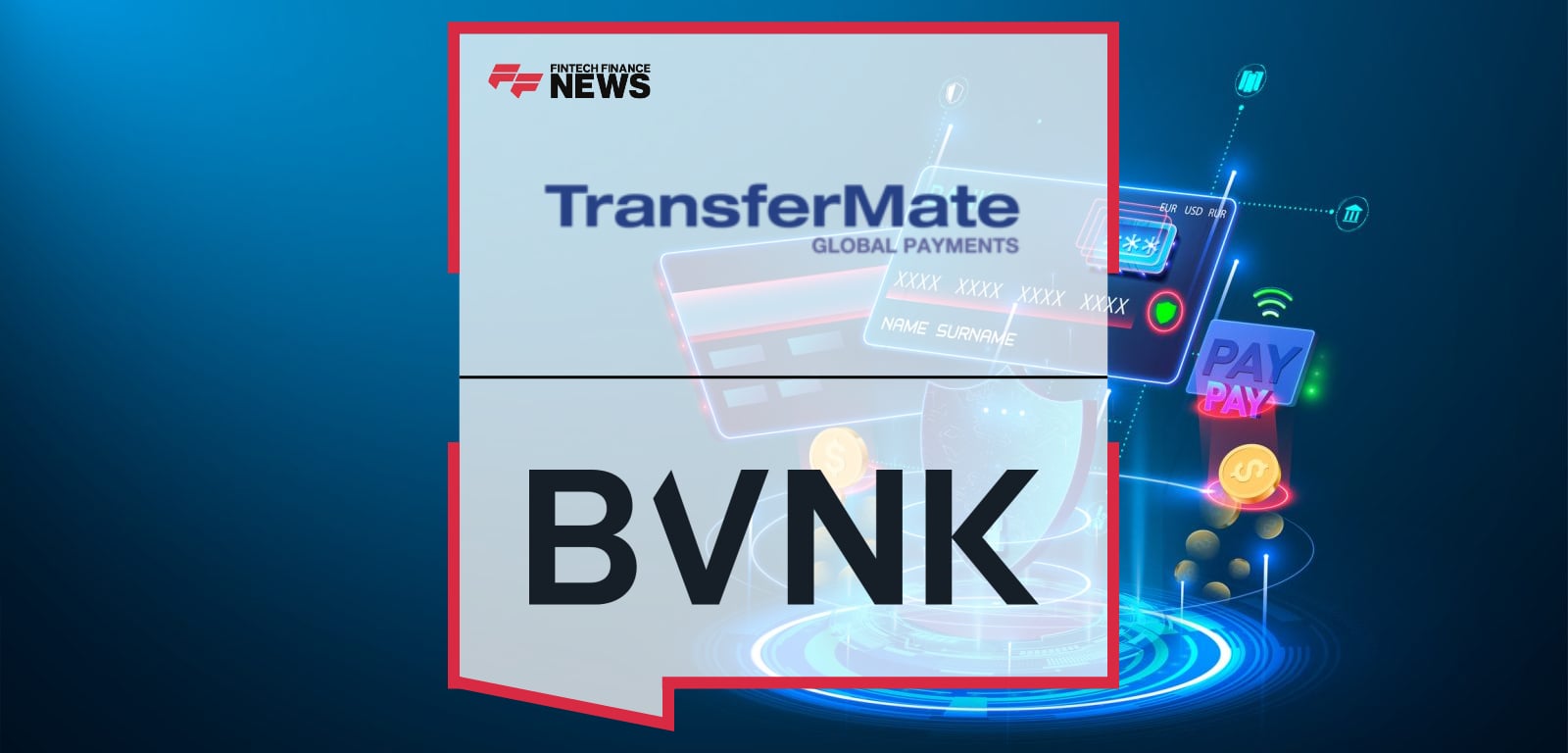
The acquisitions of Bridge and Privy by Stripe and BVNK by Mastercard indicate that traditional giants are also responding to the changing landscape with similar logic, securing key positions in the technology stack before stabilizing at the new infrastructure layer.
These are just a part of several signals indicating that the migration of finance to on-chain has crossed an irreversible threshold. The current choice is to adopt and embrace it or be left behind.
Blockchain is Dividing into Three Categories
The past assumption that “all blockchains are competing for the same set of use cases” is breaking down. Three distinct categories have emerged, each based on different combinations of needs and bringing different performance trade-offs.
1 General-purpose Public Chains Solana, Ethereum, and their major L2s remain the main battleground of the crypto capital market: trading, lending, DeFi. The market size is large and durable, but it does not encompass everything that is happening.
2 Payment-specific Blockchains An emerging category clearly aimed at financial service use cases. Networks like Stripe’s Tempo and Circle‘s Arc are competing around functionalities that have never been optimized on the general layer: stablecoin-native gas fees, privacy protection, and most critically—predictable transaction costs.
For fintech companies handling millions of payments, establishing cost models is crucial. Builders in this space are betting that payments moving to blockchain will become the preferred settlement layer for the next generation of financial infrastructure.
3 Institutional Networks Represented by Canton, designed specifically for regulated entities. These entities require programmability and privacy while not being able to abandon the compliance frameworks they must maintain by law. This category is becoming increasingly significant as banks and asset management companies accelerate adoption.
Banking Bottlenecks Easing
For most of the past decade, the banking layer has been where crypto-native financial services hit a wall. Difficulties in establishing and easily losing banking partnerships are the root of most survival risks in this field.
This situation has not disappeared, but it has clearly improved. A group of crypto-friendly banks is actively building connections between crypto-native infrastructure and traditional fiat systems.
The fiat channel issue was once the main operational challenge faced by most participants, but it is becoming easier to handle. Without fiat connections, payments from stablecoin-native fintech companies cannot run, and the entire technology stack can get stuck.
A Far-reaching Licensing Race
The competition at the stablecoin issuance level has never been as fierce as it is now, and the competitive dynamics have shifted in a clear direction: regulatory positioning.
Since the passage of the GENIUS Act, issuers have been vying for OCC national trust charters. The immediate benefit is legitimacy: a federal-level endorsement that is significant for regulators and institutional partners alike.
The longer-term impact is even greater. If regulators ultimately allow OCC national bank charter holders to directly access the Federal Reserve payment rails, those issuers who obtained the charter early will be integrated into the core of the financial system, becoming key players in its digital transformation.
This competition is less about brand rivalry and more about where you will ultimately position yourself in the payment hierarchy—and who will provide a foundation for credit and capital markets to thrive.
The Last Mile Problem
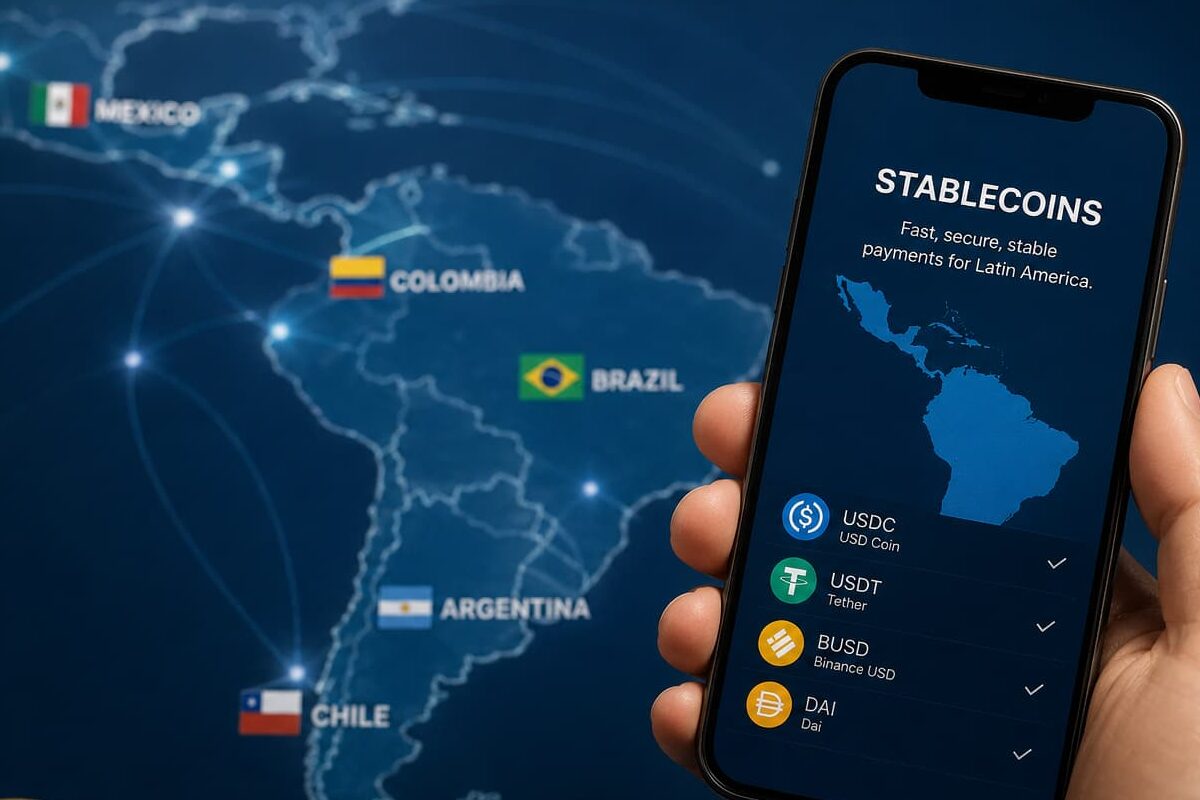
Stablecoins have made real progress in the “middle mile” of cross-border payments—the intermediate steps of transferring funds digitally from one country to another. They provide faster settlement, reduce reliance on pre-funded agent accounts, and lower friction in international transfers.
The remaining issue is the liquidity between stablecoins and local fiat currencies, especially in emerging markets. In most geographical corridors, this liquidity remains thin, leading to slippage, delays, and unreliable pricing. If not addressed, it will severely hinder the highly promising B2B use cases for stablecoins.
This gap is beginning to close through three channels:
-
Forex providers compatible with stablecoins, such as OpenFX and XFX;
-
Regional exchanges with deep relationships with local fiat currencies, such as Bitso in Latin America, Yellowcard in Africa, and Coins.ph in Southeast Asia;
-
Over time, banks that directly support stablecoin settlement for forex transactions.
All three are indispensable. Forex providers bring technical integration, regional exchanges provide local market depth, and banks bring balance sheets and correspondent banking relationships. No single channel can fill this gap alone.
The Banking Connection Layer is Key
The stablecoin infrastructure technology stack has been built almost entirely outside the traditional banking system, with builders including fintech companies, non-bank payment companies, and crypto-native entities.
This brings speed and openness but also creates a structural problem: the stablecoin infrastructure is architecturally incompatible with the traditional core systems most banks operate on, requiring a dedicated translation layer to integrate them.
The “bank connection” category is this layer. These companies are building infrastructure that allows banks to offer stablecoin capabilities alongside existing systems without undertaking the comprehensive system migrations most banks are unwilling to bear.
Some of the most forward-looking participants have already extended their business scope from crypto capital markets and payments to on-chain lending and other areas—this is also the direction banks hope to extend stablecoin infrastructure in the future.
Wallets, Neobanks, and Corporate Finance Moving Towards Unity
Two forces are reshaping the application layer.
The first force: the integration of fintech neobanks and crypto wallets.
Exchanges are adding virtual accounts, debit cards, and reward mechanisms; neobanks are integrating crypto and traditional investment products. The boundaries between these categories are rapidly narrowing, and the final form is almost certainly a unified financial application that serves both crypto-native users and mainstream users through a single interface.
The companies that win this race will not necessarily be those with the best products today, but those that can combine distribution capabilities, user trust, and products that sufficiently meet customer needs.
The second force: corporate banking is beginning to adopt stablecoins.
In markets where local dollar banking infrastructure is limited, unreliable, or costly (most of Latin America, sub-Saharan Africa, Southeast Asia), stablecoins are enabling businesses to operate in dollar-denominated ways that were previously unattainable, including vendor payments, global collections, and cash management.
What drives this is not the crypto narrative, but the real demand of businesses when local financial infrastructure fails.
However, at the application layer, the more important long-term dynamic is what happens after accounts are opened.
Access to dollars is the entry point. Once users have a stable dollar-denominated balance, whether they are small business owners in Lagos, freelancers in Buenos Aires, or savers in Jakarta, they gain access to a full suite of financial products—credit, investment, wealth management, insurance—that they could hardly access before.
Those neobanks and super apps that win account relationships will have the ability to cross-sell across all these categories, establishing a true commercial landscape in markets that traditional financial systems have never adequately served. The payment layer is where accounts are opened, while the credit and investment layers are where the business is truly built.
On-chain Credit
If payments are the first act, then credit is likely the second act, and perhaps even more critical.
The traditional narrative around the growth of stablecoins leads to a large-scale narrow banking model: dollars are tokenized, stored in wallets for settlement, and redeemable on demand. But this narrative overlooks what happens when stablecoin issuance reaches true scale.
A world with trillions of dollars in stablecoin float will also be one with a massive demand for capital allocation. Businesses holding stablecoin funds will want to find productive uses for their balances, protocols will need liquidity, and end users at the tail of the technology stack will ultimately want to borrow.
The outcome is almost inevitable: a brand new on-chain credit market will emerge.
It will not be the closed-loop games of early DeFi—collateralizing crypto assets, lending crypto assets, and speculating on crypto assets, with money always circulating within the system. It will be closer to what banks were originally designed to do: capital formation, loans collateralized by real assets and receivables, and providing working capital for markets underserved by local banks.
The early wildness of DeFi is giving way to something more enduring and mature: the era of on-chain finance.
This dynamic mirrors what has happened in the private credit space over the past decade. As banks have exited certain lending categories under regulatory pressure, private credit funds have filled the gap, growing from niche alternative asset classes into a multi-trillion-dollar market that now competes directly with syndicated loans.
The on-chain credit market is structurally similar: capital forms outside the traditional banking system, serving borrowers that traditional systems inadequately serve with new structures. The difference lies in the underlying infrastructure—it is open, programmable, and possesses a global reach that private credit funds do not have.
Traditional credit management institutions are taking note. Those that recognize this trend early and build or acquire accordingly will define the future landscape of on-chain capital markets.
Dollar Dominance and Geopolitics
Hidden within this market map is a story larger than fintech itself, unfolding in two directions.
For individuals and businesses gaining access to the new global financial system, this is tangible economic empowerment. People can hedge against local currency devaluation, access global payment rails, and conduct business in the world’s most liquid currency.
Farmers in sub-Saharan Africa, manufacturers in Southeast Asia, and small importers in Latin America can now hold dollars, transact in dollars, and save in dollars without U.S. bank accounts, correspondent banking relationships, or any traditional gatekeepers. This is indeed something entirely new.
For the U.S., this amplifies existing power. For nearly a century, dollar dominance has been enforced through institutions: the IMF, World Bank, correspondent banking systems, and a network of bilateral agreements that give the U.S. Treasury and Federal Reserve extraordinary influence over global finance.
Now, stablecoins add a new, more direct channel: every stablecoin wallet holding dollars is effectively a new node in the network of the dollar financial system. For the first time, this system can complete value settlements almost instantaneously and at very low cost between any two points. The broader the adoption, the higher the value for all users, and it may further deepen the dollar’s penetration into economies that have previously had limited access.
This is a profound consequence of the stablecoin story: with the passage of laws like the GENIUS Act, the U.S. government is not merely regulating a new financial product, but betting that stablecoin infrastructure can serve the longer-term goal of dollar dominance—especially at a time when that leadership faces the most severe challenges since the Bretton Woods system.
Not Just Payments
The new technology stack of global finance is still under construction, with stakes greater than the simple payment story suggests.
What is being built here is a wholesale system upgrade. The underlying rails are open, programmable, default interoperable, and increasingly capable of serving places, populations, and use cases that traditional systems were never designed to reach.
This includes not only low-cost global payments but also:
Accessing dollars in markets where local banking infrastructure fails;
Generating returns on previously idle capital;
Providing credit to borrowers underserved by traditional systems;
Offering investment products to billions who have never truly participated in capital markets.
The companies building at various layers of this technology stack today will define what the next era of global finance looks like and what the global dollar economy will be.