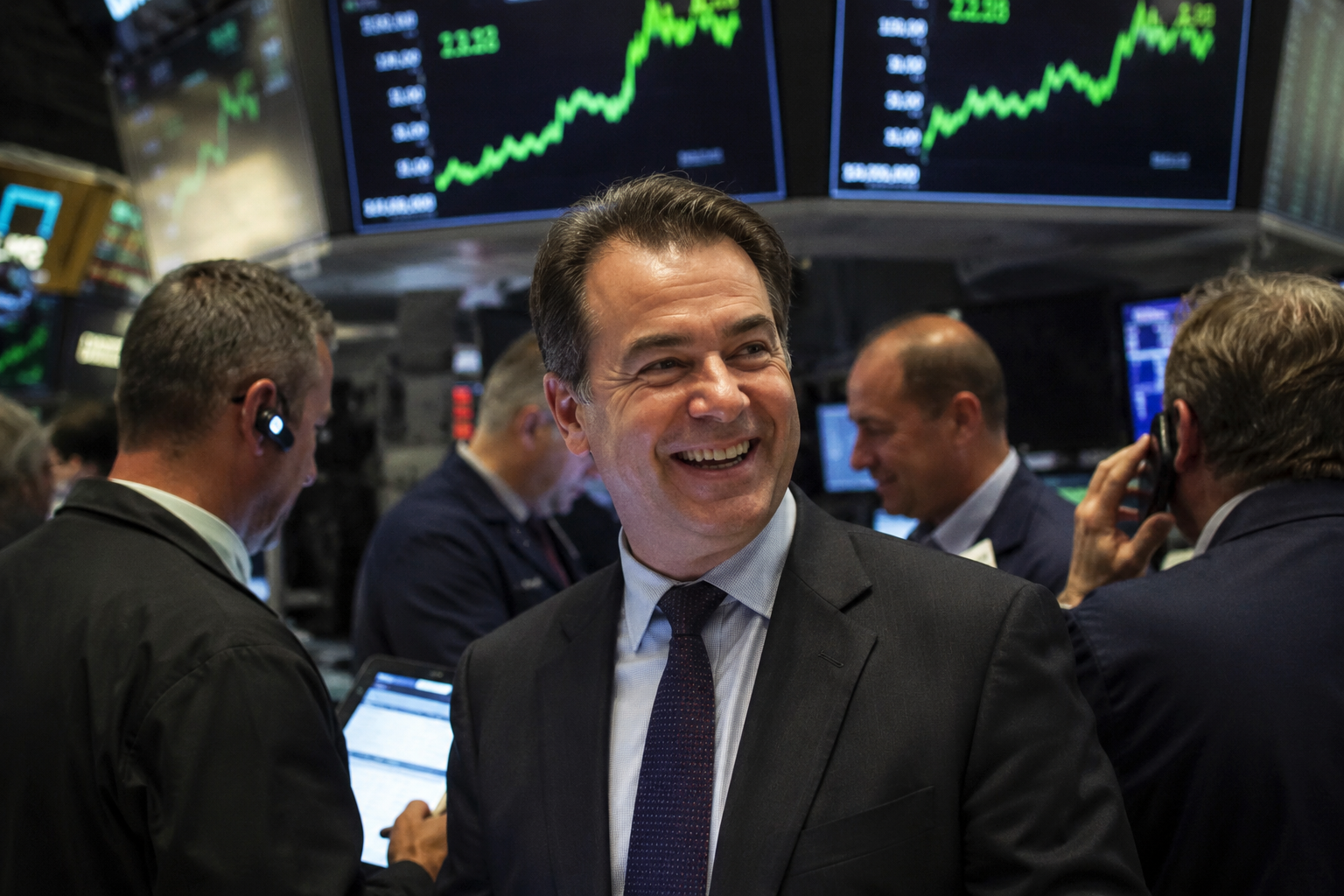

Terry Duffy, chairman and chief executive of CME Group, said on the first quarter results call on 22 April 2026 that capital efficiencies provided to clients hit a new high in the first three months of this year, with over $85bn in average daily margin savings.
“We’re very pleased to further extend our FICC cross-margining agreement to end-user clients later this month,” added Duffy.
The Depository Trust & Clearing Corporation (DTCC), the U.S post-trade infrastructure, and CME received regulatory approvals in April this year to launch expanded U.S. Treasury cross-margining arrangement for end-user clients.
From 30 April 2026, DTCC and CME Group will extend cross-margining to end-user clients of dually registered broker/dealers and futures commission merchants (FCMs) that are common members of both the DTCC’s Fixed Income Clearing Corporation (FICC) and CME. Clients active in trading U.S. Treasury and interest rate derivatives will be able to offset eligible positions across both clearinghouses, reducing margin requirements, freeing up capital and improving liquidity.

Frank La Salla, DTCC
Frank La Salla, president and chief executive at DTCC, said in a statement that efficient cross-margining opportunities across U.S. Treasury securities and futures activity is critical as the SEC’s central clearing mandates take effect and centrally cleared U.S. Treasury activity continues to grow.
La Salla said: “Our current cross-margining arrangement with CME Group has a proven track record of creating an average of $1bn across both clearing houses in risk offsets every day, and we expect the end-user cross margin effort will lead to additional offsets for the industry.”
Tokenization
DTCC has also been running a pilot program to tokenize US Treasuries to improve collateral mobility and make collateral management workflows more efficient.
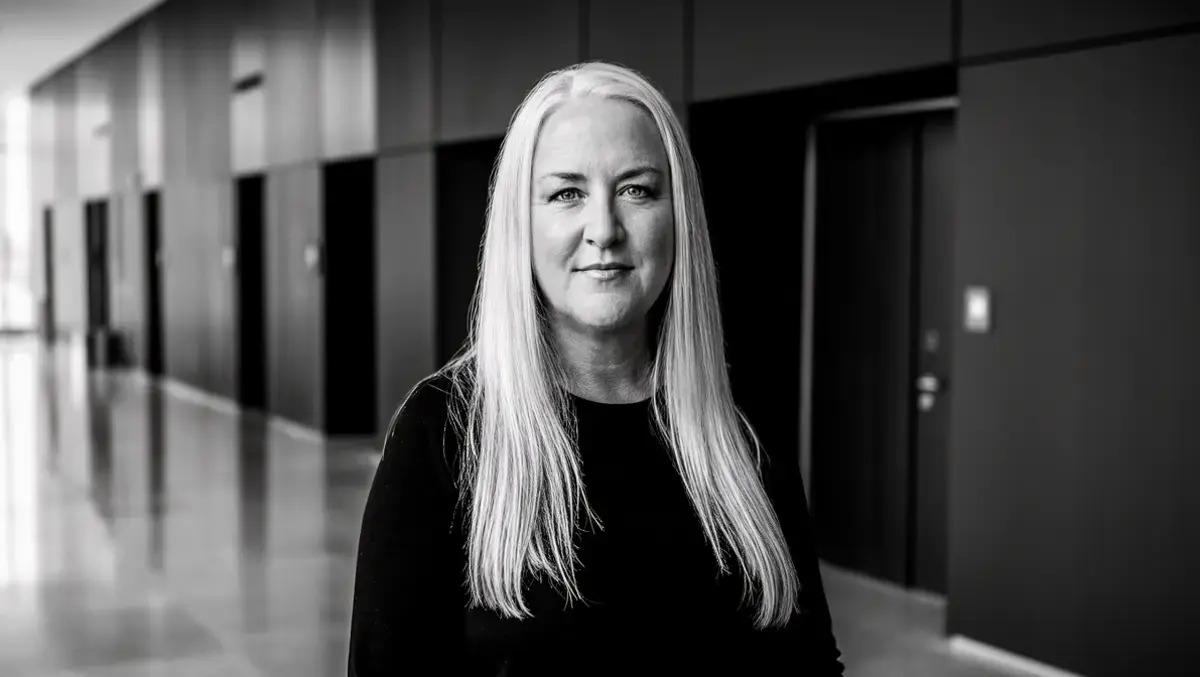
Suzanne Sprague, chief operating officer and global head of clearing, said on the call that CME is working with FICC, as well as internally, on various tokenization efforts. CME believes there is benefit for the industry in reducing friction in moving collateral, especially for collateral that does not naturally settle on the same day, such as U.S. Treasuries. Sprague said CME aims to seek a license to be able to issue a stablecoin, and is exploring technology partners to help with the project. Sprague said: “We plan to advance that effort this year, although we can’t opine on the regulatory engagement timeline.

Suzanne Sprague, CME
CME is looking at multiple ways to make that $85bn a day in margin efficiencies continue to grow, and to increase capital efficiencies by how it moves money back and forth each and every day. She added: “We want to make it effective and efficient for clients to use margin, whether it’s tokenized, a stablecoin, cash and treasuries, or other forms that clients use with us today.”
In March this year Canadian bank BMO, said in a statement that it plans to introduce 24/7 tokenized cash capabilities in collaboration with CME and Google Cloud. The bank said this will allow institutional clients to move value more easily and securely using CME’s permissioned network on Google Cloud Universal Ledger (GCUL). BMO clients will be able to convert dollars into a tokenized instrument for use with margined products at CME.
Sprague said the using tokenized cash at CME Clearing will allow firms to meet margin requirements and settlement obligations in real-time, freeing up capital that would otherwise need to wait for traditional banking cycles. CME is working with the settlement banks in its ecosystem, and clearing members.
“The goal is to be able to increase testing capabilities within the settlement bank ecosystem, as well as to start integrating clearing members into that testing process this year, with a goal of being able to go live by the end of this year,” she added.
Crypto
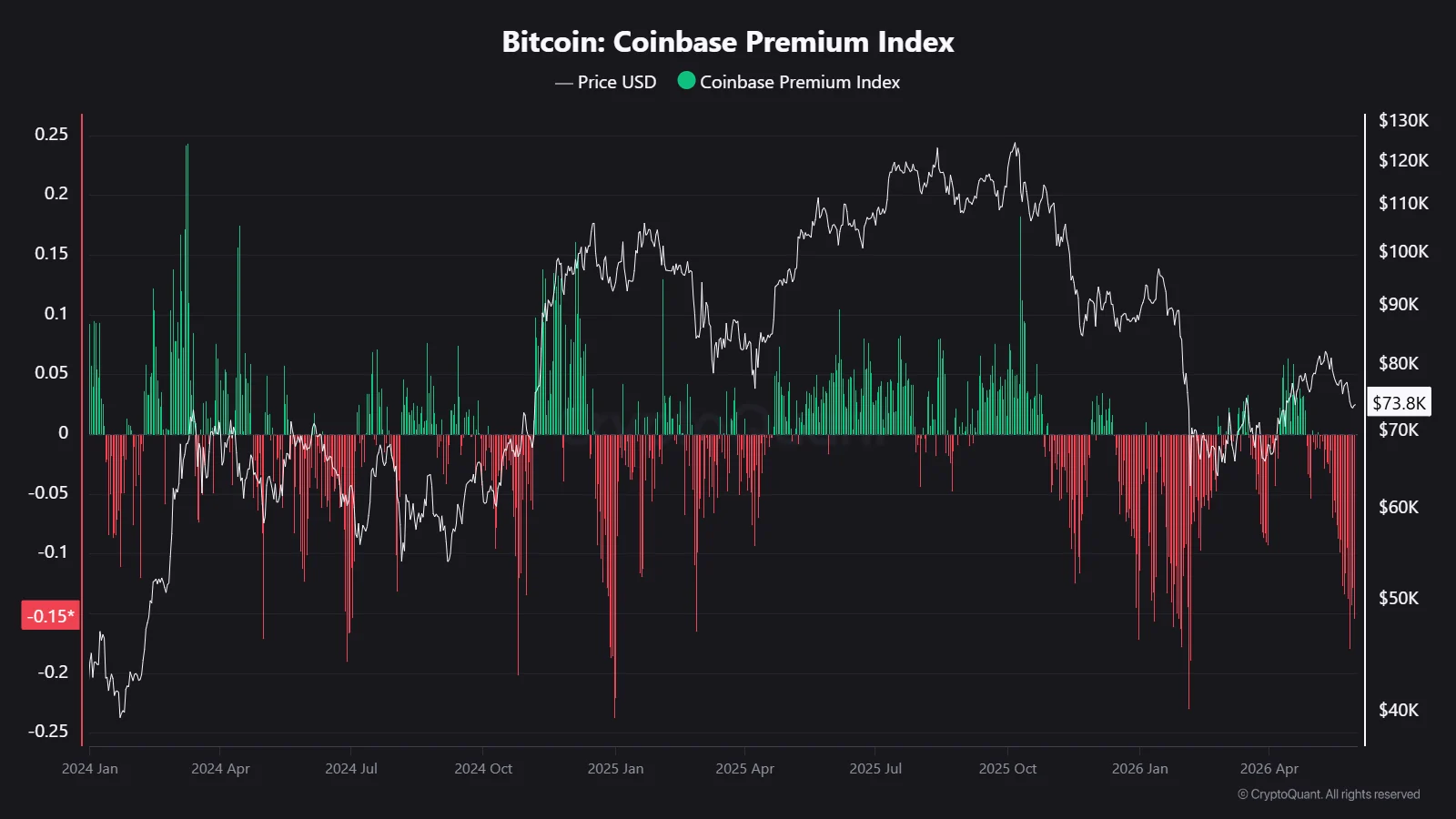
CME said that despite cryptocurrency prices remaining lower than the first quarter of 2025, the product suite experienced “significant” growth as average daily volume rose 57% to 310,000 contracts, or $9.3bn notional.
In addition, cryptocurrency futures and options will be available to trade 24 hours a day, seven days a week, from 29 May 2026. CME said: “Moving to 24/7 trading aligns our offerings with the nonstop nature of crypto markets and gives institutional and individual clients the ability to manage exposure on their own terms, at any hour.”
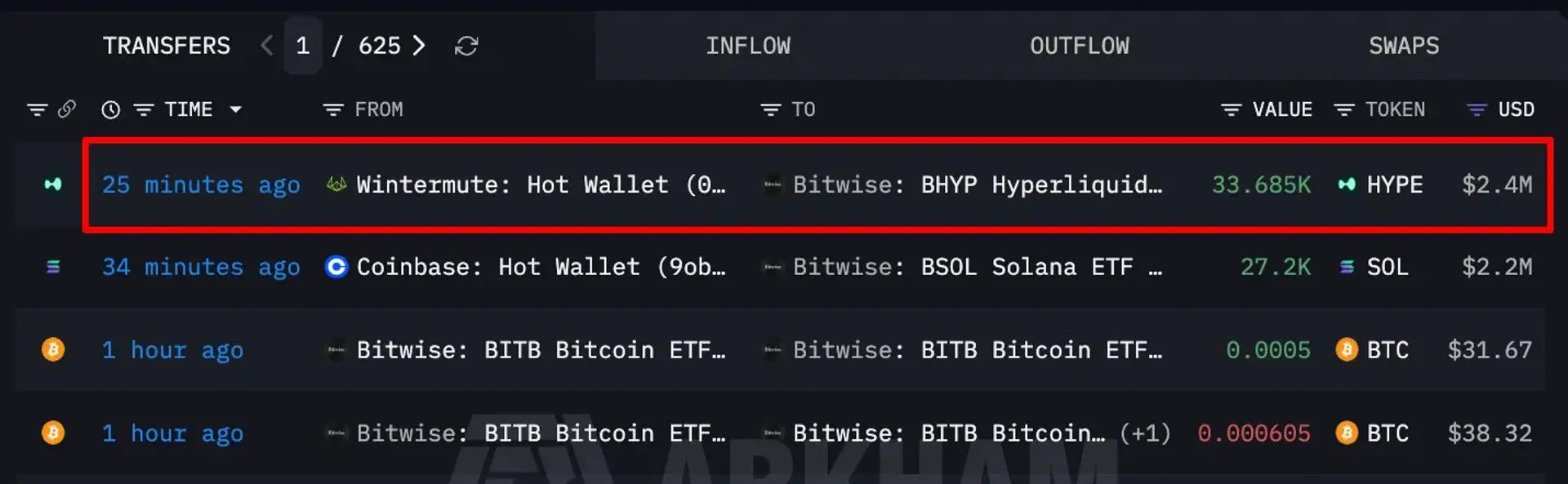
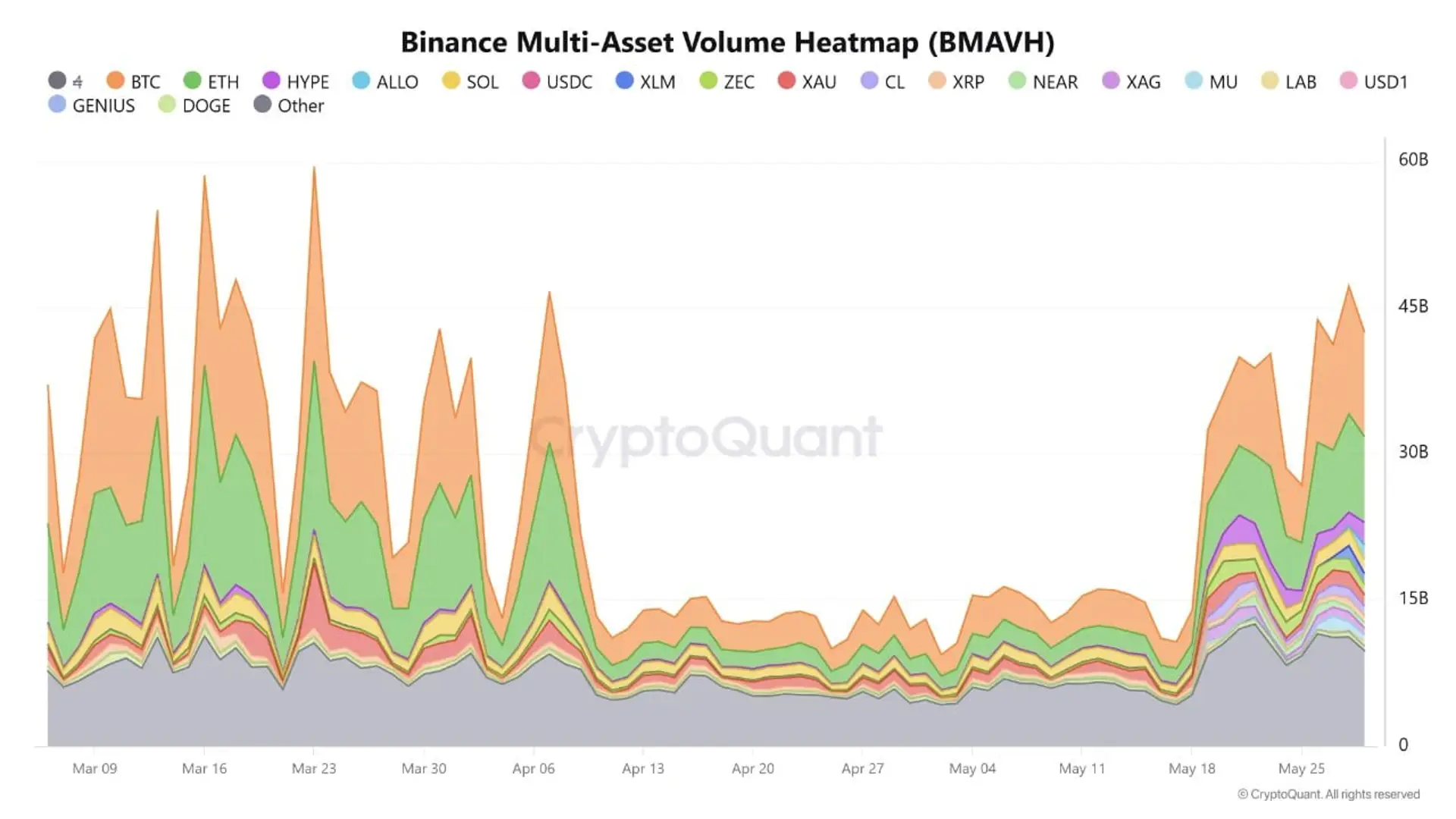
Since the United States and Israel launched joint strikes on Iran in February this year, volumes of onchain trading have exploded in commodities over the weekends when traditional exchanges are closed, particularly on Hyperliquid, a decentralized layer-1 blockchain optimized for low-latency trading.

TerrY Duffy, CME Group
Duffy highlighted that perpetual futures are against the law in the U.S. He argued that the Commodity Exchange Act of 2000 defined a futures contract as a contract for future delivery, rather than as a contract that never ends.
“I think convergence to the physical market is massively important to commercial producers and other participants that these contracts are designed for,” he added. “Contracts are not designed for speculators or pure retail.”
He believes perpetual futures have been created for speculators, which is not the mission of the Commodity Exchange Act. In addition, he argued that the auto-liquidation feature on perpetual futures, which trigger when the price falls to a certain level, is not suitable for commercial hedgers. Duffy added: “That’s something that I’m very much involved with as it relates to perpetuals.”
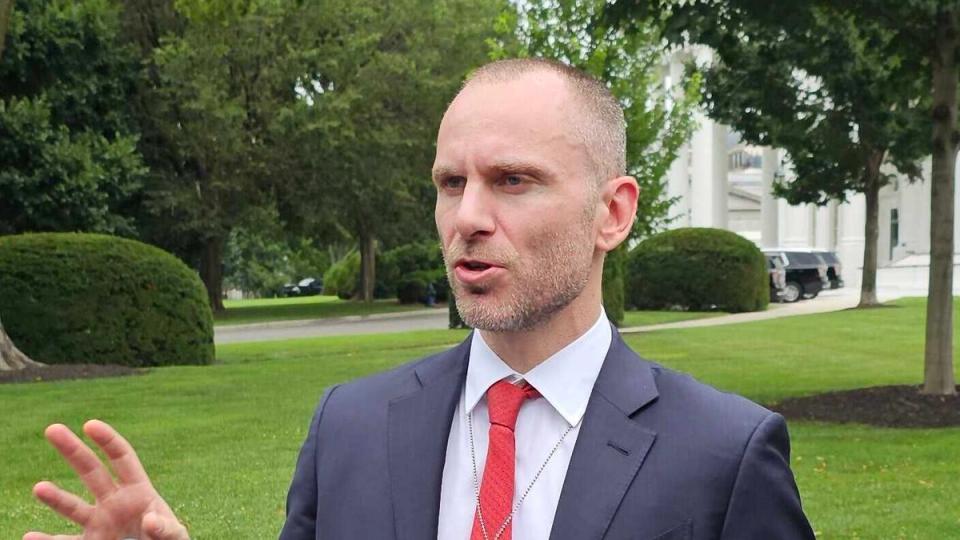
Michael Selig, chairman of the CFTC, said in a speech at FIA Global Cleared Markets Conference in Boca Raton in March this year that he had directed the U.S. regulator’s staff to consider how to clarify their views on the classification of true crypto-perpetuals

Michael Selig, CFTC
Selig said: “We will continue to listen to the needs of the agriculture and energy communities, and we recognize that certain asset classes may not be suitable for 24/7 trading and perpetual contracts.”
In March this year, S&P Dow Jones Indices said in a statement that it has licensed the S&P 500 to Trade[XYZ], which provides real world asset markets via perpetual derivatives on Hyperliquid. The collaboration represents the first time eligible, non-U.S. investors can gain leveraged exposure to the S&P 500 through an officially licensed, digitally native product designed for 24/7 trading on a decentralized platform.
Duffy said: “We were not made aware of that licensing even though we own 27% of the index business. We have a deep respect for intellectual property and we’ve made our points very aggressively on that.”
Prediction markets
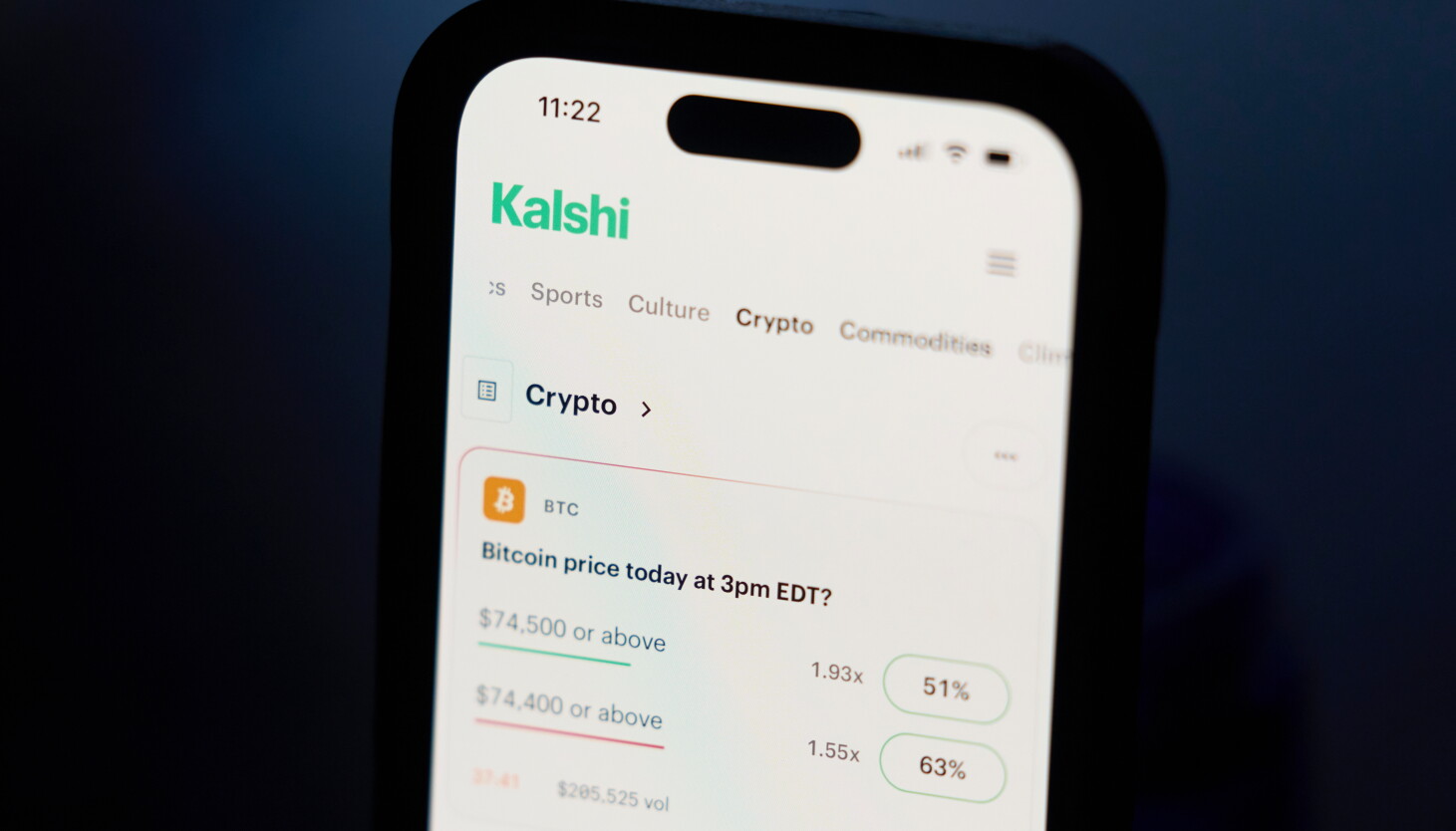
Tim McCourt, global head of equities, FX and alternative products at CME Group, said on the call that prediction markets activity has reached over 220 million event contracts since CME launched the products in early December 2025, including more than 35 million markets-related event contract

Tim McCourt, CME
CME launched prediction markets in the U.S. last year in partnership with FanDuel, the online gaming company in North America and part of Flutter Entertainment. The launch has led to CME opening more than 150,000 new retail accounts which McCourt described as a “fantastic start.” He believes that CME has the opportunity to perhaps be the first trade in the financial markets for many of these accounts.
“The original thesis was to attract the next generation traders to our markets and once they are in the CME ecosystem, we are optimistic they will look at other products,” said McCourt. “It is hard to say exactly what that cycle will look like, but capturing them earlier in the journey is one of the things that we find attractive about this opportunity, and it’s great to see that bear fruit so early in the endeavor.”
Moving to cloud
CME has built a new facility in Dallas, which Duffy said is on track to open this summer, and will be a training ground for its cloud environment at the Aurora facility. Google and CME teams are jointly in the final validation phase.
“We will provide a critical testing ground for our clients in advance of two of our agricultural products migrating to the cloud by the end of the year,” added Duffy. “I’m a big believer that this is the future of markets.”
CME is starting the migration with the agricultural complex, which is less latency sensitive. Duffy said: “I’m looking forward to every product being in the cloud as long as Google’s technology and facilities are better than what we have right now, and I believe they will be great.”
Volumes
Average daily volume increased 22% from the first quarter of last year to 36.2 million contracts, which Duffy said was the highest in CME’s history. He added: “For the first time, we simultaneously achieved record volume across every one of our six asset classes – rates, equities, energy, agricultural products, metals and foreign exchange.”
Source: CME
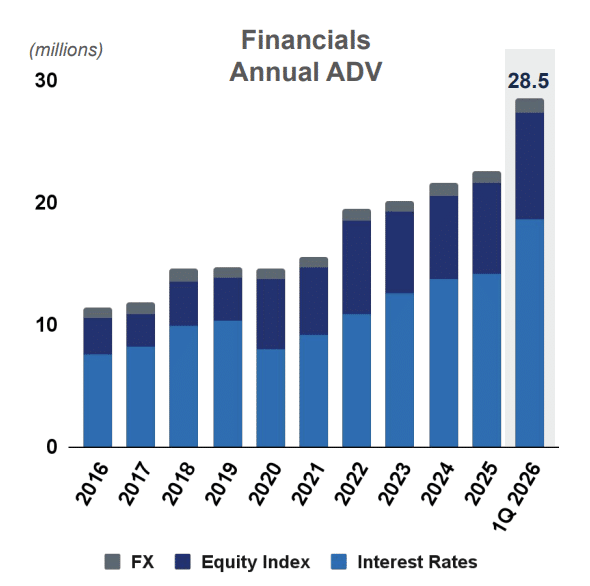
The financials contract suite had record average daily volume of 28.5 million contracts in the first quarter of this year, up 18% from the same period in 2025. This included record average daily volume across Treasury futures and options, SOFR futures and options, interest rates, equity index and foreign exchange.
Increased commodity prices drove 38% year-on-year growth in the commodities complex to 7.7 million contracts, which represented 21% of total volume and 36% of clearing and transaction fee revenue. Record commodities volume included all-time highs in average daily volume for energy products, agricultural contracts and metals.
Non-U.S. average daily volume was a record 11.4 million contracts, up 30% compared with the same period in 2025. Duffy said: “Remarkably, our international business also saw record volume in all six asset classes simultaneously proving that our value proposition is resonating globally.”
CME group reported a revenue increase of 14% to a record $1.9bn and record net income of $1.2bn for the first quarter of 2026.
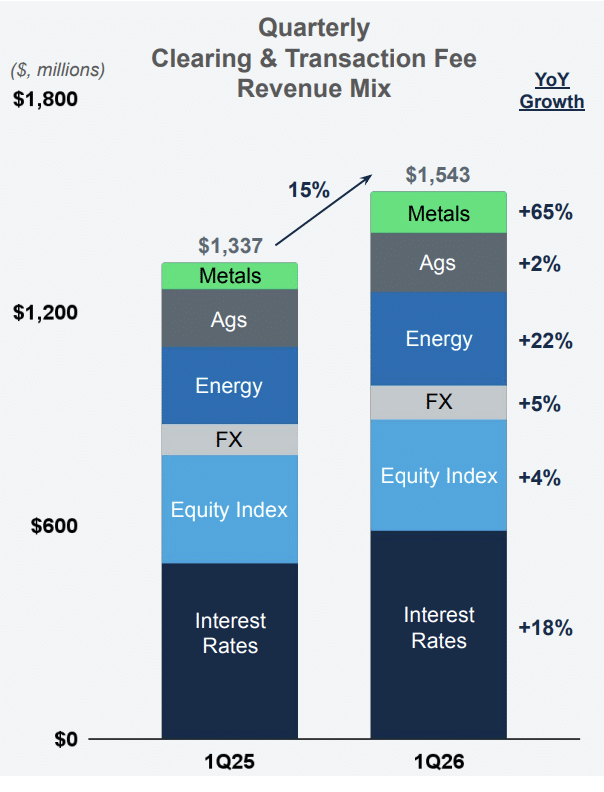
Source: CME
Lynne Fitzpatrick, chief financial officer at CME, described the first quarter on the call as “record breaking” across the board, which included growth in clearing and transaction fee revenue of 15% year-over-year.

NEWSLETTER SIGN UP
And receive exclusive articles on securities markets