GitHub Copilot’s billing system shifts permanently to token-based pricing at midnight UTC tonight, replacing the flat premium-request model with GitHub AI Credits — and the credit rate developers were waiting for was sitting in GitHub’s own documentation all along: one AI credit equals $0.01. For the millions of Copilot users whose plans had a familiar monthly dollar price, that translation is the key number. A $10-per-month Pro subscription now includes 1,000 AI credits. A single frontier-model agentic session that consumes 30,000 tokens can cost 30 to 40 of those credits before the working day is done.
GitHub’s chief product officer Mario Rodriguez announced the switch in a billing announcement post on April 27, framing it as an alignment of pricing with actual compute consumption. Today, Rodriguez wrote, a quick chat question and a multi-hour autonomous coding session cost the user the same amount — a mismatch the flat model can no longer sustain as Copilot evolves into a platform for long, multi-step agentic workflows.
Community response since the announcement has been pointed. GitHub’s official discussion thread has accumulated more than 400 comments and nearly 900 downvotes. TechCrunch reported on May 30 that some developers were projecting cost increases from $29 to $750 per month or from $50 to $3,000, depending on how aggressively they used agentic features. GitHub has not independently verified those figures, but the math underlying them — a heavy agentic user running frontier models can burn the full monthly credit allowance in one or two sessions — is consistent with the rate tables published in GitHub’s models and pricing documentation.
How GitHub AI Credits Work
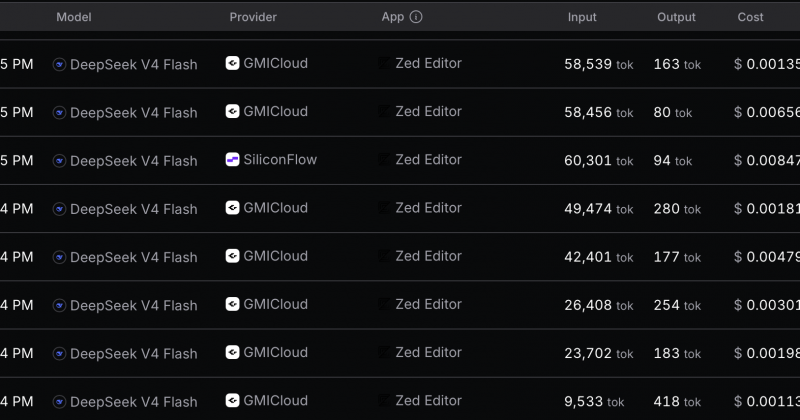
Each AI credit is worth exactly one cent. When a developer invokes Copilot Chat, runs an agent session, triggers code review, or calls the Copilot CLI, the interaction consumes tokens — input tokens sent to the model, output tokens the model generates, and cached tokens the model reuses — each charged at per-model rates and then converted into credits at that fixed one-cent rate. Code completions and Next Edit Suggestions are the sole exceptions: those features remain unlimited on all paid plans and never consume credits.
The practical cost of a session depends on two factors: the model chosen and the volume of context processed. A lightweight model handling a quick chat question might consume a fraction of a credit. A long agent session using Claude Opus 4.7, Claude Sonnet 4.6, or GPT-5.4 across a large codebase is a different calculation, because those models carry higher per-token prices. GitHub’s documentation on usage-based billing covers the full pooling and overage rules for Business and Enterprise accounts, where individual users’ credits are shared across the organization rather than siloed per seat.
What Each Plan Includes Starting Today
Base subscription prices are unchanged. What changes is what those prices represent: each plan’s monthly dollar cost now corresponds directly to an equivalent number of included AI credits.
Copilot Pro at $10 per month includes 1,000 AI credits. Copilot Pro+ at $39 per month includes 3,900 credits. Copilot Business at $19 per user per month includes 1,900 credits per user, pooled across the organization. Copilot Enterprise at $39 per user per month includes 3,900 credits per user, also pooled. For Business and Enterprise accounts that were already subscribed before today, GitHub is providing elevated promotional allocations through August 31: 3,000 credits per Business user and 7,000 per Enterprise user, giving teams a three-month window to measure actual consumption before credits normalize to plan-level amounts.
When a plan’s credit pool runs out, what happens next depends on how administrators have configured overage policies. If additional usage is permitted, Copilot keeps working and charges accumulate at the same one-cent-per-credit rate. If additional usage is blocked, Copilot’s non-completion features stop until the next billing cycle. Code completions remain available either way. GitHub has eliminated the fallback experience that previously allowed users who exhausted premium requests to continue on a lower-cost model; under the new system there is no automatic downgrade — usage stops unless an overage budget has been approved.
Why Agentic Users Bear the Highest Risk
The loudest developer objections center on agentic workflows: sessions where Copilot plans, researches, and executes multi-step tasks autonomously. One developer in the GitHub community discussion thread estimated that a typical agentic session — planning and implementing a feature across multiple files — routinely consumes $30 to $40 of credits at frontier-model rates. At that pace, a Copilot Pro user with $10 in monthly credits runs out after a single session. GitHub’s own cloud agent, which became generally available earlier this year, is designed precisely for this kind of extended autonomous work, making the cost ceiling especially visible for developers who adopted it aggressively.
Copilot code review adds a second billing dimension: each pull-request review consumes both AI credits for token usage and GitHub Actions minutes for the agentic infrastructure running the review, because code review now operates on a GitHub Actions architecture. That dual billing was not present in the earlier request-based model.
Annual Subscribers: Multipliers Rise Sharply
Users still running out annual Copilot Pro or Pro+ subscriptions are not migrating to AI Credits yet — they remain on the legacy premium-request system until their plans expire. However, the model multipliers that determine how many premium requests each interaction consumes increased today.
According to The Register’s coverage and GitHub’s own documentation, Claude Opus 4.7 now carries a 27× multiplier for annual-plan subscribers, up from 7.5×. GPT-5.4 rises from 1× to 6×. Copilot code review carries a 13× multiplier. When an annual plan expires, the subscriber is downgraded to Copilot Free rather than rolling into a paid monthly plan; GitHub has said it will provide prorated credits to subscribers who convert to a monthly plan before their annual term ends.
How to Control Copilot Costs Under Token-Based Pricing
Three steps cover most teams’ immediate exposure.
The first is to pull April’s usage report from the GitHub billing portal. April is the last full month of data under the old system and the most reliable baseline for estimating what the same usage pattern will cost in credits. GitHub flagged a billing-preview tool bug in early May that caused some credit estimates to appear artificially high during part of April; reports generated after that fix are the accurate reference.
The second is to set per-user budget caps before the first billing cycle closes. A $0 user-level budget blocks Copilot’s non-completion features entirely for that user — blunt but effective as a circuit breaker while teams calibrate real-world spend. Enterprise and organization administrators can set limits at the user, cost-center, and enterprise-wide levels through the GitHub billing dashboard.
The third is to understand which workflows are token-expensive. Agentic sessions, multi-file code review, and extended Copilot Chat conversations with large context windows drive the majority of credit consumption. Inline completions do not. Directing lighter tasks to lower-cost models — Claude Haiku 4.5, GPT-4o mini, or Gemini Flash — and reserving frontier models for work that genuinely requires them is the most direct way to stretch the monthly credit pool.
Teams evaluating alternatives are comparing Claude Code, Cursor, and direct API access through Anthropic or OpenAI. At high agentic volumes, the per-credit markup built into any managed-platform wrapper tends to be less favorable than direct API rates; the open question for each team is whether the IDE integration and workflow tooling are worth the platform premium at their specific usage level.
What the Switch Means for Your GitHub Copilot Bill
The credit math ultimately comes down to how Copilot is used. Developers who rely primarily on inline code completions will see no change, because those remain unlimited. Developers who use Copilot Chat occasionally with lightweight models will likely stay within their monthly credit pool. Developers running sustained agent loops, conducting regular automated code review, or using frontier models for complex multi-file tasks are the group for whom the economics shift most substantially.
GitHub’s stated position, repeated in both the official announcement and its community responses, is that the prior model effectively subsidized heavy agentic use at the expense of lighter users and GitHub’s own margins. The counter-argument from developers is that GitHub’s own product roadmap — Copilot cloud agent, automated pull-request review, agentic CLI — was built to encourage exactly the workflows that are now most expensive to run. Both arguments are accurate. The billing change is a structural realignment between the cost of compute and the price users pay for it. Whether that realignment is fair depends on how much agentic work was done under the old price, and whether developers knew what it actually cost GitHub to provide it.
Frequently Asked Questions
How does GitHub Copilot AI credits billing work?
Every paid Copilot plan now includes a monthly allowance of GitHub AI Credits, where one credit equals one cent. When you use Copilot Chat, agent mode, code review, or the CLI, the interaction consumes tokens — inputs, outputs, and cached context — at per-model rates that are converted to credits. Code completions and Next Edit Suggestions remain unlimited and never consume credits.
Will GitHub Copilot cost more under the new token-based pricing?
It depends entirely on how you use it. Developers who primarily use inline completions will see no change. Those who run agentic coding sessions, multi-file code review, or extended Chat conversations with frontier models are most likely to exceed their monthly credit allowance. Community estimates suggest a single extended agent session on a frontier model can consume the entire monthly credit allowance for a $10 Pro subscriber.
What happens when GitHub Copilot credits run out?
If an administrator has enabled additional usage, Copilot continues working and charges accumulate at one cent per credit. If additional usage is blocked, all features except code completions and Next Edit Suggestions stop until the billing cycle resets. There is no longer an automatic fallback to a lower-cost model when credits are exhausted.
How do I control GitHub Copilot costs for my team?
Set per-user budget caps in the GitHub billing dashboard before the first cycle closes. A $0 user-level budget suspends Copilot’s non-completion features for that user, preventing any overage charges. Enterprise administrators can also configure cost-center and enterprise-wide spending limits. Pull April’s usage report from the billing portal as your baseline before setting those limits.