Key Takeaways
- Circle froze approximately $12.6 million in USDC held within Zama’s confidential cUSDC wrapper after a federal court order.
- The freeze targeted the entire cUSDC contract address, meaning legitimate users who had no connection to the Overnight Finance dispute also lost access to their funds.
- Ethereum itself remains permissionless and neutral, but USDC includes issuer-controlled blacklist functionality.
- Critics noted that Circle acted quickly on a court order, whereas it had previously failed or delayed freezes in several major hacks involving hundreds of millions of dollars in stolen funds.
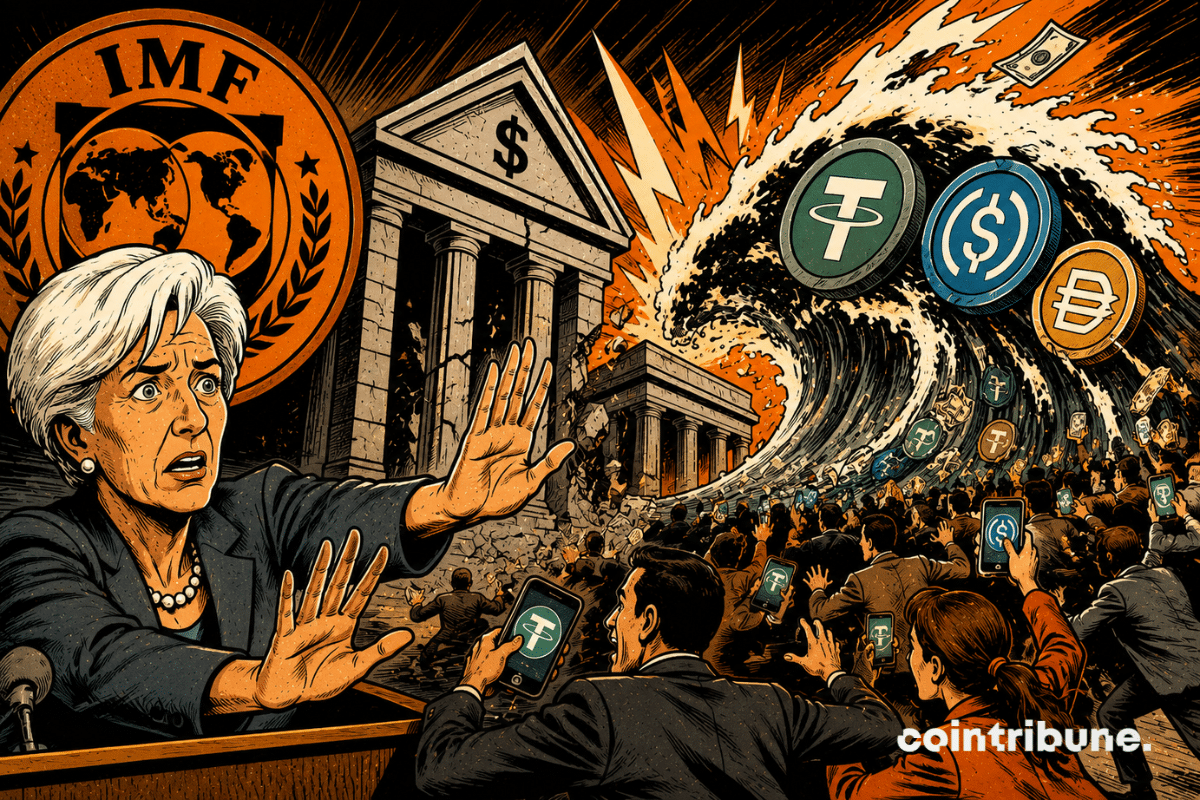
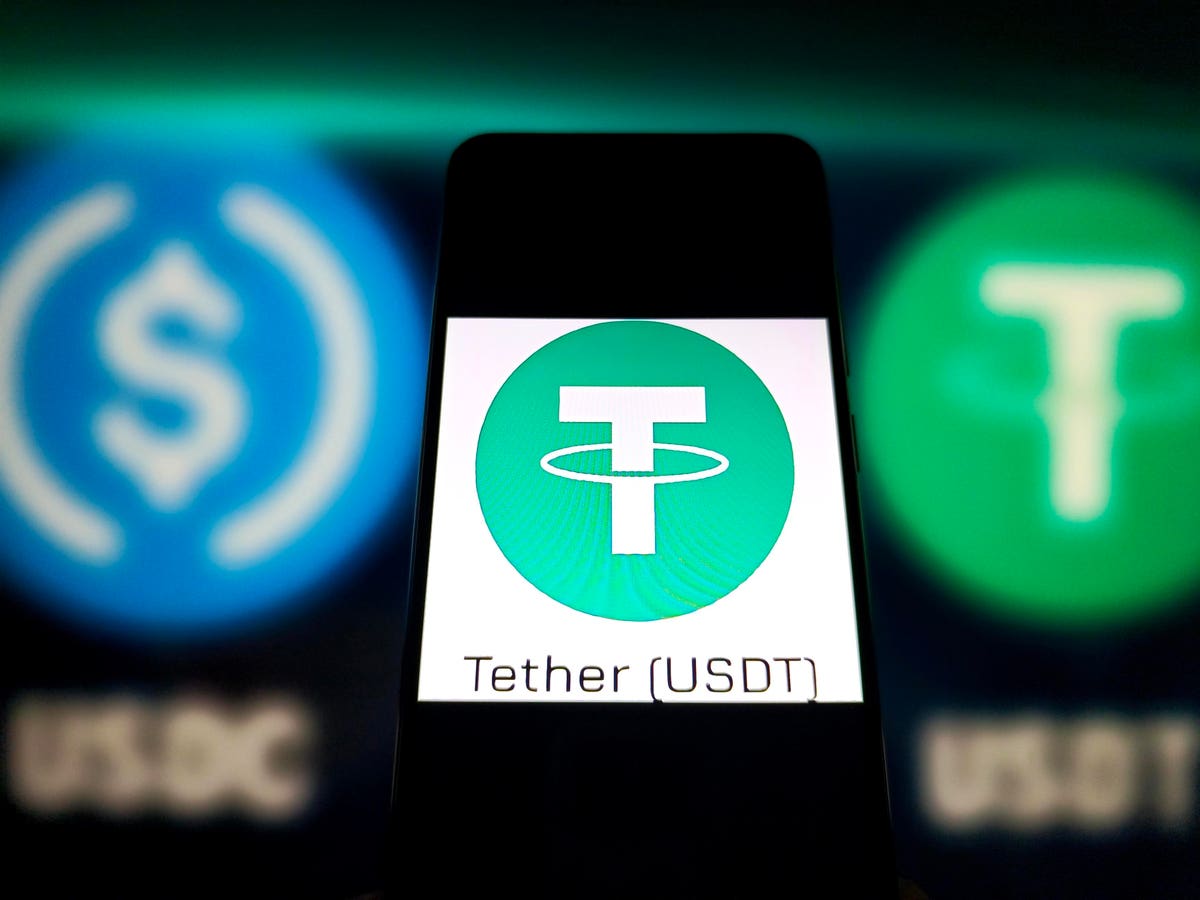
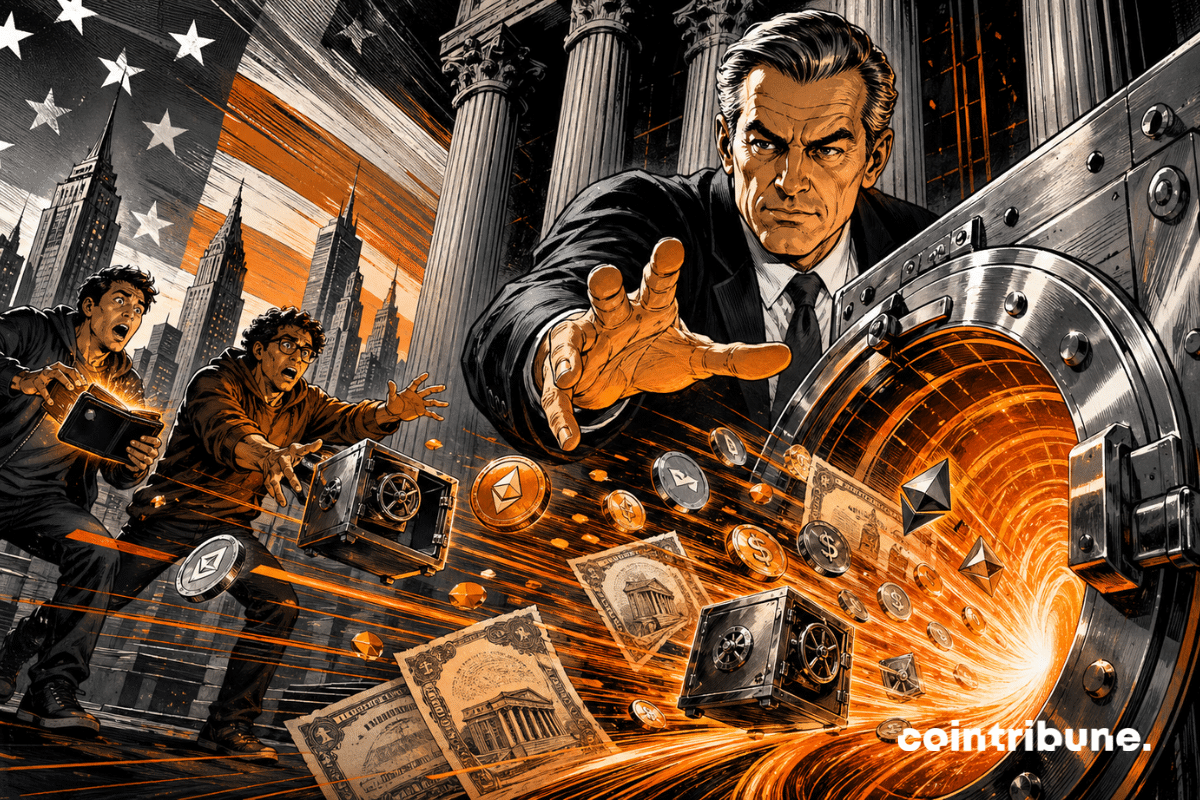
Circle executed a blacklist on the Ethereum contract labeled ‘Zama: cUSDC Token’ around 1:08 UTC on May 30, 2026, freezing roughly $12.6 million in pooled USDC and halting redemptions for users holding cUSDC in the contract.
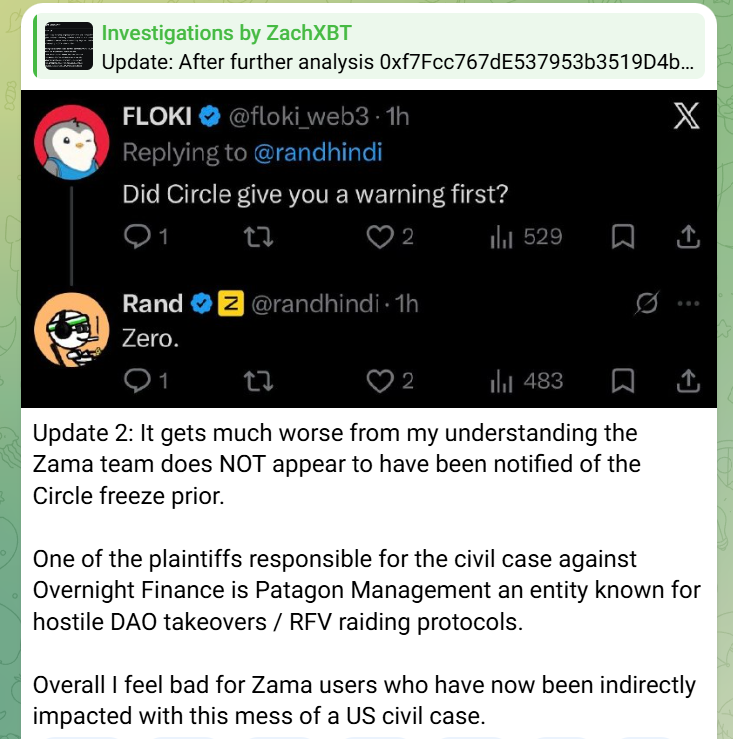
Zama received no advance warning. Users with no connection to the underlying dispute lost access to their funds.
Within hours, the freeze had reignited one of crypto’s most consequential and least resolved debates: whether a stablecoin bearing a blockchain address, a cryptographic wrapper, and a decentralized protocol label is any more censorship-resistant than a traditional bank deposit.
The honest answer, as this incident makes clear once again, is no.
Background on Zama and How Confidential USDC Works
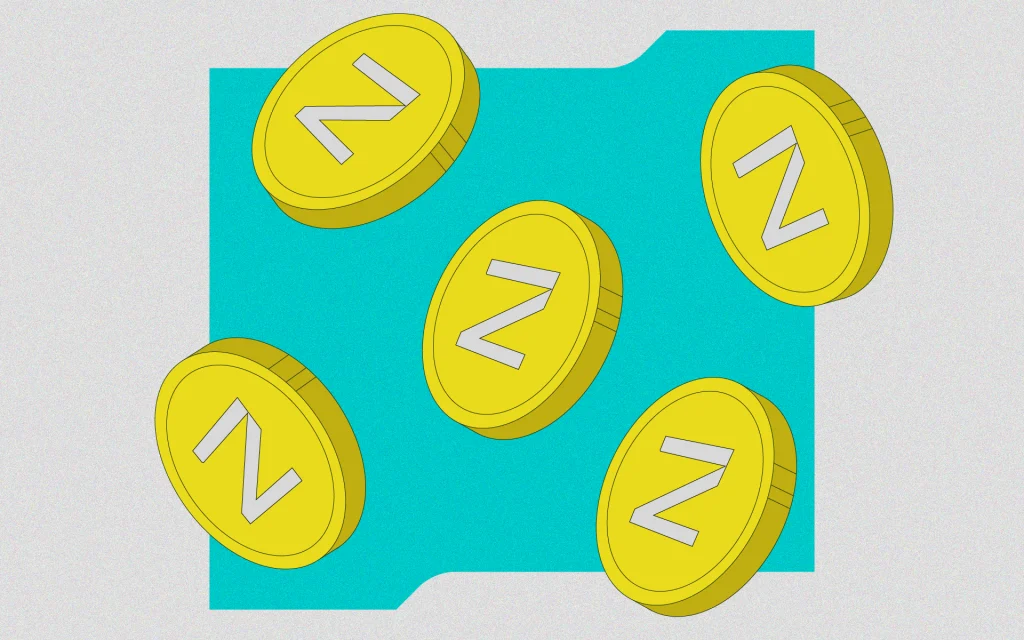
Zama is a Paris-based cryptography firm specializing in Fully Homomorphic Encryption (FHE). FHE allows computations on encrypted data without ever decrypting it. In practical terms, Zama deployed a product called cUSDC, a confidential wrapper for Circle’s USDC stablecoin built on the ERC-7984 standard.
- The cUSDC contract allows users to wrap USDC into a privacy-preserving version for confidential transactions.
- When a user deposits USDC into Zama’s wrapper, the underlying USDC sits in a pooled smart contract at a fixed Ethereum address.
- The user receives cUSDC tokens in return. Transaction amounts and balances on the cUSDC layer are encrypted using FHE, meaning that on-chain observers cannot determine how much any individual holds or transfers.
- Sender and recipient wallet addresses remain publicly visible, but the financial substance of each interaction is hidden.
- Zama has been explicit that the system does not function as a mixer or tumbler. It is infrastructure for private computation, not a tool for obscuring transaction flows from participants themselves.
The architecture is technically sophisticated. Confidential transactions are expressed on the host chain, executed off-chain by FHE coprocessors, and selectively decrypted through a threshold key management system orchestrated by a Gateway, with an access control list enforcing permissions at every step.
None of that complexity changes a single foundational fact: the USDC sitting inside the Zama wrapper is still USDC, still issued by Circle, and still subject to every control Circle retains over its token contract.
What Triggered the Freeze: Overnight Finance and a Federal Court Order
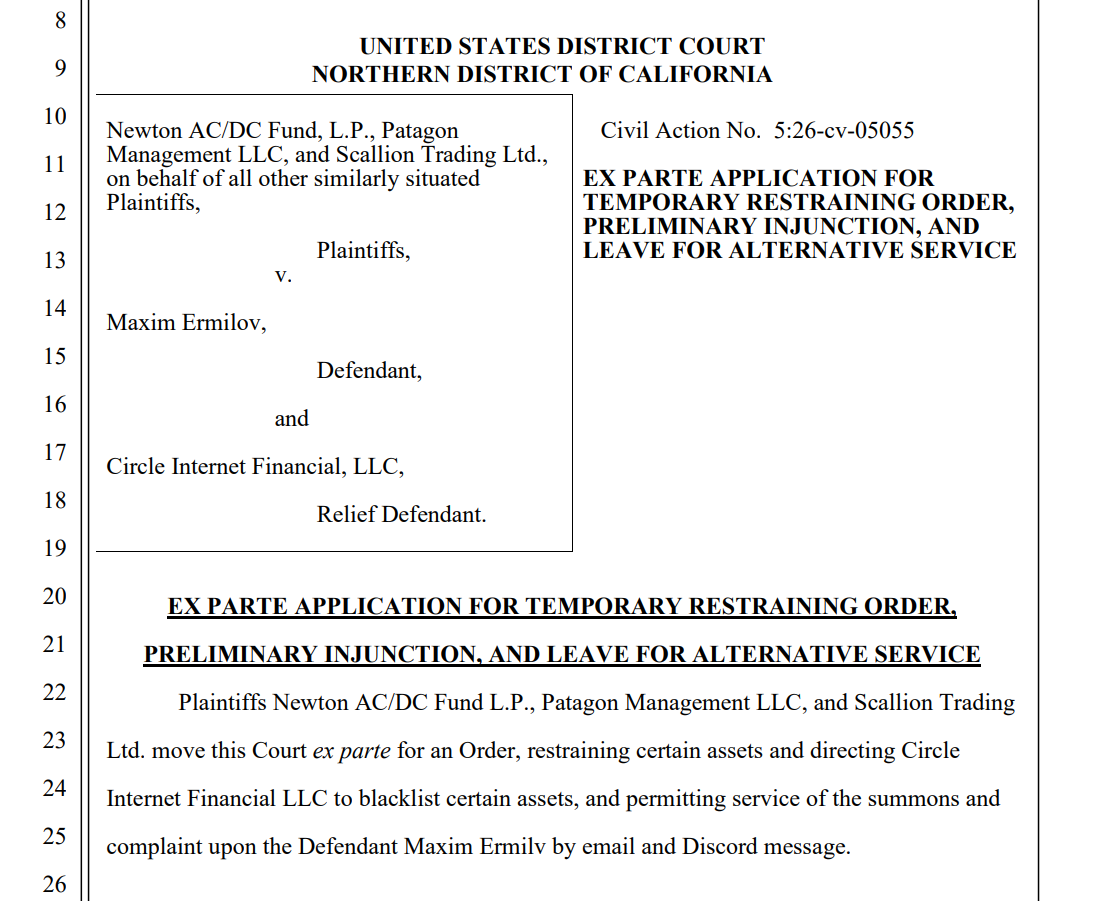
A federal judge ordered Circle to blacklist Zama’s confidential USDC contract on Friday night, freezing about $12.6 million.
A new class action suit alleges that Overnight Finance creator Maxim Ermilov used the contract to move treasury funds beyond OVN token holders’ reach.
The underlying dispute has no direct connection to Zama’s technology. Ermilov allegedly promised OVN holders in November 2024 a pro-rata claim on the treasury and the right to vote on what happened to it.
OVN holders initiated a vote on May 4, 2026, to liquidate the treasury and pay themselves out.
Just before the vote crossed a majority on May 11, the lawsuit alleges Ermilov shifted more than $15.77 million out of the treasury wallets into a new address, with about $12.5 million in USDC bridged to Ethereum and deposited into Zama’s confidential contract.
The action followed a temporary restraining order issued May 29 by US District Court Judge P. Casey Pitts in Newton AC/DC Fund LP et al. v. Maxim Ermilov et al. A full hearing is scheduled for June 1, 2026.
The freeze effectively locked all USDC held inside the cUSDC contract, not just funds linked to Overnight Finance, but any user funds deposited into Zama’s wrapper for legitimate privacy use.
Zama CEO Rand Hindi confirmed his team was not notified before Circle executed the blacklist, and described the protocol as having been “caught in a crossfire.”
Zama has since paused its cUSDC, cUSDT, and cWETH wrappers while its legal team engages US counsel, and the team says it will isolate the flagged deposit to restore access for users not connected to the Overnight Finance dispute.
How Circle’s Blacklist Mechanism Actually Works
Understanding why this freeze was technically possible requires understanding the control architecture baked into USDC’s smart contract from the day it launched.
Circle maintains a built-in blacklist on the USDC smart contract. Authorized Circle accounts add addresses, and blacklisted addresses cannot send or receive the stablecoin. When Circle adds a contract address to the blacklist, all USDC held at that address is frozen regardless of who owns it or why it is there. The contract does not distinguish between the targeted depositor and unrelated users whose funds happen to sit in the same pool.
Encrypted balances do not mean encrypted compliance powers. Circle still controls the underlying USDC, which means it can still blacklist addresses.
The cryptographic elegance does not change the legal architecture underneath. USDC is issued by Circle, a US-incorporated company subject to US financial regulations. When Circle decides an address needs to be frozen, no amount of encryption changes that outcome.
Circle’s stated policy is that it only freezes assets when presented with a court order, sanctions designation, or law enforcement request. That policy is what makes the Zama incident technically compliant with Circle’s published standards. A federal judge issued a temporary restraining order. Circle executed it. The legal chain of authority is unambiguous.
Where Circle Did Not Act: $420 Million and 15 Incidents
The Zama freeze lands in a context defined heavily by what Circle chose not to freeze in the preceding months, and the contrast is sharp enough to have generated significant industry backlash.
On April 1, 2026, the Drift Protocol was exploited for approximately $285 million. The attacker bridged approximately $232 million in USDC from Solana to Ethereum via Circle’s Cross-Chain Transfer Protocol (CCTP) across more than 100 transactions over six consecutive hours with no action from Circle.
The CCTP is Circle’s own infrastructure. The transfers were visible in real time. Security firms, including PeckShield and Arkham, flagged the activity publicly as it was happening. Circle did not freeze the funds.
On-chain investigator ZachXBT subsequently published a detailed thread documenting Circle’s freeze record across a broader set of incidents.
Over $420 million in stolen funds has escaped freezing actions across 15 incidents since 2022, in which Circle either delayed or failed to freeze USDC. Specific cases cited include the July 2025 GMX exchange breach, in which Circle did not freeze $9 million in stolen USDC, and the $200 million Cetus DEX theft, in which addresses associated with the stolen funds received blacklist treatment only after the funds had already been converted out of USDC.

In a March 2026 civil case, Circle also froze 16 legitimate business wallets, including DFINITY Foundation’s ckETH Minter contract, with 5 later unfrozen.
That action drew separate criticism for hitting infrastructure contracts belonging to protocols with no connection to the underlying dispute, producing the same collateral damage dynamic visible in the Zama case.
Circle’s position throughout has been legally sound: freezing assets without a court order or law enforcement request exposes the company to litigation from affected wallet holders.
Legal professionals have noted that unilateral freezes without legal backing would expose parties to substantial liability.
But the asymmetry between the rapid execution of civil court orders and the extended inaction during active hacks, resulting in hundreds of millions in real user losses, has created a credibility problem that the Zama incident has compounded.
What Stablecoin ‘Censorship Resistance’ Actually Means
The Zama case provides a clean example of a distinction the industry has resisted making explicitly: censorship resistance is a property of the settlement layer, not the asset layer.
Ethereum, as a base protocol, will process any valid transaction submitted to it with sufficient gas. No individual, company, or government can prevent a valid Ethereum transaction from being included. That property is genuine and valuable. It is the foundation on which the entire DeFi ecosystem operates.
USDC is a smart contract deployed on top of that settlement layer. The contract contains a blacklist function written into its code at issuance. Circle holds the keys to that function.
When Circle adds an address to the blacklist, the Ethereum network processes that blacklist transaction with the same neutrality it processes any other. Censorship is applied at the asset layer within the contract, using the exact same neutral settlement infrastructure that makes the blockchain useful.
Decentralized stablecoins such as DAI and USDS carry their own risk profiles but do not, by design, embed an issuer-controlled blacklist. Fully algorithmic or crypto-collateralized stablecoins have no single entity capable of freezing a specific address on demand.
The tradeoff is different risk vectors: smart contract risk, collateral volatility, and governance attack surface replace issuer control risk. Neither architecture is without vulnerability. They are different in kind.
For users holding USDC inside any protocol, wallet, or wrapper, the relevant question is not whether the wrapper is encrypted, decentralized, or technically innovative.
The relevant question is whether the underlying USDC contract’s blacklist function can reach the address where their funds sit. Encrypted balances built on Circle-issued USDC remain subject to Circle’s compliance controls, regardless of the cryptographic layer above them.
Zama’s FHE architecture is genuine and sophisticated. It does not and cannot override the legal authority Circle retains over USDC issuance.
Risks and What Comes Next
A June 1 hearing may result in an isolation order or a partial release. Until then, roughly $12.6 million in USDC remains locked, and the case raises direct questions about the scope of centralized stablecoin blacklisting in public, commingled DeFi contracts.
The broader risks of this incident surface extend beyond Zama. Any DeFi protocol that holds pooled USDC in a shared contract is exposed to the same dynamic: a court order targeting one depositor can freeze all users’ funds simultaneously if the order is written to target the contract address rather than the individual wallet.
That exposure applies equally to lending protocols, liquidity pools, yield aggregators, and privacy wrappers. Contract-level freezes are blunt instruments, and as DeFi composability deepens, the number of innocent users caught in any given freeze order grows with it.
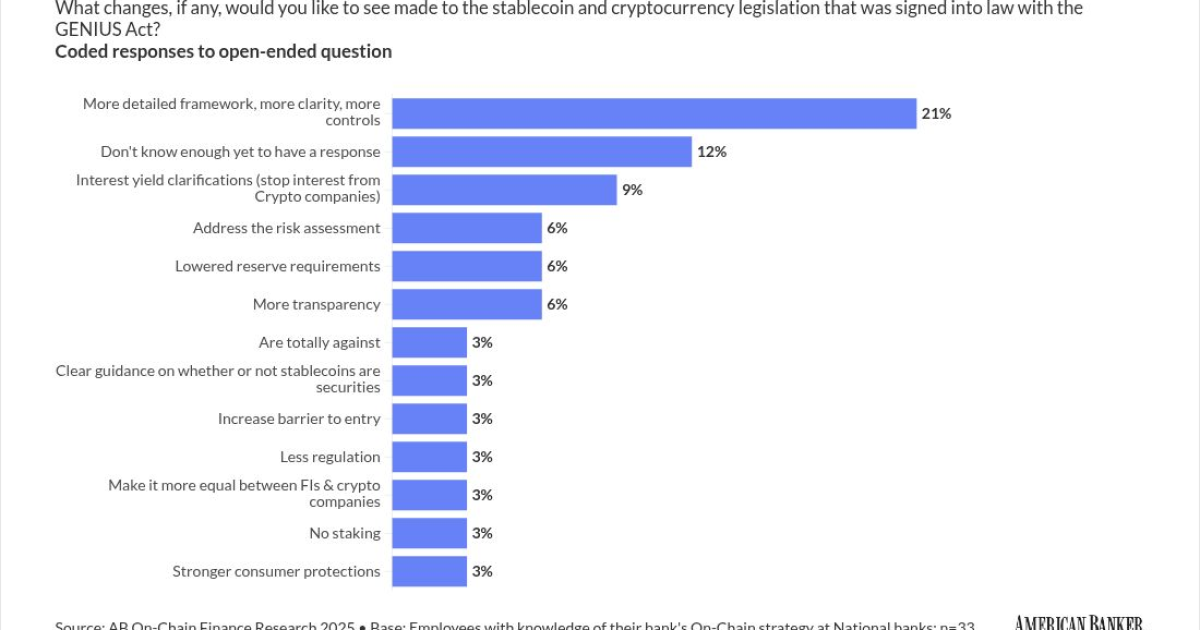
The GENIUS Act, currently moving through the US Senate, would formalize compliance obligations for stablecoin issuers but does not address the mechanics of commingled contract freezes or establish protections for third-party users affected by orders targeting specific depositors.
Until that gap is addressed at the regulatory or technical level, the pattern visible in the Zama case will repeat.
FAQs
Circle acted in response to a temporary restraining order from a U.S. federal court related to allegations that funds connected to Overnight Finance were moved into Zama’s confidential USDC wrapper.
cUSDC is a privacy-preserving version of USDC developed by Zama using Fully Homomorphic Encryption (FHE). It allows transaction amounts and balances to remain encrypted while the underlying collateral remains standard USDC.
No, while cUSDC encrypts balances and transaction details, the underlying USDC is still issued and controlled by Circle. If Circle blacklists the contract holding the USDC, those assets can be frozen regardless of the privacy technology layered on top.
Any protocol that pools USDC in a shared smart contract may be vulnerable to contract-wide freezes. A legal action targeting one participant can potentially affect all users whose funds are held in the same contract.
The information provided in this article is for informational purposes only. It is not intended to be, nor should it be construed as, financial advice. We do not make any warranties regarding the completeness, reliability, or accuracy of this information. All investments involve risk, and past performance does not guarantee future results. We recommend consulting a financial advisor before making any investment decisions.

Dr. Guneet Kaur is a senior editor at CCN.com and a Science Fellow at Exponential Science. She is a fintech and blockchain expert with extensive experience in digital finance education, blockchain ecosystems, and cryptocurrency markets. She has worked with global media such as Cointelegraph, as well as education and blockchain platforms, to design and lead strategic content and learning initiatives. As an educator and assessor for top-tier executive programs, she bridges real-world fintech trends with academic insight.
Dr. Kaur is also a published researcher and peer reviewer across fintech and data science journals, including Financial Innovation Journal and International Journal of Big Data Intelligence and Applications. Her work spans data-driven analysis, Web3 innovation, and technical content development. With a strong foundation in both industry and academia, she translates complex financial technologies into practical applications, empowering learners, professionals, and institutions across the rapidly evolving digital finance landscape.