Humanity Protocol, a crypto project built around proving who you are online without revealing your private data, lost over $30 million in a private key breach on June 9, 2026. Its native H token — one of the year’s top-performing altcoins — collapsed more than 87% in under 12 hours. Here’s what happened and what it means.
What Is Humanity Protocol?
Before getting into the hack, it helps to understand what Humanity Protocol does. It’s a Layer 2 blockchain (built on top of Ethereum) that uses your palm biometric, and something called zero-knowledge proofs — a privacy technique that lets you prove a fact (like “I’m a real human”) without revealing any personal details — to verify identity online.

The idea is that in an age of AI-generated bots and deepfakes, platforms need a way to verify that users are human. Humanity Protocol pitches itself as that “trust layer” for the internet. Users deploy the native token, H, across the network for staking, governance, and liquidity.
H Token Was on a Record Run — Until Now
Just one week before the hack, H hit an all-time high of $0.85 on June 2. It had rallied over 875% from its 2026 low, driven by partnerships with Mastercard and Fireblocks, and a wave of AI-related crypto interest.
| Key Metric | Detail |
| Project Affected | Humanity Protocol (H Token) |
| Estimated Loss | $30M+ drained + 100M H tokens minted |
| Token Price Impact | $0.70 → $0.08 (dropped ~87%) |
| Primary Cause | Foundation Member Private Key Compromise |
| Key Question | Possibly staged exit — under investigation |
How the Attack Unfolded
On-chain analyst Specter was first to flag the attack on June 9. He reported that attackers drained over 17 wallets holding H tokens, with initial losses hitting around $5 million. Within hours, the figure ballooned.
Specter later updated via his Telegram channel that losses had widened to $32 million. Of that, the attacker had already swapped $23.7 million for Ethereum, while around $7.9 million remained in H tokens. He also published five theft addresses tied to the drains.
It appears that wallets linked to, or that have interacted with, @Humanityprot are being compromised.
So far, more than 17 wallets holding $H (Humanity Protocol) tokens have been drained, resulting in total losses exceeding $5 million.
Theft addresses:… pic.twitter.com/EOmMHkYxU2
— Specter (@SpecterAnalyst) June 8, 2026
The attacker didn’t stop there. On-chain tracker Lookonchain flagged on X that the hacker had also minted 100 million new H tokens (worth roughly $11.4 million at the time) to an attacker-controlled address on BNB Chain — an action that requires minting authority over the contract itself. That’s not a typical hack. That’s access to the keys that control the protocol.
Note that the #Humanity hacker has minted another 100M $H on BSC.
By selling $H, the hacker has already obtained 18,510 $ETH($30.83M) and 1,548 $BNB($924K).
The hacker still holds 111.36M $H($14M) ready to be sold.
However, on-chain liquidity is nearly exhausted. 🚨 https://t.co/vSArj5j185 pic.twitter.com/aA56QhdNDr
— Lookonchain (@lookonchain) June 9, 2026
The attacker routed the stolen H through Kyber Network and PancakeSwap — automated trading platforms — and converted everything into ETH and BNB. By the end of the day, the attacker held 16,321 ETH worth $27.14 million at the time of conversion, plus 1,764 BNB.
The Root Cause: A Compromised Private Key
Terence Kwok, founder of Humanity Protocol, confirmed the incident publicly on X and linked it to compromised private keys held by a member of the Humanity Foundation. He urged users: “Please do not interact with the bridge or any liquidity pools until we confirm it’s safe.”
We’re aware of a security incident involving the compromise of private keys belonging to a member of the Humanity Foundation. The safety of our community is our top priority, and we want to be fully transparent about what we know.
As a precaution, please do NOT interact with the…— Humanity (@Humanityprot) June 9, 2026
A private key is essentially the master password to a crypto wallet or, in this case, a set of administrative controls. Whoever holds it can do anything: transfer funds, mint new tokens, change protocol settings. It’s not a flaw in the code — it’s a flaw in how the team stored or protected the keys.
This kind of breach — where humans holding privileged access are the weak link, not the smart contracts — has become the dominant attack vector in crypto in 2026. Private key compromises drove 88% of stolen funds in Q1 2025, and the pattern has carried clearly into this year.
The Token Crash in Numbers
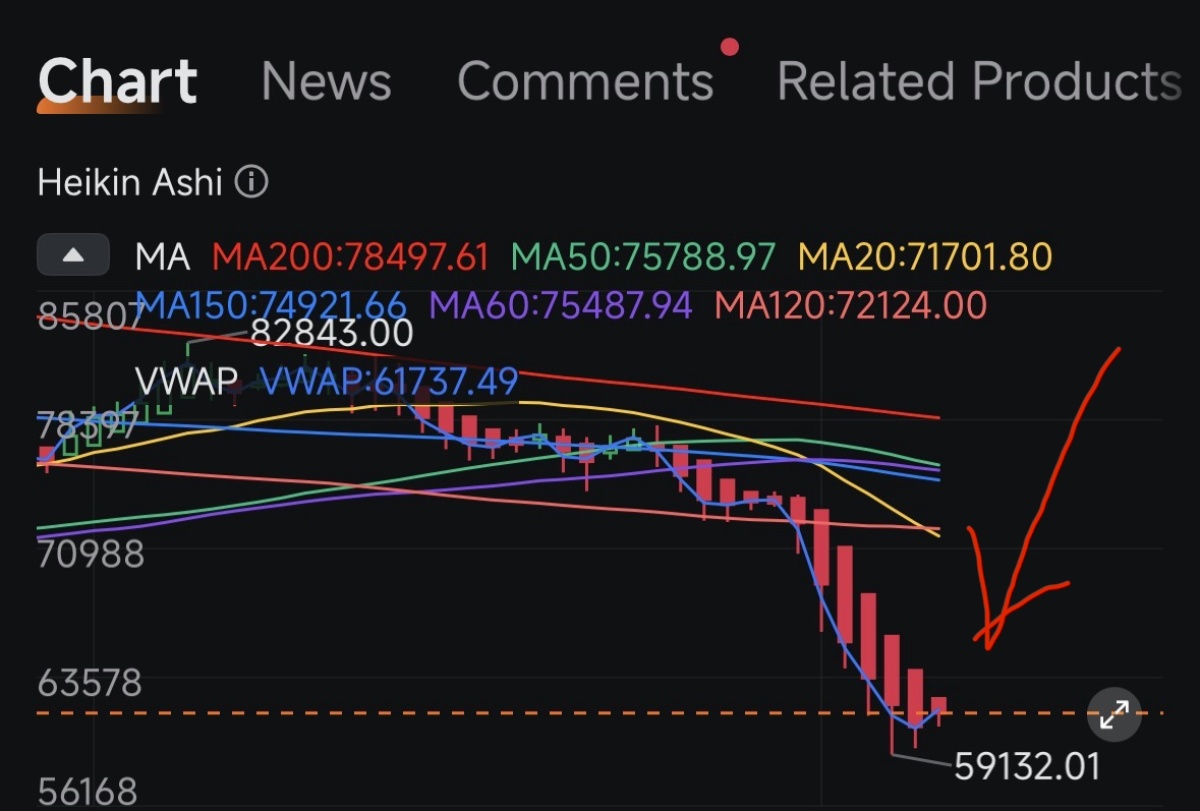
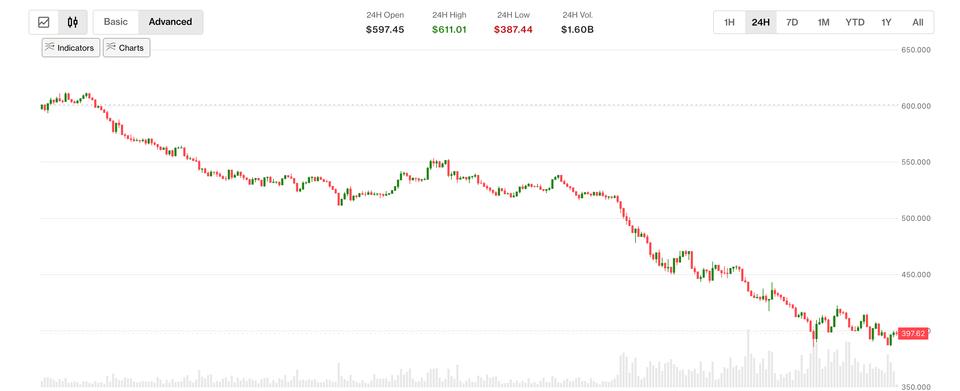
H fell over 85% on June 9, moving from about $0.70 to $0.08 over roughly 12 hours. That crash wiped out a rally that had pushed the token to a record high of $0.85 just a week earlier.

The minting of 100 million new tokens compounds the damage significantly. Even if H recovers somewhat, that extra supply needs market absorption before any sustained rebound is realistic. A major token unlock scheduled for June 25 — releasing another 105 million H — adds further pressure on top of that.
A Bigger Question: Was It Staged?
Not everyone in the crypto community takes the “private key hack” explanation at face value. On-chain analyst ZachXBT publicly doubted the team’s story, calling the incident “possibly staged” and suggesting it could be a planned exit by a market maker the team had been working with, citing the concentration of token supply.
You choose to crime pump your token for weeks with zero fundamentals and think CT will blindly trust your story?
Disclose your active MM agreements with the HK entity first….
— ZachXBT (@zachxbt) June 9, 2026
This suspicion isn’t unfounded in crypto. Projects with concentrated token distribution, insider minting access, and a recent price peak can sometimes cover coordinated sell-offs — often called rug pulls. Investigators are now asking: who held both the private key access and the financial motive?
The team hasn’t addressed ZachXBT’s claims directly as of publication.
What Should H Holders Do Right Now?
Kwok’s official guidance is clear: do not use the bridge or interact with any liquidity pools until the team confirms it’s safe. Doing so risks further exposure to the attacker or smart contract instability.
Beyond that, holders are essentially waiting for two things: a credible post-mortem from the team, and clarity on whether the 100 million newly minted tokens face a burn or some other resolution. Until either happens, selling pressure on H is likely to continue — a dynamic familiar to anyone who followed the Zcash exploit earlier this month, where token price collapse followed similar questions about protocol integrity.
FAQs
What is a private key in crypto, and why is losing one so dangerous?
A private key is a unique string of characters that proves ownership and gives full control over a crypto wallet or protocol. Unlike a password, it can’t be reset — whoever has it has permanent control. For a protocol like Humanity, a compromised admin private key means the attacker could mint new tokens or drain funds at will, with no technical way to stop them in real time.
How do zero-knowledge proofs work in identity verification projects like Humanity Protocol?
Zero-knowledge proofs (ZKPs) are a cryptographic method that let you prove something is true without revealing the underlying data. In Humanity’s case, you can prove “I’m a unique human” using a palm scan without ever sharing biometric data with the platform. It’s a key building block for privacy-preserving digital identity systems.
What does it mean when a hacker “mints” new crypto tokens during an attack?
Minting refers to creating new tokens on a blockchain. Under normal circumstances, only the protocol’s own smart contracts can do this. When a hacker mints tokens, it means they’ve gained admin-level access to those contracts, usually through a stolen private key. The new supply dilutes everyone else’s holdings and adds immediate downward price pressure.
What is a “rug pull” in crypto, and how does it differ from a hack?
A rug pull is when project insiders deliberately drain liquidity or dump tokens on unsuspecting holders, then disappear. A hack is when an outside attacker exploits a vulnerability. The line blurs when insiders have both minting access and a concentrated token supply — which is exactly why ZachXBT’s “possibly staged” claim has attracted attention. Distinguishing the two often takes weeks of on-chain forensics.
How does Humanity Protocol compare to Worldcoin (WLD) as a digital identity project?
Both aim to verify human identity in an AI-heavy world, but they use different methods. Worldcoin uses iris scans via its Orb hardware device. Humanity Protocol uses palm biometrics and ZK proofs on a Layer 2 blockchain. Humanity had been gaining attention as an alternative to Worldcoin following ZachXBT’s earlier scrutiny of WLD’s token structure — making today’s breach particularly damaging for its positioning in that space.