CoinDesk reports:
The scale of stablecoins on the XRPL is significantly expanding. The article states that this shift is enhancing settlement liquidity within the Ripple ecosystem and enabling the XRP Ledger to move beyond just cross-border payments, gradually taking on a broader range of on-chain financial activities.
Stablecoin supply continues to rise

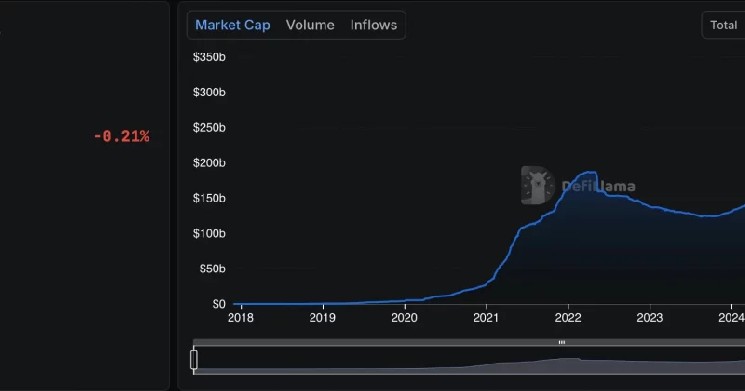
For a long time, the market capitalization of stablecoins on the XRPL remained below $100 million. By November 2025, this figure surpassed $200 million and entered a phase of sustained growth. Entering 2026, the stablecoin supply rose to approximately $762 million, with recent weekly growth reaching 22%.
The text states that Ripple USD (RLUSD) contributed the majority of the new supply, meaning more funds remain within the XRPL ecosystem for on-chain payments, settlement, and asset transfers. For a public blockchain known for settlement efficiency, an increase in stablecoin volume typically signifies greater available liquidity.
RWA issuance is expanding simultaneously
Beyond stablecoins, XRPL’s RWA progress is also accelerating. The article shows that the value of representative assets on the network has reached $3.57 billion, with $385 million in assets already distributed on-chain. This indicates that institutional adoption of XRPL is expanding from payment use cases to asset issuance.
A recent institutional pilot has further reinforced this trend. Ondo Finance’s tokenized U.S. Treasury redemption test involved JPMorgan’s Kinexys platform, Mastercard, and Ripple. In the test, XRPL was used to facilitate the transfer of tokenized assets, while the cash portion was settled offline.

The adoption rate still needs to improve.
The article also noted that over the past month, the market capitalization of XRPL stablecoins increased by 77% to $888.5 million, while transaction volume rose by 123% to $4.71 billion. This related capital flow provides foundational liquidity for settlement and asset transfers, indicating growing financial usage on the network.
However, the number of RWA holders has only increased to 110, indicating that asset issuance is outpacing actual adoption. The current focus is no longer just about moving assets on-chain, but about attracting more capital and participants to consistently use these assets.