
I. Introduction: De-Hyping the “Token Apocalypse”
Over the last few weeks, a notable wave of financial anxiety has filtered through the industrial manufacturing and process C-suite. As I converse with chief financial officers, CIOs, and operations executives across our research network, a common theme has consistently surfaced: the fear of an impending economic bottleneck. We have advanced past the initial, speculative phases of generative AI experimentation into an era where autonomous agents perform actual, long-horizon operational work. But as these systems scale, executives face a highly variable, unpredictable, and potentially volatile cost loop.
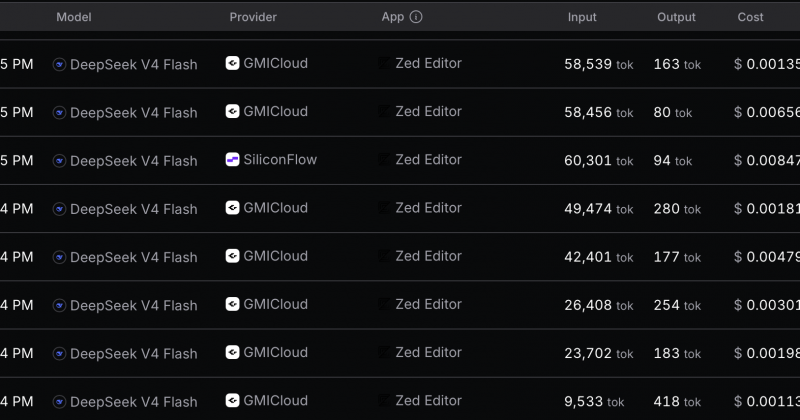
Some horizontal technology commentators have gone so far as to declare a double-headed “SaaS apocalypse” and a “token apocalypse.” They suggest that the traditional software-as-a-service billing model is fundamentally breaking down under the weight of AI compute costs, and that the sheer volume of processing cycles required to run an autonomous enterprise will overwhelm corporate IT budgets.
As an analyst, my primary mandate is to de-hype the market with empirical data and separate short-term technical adjustments from structural economic realities. To truly understand these structural realities, we must look at the macro capitalization of the AI market itself. The early phases of corporate AI adoption were heavily subsidized by massive venture capital inflows and hyperscaler market-share plays, allowing enterprises to run frontier models at an artificial loss. We are now transitioning out of that venture-subsidized honeymoon. Hyperscalers are increasingly passing the astronomical capital costs of gigawatt-scale data center buildouts, advanced silicon procurement, and soaring utility loads directly to the end user. What some interpret as a market failure is actually the sound of industrial users finally paying the true, raw bill for the underlying infrastructure footprint.
For our operations, information, engineering technology, and data science readers, this landscape prompts a necessary reality check. Should we blindly accept the assumption that a “token apocalypse” is inevitable, or that advanced operational intelligence must be rationed due to cloud billing volatility? In this post, we will test these exact premises. Rather than a systemic collapse of industrial enterprise software, what if we are simply navigating a turbulent but predictable maturation of industrial software procurement and processing architecture? The financial challenges introduced by autonomous agentic reasoning are real, but they do not have to be unmanageable—provided your organization possesses the right structural framework to anchor them.
To navigate this landscape without hitting an operational wall, leadership teams must first resolve a common vocabulary confusion that is currently running rampant through corporate boardrooms. In the modern industrial technology stack, the word “token” carries two completely separate, non-competing meanings:
-
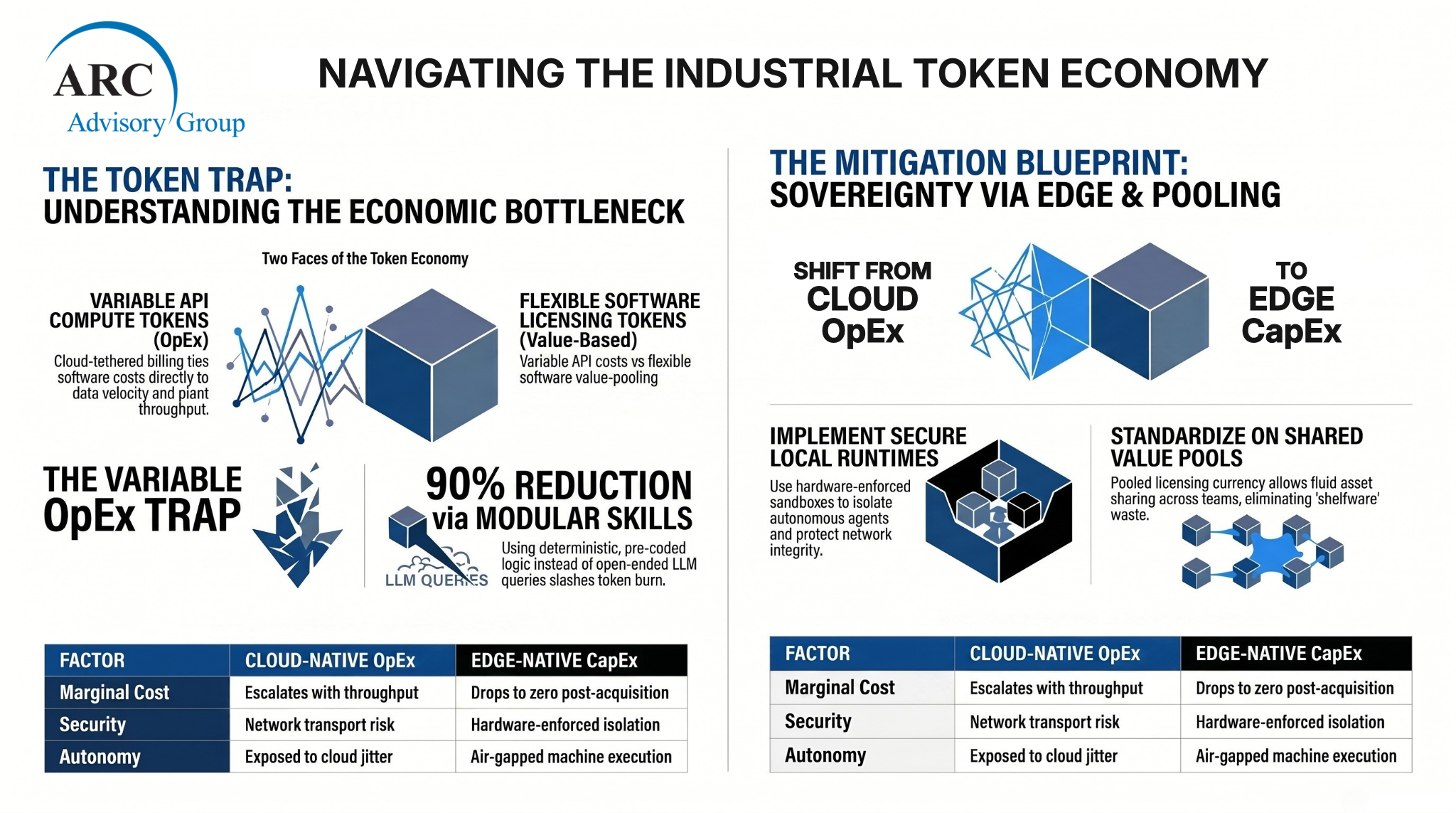
API Compute Tokens (The Hyperscaler Model): The fractional units of data, characters, or text sequences processed by a large foundational neural network, typically billed as a variable operational expenditure (OpEx) based on continuous utilization.
-
Software Licensing Tokens (The Value-Based Model): A highly flexible, shared currency pool utilized within the operational technology (OT) and engineering technology (ET) domains to dynamically check specialized application entitlements in and out on demand.
The narrative of an unmitigated cost crisis occurs when executives conflate these two concepts, assuming that running a software-defined factory means exposing their entire bottom line to a variable, cloud-metered transaction fee. By understanding how these two token models interrelate, and by leveraging the architectural developments unveiled recently by major infrastructure and automation vendors, industrial organizations can successfully insulate their margins while supercharging their computational scale.
II. The Hyperscaler OpEx Token Trap
The anxiety surrounding AI processing costs is rooted in a real structural friction point that Jared Spataro (Chief Marketing Officer, AI at Work at Microsoft) captured in his article: “Tokenomics is the new headcount.” Spataro argued that as organizations transition task execution from human personnel to autonomous software agents, managers must shift from measuring operational capacity by human full-time equivalents (FTEs) to calculating the runtime compute cost of model inference cycles.
The challenge for the industrial sector is that if you attempt to apply a standard, carpeted enterprise IT cloud framework to an uncarpeted plant floor or process network, you walk directly into the Hyperscaler OpEx Token Trap. Frontier reasoning models are mathematically capable of remarkable contextual planning, but they are computationally expensive to run continuously. If your data science division deploys always-on, high-frequency autonomous execution agents to monitor telemetry across thousands of real-time factory floor tags (running queries continuously to optimize a complex process or check visual quality on a high-speed assembly line), a cloud-tethered billing architecture is unsustainable.
Because every character read, every instruction generated, and every tool called by the agent incurs a public cloud transaction fee, your monthly software billing lines are suddenly tied directly to your active data velocity and plant throughput. This variable cost loop creates an unbudgetable operational environment that naturally triggers pushback from corporate finance. Furthermore, it introduces acute infrastructure vulnerabilities. If an industrial enterprise relies entirely on external, centralized public cloud APIs for real-time edge reasoning, they are fully exposed to vendor pricing volatility, algorithmic token inflation, and API gating. If a public cloud hyperscaler alters its API billing structures or caps token throughput during a peak global demand cycle, your physical operations face immediate, unmitigated constraints.
To counter this vulnerability, forward-thinking vendors are deploying structural mitigation strategies centered around pre-coded, modular “Skills.” In this context, a Skill is defined as a highly efficient, composable block of encapsulated domain logic, localized data mappings, and pre-configured business rules. Rather than letting a probabilistic LLM burn expensive compute tokens trying to figure out data sources, operational boundaries, or process constraints open-endedly, the platform invokes a specific, well-defined Skill to anchor the scope.
Vendor definitions vary, but typically a “skill” includes:
-
A defined interface (schema, parameters, constraints).
-
A deterministic execution path (API call, workflow, function, tool, or service).
-
A contract for inputs/outputs the agent can reason over.
-
Safety, governance, and permission boundaries.
-
A domain of competence (e.g., “create purchase order,” “fetch sensor data,” “simulate a schedule,” “query MES,” or “run a PLC routine”).
A premier real-world example of this architecture in action is Aera Technology and their Aera Decision Cloud™ platform. Aera utilizes a public URAL (Understand, Recommend, Act, Learn) framework that structurally re-engineers token economics. Instead of making a probabilistic LLM the primary engine of heavy computation, Aera treats the AI agent as a user of their highly deterministic platform. When an agent needs to evaluate an operational shift, simulate an inventory balance, or solve a complex supply chain constraint, it calls upon Aera’s prepackaged, deterministic Skills. By keeping language models focused strictly on reasoning over outcomes rather than processing raw data queries, this calibrated approach delivers an astounding 90 percent reduction in token consumption.
When structured correctly, the explosive expansion of computational scale becomes an indicator of operational success rather than an uncontrollable cost center. For example, Cognite recently reported an extraordinary 900 percent year-on-year growth in token consumption, driven entirely by the massive customer rollout of Atlas AI, its low-code Industrial AI Agent workbench. This shattering surge in token velocity represents a highly positive milestone: because it is backed by an industrial DataOps core that handles heavy contextual data preparation, every token consumed translates directly to scaled, real-world deployment and accelerated user adoption rather than wasteful, unguided cloud retries.
III. The Core CapEx Escape Route: Unmetered Local Iron and Secure Edge Runtimes
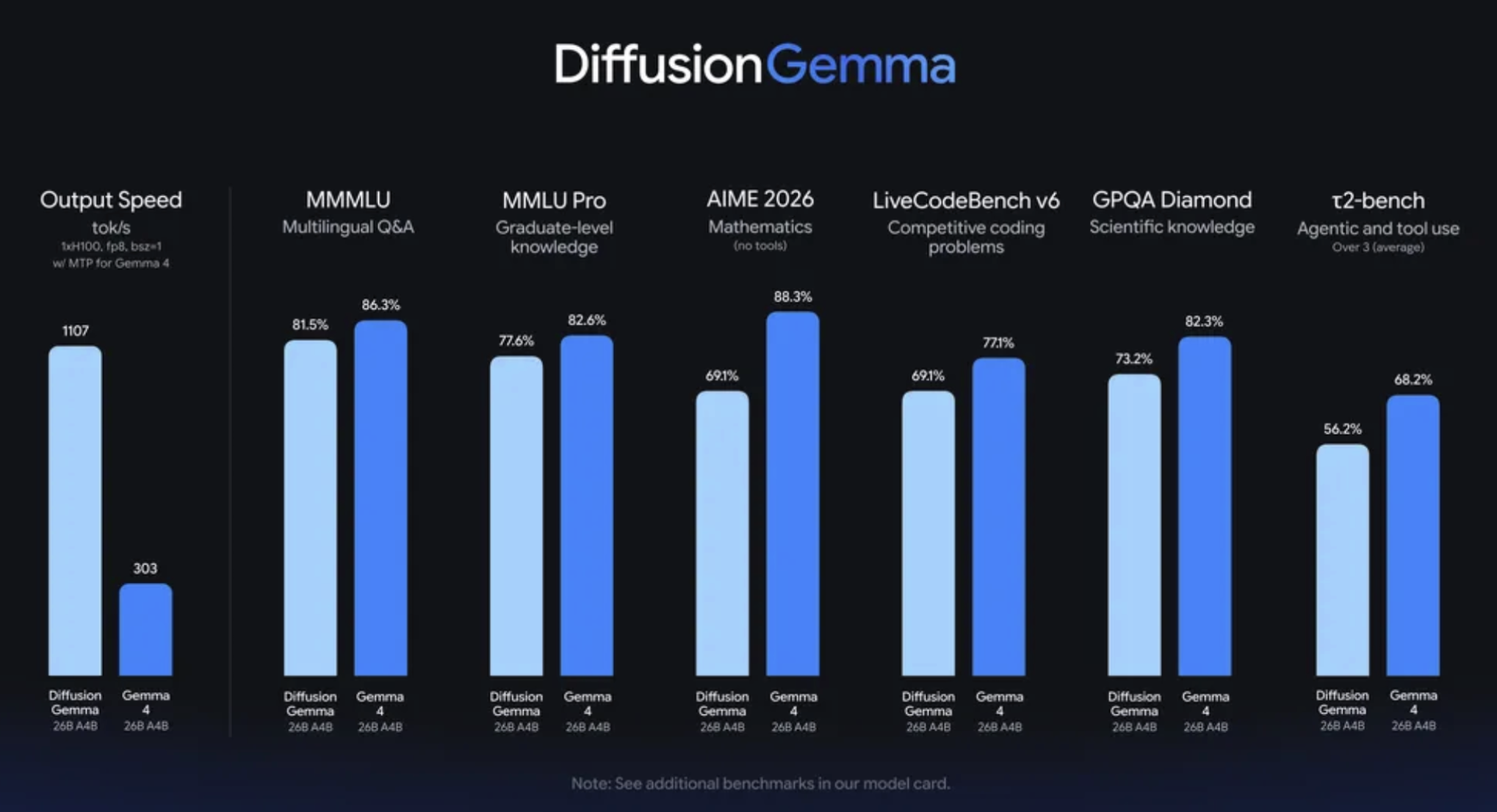
This operational bottleneck explains why the major hardware and infrastructure announcements unveiled recently across the ecosystem are so profoundly significant. Technology executives must look past the consumer-facing marketing and recognize that the intense push for heavy local edge computing is fundamentally a financial strategy designed to dismantle the OpEx token loop. By investing upfront in high-density local edge silicon (CapEx), industrial companies can permanently break their dependency on metered public cloud APIs. This infrastructure layer allows organizations to pull highly compressed, specialized open-weight reasoning models entirely out of the cloud to execute them natively on the plant floor.
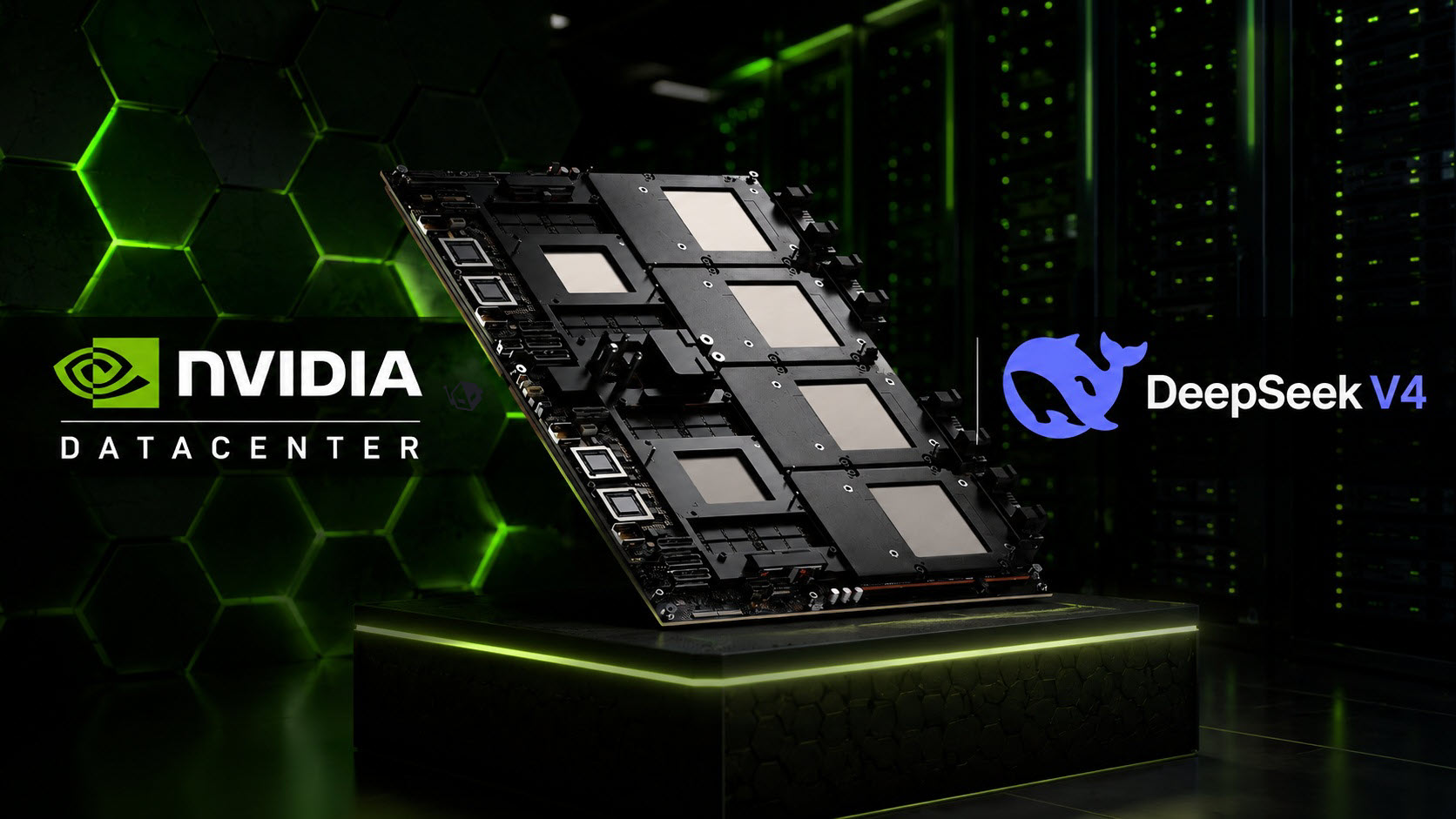
To ensure this transition does not simply exchange a high cloud bill for a massive utility and thermal load bill, specialized silicon architectures are delivering extreme energy efficiency. For example, the NVIDIA Vera CPU features a monolithic 88-core design built on a single reticle-sized 3 nm compute die. Leveraging an ultra-efficient LPDDR5X memory subsystem packaged via SOCAMM2 modules, it delivers a substantial 1.2 TB/s of peak memory bandwidth while drawing less than 30 W of power—a dramatic reduction compared to the 100 W+ consumed by standard commodity DDR5 server architectures.
To make this local infrastructure practical and secure for corporate IT governance, the hyperscaler and enterprise open-source layers are rolling out hardened, deterministic edge sandboxes:
-
The Windows Canvas: Microsoft has delivered the Microsoft Execution Container (MXC). Built directly into the core primitives of the Windows operating system, MXC provides a hardware-enforced sandbox that isolates autonomous code execution. IT and OT architects can configure strict memory boundaries, local process caps, and explicit network folder fences around open-source agent frameworks, ensuring local agents are structurally barred from executing unmanaged network traversals.
-
The Linux and Open-Source Counterweight: For uncarpeted, legacy heavy-industrial spaces where Windows does not command the runtime layer, an identical architectural shift is occurring via open-source enterprise container infrastructure. As we will explore in detail during our upcoming ARC webcasts and podcasts, the combination of Red Hat enterprise container orchestration paired with EdgeScale AI’s secure, immutable hardware edge appliances—such as “The Cube”—presents a formidable open alternative. This stack allows operators to deploy air-gapped, Level 2 and Level 3 reasoning nodes directly adjacent to the machine face without risking code sprawl or remote security compromises.
-
The Decentralized Multi-Cloud Blueprint: Concurrently, Amazon Web Services (AWS) is advancing its own edge footprint through the localized deployment of containerized runtimes via AWS IoT Greengrass architectures. Bounded by the strict deployment frameworks of the AWS Modern Industrial Data Technology Lens, AWS is focusing its edge strategy on localizing inference loops for high-frequency computer vision and machine telemetry. This ensures that localized anomalies can be processed in milliseconds on unmetered local iron, uploading only highly compressed, metadata-rich decision packets back to the centralized cloud.
This edge-centric processing architecture directly reflects the empirical findings we published in The Great Divergence in Industrial AI: Bridging the Digital Divide. Our research into the 12.9 percent Industrial AI Pacesetters cohort demonstrates that elite operators successfully break out of pilot purgatory by focusing on unglamorous, foundational edge infrastructure. Pacesetters do not rely on constant public cloud connections; they invest in localized edge connectivity, standardized data tagging via industrial data servers, and unmetered local iron to achieve total financial and data sovereignty.
Evaluating the operational and financial realignments between these processing strategies highlights several critical structural shifts:
-
Procurement Classification: Moves from a volatile, variable operational expenditure (OpEx) under cloud-native setups to a fixed, depreciable capital asset (CapEx) at the industrial edge.
-
Marginal Cost Velocity: Escalates continuously alongside data throughput in the cloud, but drops to absolute zero post-hardware acquisition on local iron.
-
Thermodynamic Footprint: Swaps concentrated reliance on high-overhead external data centers for highly efficient local edge silicon drawing less than 30 W via the Vera CPU.
-
Security Containment: Replaces vulnerability to external network directory transport risks with hardware-enforced, OS-isolated containment via Microsoft Execution Containers (MXC) and immutable Linux edge appliances.
-
Operational Autonomy: Eliminates exposure to network jitter and cloud queues to guarantee deterministic, air-gapped execution at the machine face.
IV. The OT Licensing Counterweight: Shared Value Pooling
While the hardware ecosystem provides the physical means to run local inference efficiently, the traditional operational technology providers are deploying their own counterweight to the token economy through Value-Based Licensing (VBL). This is the layer that completely refutes the narrative of a software billing apocalypse. Long before Silicon Valley began debating token metrics, industrial software vendors recognized that forcing manufacturing engineers to purchase rigid, permanent concurrent seats for specialized software resulted in massive “shelfware waste”—expensive software assets sitting unused for 90 percent of the lifecycle.
As highlighted by the major Siemens announcement making Simcenter SimSolid available via value-based licensing directly within the Simcenter and Designcenter X ecosystem, the OT market is rapidly standardizing on a pooling currency model. This architecture directly mirrors the maturity of the AVEVA Flex Credits subscription platform managed via the CONNECT portal, as well as the long-established Altair Units global licensing mechanism.
Instead of buying restrictive individual seats for every specialized CAD tool, multi-physics simulator, or operations optimization module, an industrial enterprise pre-purchases a capped pool of shared corporate licensing tokens managed via a centralized cloud registry. This pooled currency behaves as a fluid asset across the multi-disciplinary team:
-
An engineering technology (ET) designer can draw down a block of tokens to execute a complex geometric deep learning surrogate model in the morning.
-
Once that upfront simulation task closes, those exact same tokens automatically return to the shared corporate registry.
-
In the afternoon, a data science or reliability team can check out those same tokens to run an advanced process customization app inside Opcenter X or tweak an automated work instruction.
Value-Based Licensing completely insulates the procurement cycle from the volatility of individual seat licensing, providing the predictable, capped cost parameters that procurement leaders demand while maximizing user accessibility across the entire value chain.
V. ARC Advisory Group Guidance: The Pragmatic Procurement Playbook
For over two decades, ARC Advisory Group has rigorously evaluated industrial technologies to help our clients move beyond marketing hyperbole and align their deployment roadmaps with strict operational necessity. Navigating the modern token economy does not require slowing down the adoption of industrial intelligence; it requires implementing a disciplined, multi-layered procurement playbook anchored in our core advisory principles:
Apply the Right AI/ML Tool for the Job
Pacesetting organizations must reject the temptation to treat large foundational language models as a universal hammer for every automation task. General-purpose text models are statistically inefficient and financially volatile if misapplied to continuous operations. Industrial leaders should strictly preserve high-cost cloud reasoning models for upfront, low-frequency exploration, semantic data discovery, and high-level knowledge mapping. For the hard, daily, continuous work of plant optimization, lean heavily on highly specialized, lower-cost model classes—such as Causal AI, neuro-symbolic logic, and localized reinforcement learning policies—that deliver absolute mathematical determinism at a fraction of the computational overhead.
Deploy Inference Aggressively to the Industrial Edge via Secure Runtimes
To shield your corporate balance sheet from the metered cloud transaction trap, implement an explicit edge-native compute strategy modeled on the 12.9 percent Pacesetter cohort. By standardizing on ruggedized local edge workstations and industrial PCs running containerized agent sandboxes—fully secured by primitives like the Microsoft Execution Container (MXC) or enterprise Linux environments from Red Hat and EdgeScale AI—your data science resources can post-train and execute fine-tuned models directly at the machine face. Localizing the inference loop ensures that high-velocity operational tags can scale continuously without generating an unpredictable public cloud invoice.
Mandate Shared Value Pools for Physical Execution
When negotiating software agreements with core automation and operations vendors, mandate the transition to portfolio-wide Value-Based Licensing systems. Ensure that your internal engineering, operations, and maintenance divisions can dynamically share a single, capped pool of software currency. This approach eliminates the historical overhead of custom application seat configurations, caps your annual software operational expenditure under a predictable ceiling, and allows automated agents to dynamically interact with advanced software toolsets without triggering unexpected licensing violations.
The bottom line for industrial leadership is clear: the Token Apocalypse is a horizontal IT myth born from unconstrained cloud dependency. By pairing unmetered edge capital hardware with predictable, value-based software pooling models, industrial pacesetters are successfully breaking out of pilot purgatory, securing durable data sovereignty, and capturing software-like gross margins across the physical factory floor.
Navigating the New Battlefronts of the Industrial AI Wars
The alignment of local silicon assets and flexible enterprise frameworks shifts the focus directly from procurement parameters to real-world infrastructure deployment.
Up Next in the Series, Blog 6: “The Practical Edge: Deploying Industrial Autonomy on Legacy Iron Without the Hyperscaler Price Tag.”
We will transition from financial procurement playbooks straight into the physical trenches of the plant floor. We will evaluate how specialized, vertical software overlays and immutable edge appliances allow brownfield facilities to deploy level-3 and level-4 autonomous control logic directly onto legacy assets without requiring a cost-prohibitive hardware rip-and-replace. Stay tuned.
Engage with ARC Advisory Group
The Industrial AI (R)Evolution is moving faster than ever. To dive deeper into the frameworks and data shaping the future of the industrial sector, explore my latest research:
Where do you Stand in the Industrial AI (R)Evolution?
Take our Industrial AI Assessment to benchmark your organization’s maturity, identify critical gaps in your IT/OT/ET convergence, and get actionable recommendations to accelerate your path to becoming an Industrial AI Pacesetter.
Don’t guess what your global operations or prospective customers need. Use empirical data to align your stakeholders and de-hype the market with ARC Advisory Group’s Voice of Market Service.
For tailored recommendations on governing and guiding major people, process, and technology decisions across the enterprise, cloud, industrial edge, and AI, please contact Colin Masson at [email protected].
Or, set up a meeting with my fellow Analysts and I at ARC Advisory Group to find out more about our Executive Insights Service for Industrial organizations and our Industrial AI Insights Service for Vendors.