The gig economy is no longer a fringe phenomenon driven solely by ride-hailing apps or freelance marketplaces. It has become a defining feature of modern work, reshaping how businesses are built, staffed, and scaled. At the same time that Labour is rolling out tougher employment laws to protect worker’s rights and clamp down on companies that abuse gig workers, there is also a trend towards more professionals actually choosing flexible, project-based work over traditional employment, companies are being forced to rethink long-established business models that were designed for permanent teams, fixed locations, and predictable workflows.
At its core, and providing it is carried out in a fair and ethical way, the gig economy challenges the assumption that growth depends on hiring full-time employees. Instead, businesses can now access specialised talent on demand, often across borders, without committing to long-term contracts. This shift has profound implications for cost structures, operational design, and even corporate identity.
From Fixed Teams to Fluid Networks
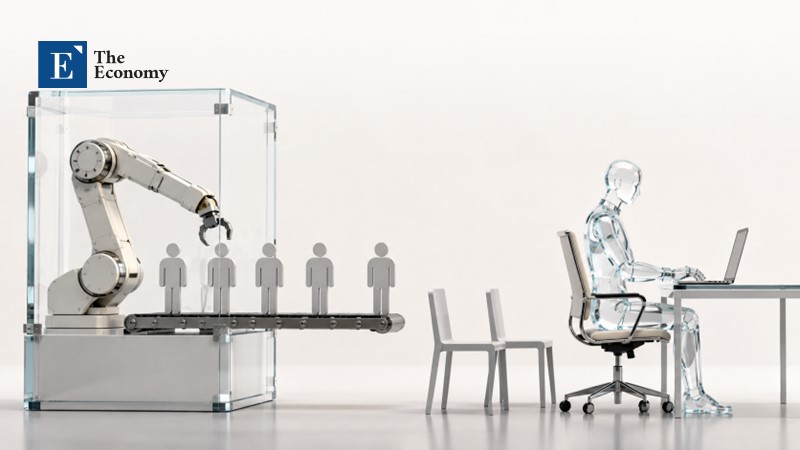
Traditional businesses are typically organised around stable teams, clear hierarchies, and long reporting lines. In contrast, gig-driven companies operate more like networks. Designers, developers, marketers, consultants, and analysts may all work on the same project without ever meeting in person or being employed by the same organisation.
This model allows companies to remain lean while scaling quickly. Rather than expanding headcount, founders can assemble teams based on specific needs and dissolve them once a project ends. The result is greater agility but also a need for stronger coordination, clearer contracts, and more robust digital infrastructure.
Cost Efficiency Meets Strategic Flexibility
One of the biggest drivers behind the gig economy is cost efficiency. Office space, equipment, benefits, and long-term payroll commitments represent significant overheads for traditional firms. Gig-based models convert many of these fixed costs into variable ones, enabling businesses to respond more easily to market changes.
However, this flexibility comes with trade-offs. Managing a distributed workforce requires careful planning, consistent communication, and well-defined processes. Companies must invest in collaboration tools, project management systems, and clear documentation to ensure continuity and accountability.
Rethinking Company Structure and Legal Setup
As businesses rely more heavily on freelancers and contractors, founders are also reconsidering how they structure their companies. Jurisdiction, compliance requirements, and administrative simplicity are becoming strategic considerations rather than afterthoughts.
For many international founders working with global talent, setting up a company in a stable and business-friendly environment provides credibility and operational clarity. In such cases, service providers like Your Company Formations Ltd are often used to help non-resident entrepreneurs establish a UK company framework that supports remote operations and cross-border collaboration.
This reflects a broader trend: company formation is no longer just about location, but about enabling flexibility, compliance, and scalability in a gig-driven world.
Performance Over Presence
The gig economy has accelerated a cultural shift away from measuring productivity by hours worked or physical presence. Outcomes, deliverables, and impact matter more than time spent at a desk. This has forced traditional businesses to re-evaluate management practices that rely on supervision rather than trust.
Asynchronous communication, milestone-based payments, and transparent performance metrics are becoming standard. Companies that adapt quickly tend to attract higher-quality gig talent, while those clinging to rigid structures risk falling behind.
Technology as the Backbone
None of this would be possible without digital tools. Cloud platforms, secure payment systems, contract management software, and collaboration apps have become the backbone of gig-based business models. Automation plays a crucial role in handling repetitive tasks such as invoicing, onboarding, and reporting, freeing founders to focus on strategy and growth.
This technological dependence also raises new challenges, particularly around data security and intellectual property. Businesses must ensure that sensitive information is protected, even when shared across multiple external contributors.
Long-Term Implications for Business Strategy
The rise of the gig economy is not just changing how businesses operate today; it is shaping long-term strategy. Companies are increasingly designed to be modular, adaptable, and resilient. Rather than building large internal teams, they focus on core competencies and outsource everything else.
This approach allows firms to pivot more easily in response to economic uncertainty, technological disruption, or changing consumer behaviour. At the same time, it requires founders to think more deliberately about governance, ethics, and fair treatment of gig workers.
A Structural Shift, Not a Trend
The gig economy represents a structural shift in how work and businesses are organised. Traditional models built around permanent employment and physical offices are giving way to more fluid, digitally enabled systems. Businesses that recognise this change early and adapt their models accordingly are better positioned to thrive.
Ultimately, the companies that succeed in this environment will be those that balance flexibility with structure, cost efficiency with quality, and speed with sustainability. The gig economy is not eliminating traditional business principles—it is redefining how they are applied in a global, connected world.