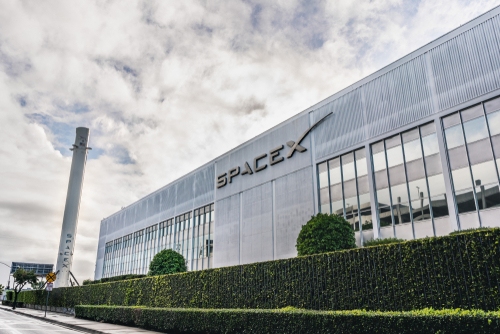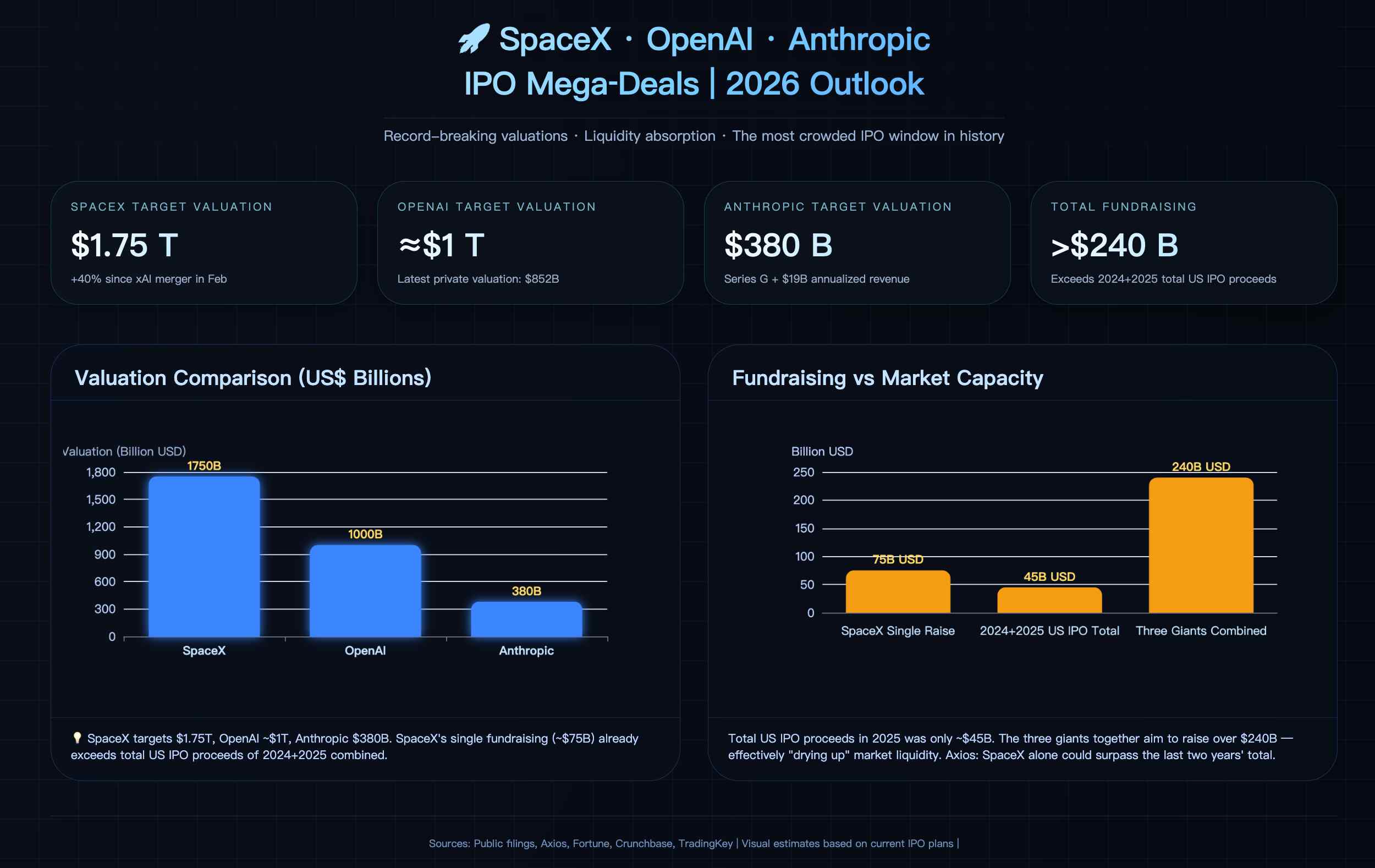
SpaceX’s initial public offering (IPO) may already be creating wealth even before public investors buy a single share. According to Reuters, the company is targeting a valuation of roughly $1.75 trillion, up sharply from the $1.25 trillion combined valuation assigned after its merger with xAI in February 2026. As anticipation builds for what could become the biggest IPO ever, investors are increasingly seeking indirect ways to gain exposure before the listing.
Here are three ways to get indirect exposure to this rocket and satellite company.

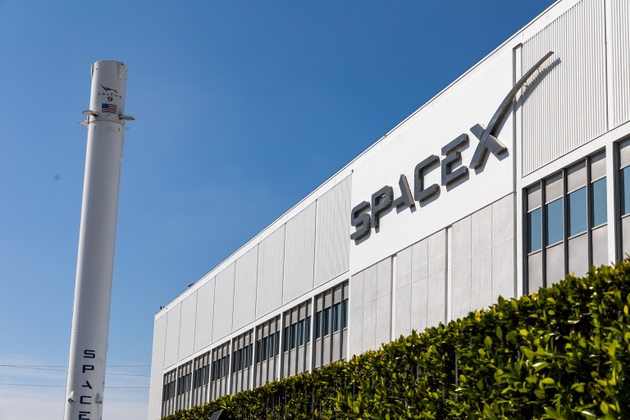
Image source: Getty Images.
1. Alphabet
Alphabet (GOOG 0.76%) (GOOGL 0.79%) may be one of the cleanest blue chip ways to get indirect exposure to SpaceX before its expected IPO. According to a recent Alaska regulatory filing, the company held a 6.11% stake in SpaceX at the end of 2025. While Alphabet does not disclose the stake as a separate line item in its own filings, the position has most likely been diluted from Alphabet’s (then called Google) reported original stake of nearly 7% in 2015. According to Bloomberg, Alphabet’s stake is now close to 5% after SpaceX’s merger with xAI. At a $1.75 trillion valuation, even a 5% stake would amount to almost $87.5 billion.

Today’s Change
(-0.79%) $-2.86
Current Price
$358.99
Key Data Points
Market Cap
$4.4T
Day’s Range
$358.08 – $366.45
52wk Range
$162.00 – $408.61
Volume
55.4M
Avg Vol
28.5M
Gross Margin
60.43%
Dividend Yield
0.23%
Alphabet’s non-marketable securities also increased from around $68.7 billion at the end of fiscal 2025 to about $106.9 billion at the end of the first quarter of fiscal 2026. The company also reported $36.9 billion of net equity securities gains, primarily from unrealized gains on its private investments. Although Alphabet does not report how much of that gain came from revaluation of SpaceX’s stake ahead of the IPO, the numbers show why the company’s private-company investments cannot be ignored.
Yet, against Alphabet’s more than $4.5 trillion market capitalization, SpaceX appears more like a high-value strategic investment than the core thesis. Alphabet’s stock will still be driven mainly by Google Search, YouTube, Google Cloud, AI spending, and antitrust risk.
2. EchoStar
EchoStar (SATS 2.13%) may be the more aggressive, but riskier, way to get indirect exposure to SpaceX before the IPO. Unlike Alphabet, EchoStar does not have an investment stake in SpaceX. Instead, the company has entered a deal to sell 65 megahertz of wireless spectrum to the rocket and satellite network company. The transaction was initially valued at about $17 billion. However, recently, total deal consideration increased to $20 billion, including up to $11 billion payable in SpaceX stock valued at about $212 per share.

Today’s Change
(-2.13%) $-2.63
Current Price
$120.92
Key Data Points
Market Cap
$36B
Day’s Range
$120.17 – $125.03
52wk Range
$14.90 – $147.25
Volume
5.6M
Avg Vol
6.6M
Gross Margin
18.99%
If SpaceX goes public at a much higher valuation than the deal assumes, EchoStar’s share price may start reflecting the value of the SpaceX stock it is set to receive later. Barron’s estimates that EchoStar’s future SpaceX stock component could amount to roughly 52 million shares. At a $1.75 trillion SpaceX valuation, EchoStar’s SpaceX equity could be worth about $31 billion. That could make EchoStar more than a distressed telecom stock. It could also become a public-market route to SpaceX’s future stock value.
However, investing in EchoStar is not without risks. The company has completed the first step of the spectrum sale, but the SpaceX stock component is still tied to the deal’s final closing, targeted for Nov. 30, 2027. The Federal Communications Commission (FCC) approved EchoStar’s SpaceX spectrum transaction, as well as its separate 50-megahertz spectrum sale to AT&T in May. This reduced a major regulatory risk around the deal, although it did not eliminate closing risk. SpaceX may also have the option to complete the deal earlier, which could allow EchoStar to receive the SpaceX stock before the current November 2027 target.
The AT&T transaction is also critical, as the $23 billion spectrum deal gives EchoStar a major cash source. EchoStar has also warned that it may not be able to meet its obligations over the next 12 months without proceeds from the transactions or additional financing. That makes EchoStar a very different kind of SpaceX play. The upside could be significant if the spectrum sale deals close and SpaceX’s valuation rises, but investors are still taking on substantial risk in a debt-heavy telecom stock.
3. ERShares Private-Public Crossover ETF
The ERShares Private-Public Crossover ETF (XOVR 1.67%) may be one of the most direct exchange-traded-fund (ETF)-based ways to get exposure to SpaceX before its expected IPO. XOVR is designed to combine public growth stocks with select private-company exposure inside a daily traded exchange-traded fund. Although large technology names such as Nvidia, Alphabet, Astera Labs, and Meta Platforms are among the ETF’s top holdings, its SpaceX exposure is now the main reason many investors are paying attention.

EntrepreneurShares Series Trust – ERShares Private-Public Crossover ETF
Today’s Change
(-1.67%) $-0.34
Current Price
$20.07
Key Data Points
Day’s Range
$19.82 – $20.34
52wk Range
$16.37 – $21.78
Volume
6.5M
XOVR does not own publicly traded SpaceX shares. Instead, the ETF holds its SpaceX position through a special-purpose vehicle (SPV), which is a separate legal entity typically created to hold a specific asset or investment. XOVR added about $35 million to its SpaceX exposure, bringing the total to approximately $281 million, or about 23% of fund assets (as of May 20, 2026). However, in a later valuation update, the fund revised the value of its SpaceX SPV position to about $292 million, based on an implied SpaceX valuation of roughly $1.55 trillion.
Investors should also note that XOVR’s SpaceX weight is not fixed. It can shift with fund flows, public stock price moves, and valuation updates for the private SpaceX SPV. XOVR’s SPV exposure to SpaceX was around 13.8% of the total portfolio, while market value remained $291.6 million as of June 1. With SpaceX expected to go public at a nearly $1.75 trillion valuation, XOVR’s net asset value could benefit from a higher markup on that private SpaceX position.
However, XOVR is exposed to liquidity and redemption risk because of its structure. If investors redeem ETF shares, the fund may be able to sell its liquid public stocks more easily than its private SpaceX position. So, while XOVR offers a useful way to gain exposure to SpaceX, it is not as simple as buying a typical ETF made up solely of publicly traded stocks.