Summary:
Once payments become faster, cheaper, and globally interconnected, stablecoins will not just open up a new market, but a new realm with boundaries that are not yet visible today.
Author: Jesse Hemson Struthers, CEO and Founder of BVNK
Compiled by: Jiahua, ChainCatcher
Regarding stablecoins, there is a fairly common saying: they are tools for individuals in emerging markets to hedge against currency fluctuations. This is indeed true and important, but it is not the whole picture.
Today at BVNK, we handle an annualized stablecoin trading volume of $36 billion. We are just one part of this vast ecosystem, but we have discovered some interesting patterns from the trading volume data that point to a three-stage evolution process.
It all began in 2022 when brokerage platforms and their retail users started using stablecoins to fund their accounts. This has developed to today, where enterprise-level platforms are embedding stablecoin wallets into their products.
Three-Stage Evolution in $36 Billion Data
Stage One (2022-2024): Brokerage Breakthrough and Model Validation
The earliest trading volume at BVNK came from brokerage platforms, with the core use case being account funding. Retail users deposit stablecoins to fund their accounts, allowing them to trade stocks, cryptocurrencies, and other assets anytime and anywhere, which we automatically convert to fiat currency for settlement with the platform.
This use case is sometimes underestimated, seen as not a “real-world” application. But think about what it means: cross-border, around-the-clock, instant settlement. A user in Brazil can fund their brokerage account at 2 AM on a Sunday. This is the future of capital flow, happening in an industry that has not received enough recognition for it.
From 2023 to 2024, this use case accounted for about 50% of our total trading volume. Public information in the industry shows that companies like Bridge and Zerohash are seeing the same trend with clients like Bitso and tastytrade.
Stage Two (2024-2025): Institutional Relay and Ecosystem Expansion
This is the truly interesting stage. Large payment service providers are beginning to integrate stablecoin payment channels for their clients: dLocal, Worldpay, Thunes, Visa, and others. The application scenarios are continuously expanding: merchant settlement, B2B accounts payable, treasury operations.

BVNK’s annualized trading volume categorized by use case
By 2025, B2B payments will account for 44% of our total trading volume, becoming the largest category, surpassing account funding.
It is worth noting that many stablecoin payment service providers that found product-market fit (PMF) on trading platforms have not successfully transitioned to the B2B payment space.
During this period, we also saw several high-growth use cases take off.
The first is B2C payroll and gig spending. Companies like Deel and Ontop are using BVNK’s infrastructure to pay employees, sellers, and creators in real-time across the globe.
The second is the surge in demand for embedded stablecoin wallets. Our trading volume grew from nearly zero to $3.4 billion within a year, an increase of 263 times.
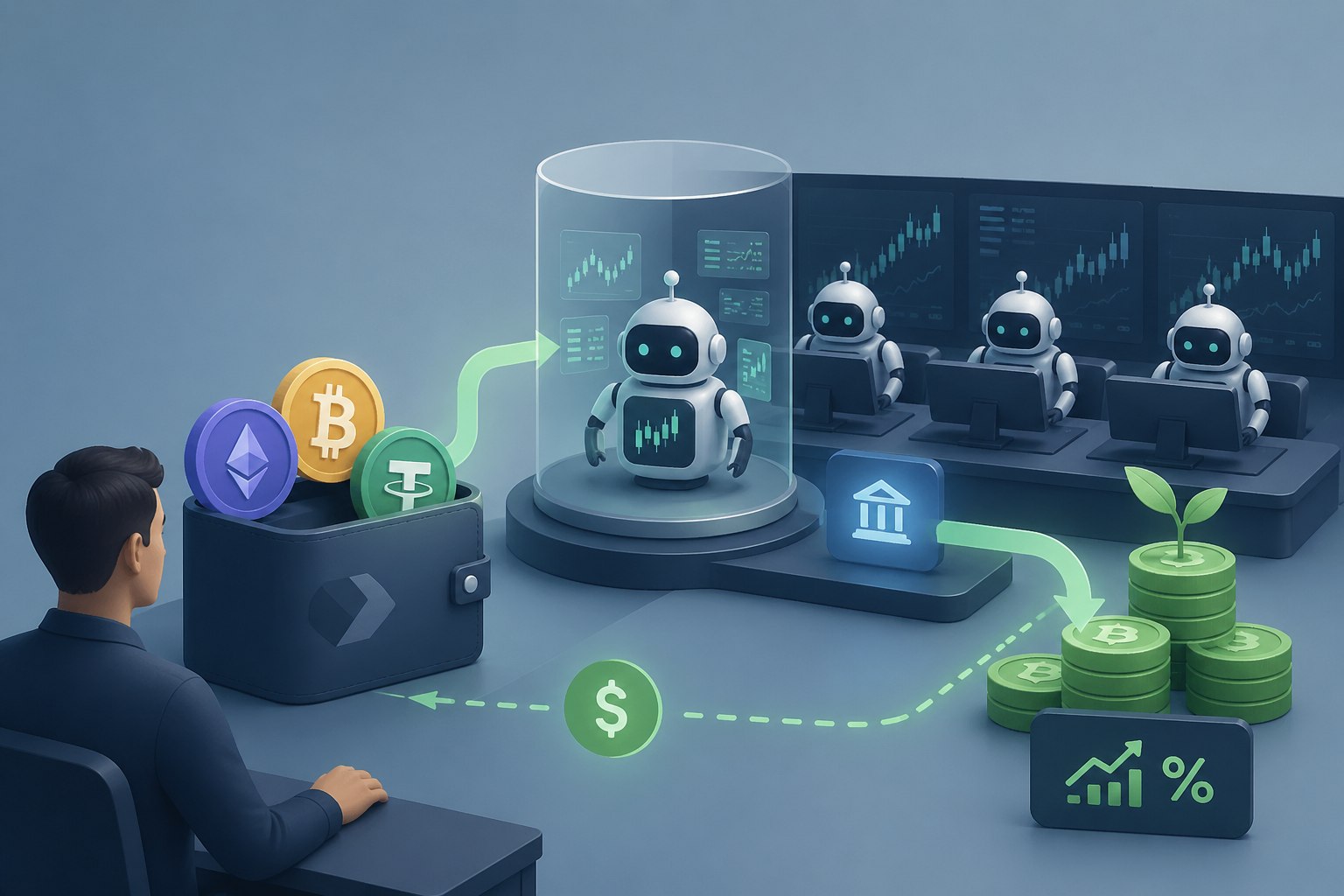
Fintech companies and global platforms are realizing that stablecoins are not just for payments; they can be embedded directly into products as a wallet layer. We have moved from simple “send/receive” to using stablecoins as infrastructure.
For these businesses, having a wallet means having control over customer relationships and value flow.

Growth rates categorized by stablecoin use case
Stage Three (2026 and Beyond): Corporate Bets and Infrastructure Reconstruction
Last year, the number of enterprise clients we onboarded was greater than in all previous years combined, and the client pipeline for 2026 shows a clear shift in use cases.
Almost one in four new clients (23%) is requesting embedded digital dollar wallets, nearly catching up to B2B payments (which account for 32% of new clients). These wallets are part of the global payment infrastructure embedded in platforms, serving millions of end users.

Comparison of BVNK client numbers by use case for 2025 and 2026
Embedding stablecoin wallets into platforms is not just adding a payment method; it is building infrastructure. When a marketplace embeds a wallet, or a tech giant integrates stablecoin spending capabilities into its platform, what you see is that companies are betting on stablecoins as the cornerstone for future capital flow and value storage.
In 2026, we also see the demand for two other emerging use cases growing:
B2C stablecoin checkout has become an independent application scenario (accounting for 7% of new clients), primarily driven by luxury goods, travel, and large tech companies adding stablecoin checkout options alongside traditional payment methods.
B2C payroll and marketplace spending continue to grow (accounting for 8% of new clients).
The Inevitability Behind the Evolution
Brokerage platforms were the first to prove the value of stablecoin payments: users are often crypto natives (no market education needed), requiring global coverage from day one, and the advantages of stablecoins over international wire transfers are immediately apparent.
But the same advantages (speed, global reach, 24/7 availability) also apply to B2B payments, B2C spending, and the embedded wallet experiences within enterprise platforms today.
Additionally, stablecoin payment infrastructure providers like BVNK, which scaled early use cases back in 2022, have accumulated strong operational capabilities and compliance frameworks, which are exactly what today’s payment companies and enterprises need. This practical track record has become the foundation for all subsequent developments.
The Flywheel Has Just Started Turning
The growth momentum of the entire market is evident, but remember, we are still in the early stages.
By making payments faster, cheaper, and globally interoperable, stablecoins have opened the door to new markets, and it is difficult to estimate just how large this market is today.
The analogy with Uber is quite relevant: its market is not just taxis, but the massive demand for transportation that emerged after travel became convenient and on-demand.
Stablecoins are similar; their unique advantages will not only optimize existing use cases but also create entirely new application scenarios.