Retail investors eagerly wait for one particular moment each quarter, and it’s not necessarily the earnings report of their favorite company. Instead, it’s an event that offers them a glimpse into the investing strategies of billionaires. I’m talking about the filing of Form 13F. Managers of more than $100 million in securities must file these forms, listing their trades, on a quarterly basis.
Though some of their moves may not be right for you, taking a look at their decisions still is informative and could offer you investing inspiration. Of course, even these expert investors don’t see eye-to-eye at all times. For example, one might have purchased shares of a particular company this quarter while another sold the shares.
Will AI create the world’s first trillionaire? Our team just released a report on the one little-known company, called an “Indispensable Monopoly” providing the critical technology Nvidia and Intel both need. Continue »
But in the first quarter of this year, seven out of eight billionaires whose 13Fs I examined sold shares of the same AI giant — one that’s seen its stock climb 105,000% since its initial public offering. The eighth billionaire opened a position in the stock, and it’s among his top holdings.
Which road should you take? Let’s find out.
Image source: Getty Images.
A company with a long history
So, first let’s name the company that I’m referring to — one that’s been around for decades and has built a long track record of earnings growth, and at the same time has positioned itself for AI growth too. I’m talking about Microsoft(NASDAQ: MSFT).
Before we consider whether Microsoft is a buy, a hold, or a sell, we’ll take a look at the moves made by several billionaires in the first quarter:
David Tepper of Appaloosa Management cut his position in Microsoft by 82% to 90,000 shares, and the stock now represents 0.56% of his portfolio.
Michael Platt of Bluecrest Capital Management closed his Microsoft position. It used to represent 0.11% of his portfolio.
Philippe Laffont of Coatue Management cut his Microsoft holding by 52% to 2,480,017 shares. It represents 3.16% of his portfolio.
Chase Coleman of Tiger Global Management cut his Microsoft position by 54% to 2,500,000 shares. It accounts for 4.05% of his portfolio.
Ole Andreas Halvorsen of Viking Global Investors cut his Microsoft position by 28% to 2,309,446 shares. It has a 2.38% weighting in the portfolio.
Stephen Mandel Jr. of Lone Pine Capital closed his Microsoft position. It previously represented 4.39% of the portfolio.
Dan Loeb of Third Point closed his Microsoft position. Prior to that move, it represented 6.15% of the portfolio.
Meanwhile, Bill Ackman of Pershing Square Capital stood out from the crowd. He opened a position in Microsoft, buying 5,654,078 shares. It now represents more than 14% of his portfolio and is among his top five positions.
Which move is right for you?
So, after this movement to reduce exposure to Microsoft or even close out positions, should you follow — or should you take the route of Bill Ackman and invest in the tech giant?
The 13F filings don’t provide us with a reason behind these investors’ trades. But it’s important to note that just because an investor lowered or closed out a position doesn’t mean that this investor no longer believes in the company’s future. In certain cases, investors aim to lock in gains and rotate into other stocks and even other industries.
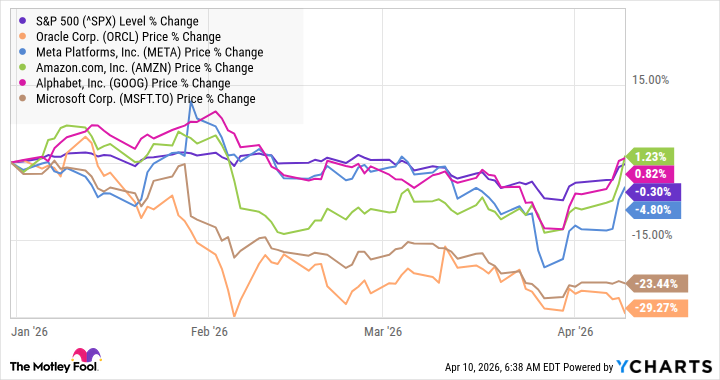
Microsoft did encounter pressure earlier this year amid concerns that AI tools could replace software down the road, but I think these worries were overdone. Here’s why: Microsoft actually applies AI to its software, so as AI advances, the company’s software should get better and better. At the same time, Microsoft’s cloud business is generating tremendous growth as it offers AI products and services to its customers. So, this company is positioned to be an AI winner — not an AI loser.
Your decision whether to follow the billionaires who sold Microsoft or to buy the stock as Ackman did depends on your own investing strategy. For example, if you already hold a significant position in Microsoft and have benefited over time, you might consider locking in some gains and bargain hunting for new opportunities. However, if you have a small Microsoft position or haven’t yet invested in this company, you might pick up shares today for a dirt cheap price — the stock trades at 25x forward earnings estimates.
Even if Microsoft experiences some ups and downs in the near term, this tech giant still has what it takes to benefit from AI as well as its well-established businesses — and deliver a long-term win to shareholders.
We just issued ‘double down’ alerts on 3 stocks — find out if Microsoft made our list
Ever feel like you missed the boat in buying the most successful stocks? Then you’ll want to hear this.
On rare occasions, our expert team of analysts issues a “Double Down” stock recommendation for companies that they think are about to pop. If you’re worried you’ve already missed your chance to invest, now is the best time to buy before it’s too late. And the numbers speak for themselves:
Nvidia:if you invested $1,000 when we doubled down in 2009,you’d have $547,669!*
Apple: if you invested $1,000 when we doubled down in 2008, you’d have $59,476!*
Netflix: if you invested $1,000 when we doubled down in 2004, you’d have $463,900!*
Right now, we’re issuing “Double Down” alerts for three incredible companies, available when you joinStock Advisor, and there may not be another chance like this anytime soon.
Adria Cimino has no position in any of the stocks mentioned. The Motley Fool has positions in and recommends Microsoft. The Motley Fool has a disclosure policy.