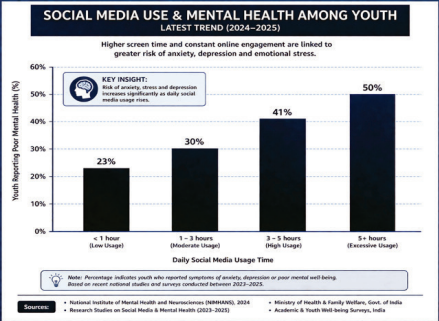
A lot of discussion and concerns have focused on social media and its impact on young people’s mental health.
It is well worth talking about and learning from experts who have a deep background and insights into the topic. In its “Talking with the University” column, the U of M did this for Mental Health Awareness Month in May. The university noted that social media is an ever-present part of our experience in the world. “In recent years, the potential impact of social media use on mental health in young people has become a top concern as teen mental health has worsened,” the university said.
In the column,
, with the University of Minnesota Medical School and M Health Fairview discussed the impact of social media on children’s mental health and offered advice for parents:
Q: What are some of the ways that social media impacts children’s mental health?
Dr. Cullen: Studies have shown both positive and negative effects of media use on mental health outcomes for children and teens. On the positive side, social media offers opportunities for learning new things, creative expression, sharing humor and receiving support from peers. The latter is especially important for young people from marginalized backgrounds who may not be able to find the support they need in their own ‘real world’ community.
On the other side, growing evidence links problematic social media use in teens to negative mental health outcomes, though risks vary by behavior. Endless scrolling can interfere with healthy activities, causing teens to miss real-life interactions, fall behind academically and sacrifice exercise, time outside, and sleep, despite knowing it makes them feel bad. Compulsive posting and checking for reactions heightens the risk of relying on others’ validation and feeling rejected, particularly during adolescence. Finally, exposure to adverse experiences like bullying, false information, harmful content and manipulation, underscoring the need for critical parental guidance.
Q: What amount of screen time is considered unhealthy for kids?
Dr. Cullen:
found that compared to screen time alone, problematic media use — defined as media use that interferes with at least one aspect of a child’s functioning — is more important when predicting clinical problems like depression, suicidal thoughts and self-injury. Concerns should arise when media use negatively impacts areas like academic success, sleep, family engagement or interpersonal relationships. In these cases, limit-setting is important, but it’s also not simple. When I was a kid, parents had a hard enough time setting limits on TV time. Now, most kids have phones in their pockets with ready access 24/7. Because of this, many parents feel like limit-setting is a losing battle. In navigating this process, it’s important to be both realistic and consistent. Some specific recommendations include turning off screens during family meals and removing them from bedrooms 30 to 60 minutes before bedtime. While homework will often require some kind of internet access, using other kinds of entertainment media while doing homework is discouraged.
Q: What advice would you give parents who may be concerned about their children’s social media usage?
Dr. Cullen: I encourage parents to talk to their kids about their social media use. They may find that their kids themselves are also concerned and feeling confused about what to do. Approaching these conversations with curiosity and without judgment can open doors that allow parents to learn more about what kids are learning and experiencing, which can help them guide their kids. Having regular discussions about experiences with social media is a good thing, and these conversations don’t need to be one-way. There’s a lot parents can learn from kids, too.
Q: Is social media “addictive”?
Dr. Cullen: This is an active area of research. Certainly, behaviors like posting, checking for responses, and scrolling through others’ posts can become habitual and can consume large amounts of time in ways that interfere with other activities that are important for well-being. We have heard young people describe scrolling like a “dopamine slot machine”, highlighting the reward process at play here. Like other habits, people develop them for a reason (feeling good, gaining comfort, etc.), and they can be tough to break.
Q: What are you doing to advance knowledge around adolescent social media use?
Dr. Cullen: I’ve recently been collaborating with Dr.
in the College of Science and Engineering to work on ways to help adolescents with their social media use. She is developing some innovative tools to help young people break out of the habitual cycle of endless scrolling. We’re currently seeking funding to test her new tool in adolescents with depression to see if it could help young people regulate their social media use and improve mood in this high-risk group.