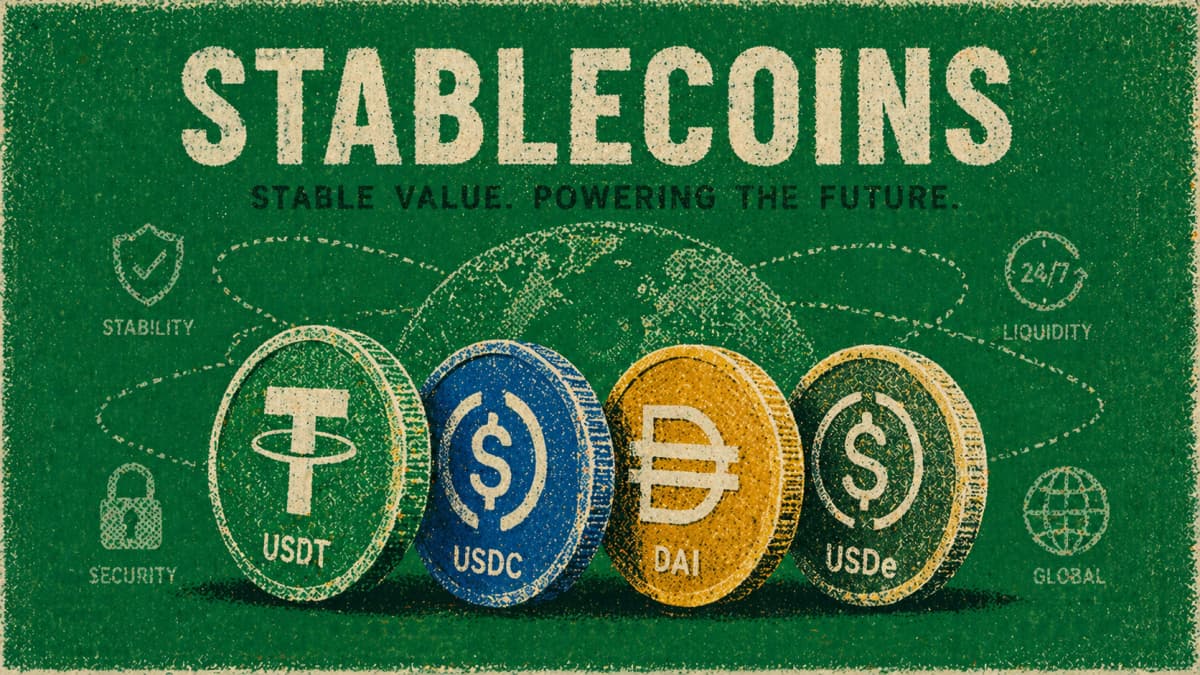
A report by Juniper Research found that the total value of cross-border B2B stablecoin transactions may reach $5 trillion by 2035, up from $13.4 billion in 2026. It projects that by 2035, B2B payments will account for 85% of total stablecoin value.
The research found that stablecoins are increasingly embedded in cross-border B2B transactions, treasury operations, and supply chain settlements, offering programmability and 24/7 settlement. Additionally, it includes stablecoin activities spanning from P2P (person-to-person), P2B (person-to-business), B2B (business-to-business), B2C (business-to-consumer), and digital currency card use cases.
“Stablecoins are not replacing payments infrastructure; they are being adopted where the advantages are most pronounced. Cross-border B2B is where those advantages are greatest, and where we expect the most sustained volume growth over the forecast period. Stablecoin issuers and payment service providers should prioritise enterprise integrations and treasury partnerships to capture the majority of this value,” Research Analyst Jawad Jahan said.
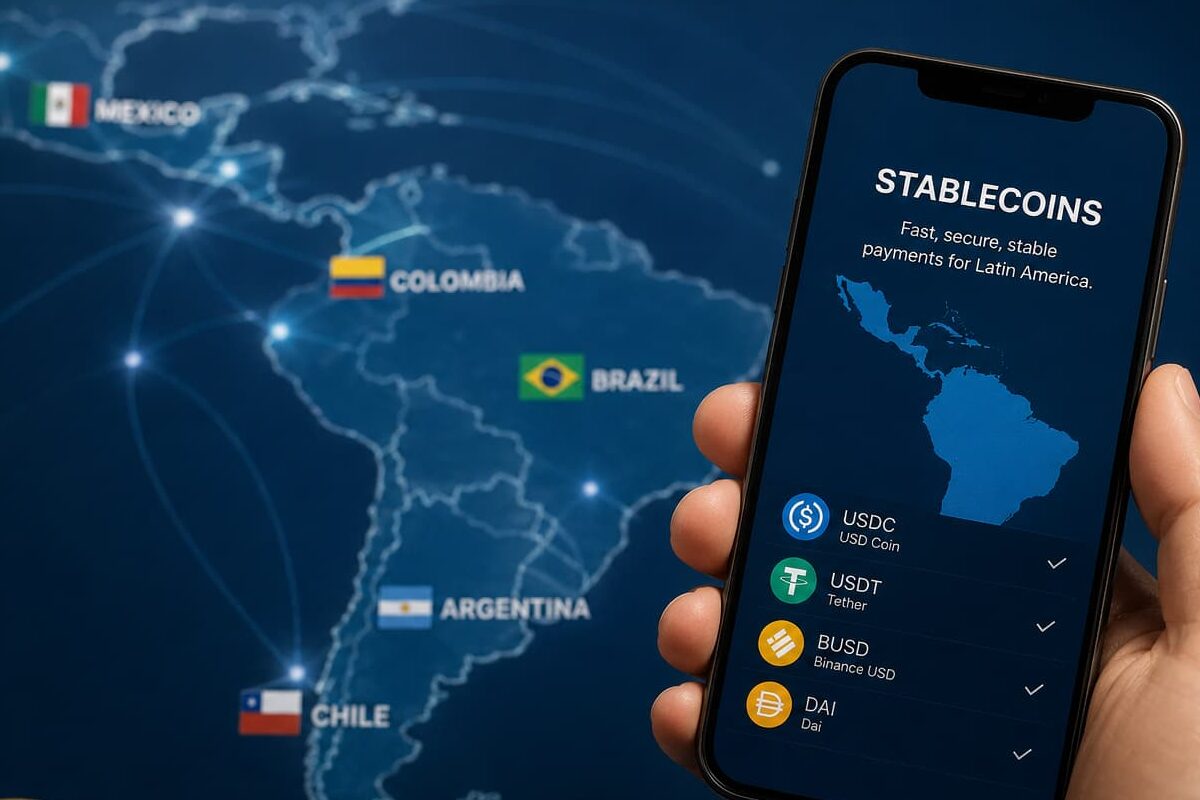
The United States is expected to lead the market for B2B stablecoin transactions in 2035 at $1.7 trillion, followed by Brazil ($453 billion), Japan ($352 billion), Mexico ($346 billion), and India ($171 billion) in the top 5.
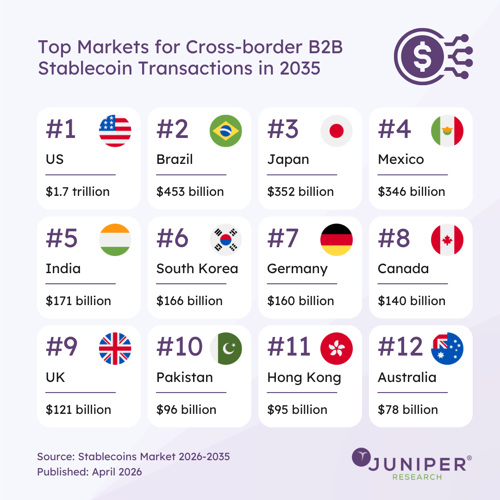
Juniper Research highlights that cross-border B2B payments are the primary engine driving stablecoin growth through 2035. It claimed that traditional banking systems often lead to delays and incur additional expenses, such as intermediary fees, foreign exchange markups, and SWIFT-related charges. Stablecoins enable near-instant, on-chain settlement and could significantly lower transaction costs compared to traditional methods, making the digital asset ideal for high-value, time-sensitive corporate transfers across the globe.
The research provides an evaluation of the stablecoin market, featuring forecasts and analysis based on more than 39,000 data points across 61 countries over ten years. It also includes a competitor leaderboard and insights into the assets’ current dynamics and future growth opportunities.
Check out the full report here.
Stablecoin and the future of payments
Meanwhile, blockchain intelligence firm Chainalysis reported that stablecoin transaction volumes could reach $719 trillion by 2035, driven solely by “organic growth.” They also stated that if macroeconomic factors were taken into account, this figure could potentially rise to $1.5 quadrillion.
“Adjusted volume has grown at a 133% compound annual growth rate since 2023, reaching $28 trillion in real economic activity in 2025. If this baseline growth continues with no additional catalysts, we project volumes could hit $719 trillion by 2035,” the firm’s blog post read.
Chainalysis stated that between 2028 – 2048, around $80 – $100 trillion in wealth will likely be moving from Boomers to Millennials and Gen Z—generations that are more willing to use digital currency as a preferred financial tool.
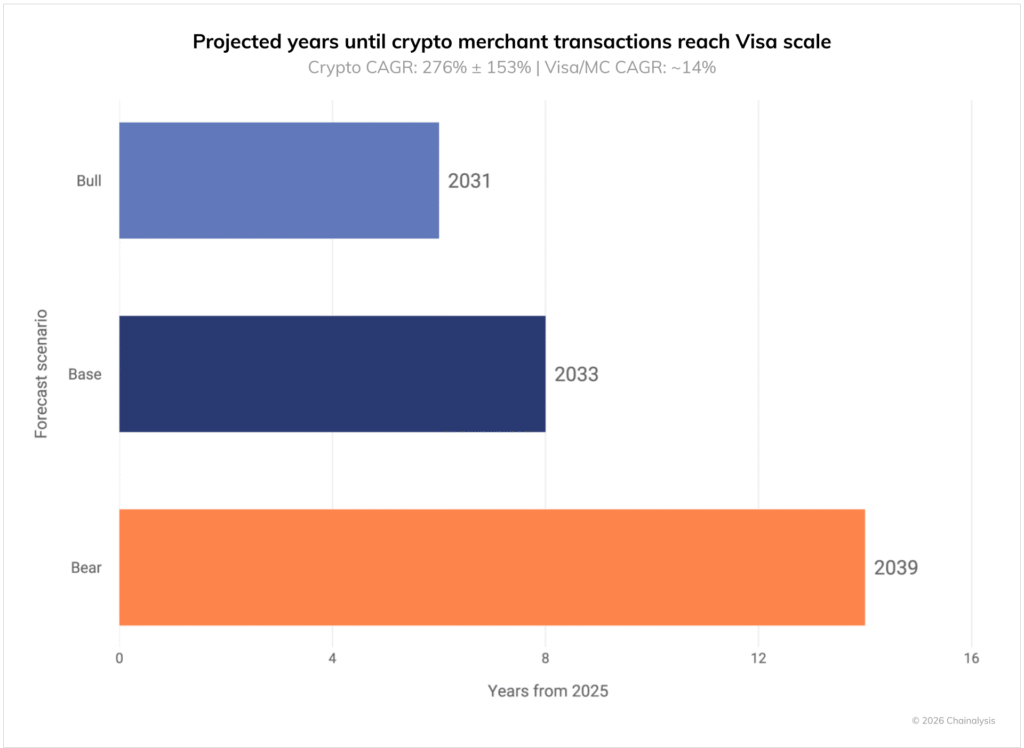
The blockchain intelligence firm also pointed out that stablecoin payment volumes are on track to match Visa (NASDAQ: V) and Mastercard’s (NASDAQ: MA) off-chain transaction volumes by 2031 – 2039.
“As consumers learned to evaluate credit cards on fees and rewards, they’ll begin weighing crypto rails against traditional ones on the same terms: transaction costs, settlement speed, and cashback incentives. Stablecoin-linked cards will compete directly with legacy payment infrastructure. For incumbents like Visa and Mastercard, this isn’t a distant threat. It’s a countdown,” Chainalysis said.
A recent webinar hosted by FinTech News Singapore explored the growing role of stablecoins as an essential asset for 24/7 global trade. Key industry experts Dan Sleep, Hassan Ahmed, Zack Yang, and Naveen Gupta discussed how regulators around the globe are converging on building frameworks to introduce stablecoins into the mainstream financial system and how the financial asset has been rapidly transitioning from being a niche crypto feature into an essential infrastructure for global finance, driven by its ability to enable near-instant, low-cost cross-border transactions.
The industry leaders emphasized that enterprise adoption is accelerating across payments, treasury, and remittances, with regulatory alignment further reinforcing the assets’ mainstream integration.
Watch | It’s time for Bitcoin ecosystem to grow—here’s how