Polygon takes a decisive step towards the world of institutional finance by introducing a new private stablecoin payment feature.

The goal is clear: to bridge one of the main limitations perceived by large companies and traditional operators, namely the total transparency of public blockchains.

Amid stablecoin growth and new moves by financial giants, privacy at the center of the debate in the blockchain sector

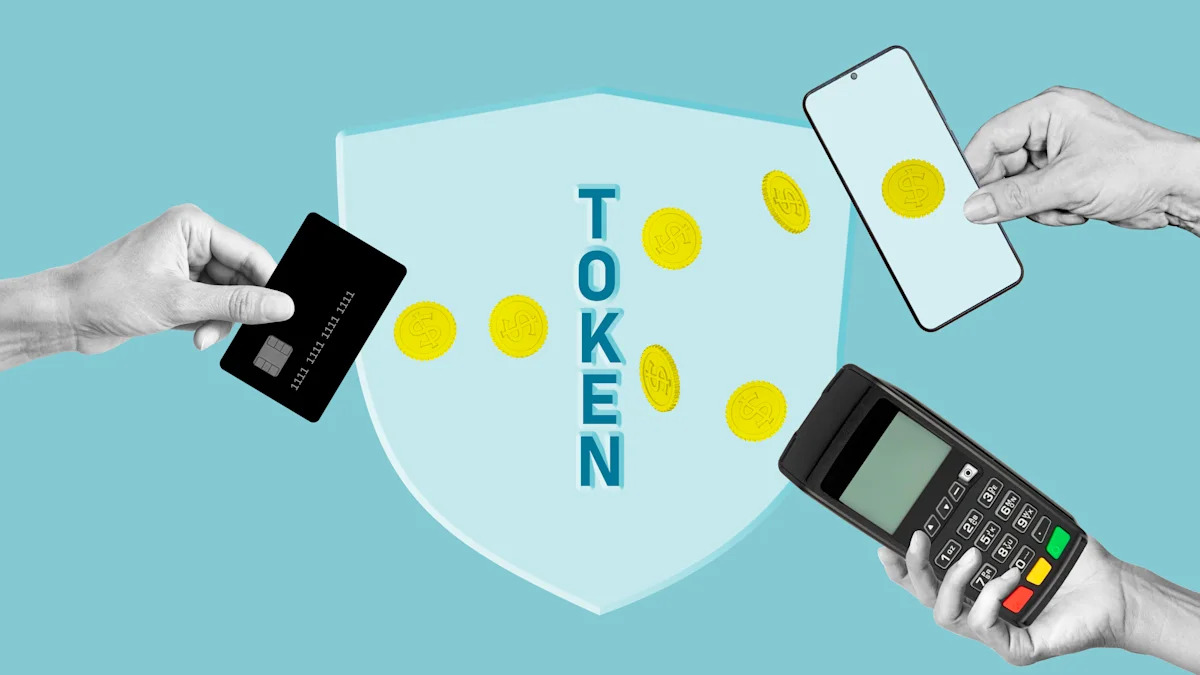
Specifically, the innovation concerns the network’s official wallet, which now allows users to send stablecoins such as USDC and USDT through a “private” mode.

In practice, the user can choose to carry out a transaction that does not publicly expose the sender, the recipient, or the amount.

This result is achieved thanks to integration with Hinkal, a protocol specialized in privacy, and the use of zero-knowledge proofs, a technology that makes it possible to verify a transaction without revealing its sensitive details.

Note that this is not total anonymity. Polygon in fact insists on a key point: the privacy introduced is “operational,” not evasive.

Every transfer is in fact subjected to KYT (Know Your Transaction) checks, a system that makes it possible to monitor the legitimacy of operations.

In addition, users can generate audit files to share with tax or regulatory authorities, thus ensuring a level of selective transparency.

This approach reflects a now evident tension in the crypto sector: on the one hand the need to protect sensitive data, on the other the obligation to comply with increasingly strict regulations.

Polygon is therefore trying to position itself exactly at this balance point, proposing a solution that does not reject compliance but introduces greater confidentiality compared to current standards of public blockchains.

Privacy and institutions: the real knot of onchain finance

Polygon’s move stems from a precise consideration, namely that the radical transparency of blockchains is one of the main obstacles to institutional adoption.

In the world of traditional finance, as we know, banks and companies operate through closed systems, where information such as counterparties and amounts is not publicly accessible.

Transferring large volumes on a fully visible network represents, for these players, a competitive as well as operational risk.

According to Polygon, it is in fact difficult to imagine that traditional financial institutions will accept exposing all their transactions to external observers.

Hence the idea of introducing tools that replicate, at least in part, the confidentiality of traditional circuits, while maintaining the advantages of blockchain infrastructure.

The favorable point is that the market context seems to support this direction. Stablecoins are in fact experiencing a phase of strong expansion, also fueled by regulatory developments.

In the United States, the approval of the GENIUS Act in 2025 has given a significant boost to the sector, increasing operators’ confidence and supporting volume growth.

Not surprisingly, on Polygon as well the market capitalization of stablecoins reached an all-time high of about 3.6 billion dollars in April, signaling growing interest.
At the same time, competition is moving quickly. The Aptos blockchain recently launched “Confidential APT,” a solution that integrates similar privacy features based on zero-knowledge proofs.

However, there is no shortage of critical issues. The introduction of privacy mechanisms, even if regulated, could attract the attention of regulators, especially in a context where the fight against money laundering and illicit financing remains a global priority.


Stablecoins and traditional finance: an increasingly evident convergence

As anticipated, Polygon’s innovation fits into a broader dynamic: the growing convergence between crypto and traditional finance.A clear signal also comes from Western Union, which recently launched its own dollar-pegged stablecoin on Solana.

This is a significant step, because it shows how even major payment operators are actively exploring the opportunities offered by tokenization.

This movement suggests that stablecoins are no longer a niche phenomenon, but are becoming an increasingly central infrastructure in global payment systems. In this scenario, privacy could represent a decisive competitive factor.

Companies might prefer networks that offer greater confidentiality without giving up regulatory compliance, creating a new category of “enterprise-friendly” blockchains.

At the same time, however, a fundamental question remains open: to what extent is it possible to reconcile privacy and transparency without compromising one of the fundamental principles of cryptocurrencies?

As we know, the blockchain was born as a public and verifiable ledger, and every attempt to limit visibility raises questions about the trust and security of the system.


Source link

Leave a Reply

Your email address will not be published. Required fields are marked *