The wearable technology space is quietly undergoing a structural shift. Forecasts project that the global wearables market will surpass $100 billion in 2026 and reach roughly $230 billion by 2033. Investors seeking the next wave of hardware capitalization are closely watching Oura Health.
Oura is reportedly preparing to seek up to $3 billion in a U.S. public offering at a valuation closing in on $16 billion. This potential debut could provide an important price-discovery mechanism for pure-play wearable health data platforms.
Rather than just another tech IPO, Oura’s targeted pricing could challenge Wall Street’s valuation of established health-tracking platforms. By isolating the premium associated with health data aggregation and recurring subscriptions, the offering could prompt investors to reassess the value of wearable divisions within legacy tech giants.
Moving Beyond Basic Hardware Margins
Oura’s potential $16 billion-plus valuation does not emerge in a vacuum. Oura Health is projected to reach approximately $2 billion in sales in 2026, implying an estimated 8x forward revenue multiple at a $16 billion valuation. In the hardware space, achieving that kind of multiple requires more than just moving physical units across a supply chain. It relies heavily on high-margin, recurring software subscriptions tightly paired with physical devices.
A standalone hardware business traditionally trades at a steep discount due to manufacturing costs, supply chain vulnerabilities, and margin compression. Oura operates differently by positioning itself as a pure-play health platform. Users pay upfront for the physical ring, but the value proposition extends to the ongoing data processing, sleep tracking, and personalized biometric insights offered through its monthly subscription.
By converting a one-time hardware purchase into a recurring revenue stream, pure-play trackers can create more predictable revenue and improve the economics of the hardware relationship over time. This predictable cash flow can also make the model more attractive to institutional buyers. If institutional markets validate Oura’s proposed premium, the offering could establish a distinct benchmark and suggest investors are willing to assign software-like multiples to hardware companies if the underlying health data ecosystem is robust enough to generate recurring revenue.
Heavyweights in the Corner: Obscured Value in Big Tech Wearables
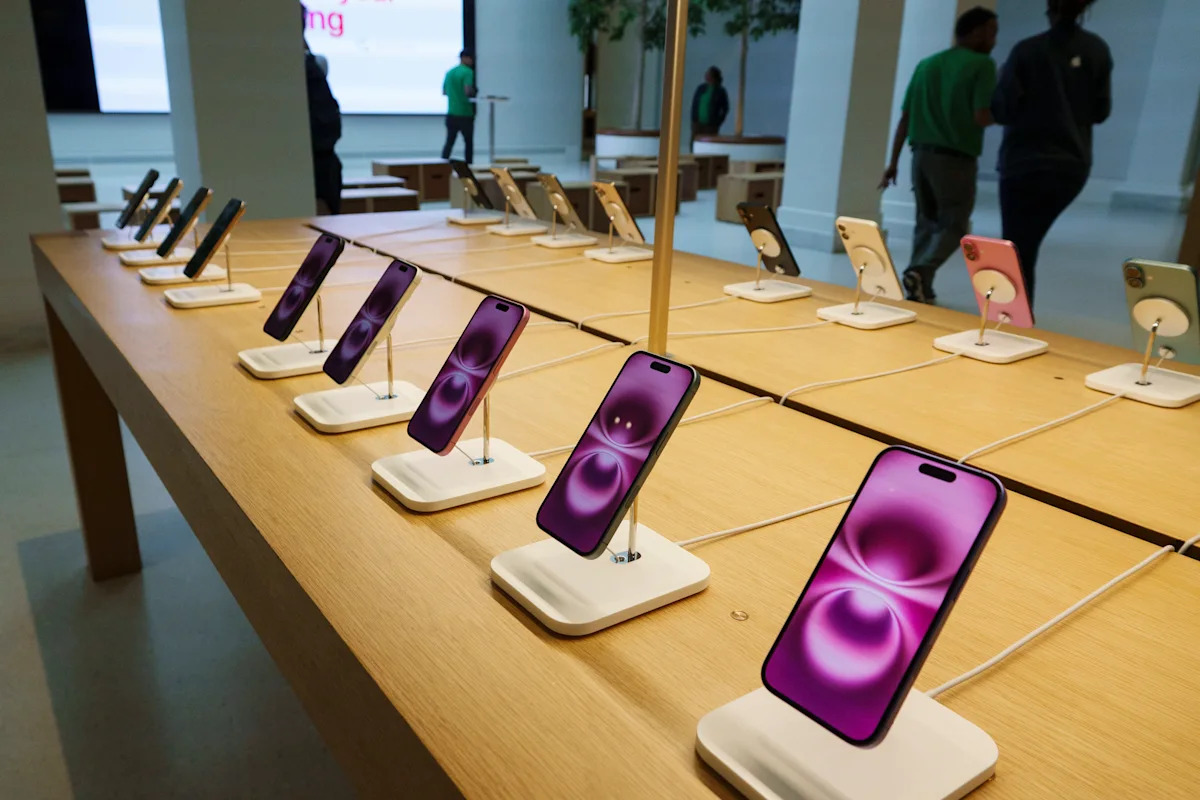
This pricing event creates an interesting dynamic for established tech ecosystems. Currently, technology sector companies like Apple Inc. NASDAQ: AAPL and Alphabet Inc. NASDAQ: GOOGL compete in wearables through products including the Apple Watch, Pixel Watch and Fitbit.
Apple Today

As of 02:33 PM Eastern
- 52-Week Range
- $225.95
▼
$344.57
- Dividend Yield
- 0.34%
- P/E Ratio
- 35.92
- Price Target
- $330.53
Consider Apple’s recent performance. Apple’s Wearables, Home and Accessories segment posted about $7.88 billion in fiscal Q3 2026, representing a solid 6.5% year-over-year increase. Despite generating billions in revenue, Apple does not break out Apple Watch sales separately, making it difficult to isolate the value of the wearable business from the broader category.
Because the Apple Watch serves primarily as an ecosystem anchor, designed to keep users tethered to the iPhone, iCloud, and Apple Fitness+, Wall Street rarely assigns it a standalone multiple. The true value of the wearable is obscured by its role as a supplementary driver for high-margin services.
Alphabet Today

As of 02:33 PM Eastern
- 52-Week Range
- $205.65
▼
$408.61
- Dividend Yield
- 0.26%
- P/E Ratio
- 17.15
- Price Target
- $420.19
Alphabet faces a similar structural dynamic. Alphabet recently rolled out its screenless Fitbit Air alongside the Pixel Watch 5, further integrating the Fitbit brand into the Google Health ecosystem. Fitbit Air also puts Google more directly into the growing market for screenless health trackers occupied by companies such as Oura and Whoop. However, Alphabet does not separately disclose the financial contribution of its health-tracking products from its broader hardware operations.
For both Apple and Alphabet, wearables remain relatively small pieces of much larger businesses. Apple’s valuation is driven heavily by the iPhone ecosystem and Services, while Alphabet’s rests largely on advertising, cloud computing and its growing AI opportunity. As a result, the value of wearables can remain obscured within their broader corporate structures.
Institutional Capital Steps Into the Ring
Institutional capital remains heavily concentrated in diversified technology, largely influenced by the ongoing generative AI boom. Alphabet’s recent multi-billion-dollar custom AI chip deal with Marvell and Apple’s reported $1 billion annual outlay for Alphabet’s Gemini AI underscore a heavy strategic pivot toward computing power.
Berkshire Hathaway recently boosted its Alphabet stake by 83% to nearly $37.8 billion, while retaining a substantial position in Apple. Insiders at both Apple and Alphabet have also recorded recent share sales.
The upcoming Oura IPO will test whether institutional liquidity is prepared to support a targeted wearable hardware pure-play. If Oura successfully secures its $3 billion offering at the targeted valuation of more than $16 billion, it will send a meaningful signal that there is institutional appetite for specialized health data platforms.
This dynamic creates a compelling narrative for the physical economy of tech. While software and language models dominate headlines, the actual collection of biological data requires physical hardware. Companies that can bridge the gap between physical data collection and recurring software revenue may be better positioned to command premium multiples.
Such a scenario could apply pressure to Apple and Alphabet. When a pure-play competitor achieves a high valuation multiple, investors naturally begin to ask what a legacy tech company’s internal division would be worth on the open market. While a spinoff of the Apple Watch or Google Pixel Watch is highly unlikely given their tight integration into broader operating systems, Oura’s valuation could give analysts another reference point for assessing the embedded value of these businesses.
The Next Era of Health Tracking
The wearable tech sector is entering a mature phase in which health data aggregation commands a significant premium over basic step tracking. Oura Health’s aggressive capitalization strategy highlights the immense value locked inside these data-driven platforms. While Apple and Alphabet continue to lead by sheer volume, their sprawling business models obscure the true multiple their wearable divisions could command in a vacuum.
As the wearables market scales past the $100 billion mark this year, the focus will increasingly shift toward margin expansion through subscription software and pure-play health metrics. The potential Oura IPO provides a useful lens for pricing this industry shift and testing how much public-market investors are willing to pay for a standalone wearable health platform.
Investors navigating this space may want to add Oura to their IPO watchlists to gauge broader market sentiment for health hardware. Simultaneously, those with long-term exposure to Apple or Alphabet could monitor how these tech giants evolve their wearable products and services as specialized competitors attract higher valuations.
Continue following MarketBeat
Add MarketBeat as your preferred source on Google to see our latest stories in your feed.
Before you consider Apple, you’ll want to hear this.
MarketBeat keeps track of Wall Street’s top-rated and best performing research analysts and the stocks they recommend to their clients on a daily basis. MarketBeat has identified the five stocks that top analysts are quietly whispering to their clients to buy now before the broader market catches on… and Apple wasn’t on the list.
While Apple currently has a Moderate Buy rating among analysts, top-rated analysts believe these five stocks are better buys.
Enter your email address and we’ll send you MarketBeat’s list of ten stocks set to soar in Summer 2026, despite the threat of tariffs and what’s happening in Iran. These ten stocks are incredibly resilient and are likely to thrive in any economic environment.