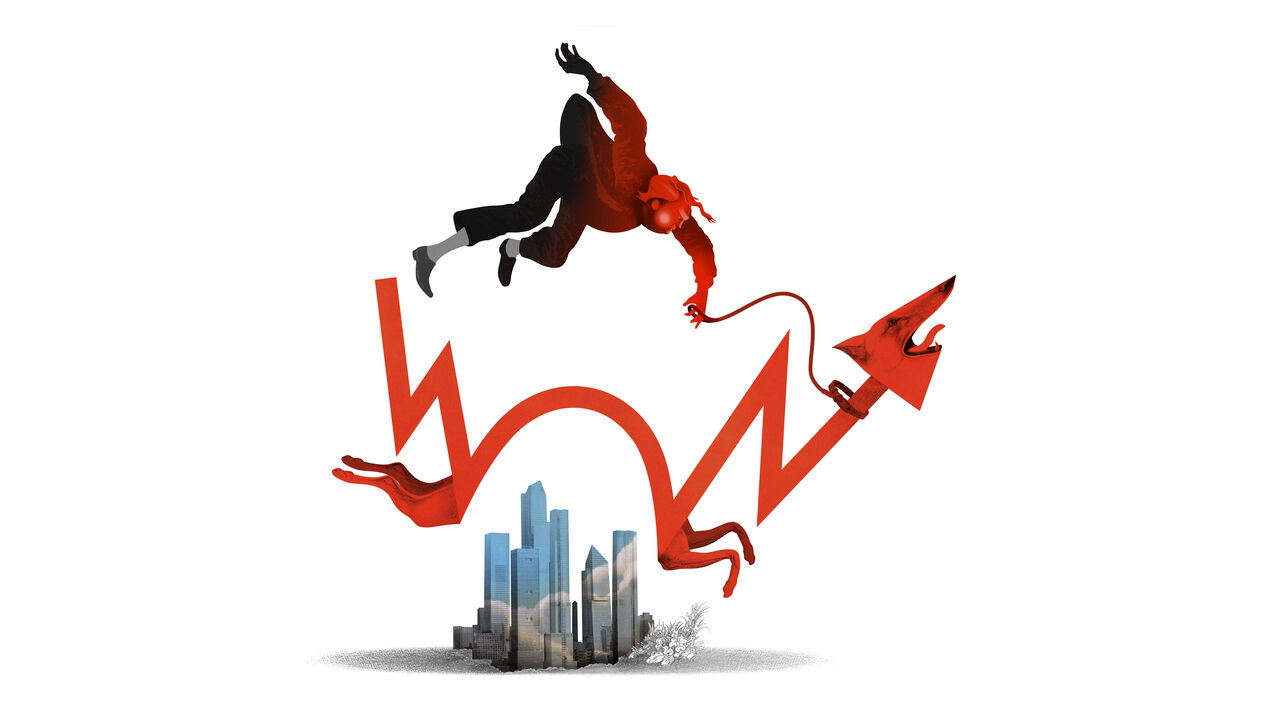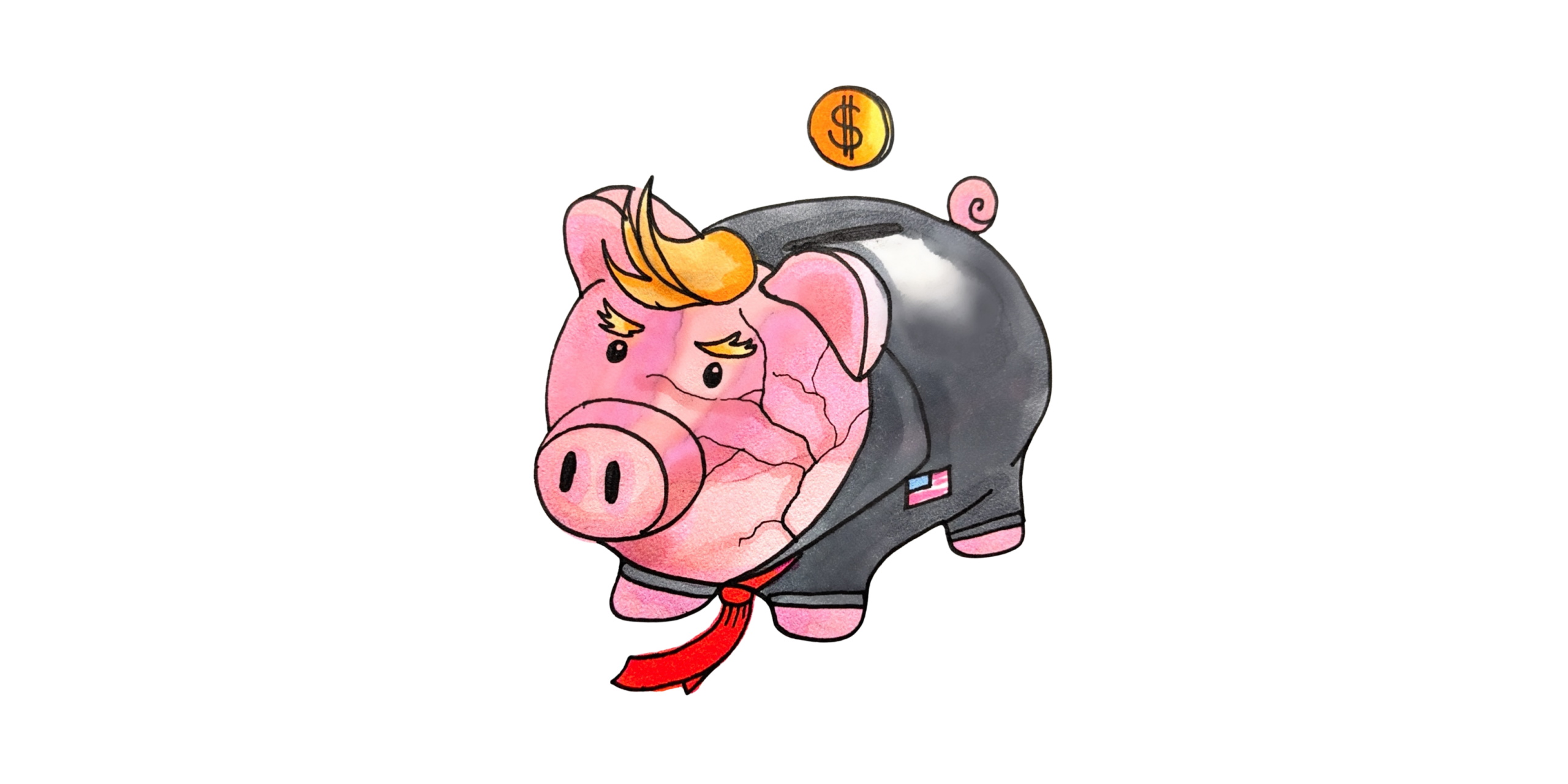
At first glance, the news that the United States national debt had exceeded the size of the American economy may be worrisome.
But Northeastern University economists said the milestone was largely symbolic.
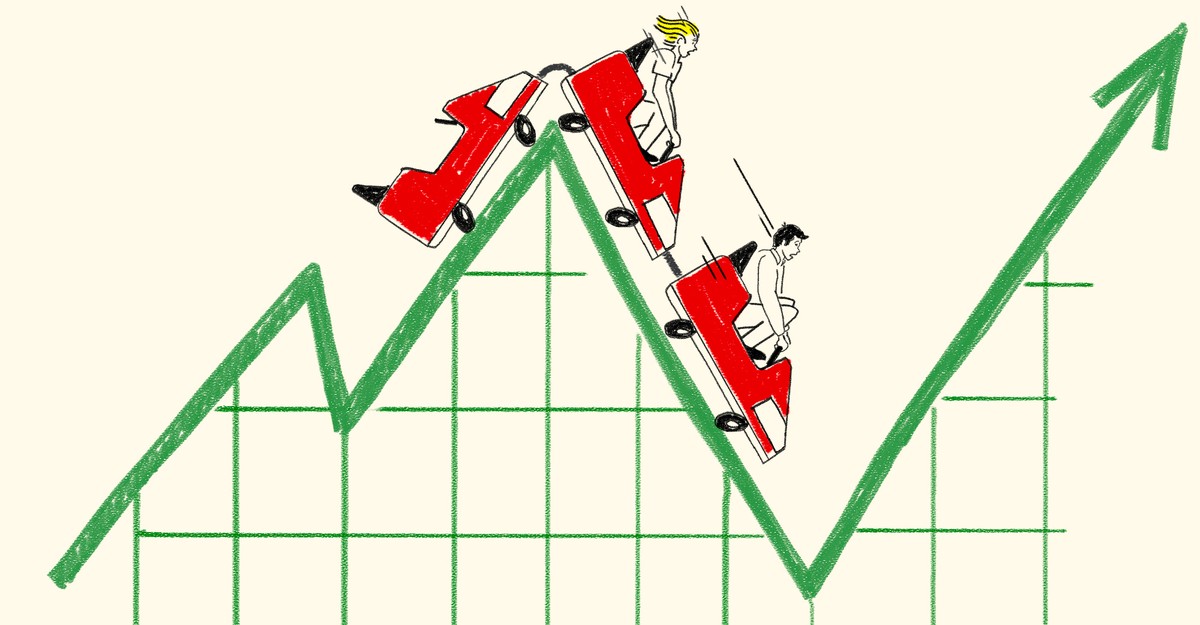
“It was, in a sense as far as the market’s concerned, non-news,” said Bob Triest, professor of economics at Northeastern. In fact, indexes reached record highs following the news, and have continued to roar.
Triest explained that the market had already “priced in” such an event because the milestone was expected due to the projections of the national debt, which is the total amount of outstanding borrowing by the U.S. Federal Government accumulated over the nation’s history,
And while Triest called the debt surpassing the nation’s Gross Domestic Product (GDP), the total value of final goods and services produced in an economy in a year, “concerning,” he noted that the debt-to-GDP ratio is currently “just inching up a little bit.”
“What’s really concerning is that it’s projected to continue inching up over time,” Triest said.
It’s a sentiment that others echoed.
“The main thing I worry about is how things are going to go over the coming 30 years if anything like the projections pan out,” said Mark Hooker, teaching professor of economics at Northeastern. “The projections are quite concerning.”


On April 30, the federal government released data on the GDP. This was analyzed by The Committee for a Responsible Federal Budget, a nonpartisan, non-profit organization committed to educating the public on issues with significant fiscal policy impact. The analysis showed that GDP totaled $31.22 trillion between April 2025 and March 2026 and public debt totaled $31.27 trillion, representing a debt-to-GDP ratio of 100.2%, according to the analysis.
Northeastern Global News, in your inbox.
Sign up for NGN’s daily newsletter for news, discovery and analysis from around the world.

Outside of a brief period early in the COVID-19 pandemic when GDP temporarily crashed, debt only exceeded GDP for two years at the end of World War II, according to the CRFB.
So, why has media hype over the milestone outweighed concern on Wall Street or in Washington,D.C., according to the New York Times?
Hooker describes national debt and GDP as “related, but not closely related.”
“Let’s say that the debt is the size of your mortgage, and GDP is your annual salary,” Hooker said. “One might be bigger than the other, but nothing magic happens if they cross.”
The comparison isn’t perfect, Hooker noted. The government’s “salary” isn’t GDP; it’s tax revenue, Hooker said.
But plenty of Americans understand that to buy a house today, you have to take out a mortgage that exceeds your income.
Indeed, the debt is projected to reach 125% of GDP by 2036, and reach 175% of GDP by 2056, according to the Congressional Budget Office (CBO), a nonpartisan Congressional office that provides objective, nonpartisan information to help Congress make effective budget and economic policy.
“That’s a big increase,” Triest said.
Meanwhile, the CBO projects that simply paying the interest on the debt will rise from costing 3.3% of GDP today to 6.9% of GDP in 2056.
The debt also continues to grow.
The federal government borrows roughly $50 billion every week by issuing new Treasury bonds and bills and other products, Hooker noted, and the buyers of those products – whether individuals, countries, banks, or others – will likely demand a higher interest rate the more that the debt grows. Those higher interest rates could make the debt grow even faster than the CBO projects, increasing the debt-to-GDP ratio even more. Triest said.
To be sure, plenty of countries have had and/or do have a debt-to-GDP ratio higher than 100% while still providing low interest rates, Hooker said, noting that Japan has been in such a situation for the last 25 years.
And interest rates remain relatively low in the United States – for example, interest rates on long-term Treasury bonds, which are one of the mechanisms the government uses to borrow money, are roughly4% to 5%. This means that the buyer makes a 1.5% profit if inflation stays around 3%.
But given the latest inflation rate of 3.8%, and with the debt projected to increase at the rate it’s been increasing for the last few years, at some point a threshold — which no one seems to have a good sense of, according to Hooker — will be crossed where “interest rates will get a lot higher,” he said.
Thankfully, “the people who are lending to the Treasury don’t seem very concerned about the level of debt, at least not yet,” Hooker said.