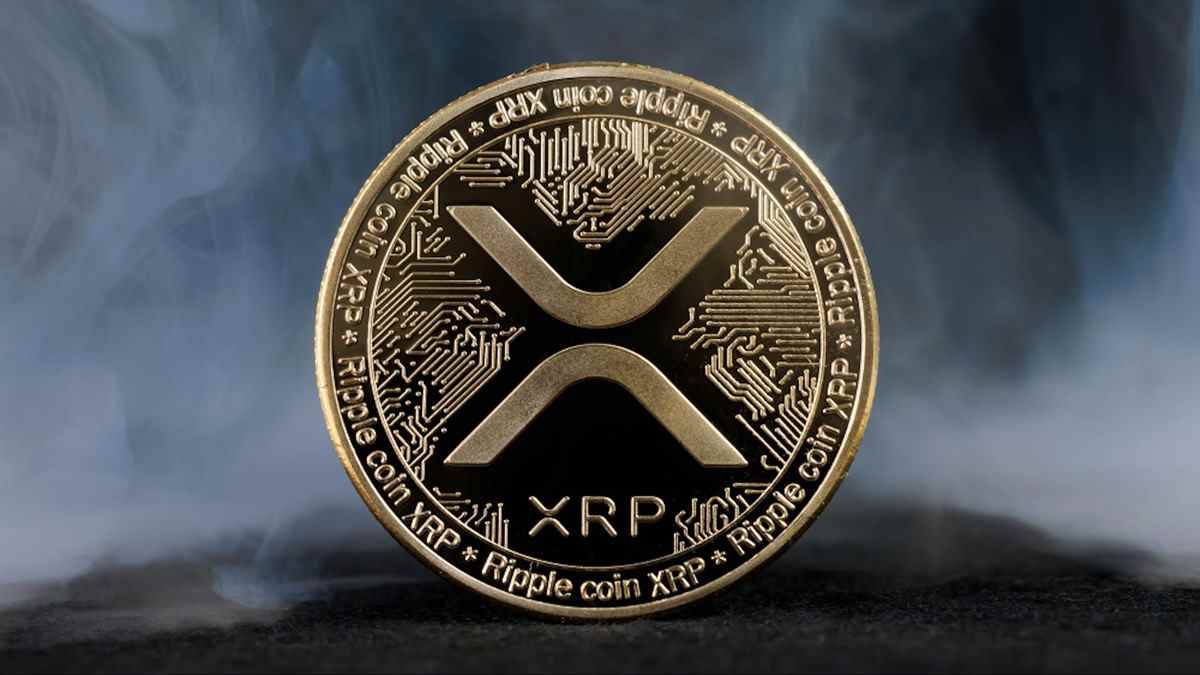
XRP Ledger (XRPL) takes more than 70 percent of the leading on-chain representative tokenised commodities market, ranking first in the segment. In the overall tokenised commodities market combining representative and decentralised products, Ethereum keeps the largest share.
On July 15, blockchain media outlet Decrypt reported that XRP Ledger holds about $2.5 billion of the $3.55 billion global representative tokenised commodities market. Its market share reaches 70.4 percent.
Representative commodities refer to products whose tokenised assets cannot be transferred outside the issuing platform. By contrast, decentralised commodities allow investors to move assets off the issuing platform and use them in other on-chain services. The overall tokenised commodities market is tallied at $8.08 billion. That is up $3.84 billion from $4.24 billion at the start of the year.
This year’s increase has already exceeded last year’s full-year gain. The tokenised commodities market grew by about $3.2 billion in 2025, but an additional $3.84 billion was added through the first half of this year. The market is split into representative and decentralised products. The decentralised commodities market is $4.53 billion, while the representative commodities market is $3.55 billion.
Network leadership also diverges clearly depending on asset structure. Ethereum accounts for most of the decentralised commodities market, while XRP Ledger effectively leads the representative market. RWA tokenisation data platform RWA.xyz shows more than 70 percent of the global representative commodities market is concentrated in the XRP Ledger ecosystem. The rest is shared by Polygon and Arbitrum.
Most commodity assets on XRP Ledger come from the JMWH product offered by Just Token. JMWH’s on-chain asset value is $2.229 billion, accounting for more than 89 percent of the total tokenised commodities value on XRP Ledger. Representative commodities also take a large share in XRP Ledger’s overall tokenised real-world assets market. XRP Ledger’s total tokenised real-world assets value is about $4.4 billion, of which representative commodities account for about 57 percent.
The main networks handling representative commodities on-chain are effectively narrowed to XRP Ledger, Polygon and Arbitrum. Polygon’s representative commodities amount to $661.2 million, while Arbitrum is limited to $482,700. Compared with XRP Ledger’s $2.5 billion, this shows the representative commodities market is heavily concentrated in a specific network.
Rankings change when the scope is expanded to the overall tokenised commodities market. In the $8.08 billion market combining representative and decentralised products, Ethereum holds the largest share at $4.2 billion. Its share is about 52 percent. XRP Ledger ranks second with about $2.5 billion, taking 31 percent of the total market.
In the tokenised commodities market, the dominant blockchain ultimately varies depending on asset structure. Ethereum leads the decentralised commodities market, where external transfers are freely possible, while XRP Ledger is assessed to have secured a strong advantage in representative products centred on the issuing platform.